 Mystical places in Mexico
10 legends · 6 cities
Regions and cities
Chihuahua2
Durango1
Guanajuato1
Mexico City3
State of Mexico3
By kind of place
All places
The Acámbaro Figures
In 1945 the German dealer Waldemar Julsrud began buying clay figures at Acámbaro in Mexico, dug up on the Bujares hill by a local farmer, Odilón Tinajero. Some thirty-three thousand accumulated over the years, dinosaurs among them, standing beside people. The archaeologist Charles Di Peso of the Amerind Foundation excavated the site and found the figures lying in disturbed ground with no patina of age and fresh unoxidised breaks, some still carrying file marks. In 1969 thermoluminescence testing at the Pennsylvania museum returned modern dates, and the laboratory formally withdrew its earlier results, which had been taken without allowing for the firing.
Copper Canyon and the Starchild Skull
A skull with a disproportionately large braincase and almost no occipital relief was found around 1930 in a mine tunnel near Copper Canyon in Chihuahua. From 1999 the author Lloyd Pye promoted it as the Starchild, evidence of a human-alien hybrid. DNA testing in 1999 and 2003 returned human mitochondrial and nuclear sequence including a Y chromosome: a boy, with human parents on both sides. The shape of the skull is consistent with congenital hydrocephalus, which in a child of about five produces exactly this deformation.
Metepec and the Ranch Alien
In 2007 the Mexican television presenter Jaime Maussan exhibited the body of a tiny creature said to have been caught alive in a trap on a ranch near Metepec in 2005 and drowned in a water tank. According to Maussan the ranchers wanted a fortune for it. The testing that the promoters themselves reported produced an answer nobody had ordered: a skinned primate — a squirrel monkey or a marmoset — with the jaw bones removed and the skin sewn shut. Maussan went on to present several more alien bodies to the public, the Nazca mummies among them.
Mexico City and the Roswell Slides
On 5 May 2015 a seven-thousand-seat hall in Mexico City was shown two Kodachrome slides from 1947: a small body in a display case, announced as an alien from Roswell. Tickets were twenty dollars and the stream was extra. The slides included a placard blurred past reading. Within days a group of sceptics led by Nab Lator stacked frames from the broadcast into a legible version: the mummified body of a two-year-old boy, an exhibit at the Mesa Verde museum in Colorado. Nobody was refunded.
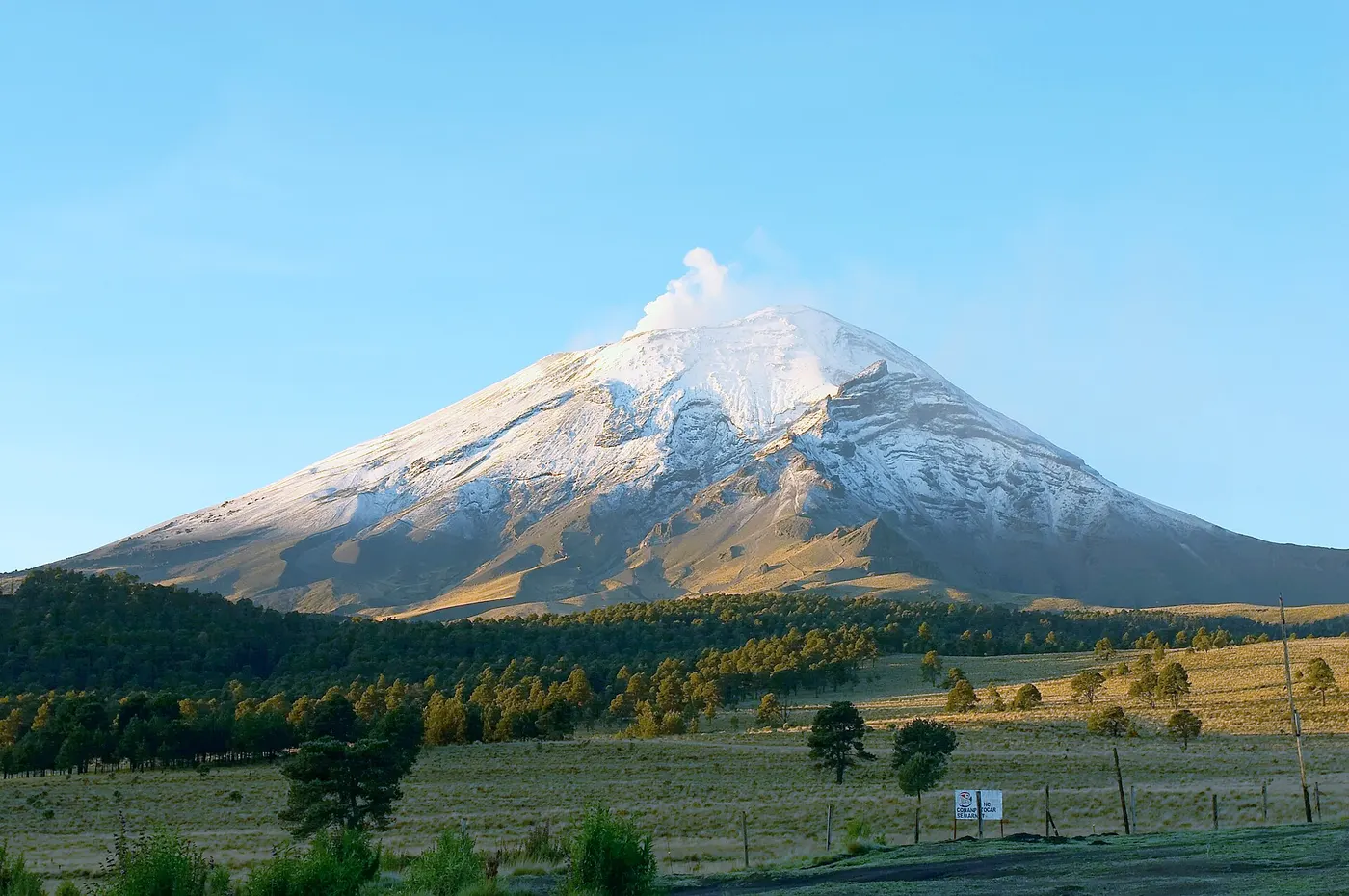
Popocatépetl and the Objects in the Crater
An active volcano seventy kilometres from Mexico City whose crater is watched around the clock by the cameras of the national disaster prevention centre. The recordings are published openly, and since 2012 elongated glowing objects have regularly been found in them, entering or leaving the crater. The best-known clip, showing a cigar shape about a kilometre long, went round the world in October 2012. Volcanologists attribute such footage to a combination of video compression artefacts, birds and insects passing close to the lens, and glowing fragments thrown out in minor explosions. The cameras keep recording, and the material accumulates faster than anyone works through it.
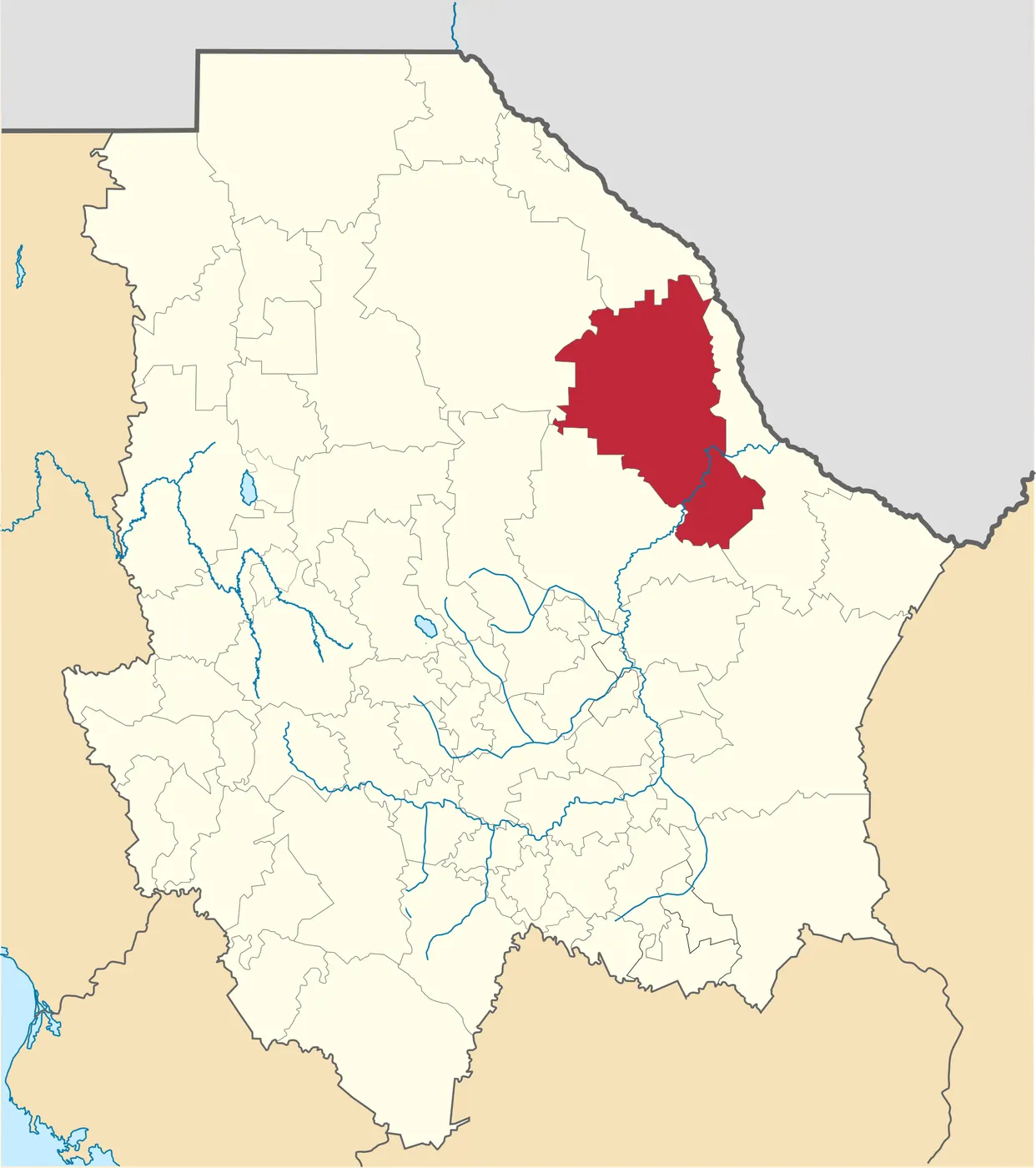
Coyame and the Crash That May Not Have Happened
On 25 August 1974 US radar over the Chihuahua desert picked up an unidentified return heading north and, almost at the same time, a light aircraft. The returns merged and vanished. In the version set out in a document that reached an American researcher in 1978, a Mexican military party found the wreckage of a disc in the desert, and then contact with the party was lost. The document is a typed report with no signature and no classification, of unknown provenance. No agency in either country has ever confirmed it. The case survives in the literature as an example of a story grown entirely out of one piece of paper, and is useful for exactly that: there is nothing in it to check.
La Llorona, the Weeping Woman
A woman in white who walks beside water weeping for children she drowned herself. The story is known throughout Latin America, but in Mexico City it is fixed to the canals of Xochimilco — the last remains of the lake system Tenochtitlan stood on. The earliest written versions date from the colonial period and braid two layers together: a Spanish tale of an abandoned woman, and pre-Hispanic accounts of a weeping female voice heard before the conquerors came.
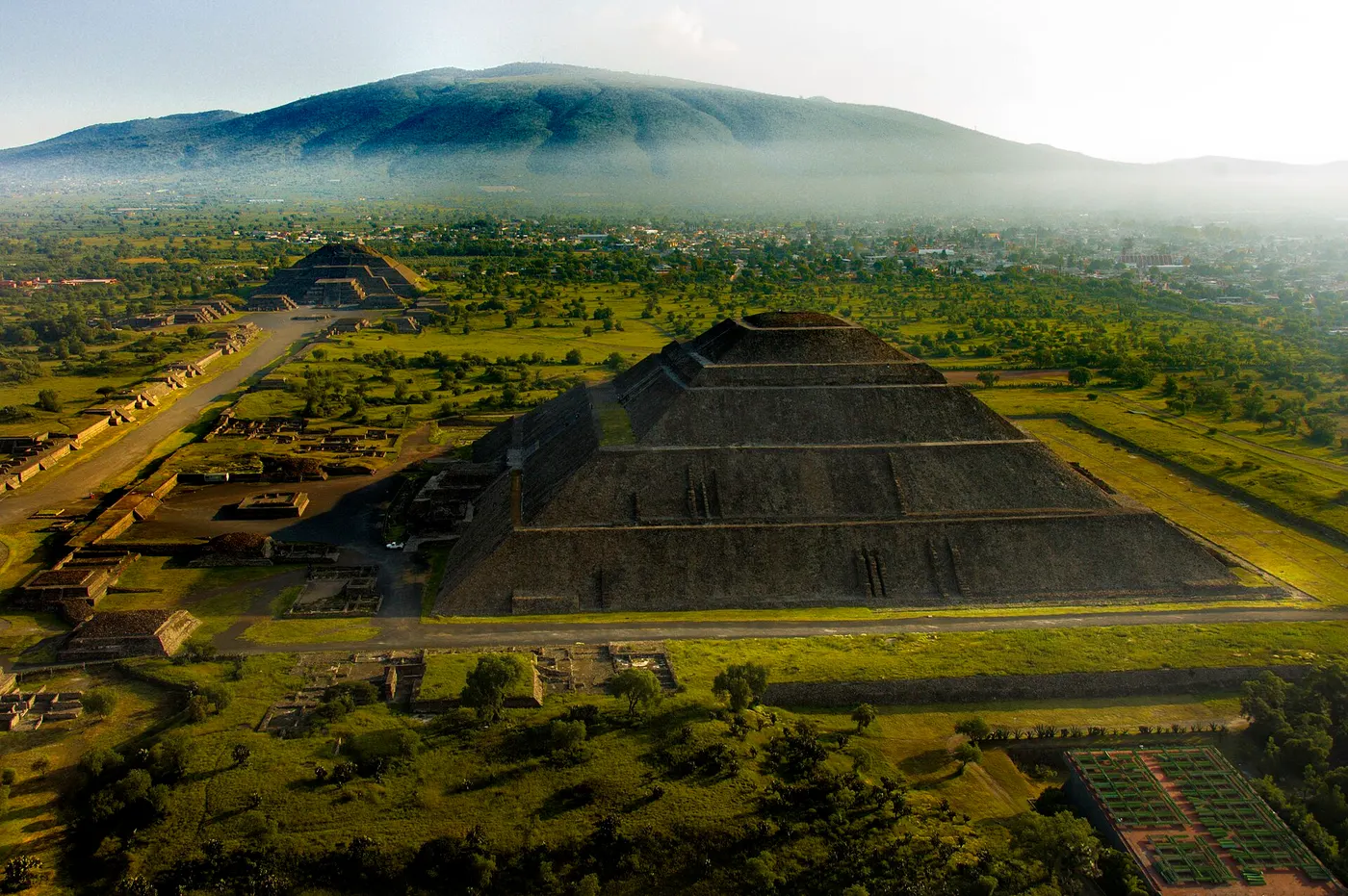
Teotihuacan
A city that was the largest in the Western Hemisphere by 500 AD and had already stood in ruins for centuries when the Aztecs arrived. They did not know who built it and named it the place where men become gods. Beneath the Temple of the Feathered Serpent, archaeologists found a tunnel in 2003 that had been sealed for nearly two thousand years: thousands of objects inside, chambers with ceilings dusted in pyrite to imitate a night sky, and pools of liquid mercury.
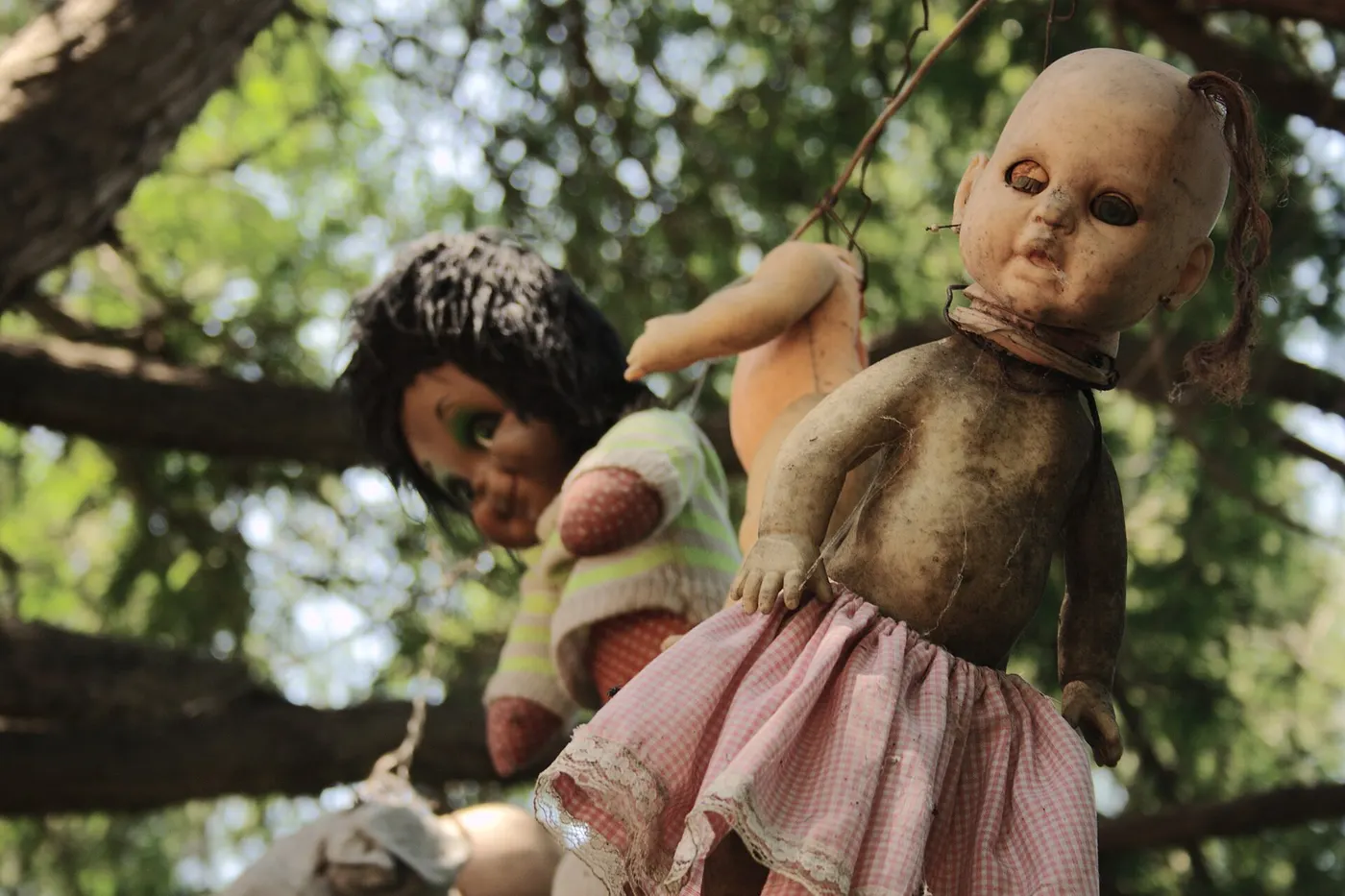
Island of the Dolls
An islet in the Xochimilco canals near Mexico City, hung with salvaged dolls for half a century. Its caretaker said he hung them to appease the spirit of a drowned girl; after his death in 2001 it became a tourist pilgrimage.
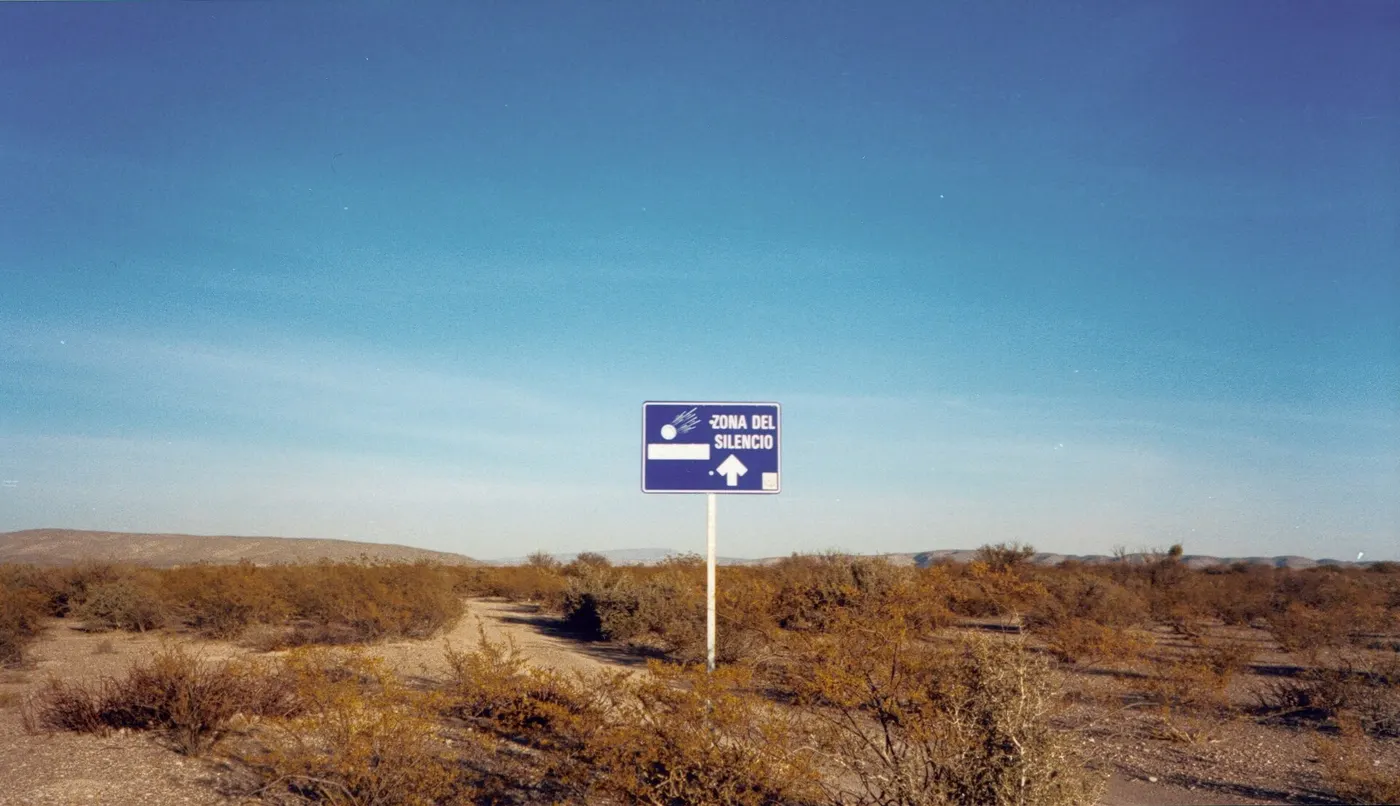
Mapimí Silent Zone
A patch of northern Mexican desert where, by local account, radios fall silent and compasses misbehave. The reputation dates from a US missile crashing here in 1970; tests have not confirmed any radio anomaly.