Khumbupasanglahmu
3 legends
Khumjung and the Yeti Scalp
The conical russet scalp in the monastery at Khumjung was held by the Sherpas to have been taken from a yeti and kept as a relic. In 1960 Edmund Hillary's expedition was allowed to take it to Chicago, Paris and London for examination, against a deposit and in the company of a village elder. The verdict was unanimous: the scalp had been moulded from the hide of a serow, a goat-antelope common in the same mountains, and the direction of hair growth and the structure of the skin matched exactly. It was returned to Khumjung, where it still is.
Pangboche and the Yeti Hand
The monastery at Pangboche in the Khumbu kept a hand for centuries that the monks called a yeti's. In 1959 the expedition member Peter Byrne swapped several bones for human ones and smuggled the originals out — in the luggage of the actor James Stewart, by the usual telling. Tests over the years contradicted one another until 2011, when the University of Edinburgh sequenced what survived: human bone. The relic itself was stolen from the monastery in the nineties, and what remains of it is an ordinary human hand with somebody else's fingers attached.
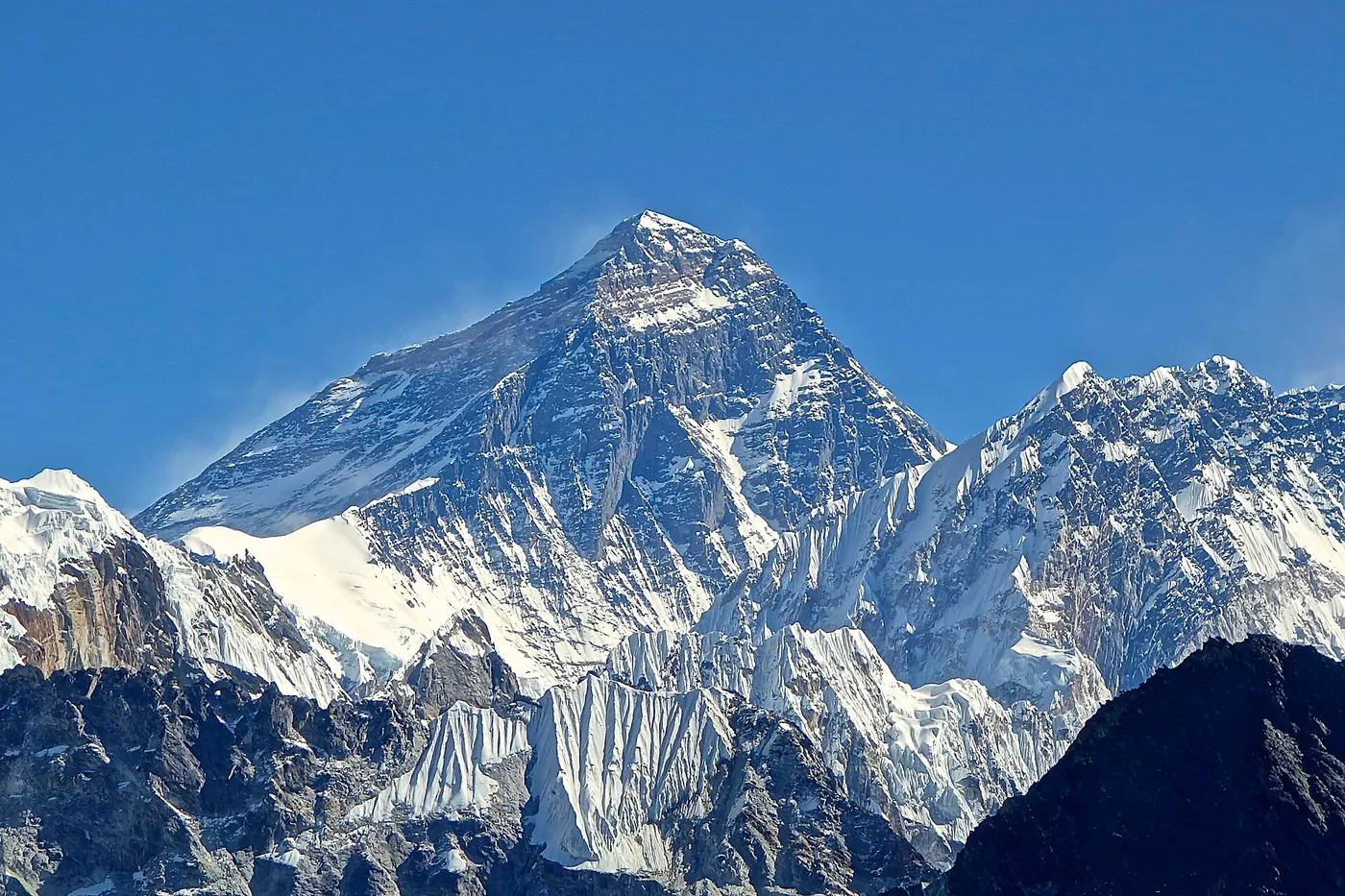
Mount Everest
The highest mountain on earth, with more than two hundred bodies left on its slopes — recovering them is all but impossible. One served for decades as a landmark known as Green Boots. Above eight thousand metres climbers regularly describe the third man: a persistent sense of a companion who is not there. The effect has been known since Shackleton's expedition and is attributed to hypoxia, which makes it no easier.