New York
6 legends
The Great Moon Hoax
From 25 August 1835 the New York Sun ran a series of six articles reporting that Sir John Herschel, from the Cape of Good Hope, had seen life on the Moon through a new telescope: forests, herds of bison, temples of sapphire and intelligent winged people four feet tall, which he called Vespertilio-homo. The material was presented as a reprint from the Edinburgh Journal of Science, which had by then been out of print for years. The Sun's circulation rose to fifteen thousand, the largest in the world. The author was the reporter Richard Adams Locke, writing satire on the fashionable speculation about inhabitants of the planets; the paper never printed a retraction, and Herschel learned of his discovery by post.
Eusapia Palladino at Columbia
For twenty years the Neapolitan medium Eusapia Palladino lifted tables and materialised hands in front of the best scientists in Europe, and some of them went home convinced. Her method never varied: in the dark she substituted one hand or foot for another among the people controlling her, freeing a limb. The Cambridge sittings of 1895 showed it, and the matter was closed in New York in 1910, when investigators from Columbia University hired two conjurors. They took turns lying under the table and watched, in the dark, her foot come out of its shoe and brace against the leg. The report was printed in full and the American tour ended there.
Barnum's Feejee Mermaid
In the summer of 1842 New York read in the papers that an English naturalist, Dr Griffin, had arrived with a dried mermaid from the South Seas. There was no Dr Griffin — he was Barnum's employee Levi Lyman, and Barnum wrote the letters to the editors himself. The specimen, leased from the Boston showman Moses Kimball, was the upper half of a monkey sewn to the tail of a large fish, one of dozens made by Japanese or East Indian craftsmen in the nineteenth century. Takings at the American Museum tripled. The original most likely burned with the museum in 1865.
Mumler and the First Spirit Photographs
In 1861 the Boston engraver William Mumler found a translucent figure on a self-portrait and announced he had photographed his dead cousin. For years afterwards he photographed Civil War widows beside their dead — his most famous print shows Mary Todd Lincoln with the hands of the murdered president on her shoulders. New York tried him for fraud in 1869: P. T. Barnum appeared for the prosecution and produced a spirit portrait of his own, made in an evening. Mumler was acquitted because the court could not prove the method, but several of his ghosts were recognised as living Bostonians he had photographed earlier.
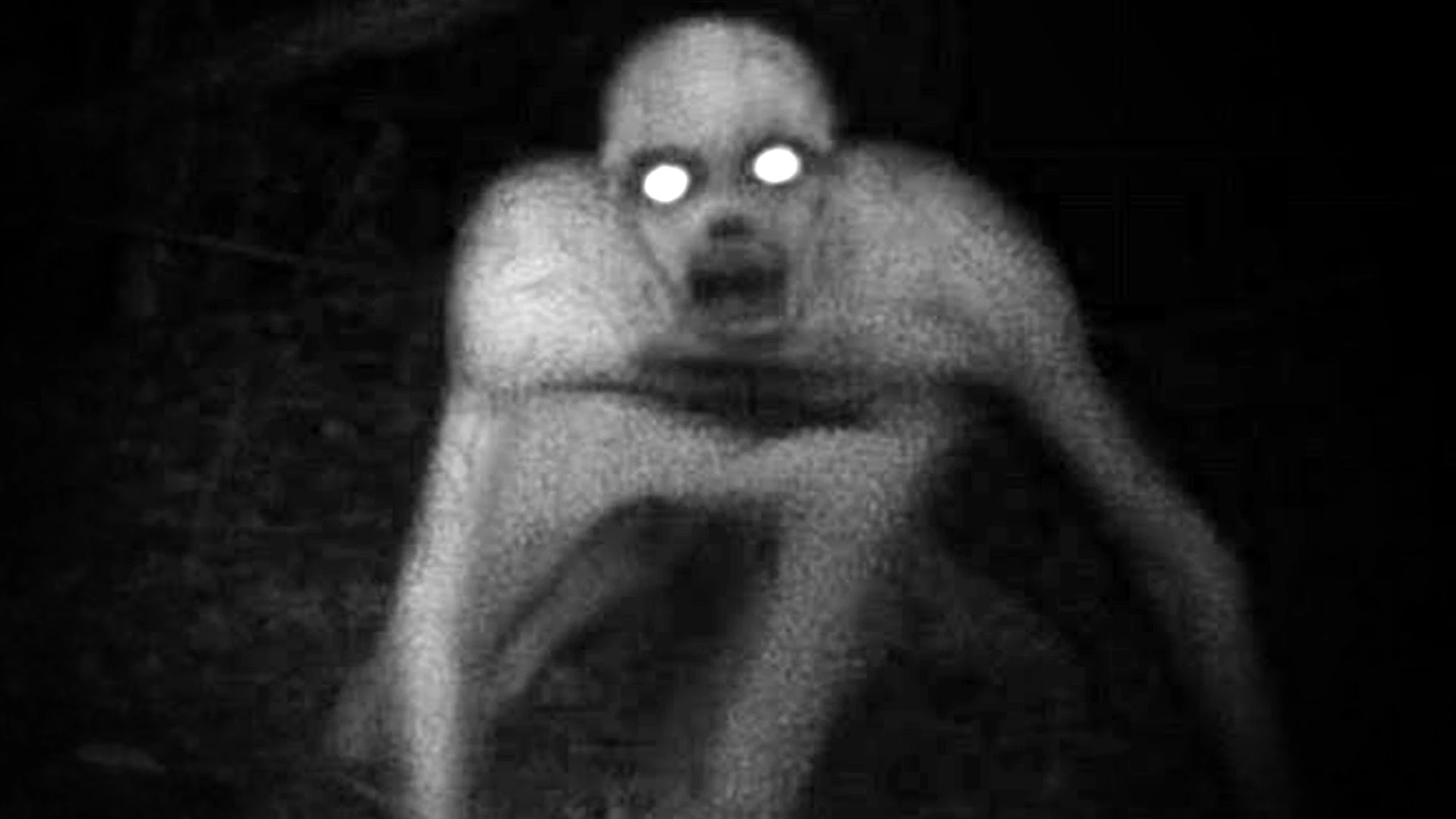
The Rake
A hairless creature on four limbs, sitting beside a sleeping person's bed. It appeared around 2005 as a collaborative forum project: several users agreed to invent a monster and supply it with "historical evidence" — extracts from a 1691 ship's log, Spanish chronicles, diaries. Every document is fictional and was written the same evening. The case is interesting as a rare documented example of folklore being manufactured deliberately and from nothing.
Cropsey
A children's bogeyman with a hook, told on Staten Island for generations — until children began disappearing in the neighbourhood in the 1980s and it emerged that a former orderly from the abandoned Willowbrook school was living beside it. Willowbrook was a real institution, closed after a 1972 investigation exposed appalling conditions. A rare and unpleasant case of a local bogeyman and a documented local history meeting at the same point on the map.