 Mystical places in Japan
14 legends · 11 cities
Regions and cities
Aomori Prefecture1
Gifu Prefecture1
Hokkaido Region1
Ishikawa Prefecture1
Kanagawa Prefecture1
Nagasaki Prefecture1
Okinawa Prefecture1
Yamanashi Prefecture2
By kind of place
All places
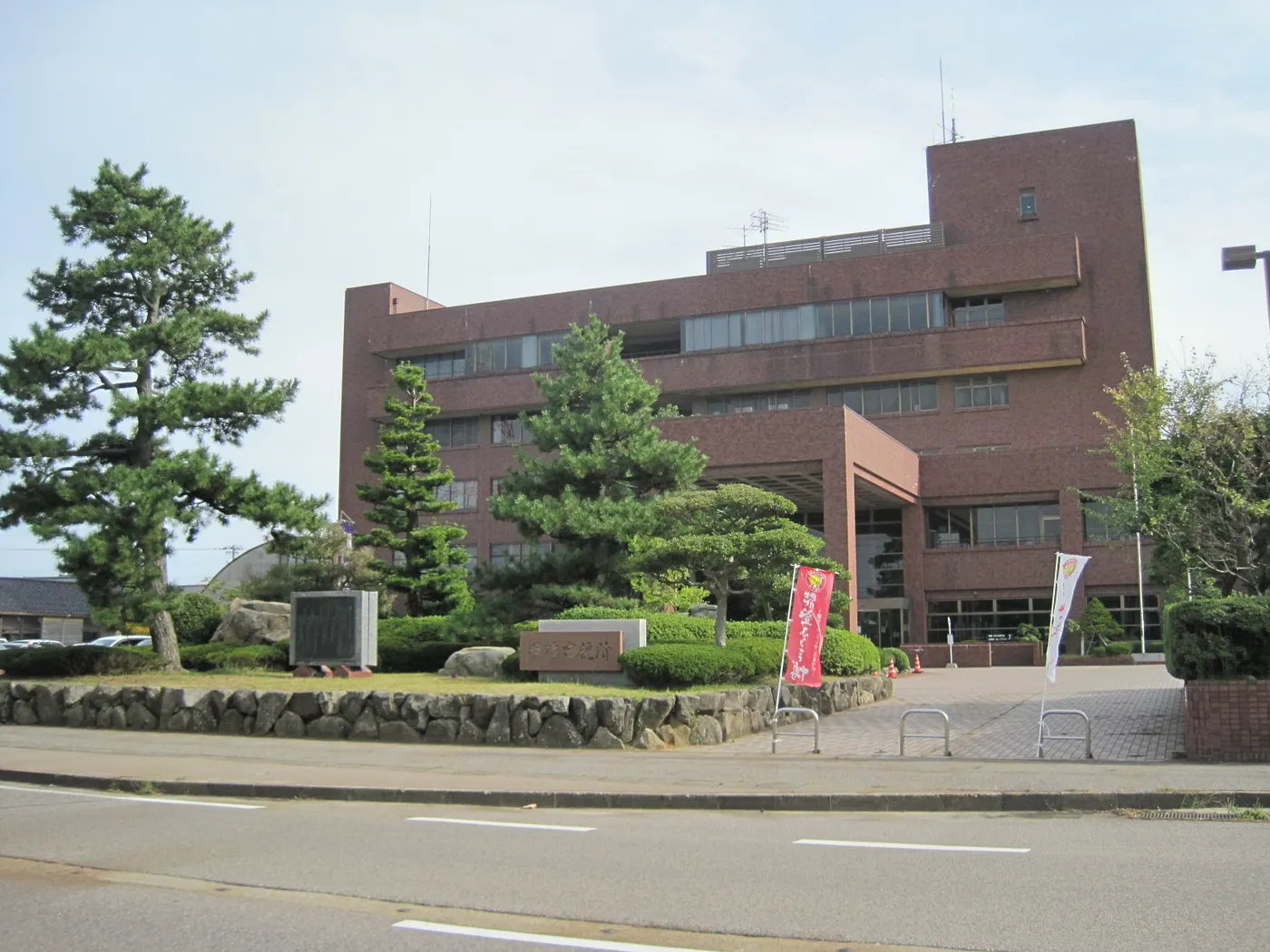
Hakui, the Town That Chose UFOs
A town on the Sea of Japan coast whose local chronicles record sorabune — sky boats — and which has built a municipal strategy on it. In 1996 it opened Cosmo Isle Hakui: a museum where a genuine Voskhod descent module, a lunar module mock-up and a display on unidentified objects stand side by side. The space hardware is real, bought from Russian and American organisations; this is not a theme park. The town deliberately keeps the two lines next to each other — the documented history of spaceflight and the undocumented stories — and the visitor walks from one into the other through a door. As an approach it is more honest than most places on this list.
Teke Teke
The upper half of a woman's body, moving on its elbows with the clattering sound the legend is named for. The story makes her a schoolgirl cut in two by a train. Its persistence has a simple explanation: in a country with the densest railway network in the world everyone has a level crossing of their own where the legend becomes local. Like most Japanese urban legends of the later twentieth century it spread by word of mouth through schools, long before the internet.
Aka Manto: red paper or blue
Another inhabitant of Japanese school toilets, and the cruellest in construction. A voice from the last cubicle asks which paper you want, red or blue. Choosing red means one thing, blue another, and both are bad; refusing to answer, in most versions, does not save you either. The legend is interesting because it is built as a trap with no exit: there is no right answer, and that is the point — it is the shape of a fear of being asked something you cannot answer correctly.
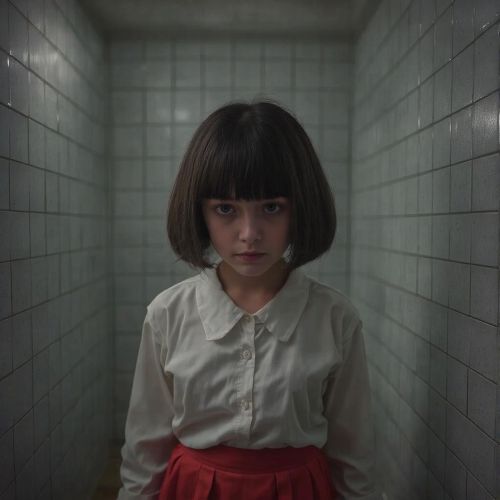
Hanako-san of the school toilet
Restrooms of elementary and junior high schools across Japan (conventionally the third stall on the third floor of the girls' lavatory). Hanako-san (Toire no Hanako-san / "Hanako of the Toilet") is the definitive supernatural entity of modern Japanese school folklore (gakkō no kaidan). Emerging during the post-war decades, the spectral figure evolved into a ubiquitous national myth, synthesizing ancient Shinto animism, the collective trauma of World War II air raids, and adolescent rituals of courage testing (kimodameshi).
Kuchisake-onna, the slit-mouthed woman
A woman in a surgical mask stops a passer-by and asks: am I beautiful? Say yes and she takes the mask off, revealing a mouth slit to the ears, and asks again. The legend erupted in the spring of 1979 in Gifu Prefecture and crossed the whole of Japan within months: schools sent children home in groups, police stepped up patrols, newspapers reported the panic. The roots are older, going back to the Edo period, but the 1979 version was the country's first case of an urban legend requiring a police response.
Lavender Town Syndrome
The legend says that in the Japanese release of Pokémon Red and Green in 1996 the music of the graveyard town carried high frequencies that gave children headaches and worse, and that the score was rewritten after a wave of complaints. Only one part of it checks out: the Japanese version does sound different from the international one — but the music was reworked for release abroad for ordinary technical reasons. No medical records, no cases, no names. The story appeared online a decade and a half after the game did.
SCP-173: the Foundation's first file
On 22 June 2007 an anonymous user posted a short text to 4chan in the form of a containment report: an object of concrete and rebar that cannot move while it is being looked at, and kills the instant you blink. The entry came with a photograph of Untitled 2004 by the Japanese artist Izumi Katō, used without asking. That single post grew into the SCP Foundation, a collaborative universe of thousands of documents written over years by thousands of people. The illustration was replaced in 2022: the artist had never given permission.
Momo: the sculpture that became a panic
The face that frightened half the world in 2018 and 2019 was never a character. It is Mother Bird, a sculpture by the Japanese artist Keisuke Aisawa of Link Factory, made in the summer of 2016 and exhibited at the Vanilla Gallery in Tokyo. In July 2018 a photograph of it was used in a YouTube video, from there it spread through messaging apps, and by 2019 it had grown into an international panic about a non-existent "challenge" supposedly pushing children towards dangerous tasks. Police forces and child-protection bodies in several countries stated publicly that no confirmed cases were found. The sculpture itself was destroyed by its maker.
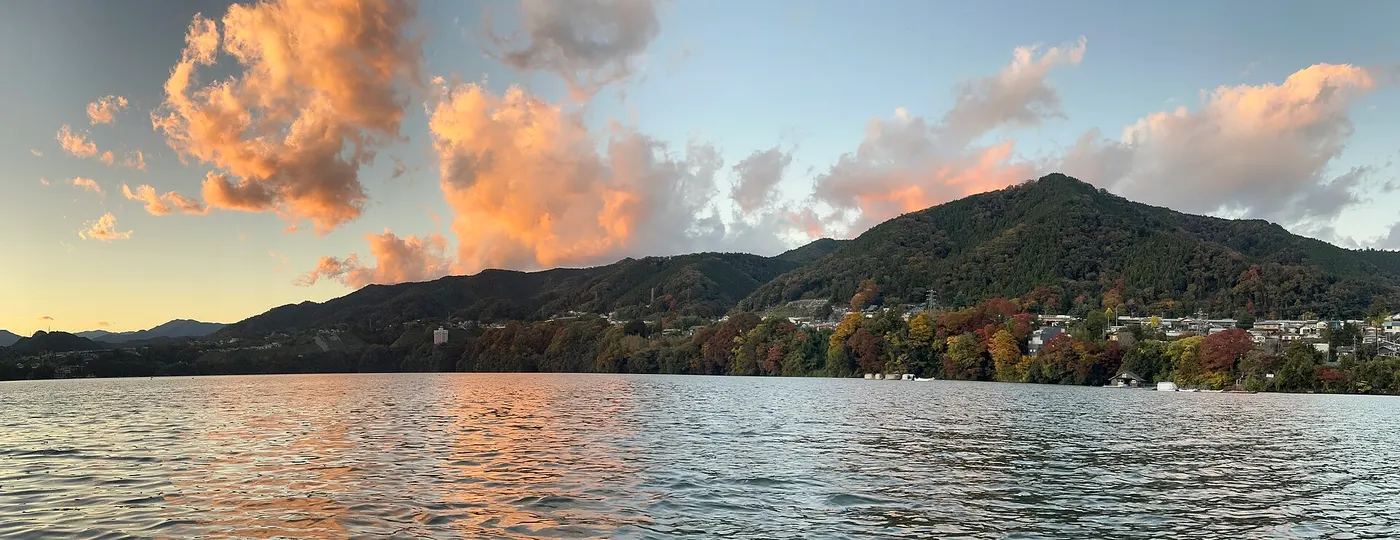
Lake Sagami
An artificial lake in Kanagawa Prefecture, made in 1947 by flooding a valley — houses and a stretch of road remain beneath the water. It was the first reservoir built in Japan after the war. It has acquired a reputation as a place people do not come back from: drownings and suicides here run notably above average, and local accounts tie that to the drowned village.
Oiran Buchi
A gorge in Yamanashi Prefecture attached to one of Japan's grimmer traditions. In the sixteenth century, the account goes, when the Kurosawa gold mine was closed, fifty-five courtesans who knew the layout of the workings were led onto a suspended platform above the river — and the ropes were cut. There is nothing to confirm it historically, but the site is formally treated as a place of remembrance, and the bridge has the reputation to match.
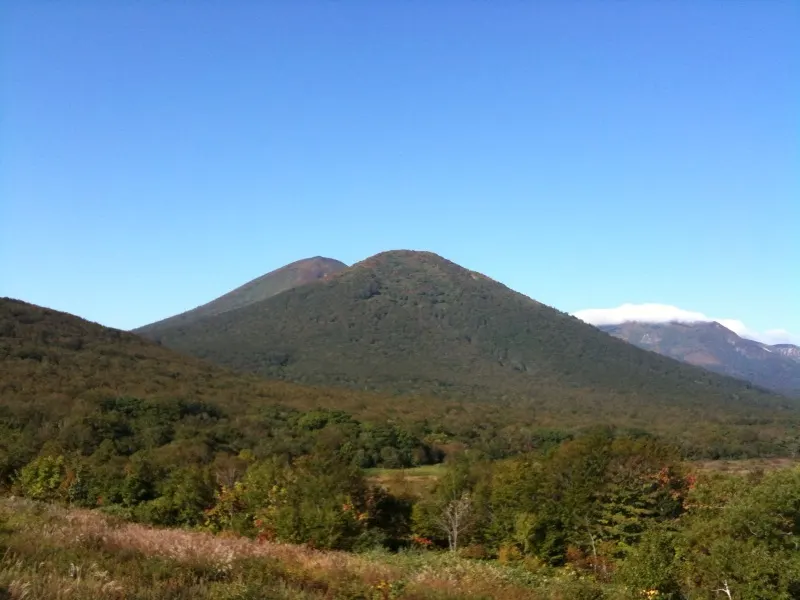
The Hakkōda Mountains
Mountains in northern Honshū where, in January 1902, an army unit was almost wiped out on a training march: of two hundred and ten men, eleven survived. A blizzard of exceptional force caught them and some froze standing up. It remains the worst disaster in the history of mountain travel. The place is called one of the bleakest in Japan, and accounts of meeting soldiers on the trail are unremarkable here.
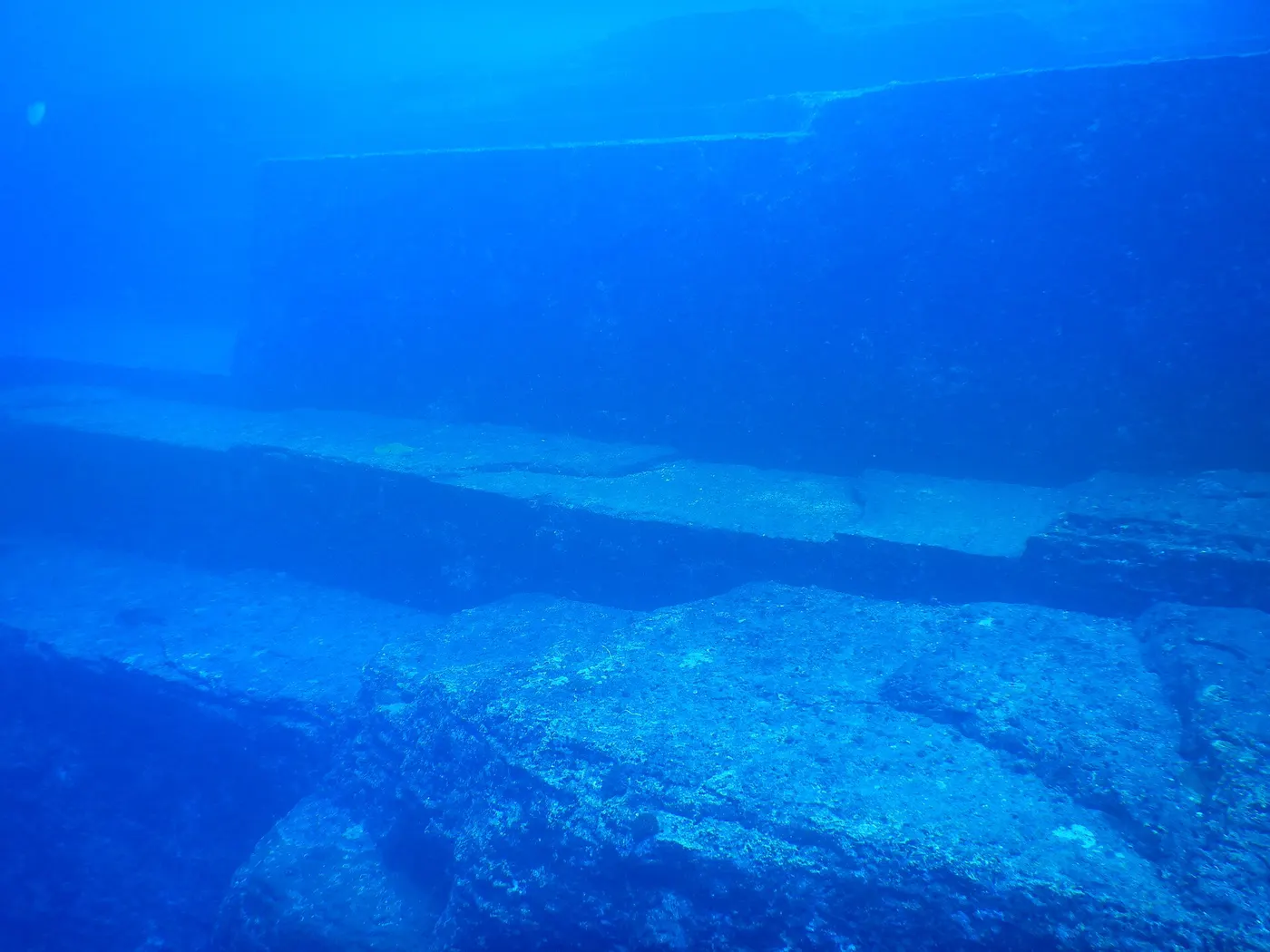
Yonaguni Monument
An underwater formation off the Japanese island of Yonaguni with flat terraces and right angles. Some read it as a sunken city, others as natural sandstone split along its bedding — the argument is still open.
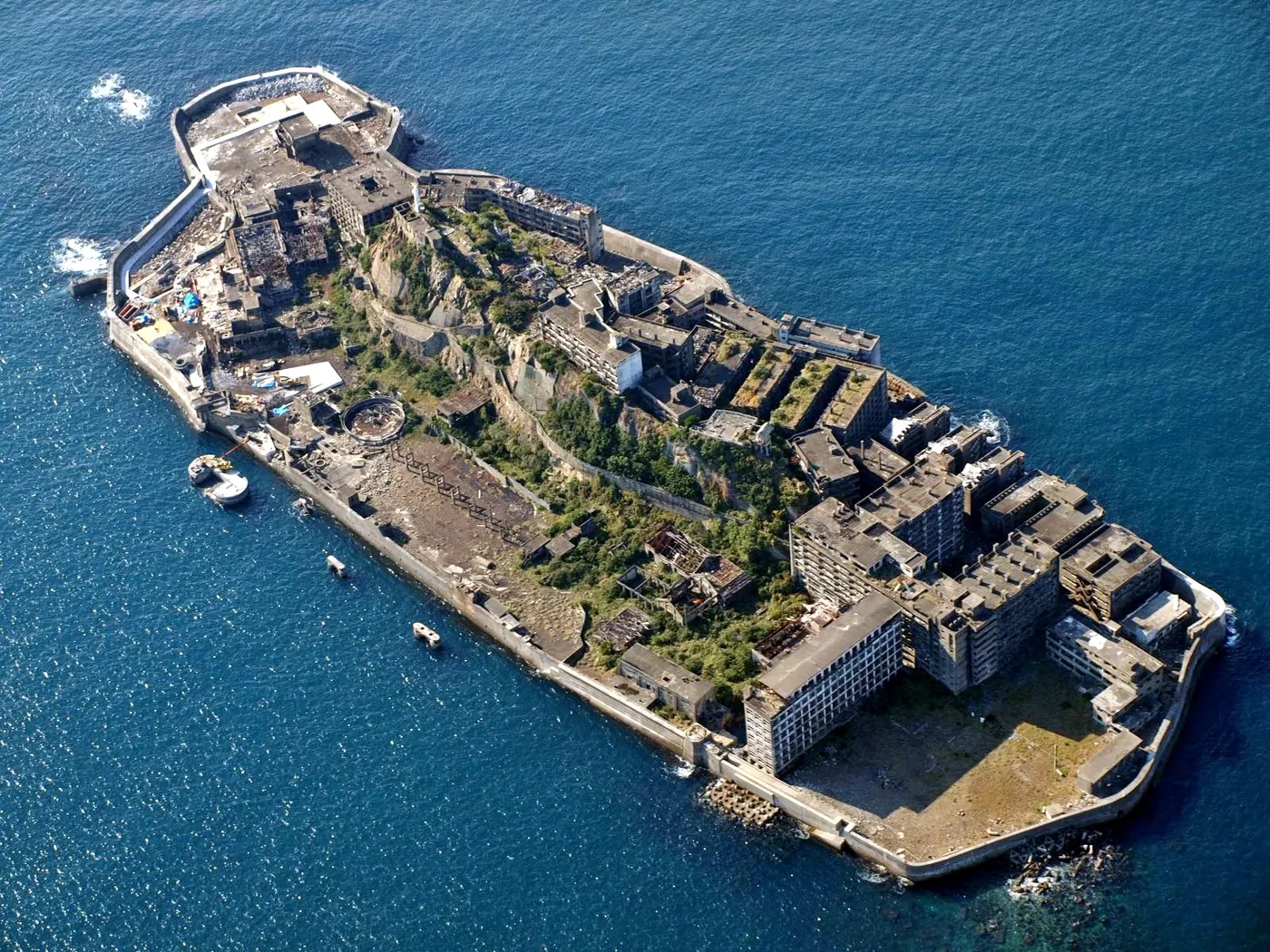
Hashima Island
A tiny island off Nagasaki, packed with concrete apartment blocks for coal miners and abandoned in 1974 when the mine closed. Its silhouette earned it the nickname Gunkanjima — "Battleship Island".
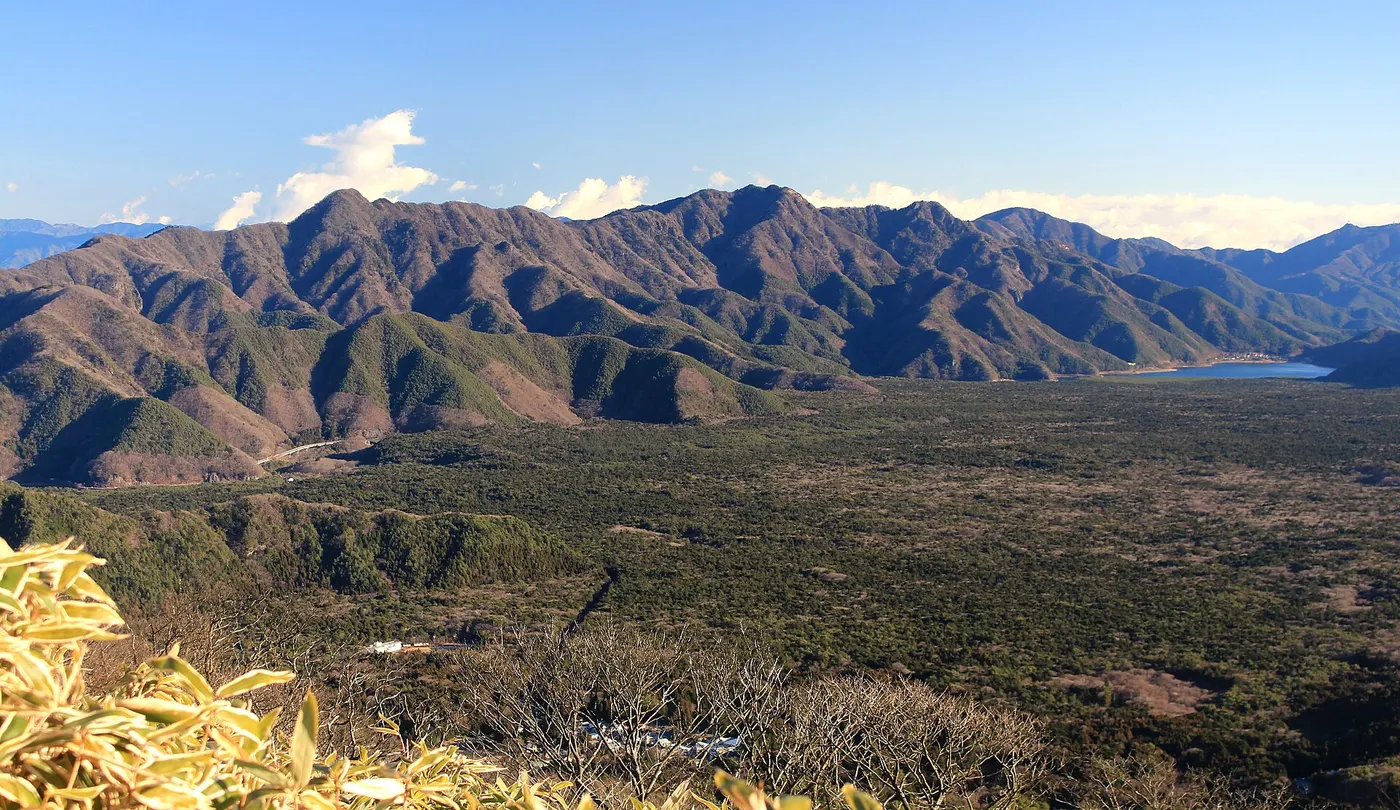
Aokigahara Forest
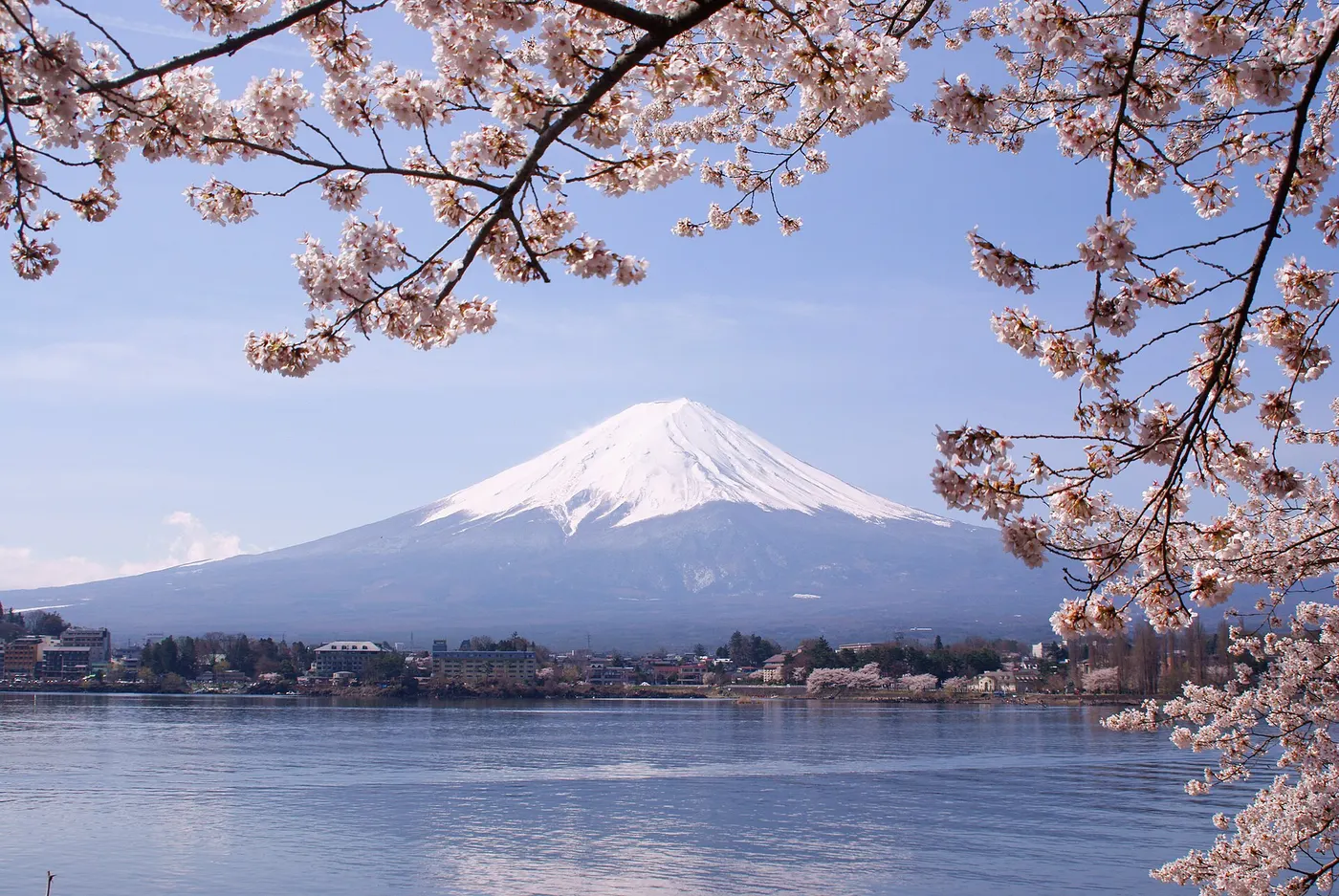
A dense forest at the foot of Mount Fuji in Japan, known in folklore as a home to yūrei — the spirits of the dead. Its heavy silence and tree roots gripping hardened lava give it a singular atmosphere.