Bhangarh Fort
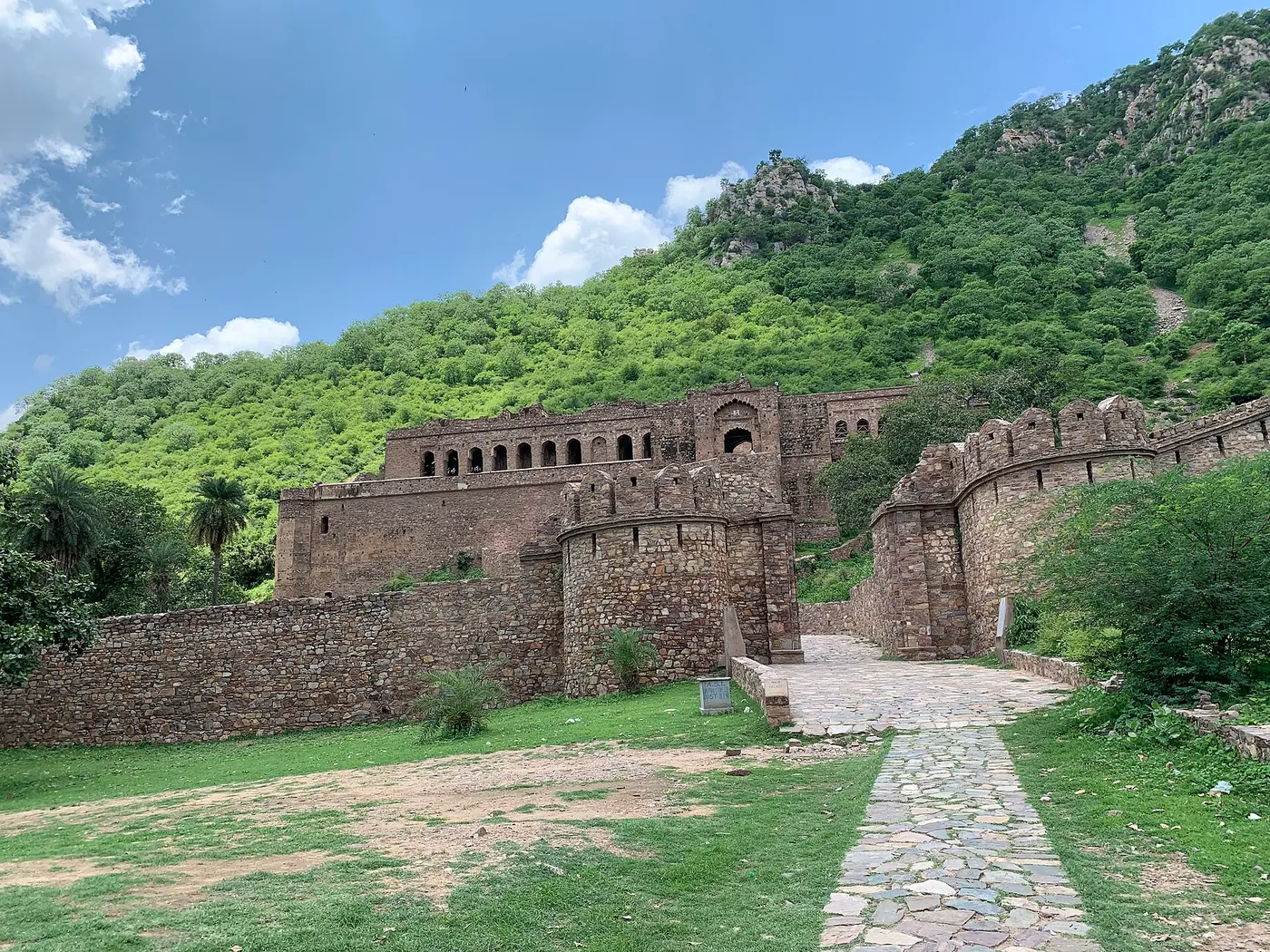
Bhangarh Fort is a monumental late-16th- to early-17th-century abandoned fortified city located in the Alwar district of Rajasthan, India, situated at the base of the Aravalli Range bordering the Sariska Tiger Reserve. Encompassing the ruins of a multi-tiered royal palace, stone bazaars, defensive bastions, and ornate Hindu temples, the complex is designated as a Monument of National Importance by the Archaeological Survey of India (ASI) and is globally famous as "the most haunted place in Asia."
The legend
Danger Level: Yellow (Legitimate nocturnal wildlife threats and structural hazards romanticized into a supernatural curse) According to popular Indian folklore, the city fell victim to irrevocable curses. The first legend attributes its ruin to an ascetic named Guru Balu Nath, who permitted construction on the strict condition that the royal palace's shadow never eclipse his meditation retreat; when a later ruler expanded the upper tiers, the shadow struck the hermitage, prompting the sage to doom the settlement to ruin. The more pervasive myth concerns Princess Ratnavati and an adept of black tantra named Singhia: obsessed with the princess, the sorcerer enchanted a vial of scented oil to bend her will, but Ratnavati discerned the plot and hurled the flask onto a boulder; the rock rolled downhill and crushed the tantrik, who used his dying breath to curse the fort, decreeing that all inhabitants would perish violently and remain trapped as tormented spirits denied reincarnation. Local lore alleges phantom screams, spectral music, and weeping echoing through the ruins after dark. Paranormal enthusiasts point to the official Archaeological Survey of India (ASI) signpost at the outer gate—strictly forbidding visitors from remaining inside between sunset and sunrise under penalty of law—as bureaucratic confirmation of active haunting.
What actually happened?
Archival evidence and field research dismantle the supernatural narrative: Economic decline and abandonment: Bhangarh did not perish overnight, but underwent systematic socio-economic decline. Following the decay of Mughal authority in the early 18th century, the city was besieged and pillaged by forces from neighboring Ajabgarh before being formally annexed by Maharaja Sawai Jai Singh II of Jaipur in 1720. The definitive abandonment was triggered by the devastating Chalisa famine of 1783–1784, caused by El Niño weather shocks: regional water tables across the arid Aravalli rain shadow dropped, agricultural irrigation collapsed, and the surviving populace permanently relocated to more fertile river valleys. The real motive behind the ASI nocturnal ban: The Archaeological Survey of India enforces sunrise-to-sunset operating hours across unlit heritage sites nationwide pursuant to the Ancient Monuments and Archaeological Sites and Remains Act of 1958. At Bhangarh, the policy is enforced due to three pragmatic considerations: Apex wildlife predators: The fort shares an unfenced boundary with the Sariska Tiger Reserve. Nocturnal carnivores—principally Indian leopards (Panthera pardus), striped hyenas, jackals, and venomous reptiles (Russell's vipers, spectacled cobras)—actively hunt within the ruins after dusk. Severe structural fall risks: The sprawling site lacks electrical illumination, featuring deep unprotected stepwells (baoris), sheer multi-story drops, unbarricaded stairways, and fractured masonry where nocturnal navigation is dangerous. Site preservation: Restricted hours prevent looting by illegal treasure hunters, illicit alcohol consumption, and defacement of protected heritage architecture. Acoustics and microclimate: The interior palace chambers host massive colonies of nocturnal insectivorous bats. High-frequency bat chatter, the continuous rustle of wings within unlit stone vaults, and heavy atmospheric concentrations of ammonia gas from accumulated guano trigger dizziness, mild nausea, and disorientation among visitors. Furthermore, dry drafts from the Thar Desert channeling through open stone colonnades generate resonant whistling tones easily misinterpreted as human wailing.
History
The fortified town was established around 1573 (or early 1600s) by the Rajput ruler Raja Bhagwant Das for his younger son Madho Singh, brother of the famous Mughal general Raja Man Singh I of Amber. During its zenith, Bhangarh flourished as an affluent administrative and trade hub supporting over 10,000 residents, centered around the Johari Bazaar, public baths, formal gardens, and monumental sandstone temples. Following military incursions in the early 18th century and the famine of 1783, the municipality became entirely depopulated. During the mid-20th century, the complex was placed under federal conservatorship by the Archaeological Survey of India, which stabilized the perimeter ramparts and conserved the principal temple sanctuaries.
Where is it?
Rajgarh Tehsil, Alwar District, Rajasthan, India; situated near the rural settlement of Gola ka Baas along the southwestern boundary of the Sariska Tiger Reserve (roughly 85 km east of Jaipur and 235 km southwest of New Delhi).
Can you visit?
Yes, Bhangarh Fort is open to tourists daily strictly during daylight hours, from sunrise to sunset (approximately 06:00 to 18:00, fluctuating seasonally). Entry requires an admission fee payable via the ASI ticket window or mobile QR ticketing portal. Visitors can tour the bazaars, royal palace ruins, and well-preserved carved temples (notably Gopinath, Someshwar, and Mangla Devi). Following sunset, remaining inside is illegal: main gates are locked, and federal guards patrol the perimeter. Trespassing after dark carries severe legal penalties, including formal detention and heavy fines. Visitors should wear sturdy closed-toe walking shoes, carry bottled water, keep food secure from local troops of aggressive rhesus macaques and gray langurs, and stay on paved central pathways.
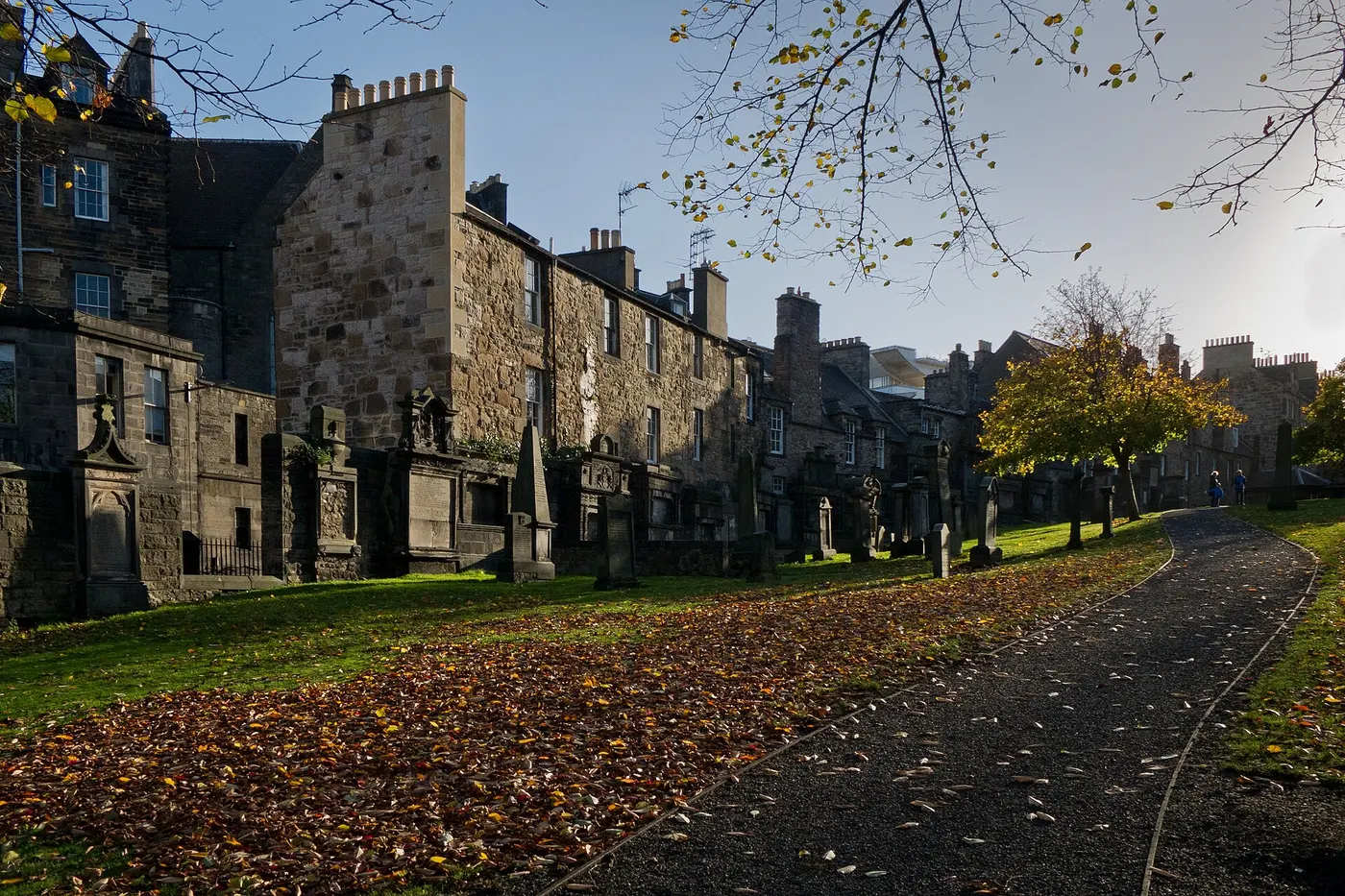
Greyfriars Kirkyard
An old graveyard in central Edinburgh with the "Covenanters' Prison" at its far end. Since 1999 visitors have reported unexplained cuts and bruises — the phenomenon nicknamed the Mackenzie Poltergeist.