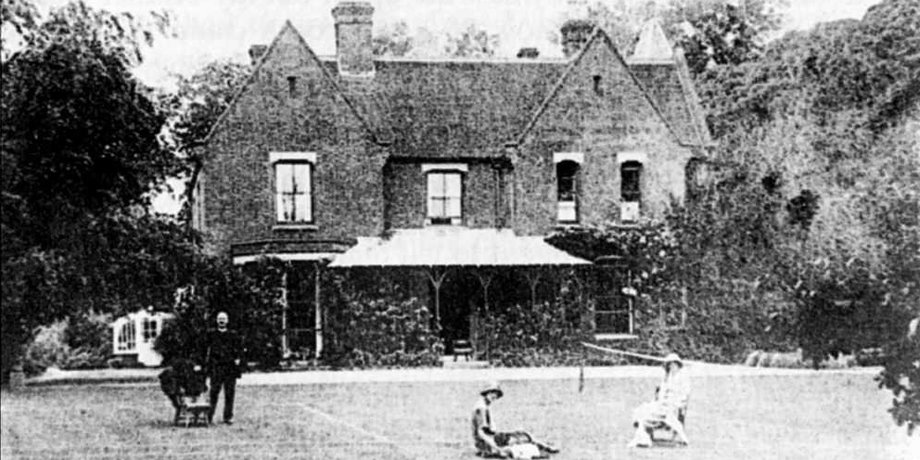
Borley, 'the Most Haunted House in England'
Borley Rectory was a demolished Victorian parish house located in the rural civil parish of Borley in Essex, southeastern England, near the River Stour. Erected in the mid-19th century in an imposing red-brick High Victorian Gothic style, the residence achieved international fame during the 1930s and 1940s through the publicized investigations of paranormal researcher Harry Price, who branded it across British tabloids and bestsellers as "The Most Haunted House in England."
The legend
Danger Level: Green (A debunked historic hoax and demolished structure posing zero physical danger) The legend of Borley contends that the house was erected over the foundations of a 14th-century Benedictine monastery. According to lore, a monk fell in love with a novice nun from a nearby convent in Bures; the lovers attempted to elope in a horse-drawn coach but were intercepted: the monk was beheaded, and the nun was walled up alive inside the monastery crypt. Consequently, the phantom nun roamed the garden path ("The Nun's Walk") wringing her hands in prayer. Later residents reported extensive poltergeist phenomena: violent midnight ringing of abandoned servant bells, spontaneous furniture movement, inexplicable small fires, flying stones and bricks, and frantic pencil scrawls materializing across wallpaper begging: "Marianne, please help get... prayers." In 1937–1938, psychical researcher Harry Price leased the house, staffing it with 48 volunteer investigators who documented hundreds of anomalies. In 1939, a fire gutted the estate, during which spectators claimed to observe the spectral nun watching from upper second-story windowframes.
What actually happened?
The Borley haunting was systematically dismantled by the Society for Psychical Research (SPR) in their 1956 critical report authored by Eric Dingwall, Kathleen Goldney, and Trevor Hall (The Haunting of Borley Rectory): Fictional monastic heritage: County historical records confirmed that no monastery or convent ever stood on the site. Prior to Reverend Henry Bull's construction in 1862, the plot contained a standard timber-framed Tudor manor. The romantic tragedy of the "walled-up nun" was invented by Bull's daughters in the 1880s, influenced by Victorian gothic novels. Acoustics, structural drafts, and vermin: The rectory was a cavernous, uninsulated 35-room structure with hollow lath-and-plaster walls. The mechanical servant bell network consisted of exposed wire runs traversing basements and ceiling voids heavily infested by brown rats. Rodents running across the wire linkages jostled the springs, causing bells to chime in unoccupied rooms. Marianne Foyster's staged hoaxes: The height of physical poltergeist activity (1930–1935) coincided with the tenancy of Reverend Lionel Foyster and his young wife Marianne. SPR inquiries and Marianne's later confessions revealed that she personally manufactured the phenomena—throwing crockery, igniting small localized fires, and scrawling messages across walls. Her goal was to distract her ailing husband and conceal an ongoing affair with lodger Frank Pearless. Harry Price's journalistic fraud: Price was a publicist and showman seeking publicity. Colleagues and volunteer observers documented that Price covertly hurled river pebbles and lead weights during midnight vigils and doctored observation logs to engineer sensational newspaper copy and sell copies of his 1940 bestseller. The 1939 fire and skeletal fragments: The February 1939 blaze was caused when the new owner, Captain W. H. Gregson, accidentally knocked over a paraffin oil lamp while unpacking cartons in the library. Skull fragments recovered by Price from the cellars in 1943 were not the remains of an 18th-century French nun ("Marie Lairre"), but disarticulated remains washed down from the adjacent Saxon churchyard burial grounds.
History
The mansion was constructed in 1862 by the Reverend Henry Dawson Ellis Bull and enlarged in 1875 to accommodate his family of 14 children. Following the deaths of Bull and his rector son Harry Bull in 1927, the parish struggled to find long-term occupants. In June 1929, the Daily Mirror dispatched journalists and engaged Harry Price to investigate, igniting a decade-long media sensation. In 1937–1938, Price leased the residence for his prolonged observational project. On the night of February 27, 1939, the house was gutted by fire. The ruined brick shell stood abandoned until 1944, when the site was completely demolished and its masonry sold off for wartime scrap and aggregate.
Where is it?
Borley civil parish, Braintree District, Essex, East of England; the former rectory grounds sit opposite St Michael and All Angels Church along Hall Road, approximately 3 kilometers northwest of Sudbury, Suffolk.
Can you visit?
The rectory itself has been non-existent for over eight decades, having been leveled to its foundations in 1944. The footprint where the house stood, along with its grounds, is private residential property where unauthorized entry constitutes criminal trespassing under UK law. Across the lane, the historic 12th-century Church of St Michael and All Angels remains an active Anglican parish church open during daylight hours for respectful architectural visits and prayer. However, the parish council and local residents actively discourage ghost enthusiasts due to persistent nocturnal trespassing, noise complaints, and cemetery vandalism. Loitering within the churchyard after dark is prohibited and monitored by local authorities.
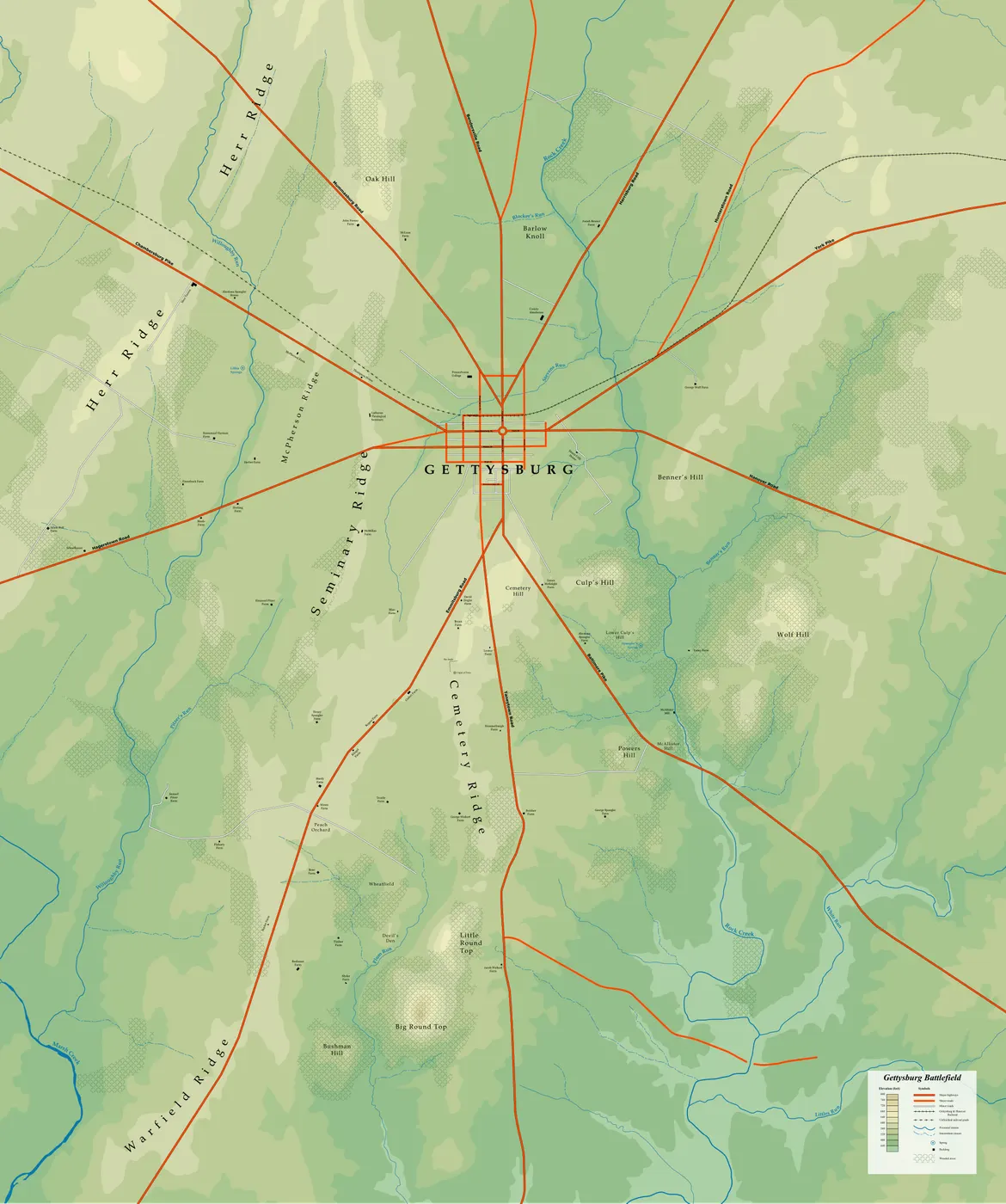
The Gettysburg Battlefield
In three days of July 1863 some fifty thousand men were killed, wounded or lost here — the bloodiest battle in American history. Burials were hasty and many of the dead were never identified. Gettysburg has been called the most haunted ground in the country since; the accounts cluster at Devil's Den and the Rose Farm, where people report hearing orders shouted at night and seeing uniformed figures walking where the lines once stood.
Comments
No comments yet. Be the first.