The British Museum Crystal Skull
A life-size rock crystal skull, bought by the British Museum from Tiffany & Co. in 1897 and displayed for half a century as Aztec work. In the nineties the museum's researchers traced it to the Paris dealer Eugène Boban, who sold Mexican antiquities in the second half of the nineteenth century and had connections to the German lapidary workshops of Idar-Oberstein. In 2005 a joint study by the British Museum and the Smithsonian found the regular marks of a rotary wheel under the microscope, and the inclusions showed the quartz to be Brazilian — unavailable to pre-Columbian Mexico. The label in the gallery was rewritten.
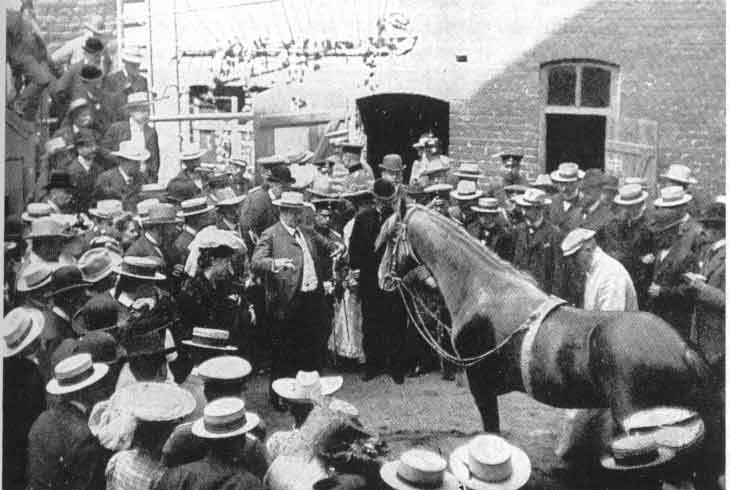
Clever Hans
The residential inner courtyard at 10 Griebenowstraße in the Mitte district of Berlin, Germany. At the turn of the 20th century, this urban setting hosted public demonstrations of the Orlov Trotter stallion known as Clever Hans (Der Kluge Hans). The horse's apparent mastery of arithmetic and human language captivated international audiences, revolutionized animal cognition research, and led to the discovery of the observer-expectancy effect ("Clever Hans effect").
Comments
No comments yet. Be the first.