Catacombs of Paris
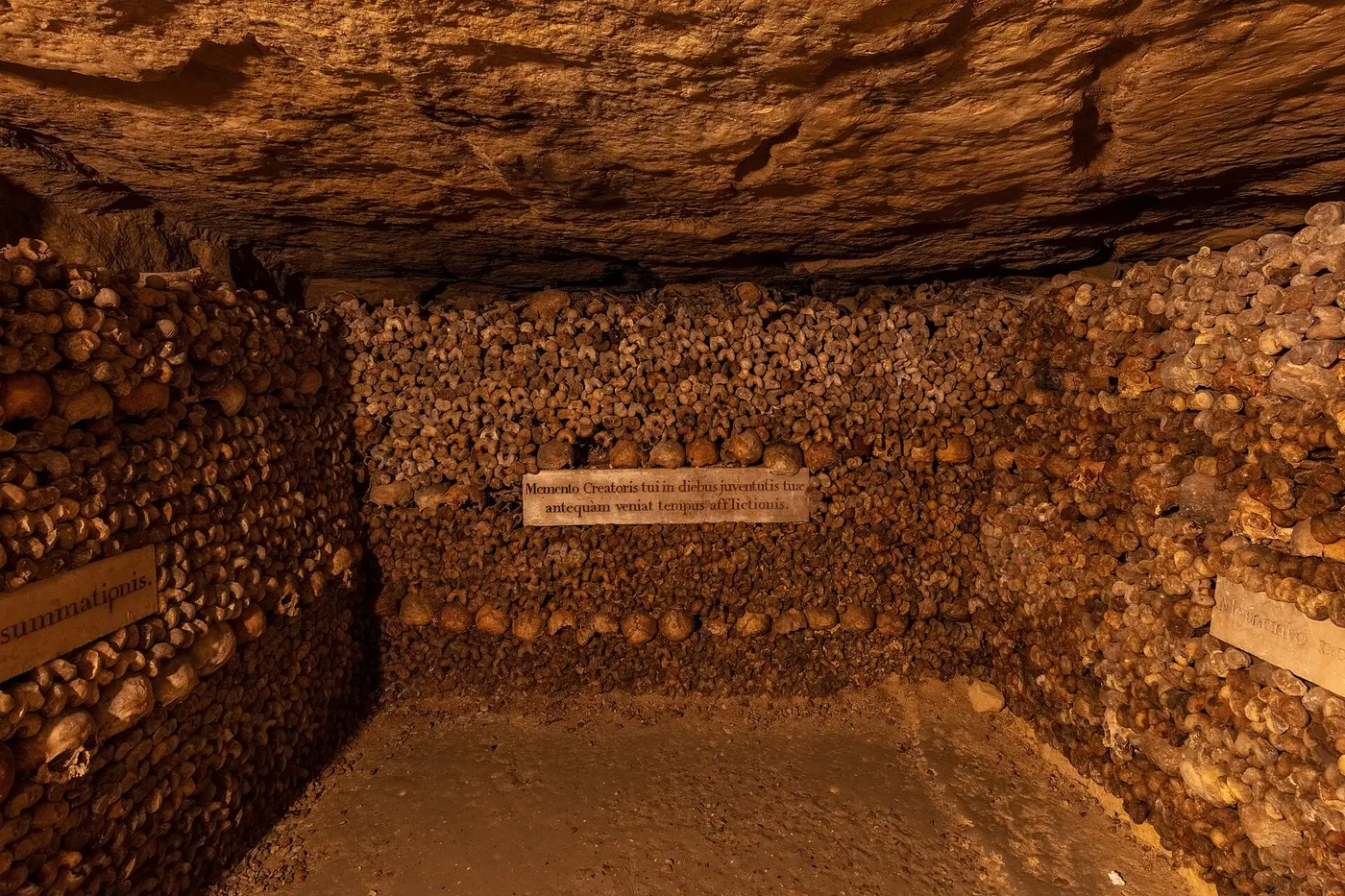
The Paris Catacombs (Catacombes de Paris) comprise an expansive underground labyrinth of historic limestone quarries and ossuaries spanning roughly 20 meters beneath the central and southern districts of Paris. Extending across more than 280 to 300 kilometers of abandoned subterranean galleries, a fortified section houses the skeletal remains of over six million people, forming the largest collective necropolis in the world.
The legend
Danger Level: Orange (Documented hazards of entrapment in off-limits quarries that spawned myths of demonic gates and subterranean cults) Centuries of urban lore have branded the catacombs as a gateway to the underworld, fueled by the ominous carved lintel above the ossuary entrance reading: "Halt! Here is the Empire of Death." Rumors persist of subterranean cannibals, shadowy occult cabals performing black masses, and unexplained paranormal portals. The most enduring modern viral legend revolves around a lost 1990s camcorder recovered in the tunnels: the footage shows an unidentified man fleeing blindly through pitch-black corridors in sheer terror before dropping the recording device into water and vanishing, allegedly consumed by malevolent underground entities.
What actually happened?
The mythology unravels under historical and forensic reality. The famous "lost runner footage" broadcast on television in 2000 was either a staged mockumentary capitalizing on the Blair Witch craze or a genuine panic attack triggered by sensory deprivation and disorientation, where the trespasser abandoned the equipment and fled toward an exit (police recovery records show no unrecovered human remains linked to the incident). Stories of secret subterranean networks stem from urban exploration groups (cataphiles) and art syndicates: in 2004, Paris police famously uncovered an elaborate underground cinema, bar, and amphitheater secretly constructed beneath the Trocadéro by the cultural collective Les UX. The true dangers of the quarries are strictly environmental: pitch darkness, structural collapses, noxious gas pockets, hypothermia, and extreme disorientation inside unmapped labyrinths.
History
The quarries date back to the Gallo-Roman era, excavated to extract Lutetian limestone to construct Paris, including Notre-Dame and the Louvre. By the late 18th century, Paris faced an overwhelming public health emergency: centuries of burial had saturated urban parish churchyards. In May 1780, the retaining wall of the ancient Holy Innocents' Cemetery (Cimetière des Innocents) collapsed under rain and weight, spilling decomposed human remains directly into residential cellars. Between 1786 and 1814, authorities evacuated the city's overflowing cemeteries in nightly processions, depositing millions of skeletal remains into the Tombe-Issoire limestone quarries. In 1810, mining inspector Louis-Étienne Héricart de Thury organized the bone piles into architectural walls, decorative mosaics, and classical funerary monuments.
Where is it?
14th Arrondissement, Paris, France. The public museum entrance is situated at Place Denfert-Rochereau, while the off-limits network of non-tourist quarries extends beneath the 5th, 6th, 13th, 14th, and 15th arrondissements.
Can you visit?
The official Paris Catacombs museum is open to the public via advance online reservation, covering a secure 1.5-kilometer route 20 meters below ground (131 steps down). Access to the remaining 99 percent of the subterranean network is strictly illegal under a municipal decree dating back to 1955. Entrances, manholes, and ventilation shafts are sealed and actively patrolled by a specialized subterranean police unit known as the cataflics. Unauthorized exploration carries heavy fines and severe life-threatening hazards.
Sedlec Ossuary
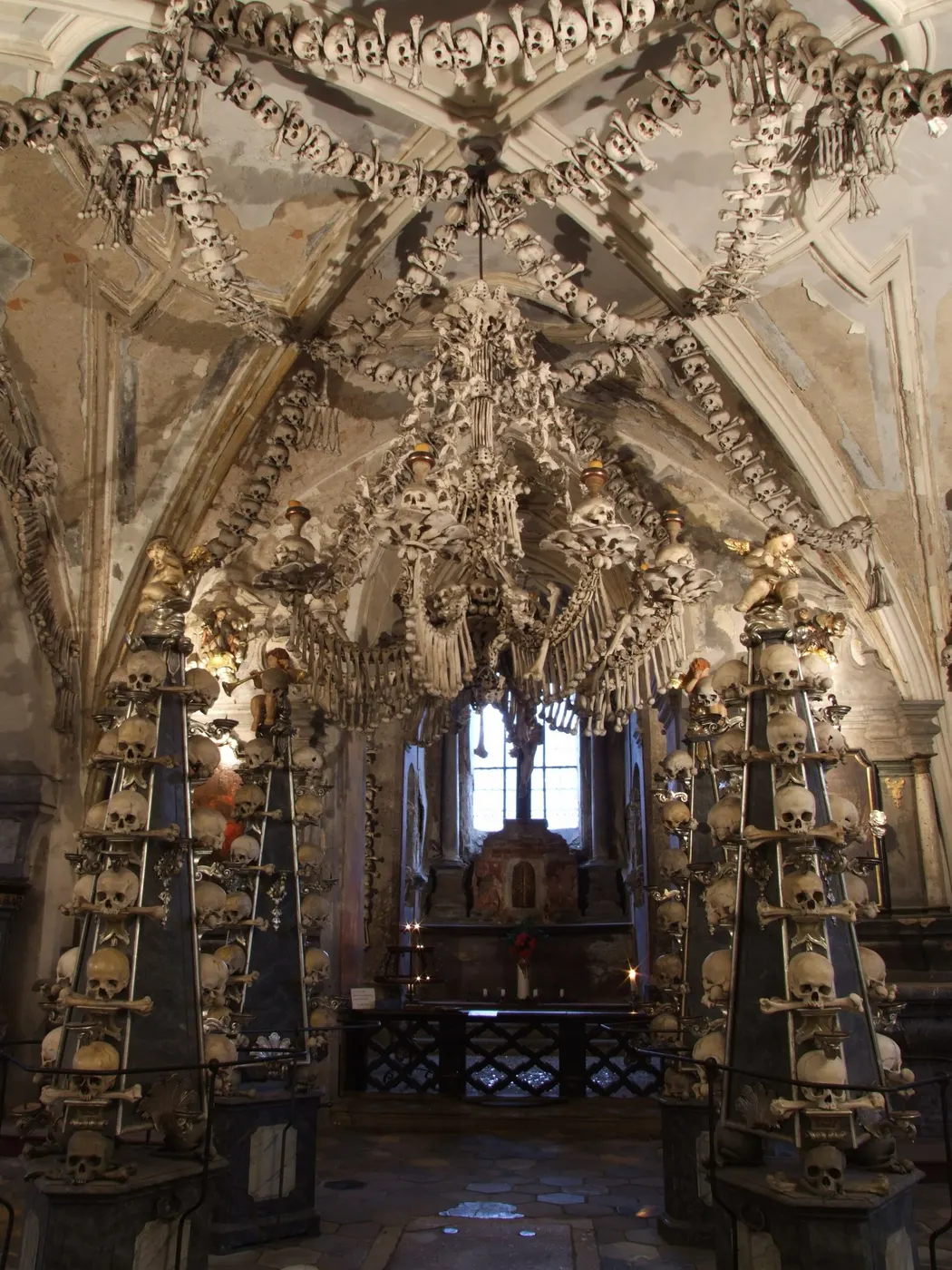
The Sedlec Ossuary (Kostnice v Sedlci) is a Gothic chapel situated beneath the Cemetery Church of All Saints in Sedlec, a suburb of Kutná Hora in the Czech Republic. It is one of the most striking and macabre monuments in Europe: the chapel’s interior is famously decorated with the skeletal remains of tens of thousands of people, fashioned into ornate furnishings, towering bone pyramids, garlands, and an intricate noble coat of arms.
Comments
No comments yet. Be the first.