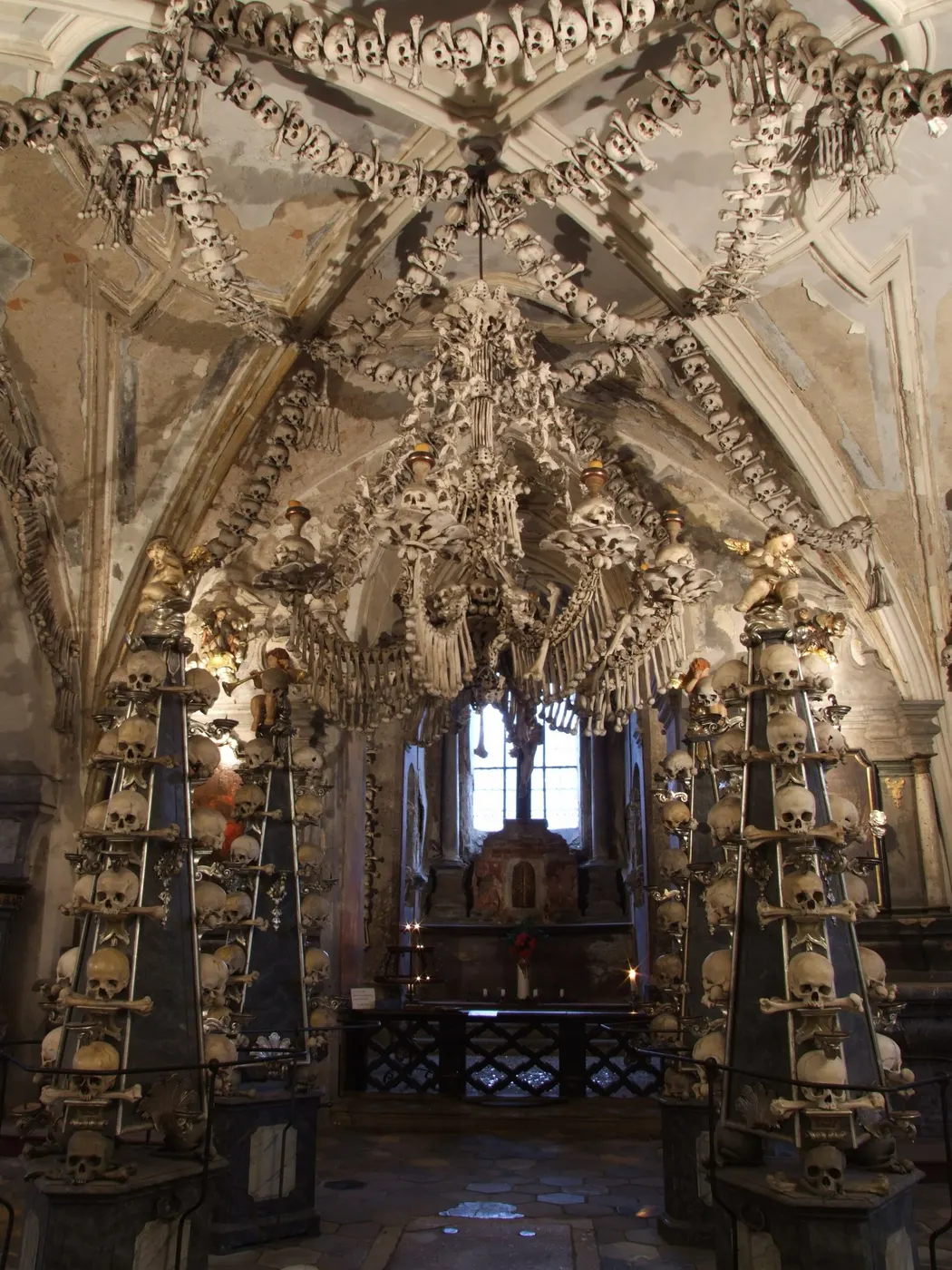
Sedlec Ossuary
The Sedlec Ossuary (Kostnice v Sedlci) is a Gothic chapel situated beneath the Cemetery Church of All Saints in Sedlec, a suburb of Kutná Hora in the Czech Republic. It is one of the most striking and macabre monuments in Europe: the chapel’s interior is famously decorated with the skeletal remains of tens of thousands of people, fashioned into ornate furnishings, towering bone pyramids, garlands, and an intricate noble coat of arms.
The legend
Danger Level: Green (A real historical location with no recorded harm to visitors) For centuries, local folklore surrounded the crypt with ghost stories of plague victims and fallen warriors denied eternal rest. Urban legends claimed the catacombs were exploited for covert occult and alchemical rites, and that anyone stealing a bone as a keepsake would bring an incurable curse upon their household. The most enduring myth tells of a half-blind monk tasked in the 16th century with sorting the skeletal mounds: working surrounded by decay, he reportedly slipped into madness, but miraculously regained his sight upon stacking the final bone pyramid.
What actually happened?
The ossuary represents deeply rooted Christian theology rather than desecration or black magic. In 1278, Henry, the abbot of the local Cistercian monastery, returned from a pilgrimage to Jerusalem carrying a handful of soil from Golgotha, scattering it over the cemetery. Regarded as holy ground, the cemetery quickly became a preferred burial site across Central Europe. The Black Death in 1318 (claiming roughly 30,000 lives) and the Hussite Wars in the early 15th century catastrophically overwhelmed the grounds. Gravediggers systematically exhumed older remains and stacked them inside the lower chapel ossuary to make space. In 1870, the noble Schwarzenberg family hired local woodcarver František Rint to organize the chaotic mounds. Working within the classical Baroque tradition of Memento Mori (remember that you must die), Rint bleached an estimated 40,000 to 70,000 skeletons with chlorinated lime, assembling them into chandeliers, urns, and displays symbolizing the transient nature of mortal status.
History
Burials surged in the late 13th century following the sprinkling of Holy Land soil across the cemetery. The Gothic Church of All Saints with its subterranean crypt was constructed around 1400. In 1511, a half-blind monk stacked the exhumed bones into six large pyramids. In the early 18th century, noted Czech architect Jan Blažej Santini-Aichel remodeled the interior into his signature Baroque Gothic style. The current artistic arrangement was completed in 1870 by František Rint under the patronage of the House of Schwarzenberg. Today, the monument is preserved under UNESCO World Heritage protection as part of Kutná Hora's historic core.
Where is it?
Zámecká street, Sedlec, Kutná Hora, Central Bohemian Region, Czech Republic (approximately 45 miles / 70 km east of Prague).
Can you visit?
Yes, the ossuary is open to the public daily as a paid cultural and historical monument (tickets are typically combined with the nearby Cathedral of the Assumption of Our Lady). Strict decorum rules apply: touching the skeletal displays is strictly forbidden, and non-commercial photography and video recording inside the chapel have been prohibited without prior written media accreditation since 2020 out of respect for the deceased.
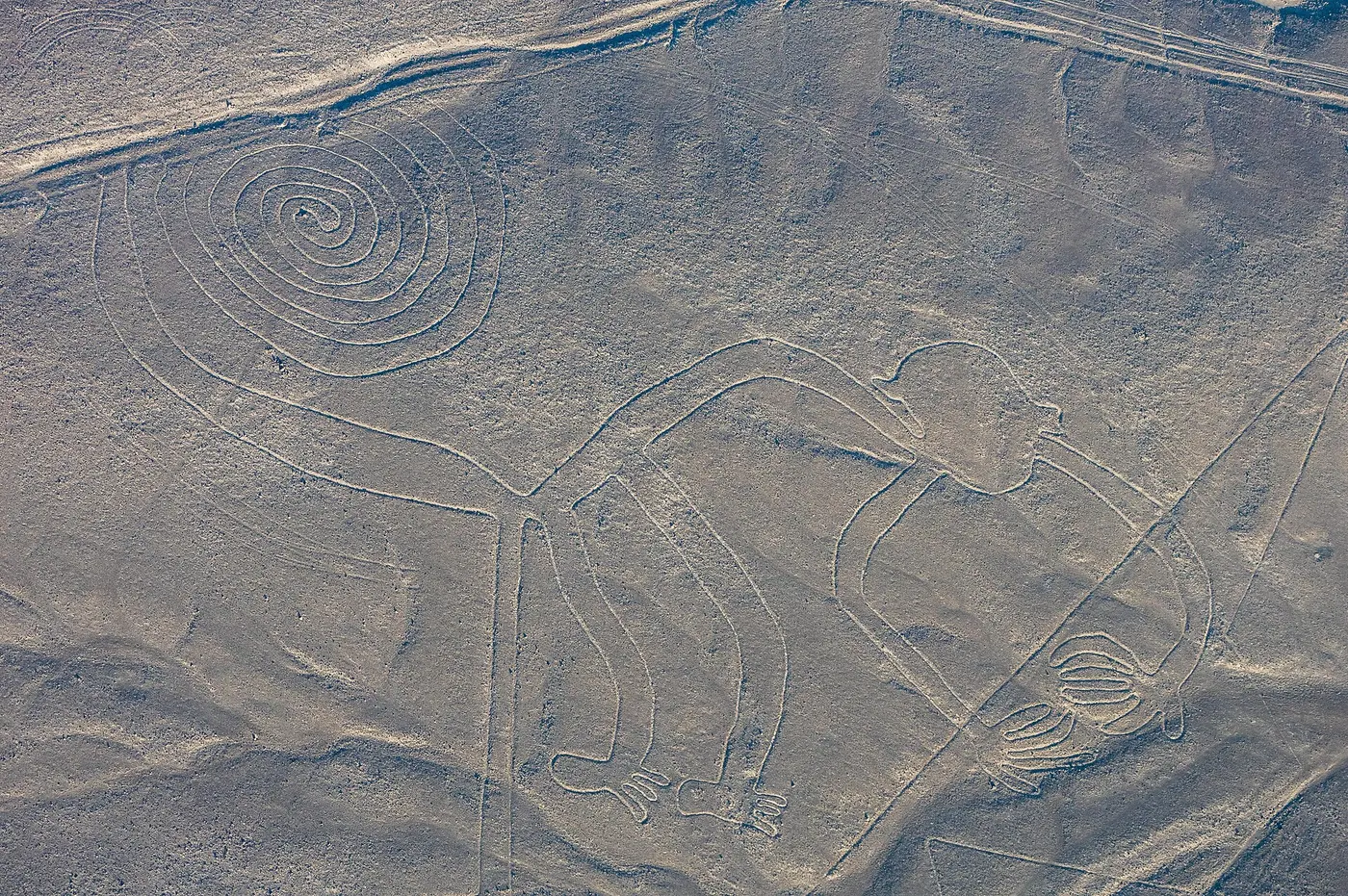
Nazca Lines
Giant geoglyphs etched into the desert of southern Peru more than 1,500 years ago. The animal figures and geometric patterns are only fully legible from the air — their purpose is still unresolved.
Comments
No comments yet. Be the first.