The Crying Boy and the Fires
On 4 September 1985 the Sun printed the story of the Hall family of Rotherham: their house burned to the ground and a cheap print of The Crying Boy by the Spanish painter Bruno Amadio survived on the wall. Firefighters confirmed they had seen such pictures in the ashes more than once. The paper gathered hundreds of letters and staged a public burning of the prints. The explanation was simple and was tested in 2010 at the Building Research Establishment: the prints were made on dense board coated with a fire-resistant varnish and hung on a cord, which burns through first — the picture falls face down onto the floor, where the temperature is lowest. More than fifty thousand copies of The Crying Boy were sold, and most of them hung in kitchens.
The Durupınar Formation, the Ark
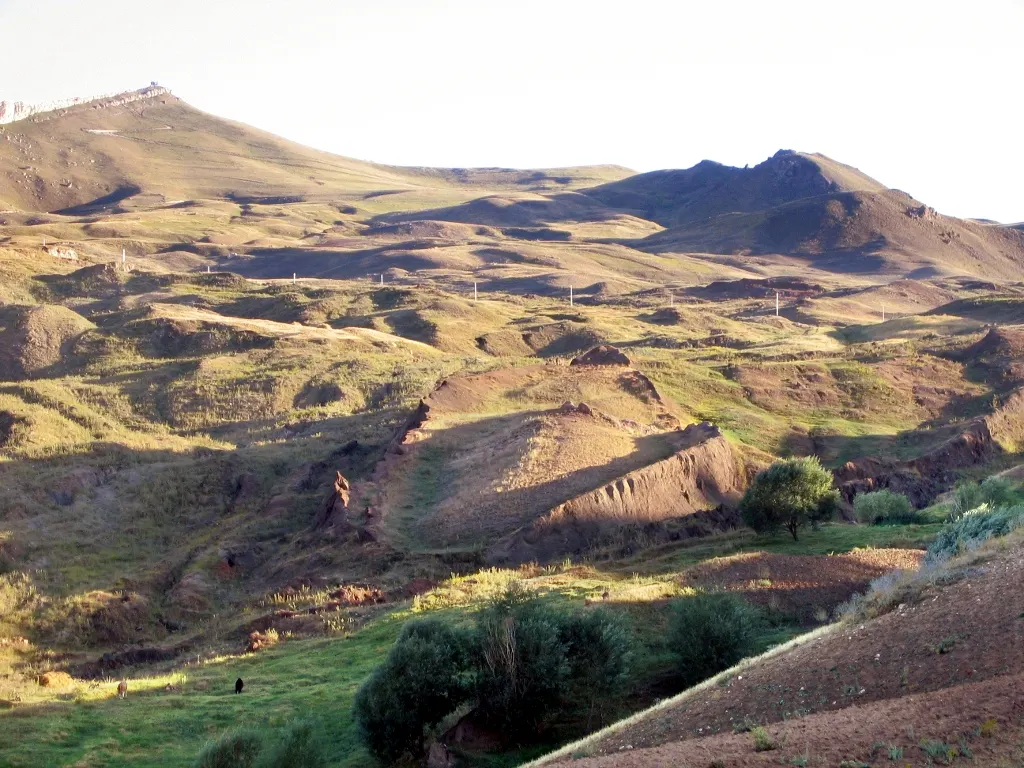
The Durupınar site is a natural geological formation resembling the hull of a massive ship, roughly 160 meters (538 feet) long, situated in the Tendürek Mountains of eastern Turkey. Located 30 kilometers south of Mount Ararat, the outcrop has been promoted for decades by creationists and alternative theorists as the petrified remains of Noah's Ark.
Comments
No comments yet. Be the first.