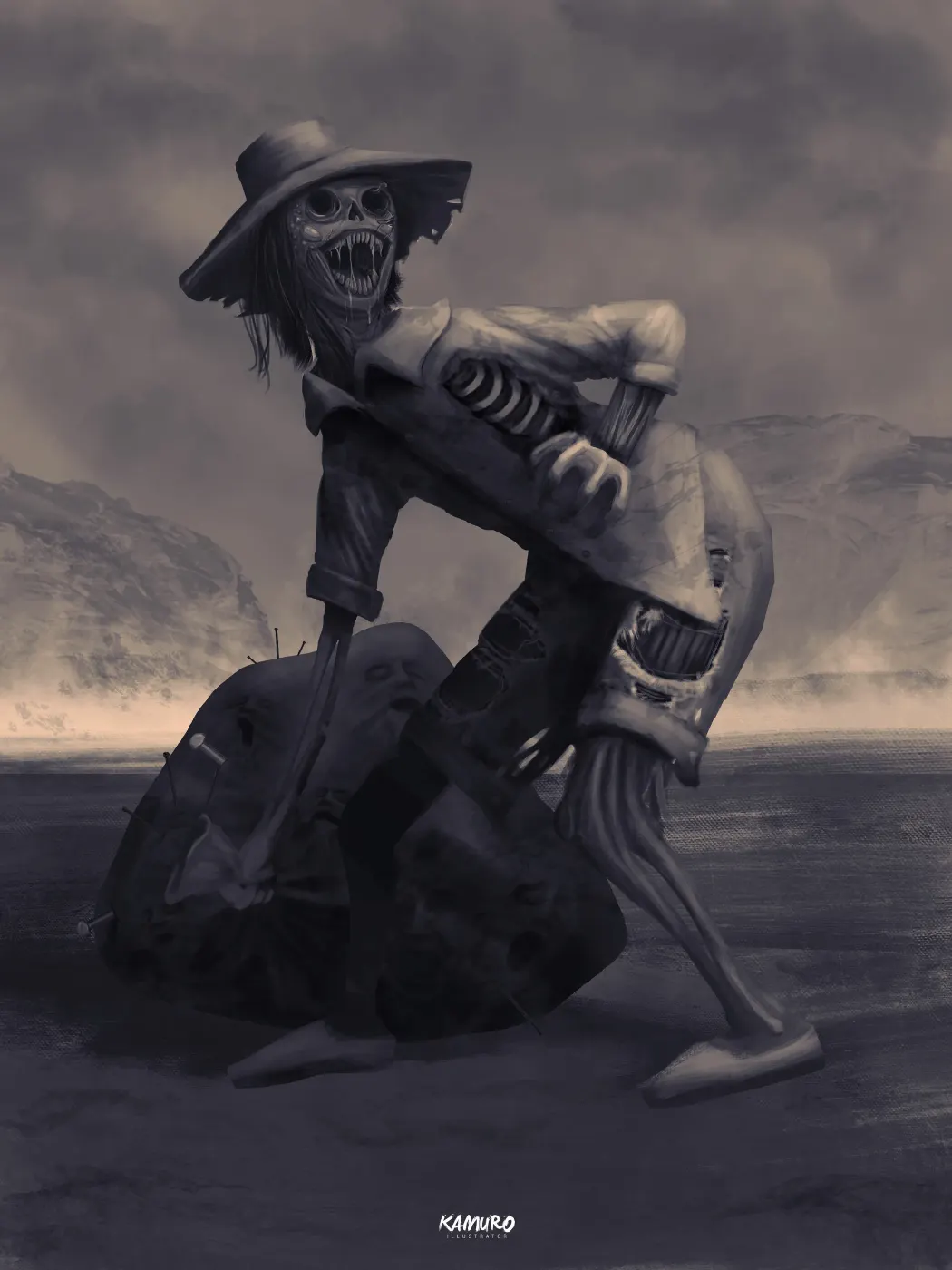
El Silbón, the Whistler
The Llanos (Los Llanos) is a vast expanse of tropical grassland plains and savanna situated within the Orinoco River basin across western Venezuela and eastern Colombia, specifically centered on the municipality of Guanarito in the state of Portuguesa, alongside Barinas and Cojedes. "El Silbón" (The Whistler) is a premier figure of northern South American folklore. Depicted as a roaming spectral patricide bearing a sack of human bones across his shoulder while emitting a chilling tonal whistle, the entity represents a foundational cultural archetype of regional Llanero cattle-ranching lore.
The legend
Danger Level: Green (Traditional agrarian cautionary folklore and supernatural boogeyman myth posing zero physical danger) According to the core narrative, the protagonist was a petulant, spoiled youth living in the plains. Demanding deer viscera for dinner, he dispatched his father into the brush to hunt; when the father returned unsuccessful, the enraged son butchered his parent, extracted his internal organs, and presented them to his mother for cooking. Discerning the gruesome reality, the mother pronounced an irrevocable curse. The boy's grandfather bound the youth to a post, whipped his flesh, rubbed crushed chili peppers into the lacerations, and released a spectral hound (Perro Tureco) to hunt him through eternity. Doomed to wander the plains forever, El Silbón is depicted as an emaciated, skeletal phantom standing 3 to 6 meters tall, wearing a wide-brimmed straw hat and hauling a burlap sack packed with his father's bleached skeleton and the bones of subsequent victims. His defining hallmark is a melodic, piercing whistle ascending through the musical scale: Do-Re-Mi-Fa-Sol-La-Si. The acoustic terror hinges on an inversion paradox: if the whistle rings out clearly right beside the listener, the entity is far away; if the whistle registers as a distant, faint echo, the phantom is standing directly at one's shoulder. At night, the phantom reputedly sits outside remote homesteads to unpack and count the bones in his sack. If the inhabitants hear him and awaken, good fortune follows; if the entire household sleeps unaware, a resident dies before dawn. On solitary rural trails, he targets drunkards, womanizers, and unfaithful spouses, draining their blood. Traditional protection against the specter involves cracking a whip, scattering chili powder, or unleashing a farm dog, whose barking reminds the phantom of his eternal punishment.
What actually happened?
The legend of El Silbón is an amalgamation of socio-cultural moral enforcement within isolated cattle communities, combined with natural bioacoustic phenomena: Patriarchal social regulation: In the 19th-century Llanos, life centered around remote cattle ranches (hatos) separated by vast, unpoliced grasslands. Survival required strict family hierarchies and filial obedience. The legend operated as an effective pedagogical deterrent: it dramatized the mortal consequences of disrespecting parents or committing patricide, while serving as a cultural curb against nocturnal drunkenness, wandering, and marital infidelity among ranch hands. Ornithological bioacoustics: The musical whistling attributed to the phantom is produced by indigenous nocturnal avifauna. The Llanos biome hosts bird species known for uncanny, human-like whistling calls, such as the common potoo (Nyctibius griseus), the whistling heron (Syrigma sibilatrix), and various tinamou species (Crypturellus). In the pitch-black savanna, their solitary descending notes are easily misidentified by travelers. Atmospheric acoustic ducting: Following daytime heat, the savanna experiences nocturnal radiative surface cooling, triggering thermal air inversions. This inversion acts as an acoustic conduit: distant high-frequency sounds—such as wind whistling through scrub vegetation or distant wildlife—refract across kilometers without standard attenuation, creating auditory illusions regarding distance and proximity. Visual pareidolia: Under low moonlit illumination, isolated dead palm trunks, towering conical termite mounds, or late-traveling horsemen clad in high hats and ponchos were easily distorted by tired or intoxicated riders into a towering spectral figure.
History
The oral tale crystallized across the Venezuelan cattle interior during the mid-19th century, with the earliest regional variants documented around rural settlements in Portuguesa. Over decades, it crossed geographic borders into the Colombian Llanos departments of Arauca and Casanare. During the 1960s and 1970s, the lore was codified into modern regional identity through the narrative poetry of Dámaso Delgado (La Leyenda de El Silbón) and widely recorded musical folk ballads (joropo). The town of Guanarito formally designated itself the global capital of El Silbón, erecting a massive public monument dedicated to the legend along its municipal access route. In modern times, the entity is featured across Venezuelan literature, graphic novels, animated shorts, and heritage festivals.
Where is it?
The Llanos basin of western Venezuela, centered on the municipality of Guanarito in Portuguesa State (historically celebrated as the birthplace of the myth), extending across Barinas, Apure, and Cojedes; in Colombia, it spans the eastern savanna departments of Arauca, Casanare, and Meta.
Can you visit?
Yes, the state of Portuguesa and the municipality of Guanarito are open agricultural districts accessible by passenger car or long-distance buses operating out of Guanare and Acarigua. In Guanarito, visitors can freely inspect the monument dedicated to the legendary figure. Practical travel considerations include: Seasonal accessibility: During the rainy season (May through November), extensive areas of the Llanos experience widespread flooding, turning secondary ranch tracks impassable without 4x4 vehicles or river transport. The dry season brings persistent temperatures exceeding +35 °C to +38 °C; Wildlife hazards: Genuine rural risks include venomous reptiles (fer-de-lance, rattlesnakes), Orinoco crocodiles, spectacled caimans, freshwater stingrays in river fords, and mosquito-borne viruses (dengue); Regional travel safety: Overland travelers should observe standard situational awareness given the nation's socioeconomic context, avoid nighttime driving along unlit rural corridors, and carry redundant fuel supplies and local currency.
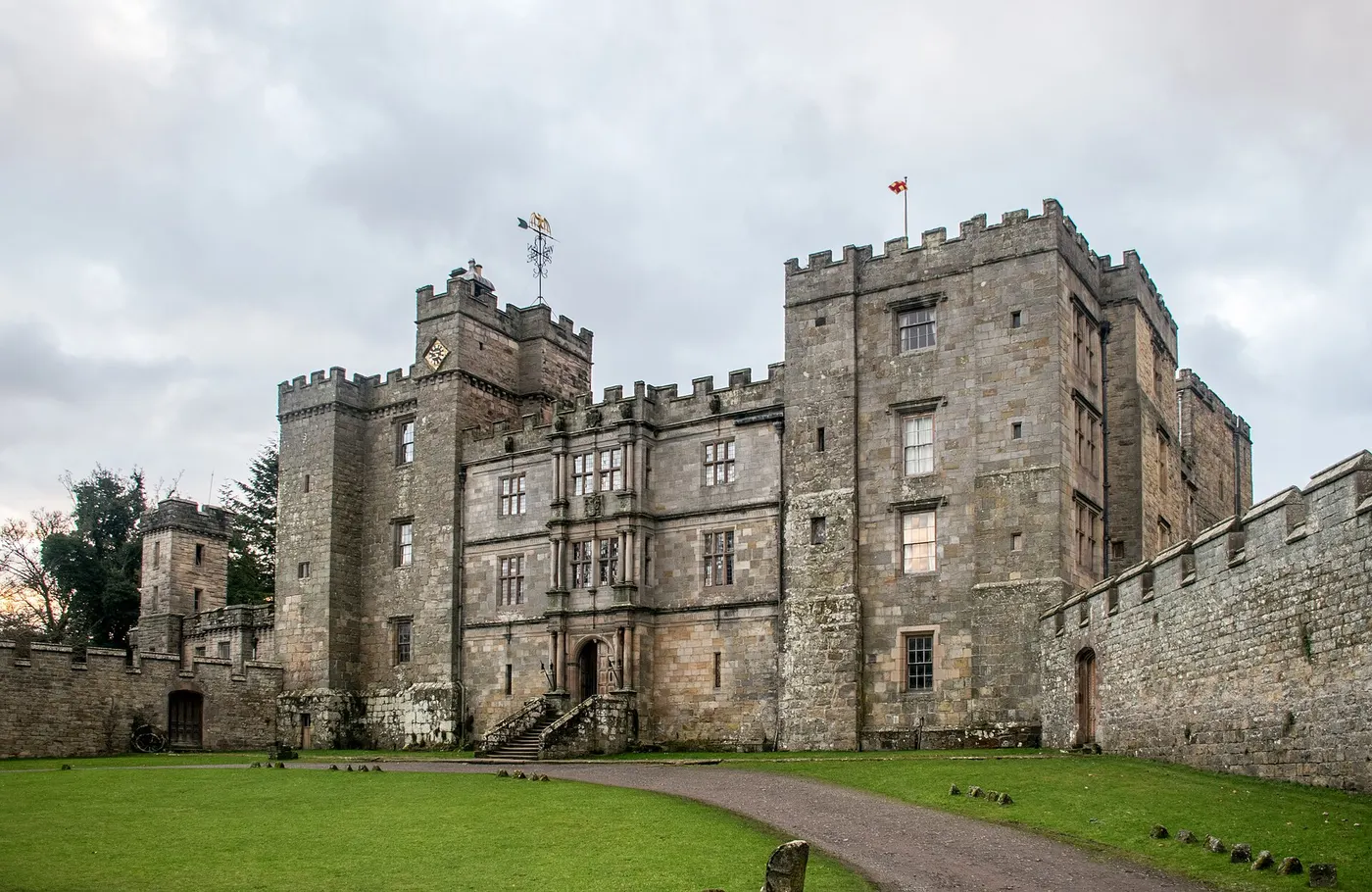
Chillingham Castle
A thirteenth-century castle in Northumberland on the Scottish border, where captured Scots were held and tortured for centuries — the torture chamber survives with its instruments. Its best-known figure is the Radiant Boy, a bluish glow by a wall of the Pink Room; during repairs a child's bones and a scrap of blue cloth were found bricked into that wall. After reburial, the owners say, it stopped.
Comments
No comments yet. Be the first.