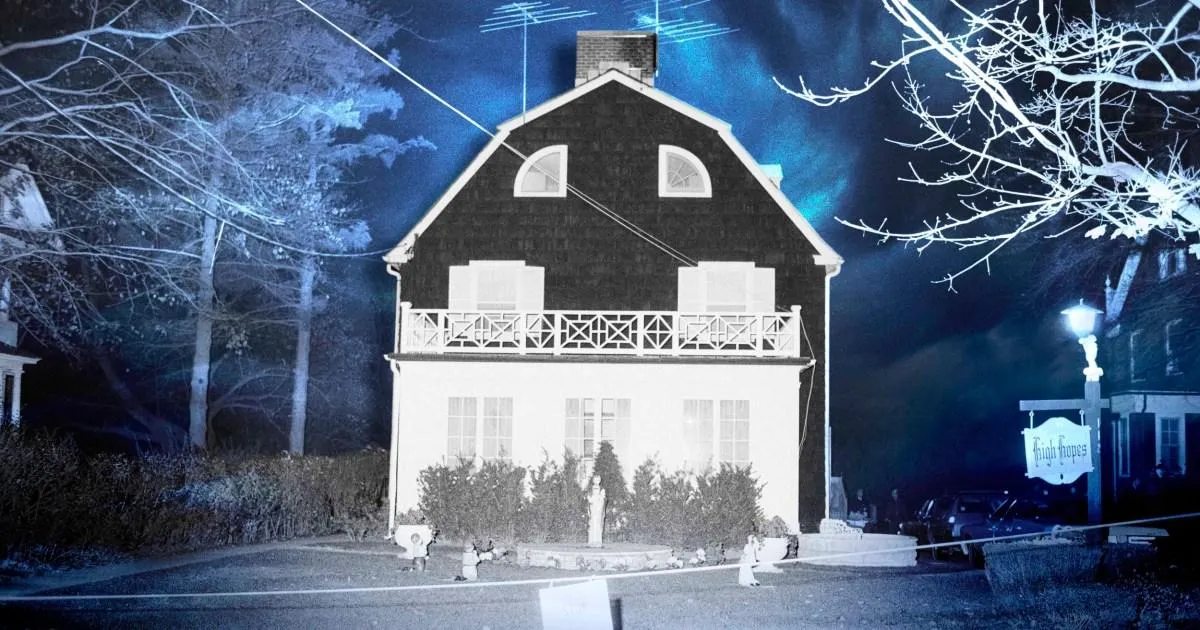
Amityville
A three-story Dutch Colonial suburban home located at 112 Ocean Avenue (subsequently renumbered to 108 Ocean Avenue) in the coastal village of Amityville, Suffolk County, Long Island, New York, United States. Constructed in 1927 and recognized by its distinctive gambrel roof and quarter-round eye-like attic windows, the property was the site of the November 1974 DeFeo family massacre. The subsequent claims of the Lutz family transformed the address into the quintessential "haunted house" of modern pop culture, launching the multimedia franchise The Amityville Horror.
The legend
Danger Level: Green (A commercialized legal and literary hoax within a private suburban residence posing zero physical or supernatural danger) In December 1975, George and Kathy Lutz moved with their three young children into the discounted ($80,000) colonial home where the DeFeo massacre had occurred thirteen months prior. The family claimed they endured only 28 days before fleeing in terror, abandoning their possessions. According to lore, when Catholic priest Father Mancuso arrived to bless the residence, a booming disembodied voice commanded him to "Get out!", causing blisters on his hands and sudden debilitating flu-like symptoms. The haunting narrative alleged winter infestations of hundreds of blowflies, putrid green bile weeping from keyholes and plaster walls, crucifixes inverted by invisible forces, and deadbolt-latched doors ripped off brass hinges. George Lutz claimed he involuntarily awoke every night at 3:15 AM (the precise time of the DeFeo shootings), observed freezing cold spots, and witnessed his wife levitating above their mattress and physically morphing into a crone. Their young daughter allegedly befriended an entity named "Jodie"—a demonic pig with glowing red eyes. The basement was said to hide a concealed, unmapped "Red Room" acting as an active portal to hell, supposedly situated over an ancient Shinnecock burial ground used to quarantine the sick and insane.
What actually happened?
The Amityville phenomenon is a composite of a brutal domestic mass murder and an intentional commercial hoax dismantled by investigative journalists and sworn testimony: The DeFeo murders: In the early morning hours of November 13, 1974, 23-year-old Ronald "Butch" DeFeo Jr. utilized an unsuppressed .35 caliber Marlin 336C lever-action rifle to execute his parents and four younger siblings (aged 9 to 18) as they slept face-down in their beds. Forensic trials proved the murders were motivated by deep domestic hostility, severe amphetamine and heroin addiction, and an ambition to secure his family's $200,000 life insurance policy. DeFeo was convicted on six counts of second-degree murder in November 1975 and sentenced to 25 years to life, dying in state custody in March 2021. The Weber-Lutz fabrication: The supernatural narrative was engineered inside the law offices of DeFeo's defense attorney, William Weber. Seeking grounds to file an appeal based on psychiatric insanity (arguing that metaphysical voices compelled the killings), Weber collaborated with George and Kathy Lutz, who were facing foreclosure and could not service their heavy mortgage payments. Over multiple planning sessions and bottles of wine, the trio devised the haunting scenario. In 1979, Weber publicly confirmed the conspiracy in People magazine: "We created this horror story over many bottles of wine... We were feeding each other lines. It's a hoax." Forensic and journalistic debunking: Writer Jay Anson dramatized the family's notes into the 1977 bestseller The Amityville Horror. Critical investigations by researcher Rick Moran and parapsychologist Stephen Kaplan systematically dismantled the book's claims: Meteorology and insects: Weather service archives recorded sub-freezing regional temperatures during the claimed fly infestations, precluding housefly swarming; Physical integrity: Suffolk County Police Department records verified that the Lutzes never placed a single emergency distress call during their 28-day stay. Physical inspection proved hardware, locks, and windowpanes were factory-intact without the structural violence depicted in the text; The clerical witness: Father Ralph Pecoraro (the basis for "Father Mancuso") testified in an official court affidavit that he never experienced levitation, disembodied voices, or fever blisters; he had simply walked through the rooms and made a brief phone call; The indigenous trope: Archival records confirm that the Shinnecock Indian Nation never occupied or maintained sacred burial grounds in Amityville, residing nearly 80 miles to the east on the South Fork of Long Island. Subsequent structural normalcy: The subsequent owners, James and Barbara Cromarty, purchased the property in 1977 and resided there comfortably for a decade without observing a single anomalous disturbance. Their sole disturbance stemmed from midnight tourists trespassing on their lawn, prompting a successful civil settlement against the Lutzes and the publisher for public nuisance.
History
The waterfront home was constructed in 1927 for John and Catherine Moynahan. The DeFeo family purchased the estate in June 1965, outfitting the property with an inground pool and a boathouse marked with the family motto High Hopes. Following the 1974 murders and the Lutzes' brief stay, Jay Anson published The Amityville Horror in September 1977, which sold over 10 million copies. Stuart Rosenberg's 1979 film adaptation starring James Brolin and Margot Kidder generated massive box-office revenue and turned the quiet suburban street into a permanent tourist target. Over the ensuing decades, the residence passed through five successive owners. To mitigate harassment, owners painted over the dark exterior, removed the iconic quarter-round attic "eye" windows in favor of standard architectural sash windows, and petitioned the Village of Amityville to legally change the house number from 112 to 108 Ocean Avenue to obscure it from casual drive-by tourists.
Where is it?
Town of Babylon, Suffolk County, Long Island, New York, United States; situated within the incorporated Village of Amityville along the eastern frontage of Ocean Avenue at house number 108 (historically 112 Ocean Avenue, Amityville, NY 11701), backing directly onto the Amityville River canal system leading into the Great South Bay.
Can you visit?
No, the property is a strictly private residential single-family home occupied by private citizens. No commercial tours operate, and no historical markers or plaques exist. The Village of Amityville and the Suffolk County Police Department enforce a rigid zero-tolerance policy against curiosity-seekers and dark tourists: The entire residential corridor of Ocean Avenue is designated with strict "No Stopping, Standing, or Parking" municipal signs; Pausing on the sidewalk to take photographs or loitering near the driveway prompts immediate calls to law enforcement from local neighborhood watch groups; Trespassing onto the lawn, dock, or driveway constitutes a Class B misdemeanor under New York State Penal Law, subject to arrest, court appearance, and heavy fines. The exterior can be legally viewed only in transit while driving by in a moving vehicle without obstructing traffic.
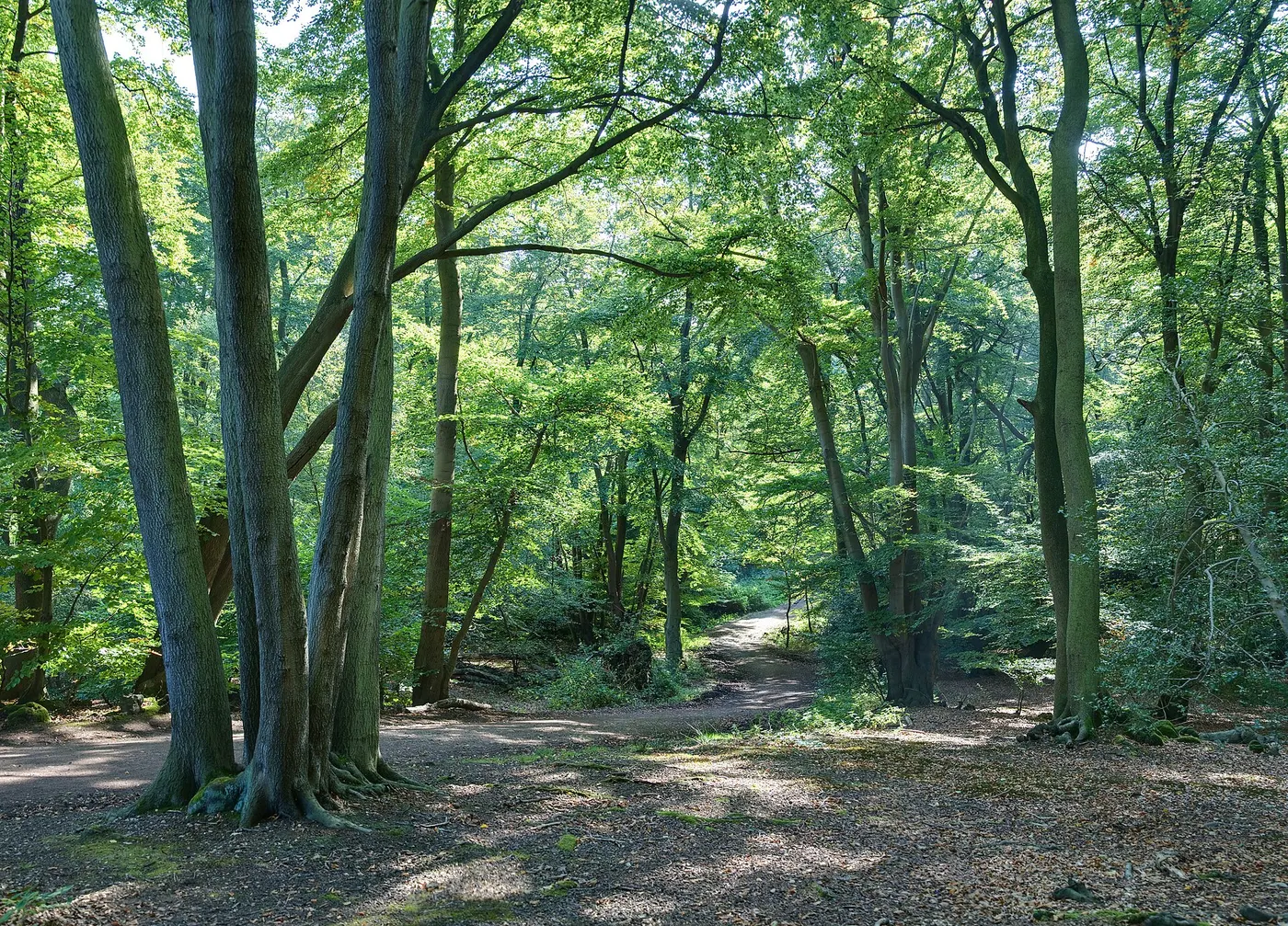
Epping Forest
An ancient forest on the boundary of London and Essex, once a highwaymen's refuge — an inn here carries Dick Turpin's name. Over the last century it became known for something else: bodies have been brought here for generations. Police have recovered the remains of several murder victims in it, and the forest has a reputation that makes accounts of figures between the trees sound more plausible than they should.
Comments
No comments yet. Be the first.