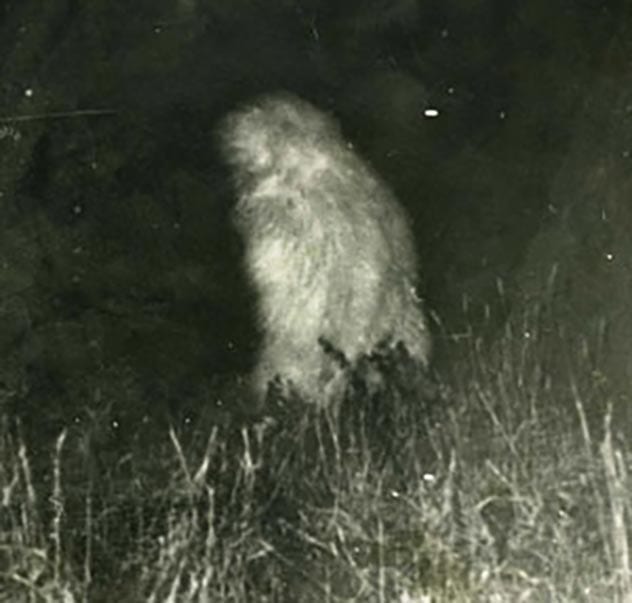
Lake Worth and the Goatman
Lake Worth is an artificial freshwater reservoir impounding the West Fork of the Trinity River, situated along the northwestern boundary of Fort Worth in Tarrant County, Texas, United States. Engineered in 1914 across roughly 3,200 acres, the basin is bounded by oak woodlands and the Fort Worth Nature Center and Refuge. Between July and October 1969, the lakeside recreation area became the epicenter of an American cryptozoological craze following reported attacks by the "Lake Worth Monster"—a seven-foot-tall, white-furred caprine-human hybrid archetype known regionally as the Goatman.
The legend
Danger Level: Green (A municipal wildlife preserve and recreational shoreline; a teenage prank cycle posing zero physical danger) The urban legend erupted on the sweltering night of July 9, 1969. Three teenage couples were parked along the lover's lane turnouts near Greer Island. Around midnight, a roaring entity reportedly dropped from an overhanging oak canopy onto the hood of John Reichart’s vehicle. Witnesses described a towering seven-foot, bipedal creature draped in mottled white fur and scales, brandishing long claws and a goat-like head adorned with horns. The entity lunged at a passenger before Reichart slammed the transmission into reverse; the beast tumbled onto the roadbed, allegedly gouging an 18-inch scrape down the vehicle's quarter panel. The following evening, local radio broadcasts drew a crowd of forty spectators, journalists, and police officers to a nearby scenic bluff. Without warning, a high-pitched scream pierced the timberline, followed by an automobile tire and wheel assembly hurled from the brush line that flew an estimated 100 to 500 feet toward police cruisers. Armed vigilantes opened fire into the darkness, but the entity vanished into the water. In October 1969, motorist Allen Plaster captured a grainy photograph depicting a blurred, bulky white hominid figure skulking through the roadside brush. Popular rumors attributed the beast to escaped genetic experiments originating from the nearby Carswell Air Force Base or the vengeful ghost of a caprine pastoralist whose ranch was inundated by the 1914 reservoir dam.
What actually happened?
The Lake Worth Monster outbreak represents a mix of suburban youth hoaxes, summer boredom, and sensationalist yellow journalism: The High School Hoax confession: In 2005, the editorial board of the Fort Worth Star-Telegram received a detailed confession from a former Brewer High School athlete. The author revealed that in July 1969, he and three peers staged the entire incident: outfitted with surplus burlap wool, flour sacks, and a rubber mask, they harassed parked cars along Greer Island to scare classmates. The tire-throwing episode was a mechanical trick: the students rolled an unmounted truck tire down a steep, hidden limestone embankment, producing the illusion of a monster hurling a projectile hundreds of feet. Deconstruction of the Plaster photograph: In 2006, Allen Plaster publicly debunked his own famous October 1969 snapshot. Plaster acknowledged that the silhouette captured in his vehicle's high beams was simply a local prankster wrapped in white bedsheets or insulated batting who posed by the roadside and dashed into the cedar brakes laughing. The media-driven panic of 1969: In July 1969, coinciding with the Apollo 11 lunar broadcast cycle, local journalist Jim Marrs (who later became a prominent JFK conspiracy author) published sensational accounts of the sightings. Front-page headlines triggered widespread panic, drawing hundreds of shotgun-wielding youths to Greer Island. Police had to blockade access roads to prevent armed teens from accidentally shooting each other in the brush. Faunal misidentifications: The lake perimeter encompasses rich riparian habitats supporting bobcats (Lynx rufus), feral hogs, alligator snapping turtles, and stray livestock from nearby pasturage. The terrifying "screams" recorded by callers match the vocalizations of screech owls, mating bobcats, or startled yellow-crowned night herons.
History
The first press release detailing the Greer Island ambush ran on July 10, 1969. Over the subsequent three months, the Fort Worth Police Department fielded dozens of sightings before the craze dissipated with the start of the autumn school semester. Throughout the 1970s, the event entered the national cryptozoological canon alongside West Virginia’s Mothman and South Carolina’s Lizard Man. By the 21st century, Fort Worth repurposed the folklore into an ecotourism asset. In 2009, commemorating the 40th anniversary of the sightings, the Fort Worth Nature Center and Refuge launched the annual "Lake Worth Monster Bash" every October, featuring guided night hikes across Greer Island, folkloric storytelling, and educational wildlife seminars.
Where is it?
Tarrant County, Texas, United States; situated within the northwestern Dallas–Fort Worth metroplex along the West Fork Trinity River, roughly 15 kilometers northwest of downtown Fort Worth. Key folkloric hubs include the Greer Island peninsula and the Lake Worth Dam overlook.
Can you visit?
Yes, the Lake Worth shoreline and Greer Island are accessible to the public. Access protocols: Greer Island is connected to the mainland via a narrow gravel causeway and integrated within the Fort Worth Nature Center and Refuge. The refuge is open daily from 08:00 to 17:00 (admission is roughly $6 for adults, $3 for children). The area maintains marked walking paths (notably the Greer Island Trail) and launch sites for non-motorized paddling; Environmental precautions: Real hazards stem from indigenous wildlife rather than mythical entities: the shallows and backwaters harbor American alligators (Alligator mississippiensis), venomous snakes (cottonmouths and western diamondback rattlesnakes), and feral hogs. Swimming in unmonitored reeds is prohibited; hikers must stay on maintained boardwalks and keep pets leashed; Municipal day-use areas: The public recreation grounds at Casino Beach and the Lake Worth Dam parks are free and accessible year-round.
Cannock Chase
Fifteen hundred hectares of heath and forest in Staffordshire where, in recent decades, everything has been reported at once: black cats the size of pumas, a "werewolf" seen near the German war cemetery, and a figure with burning eyes. The county police take such calls regularly and log them. An unsolved series of child murders in the 1960s adds its own layer to the reputation.

Comments
No comments yet. Be the first.