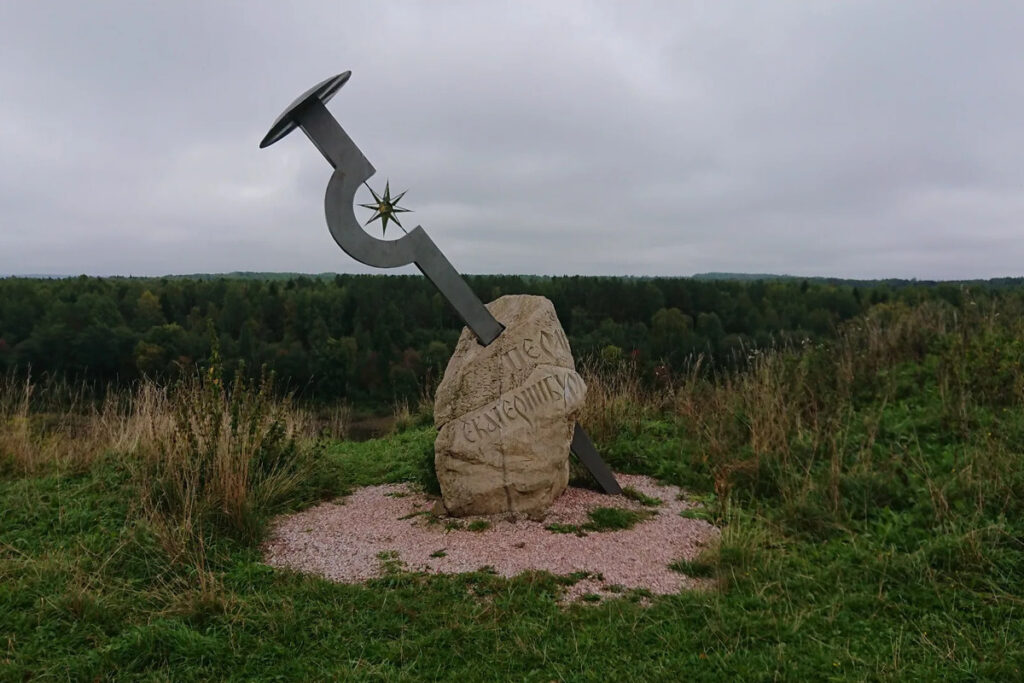
The Molebka Triangle
The Molebka Triangle (also known as the M-Zone or the Perm Anomalous Zone) is a geographic area spanning roughly 70 square kilometers in the Kishertsky District of Perm Krai, Russia, situated along the Sylva River near the historic village of Molebka. In the late 1980s, this remote pocket of Ural taiga transformed into the Soviet Union's first and most famous recognized "paranormal zone," becoming a global epicenter for UFO tourism and ufological expeditions.
The legend
Danger Level: Yellow (Extensive reports of anomalous phenomena without confirmed physical casualties) According to ufological lore, the Molebka zone serves as an interdimensional portal and extraterrestrial transit hub. Eyewitnesses claimed to observe glowing orbs (plasmoids), hovering luminous discs, translucent eight-foot humanoid silhouettes wandering the forest, localized time-dilation anomalies (mechanical and digital watches gaining or losing hours), and spontaneous telepathic contacts. Iconic waypoints were established across the taiga: the "Central Clearing," the "Witch's Rings" (where camera flashes purportedly exposed spirit spheres), "Snake Hill," and the "Pyramids"—heaps of stone slabs proclaimed by enthusiasts to be prehistoric alien navigation beacons.
What actually happened?
The Molebka phenomenon was a textbook confluence of late-Soviet Glasnost sensationalism, journalistic fabrication, and collective social contagion. Multiple rigorous academic expeditions fielded by geologists and physicists from Perm State University and the Soviet Academy of Sciences detected zero anomalous electromagnetic deviations, abnormal radiation, or gravity fluctuations outside natural regional baselines. Most high-altitude "UFOs" and glowing domes observed during the 1980s and 1990s coincided precisely with orbital satellite launches and classified missile tests from the northern Plesetsk Cosmodrome, whose high-altitude exhaust plumes caught the pre-dawn sunlight. The mysterious "Pyramids" proved to be slag piles and limestone ballast left behind by 18th-century Demidov copper and iron foundry operations. The "Witch's Rings" in amateur photographs were common photographic backscatter artifacts (orbs): moisture droplets, ambient dust, and insects hovering inches from the lens illuminated by camera flashes. Reports of psychological dread, altered states, and auditory hallucinations stemmed from sensory deprivation, hypothermia, autosuggestion, and localized piezoelectric friction within the active karst limestone faults of the Sylva River basin.
History
The village of Molebka was founded in 1787 alongside an iron smelting plant operated by the Demidov industrial dynasty (the name derives from the Molebka stream and a sacred sacrificial stone once venerated by indigenous Mansi tribes). Its paranormal fame ignited in October 1984 when local geologist Emil Bachurin claimed to have discovered a 62-meter circular melted indentation in the snow, declaring it a UFO landing site. In October 1989, journalist Pavel Mukhortov published a sensational serialized expose titled "The M-Triangle: Strangers Do Not Walk Here" in the Riga newspaper "Sovetskaya Molodyozh," vividly recounting telepathic interviews with extraterrestrial visitors. The articles triggered a frenzy across the perestroika-era USSR, drawing hundreds of thousands of curiosity-seekers, occultists, and scientists into the Ural forests. In the 2000s, local regional authorities embraced the site as a cultural tourism asset: in 2011, a wooden monument to an alien named "Aleshenka" was erected at the village entrance, anchoring annual UFO conventions.
Where is it?
Kishertsky District, Perm Krai, Russia; situated in and around the village of Molebka (roughly 160 kilometers southeast of Perm), located across the Sylva River bend near the regional boundary with Sverdlovsk Oblast.
Can you visit?
Yes, the village of Molebka is publicly accessible year-round via unpaved gravel roads leading from Suksun or Ust-Kishert. However, the core anomalous zone sits across the Sylva River on the undeveloped bank: there is no automotive bridge, requiring visitors to ford the river in shallow summer periods or cross by personal inflatables and boats. The backcountry is completely undeveloped, lacking cellular reception, paved trails, or emergency facilities. Hikers venturing into the taiga face genuine hazards: disorientation in dense swampy forests, dangerous encounters with brown bears and moose, and severe seasonal tick-borne encephalitis risks.
The Valley of Death in Kamchatka
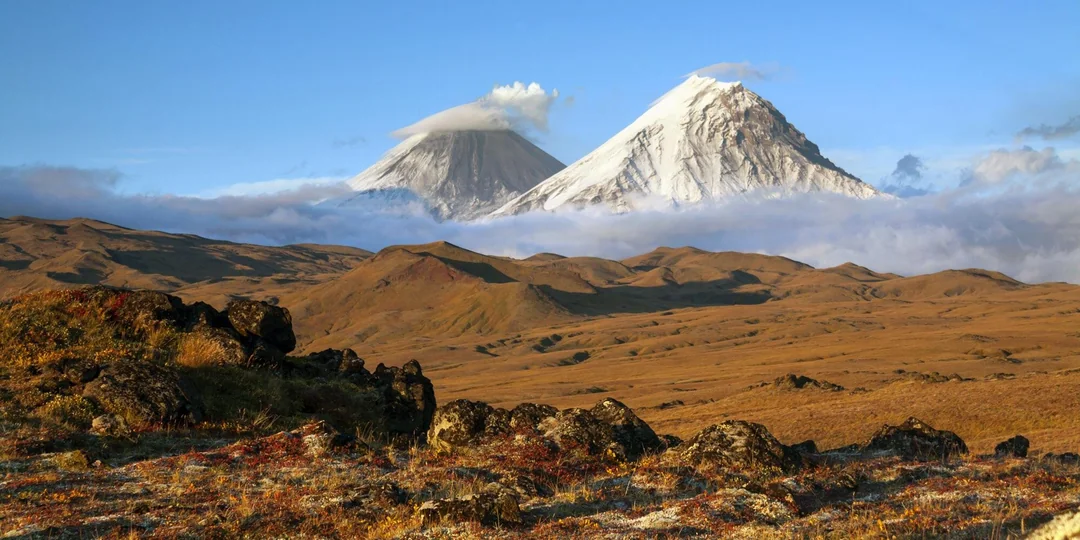
Nestled at the base of the Kikhpinych volcano, just miles from Kamchatka’s famous Valley of Geysers, lies an invisible natural death trap: Kamchatka’s Valley of Death. Spanning a narrow canyon roughly two kilometers long, this ground has perfected the art of silent execution. In the summer of 1975, volcanologist Vladimir Leonov and forest ranger Vladimir Kalyaev stumbled upon an eerie sight: the canyon floor was littered with dead birds and mammals. There were no signs of struggle, physical trauma, or epidemic disease—the animals looked as though they had simply fallen asleep mid-stride. Even more bizarrely, the carcasses remained remarkably preserved; the toxic atmosphere had effectively embalmed them by suffocating putrefactive bacteria. The secret behind this anomaly is a lethal cocktail of volcanic gases seeping through fractures in the canyon bed: carbon dioxide, hydrogen sulfide, carbon disulfide, and highly toxic cyanide compounds. Because these gases are significantly heavier than air, they settle into low-lying pockets during calm, overcast weather, forming a dense, invisible blanket that completely displaces oxygen. The valley's most chilling dynamic is its trophic chain reaction of death: The Bait: In early spring, small birds and rodents land on freshly thawed ground and suffocate within minutes. The Scavengers: Lured by the scent of fresh carcasses, small predators like foxes, sables, and wolverines descend into the hollow, only to collapse over their prey. The Apex Predators: Brown bears and wolves follow the trail of easy meals, inhale the concentrated poison layer, and perish directly beside the animals they came to eat. For humans, stepping into the basin is lethal. Within minutes of breathing the heavy fumes, victims experience a sharp metallic taste, sudden muscular weakness, violent dizziness, and respiratory paralysis. Researchers survive only because the toxic blanket rarely rises higher than one meter above the ground, and shifting mountain winds periodically flush the canyon clean. Today, the Valley of Death is strictly protected within the Kronotsky Nature Reserve. Access is heavily restricted—a haunting reminder of a primal wilderness where raw beauty kills with a single breath.
Comments
No comments yet. Be the first.