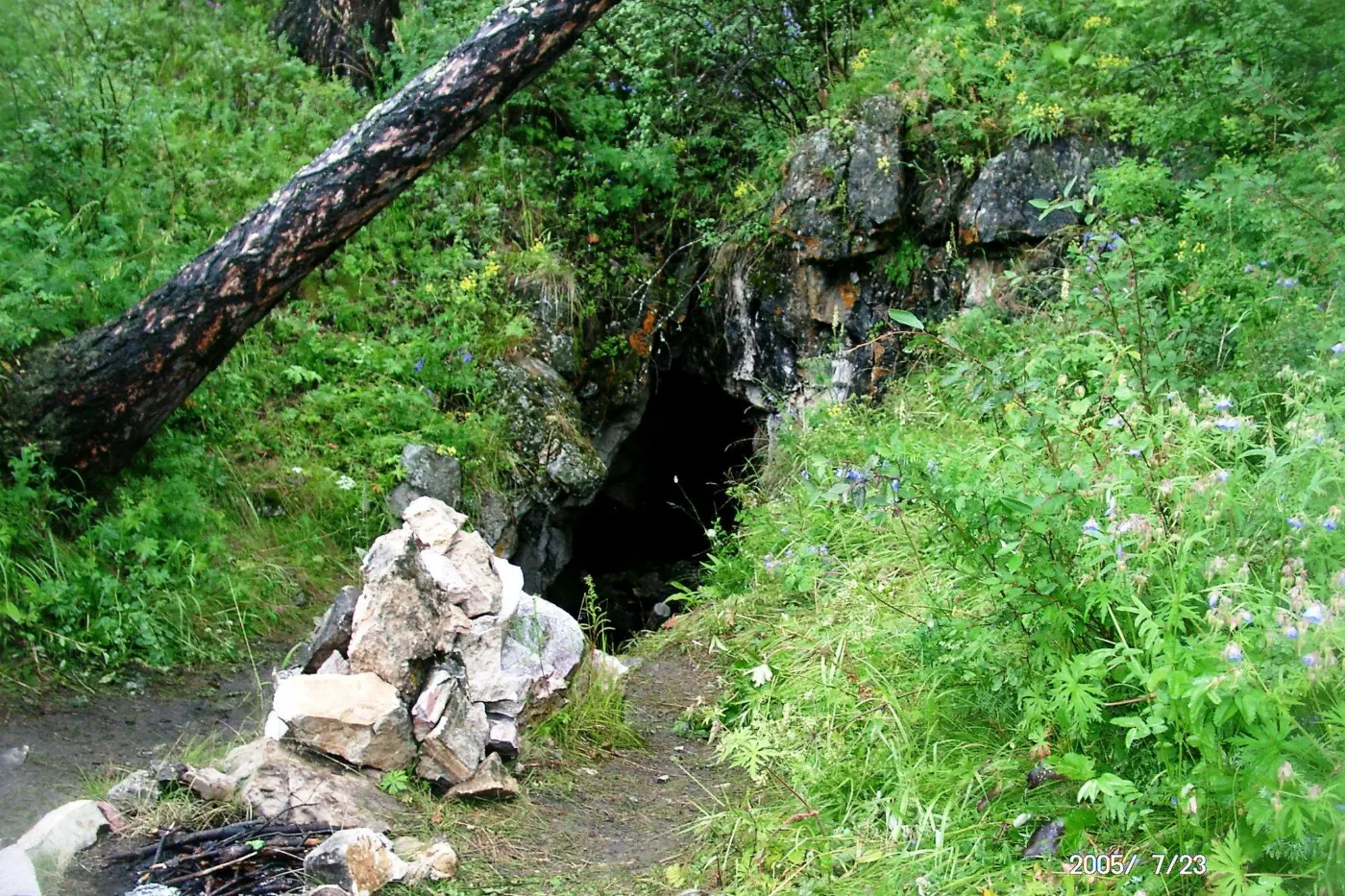
Kashkulak Cave
Kashkulak Cave (colloquially known as the "Cave of the Black Devil" or the "White Shaman's Cave") is a karst cavern system in the Batenevsky Ridge of the Kuznetsk Alatau mountains, situated in the Shirinsky District of Khakassia, Russia. Featuring a three-tier network of galleries descending to a depth of 49 meters with over 800 meters of mapped corridors, the site earned notoriety in the late Soviet period as an anomalous subterranean hotspot where explorers and scientists experienced acute panic attacks, disorientation, and waking hallucinations.
The legend
Danger Level: Orange (Severe speleological fall hazards compounded by acute psychological distress and disorientation) Regional Khakass folklore and sensationalist media portrayed the cavern as an ancient sacrificial altar dedicated to the underworld deity Erlik Khan. According to lore, dark shamans conducted animal and human sacrifices inside for centuries, leaving the spirit of an ancient practitioner bound to the deep rock. The central urban legend revolves around the "Black Shaman"—the spectral figure of an ancient wizard wearing a fox-fur hat with blazing eyes who appears inside narrow crawls, luring trespassers toward sheer drops or inducing blind terror that drove seasoned cavers to abandon their camps. Speculative accounts in the 1980s and 1990s claimed the cave possessed malevolent consciousness, radiating dark frequencies that led to fatal heart failure or mental breakdowns among returning explorers.
What actually happened?
Kashkulak is an authentic archaeological sanctuary and documented geophysical site fully explained through natural sciences:Authenticated Iron Age shrine: Systematic excavations by Siberian archaeologists confirmed its ancient sacred function. Inside the Temple Grotto, surrounding an altar-shaped stalagmite, researchers excavated a 1.5-meter stratum of compacted ash, calcined livestock bones (horses, sheep, cattle), and ceramic shards belonging to the Tagar (7th–3rd centuries BC) and Tashtyk (2nd century BC – 5th century AD) cultures, proving that indigenous pastoralists maintained sacrificial pyres here over centuries.Natural Helmholtz infrasonic resonator: During the 1980s, the Institute of Clinical and Experimental Medicine (Siberian Branch of the USSR Academy of Medical Sciences) deployed acoustic and geophysical monitoring equipment inside the chambers. Air currents channeled through the fractured limestone conduits act as a physical acoustic resonator, producing natural low-frequency infrasound waves at roughly 6 to 7 Hz. This frequency couples with human neuro-electrical brain rhythms and internal organs, triggering direct hormonal panic responses, palpitations, and tactile or visual hallucinations of malevolent silhouettes.Hypoxia and sensory deprivation: Stagnant blind pockets inside the lower corridors accumulate carbon dioxide ($CO_2$) from decaying organic matter. Under heavy CO2 concentrations, near-freezing ambient temperatures (+2°C to +4°C), 100% relative humidity, and absolute darkness, the sensory-deprived brain prone to pareidolia misinterprets water drips and shifting shadows as the presence of a humanoid figure.
History
The cavern was traditionally known to local Khakass herders as Khonykh-khol. Geologists charted the surface ridge during early-20th-century resource mapping, but detailed subterranean exploration began in the late 1950s and 1960s with amateur caving clubs from Tomsk and Krasnoyarsk. In the 1970s, archaeologist V. N. Bobrov's team excavated the sacrificial grotto. Throughout the 1980s, the site functioned as an in-situ field research station for Soviet medical biophysicists evaluating environmental electromagnetic and acoustic stressors. In 1993, the complex was designated a regional natural geological monument. By the 2000s, it developed into a mainstream Siberian speleotourism destination alongside an informal gathering hub for neo-shamanic practitioners.
Where is it?
Shirinsky District, Republic of Khakassia, southern Siberia, Russia; situated within the Batenevsky Ridge of the Kuznetsk Alatau range on Mount Kashkulak (elevation 998 m), roughly 10 km west of the rural settlement of Topanov and 30 km southwest of the municipal town of Shira.
Can you visit?
Yes, the cave entrance is physically open, but exploration requires technical speleological competencies and specialized gear. The upper Temple Grotto can be traversed on foot across scree, but reaching the lower levels (the Collapse, Gloomy, and Skeleton grottos) requires navigating the Enthusiasts' Pit (a 12-to-20-meter vertical pitch), slick mud climbs, and tight squeeze channels. Safely entering the lower chambers mandates climbing helmets, single-rope technique (SRT) harnesses, mechanical ascenders and descenders, waterproof caving overalls, redundant flashlights, and a multi-gas monitor. Solo or unguided descents carry life-threatening risks of falls, hypothermia, labyrinth disorientation, and CO2 asphyxiation.
Found by
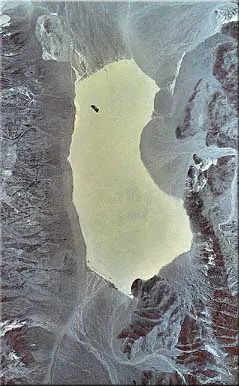
Racetrack Playa
A dry lakebed in Death Valley where stones move by themselves, leaving long trails behind them. The puzzle was only solved in 2014: thin sheets of ice push the rocks along under a light wind.
Comments
No comments yet. Be the first.