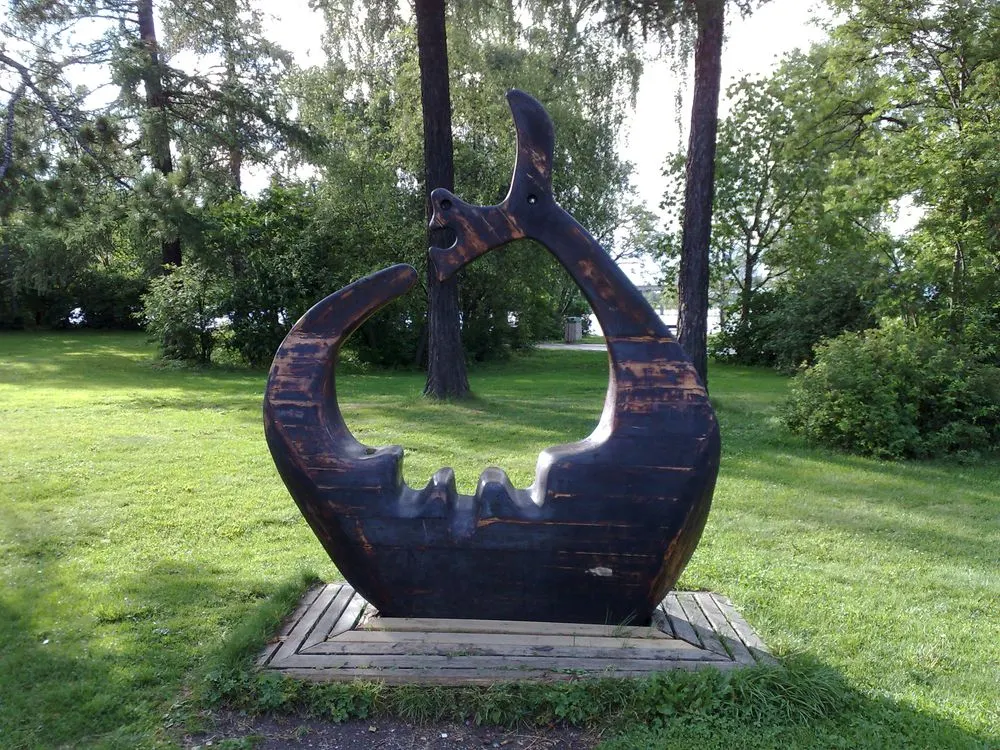
Storsjön and the Great Lake Monster
Lake Storsjön ("The Great Lake") is Sweden's fifth-largest lake, spanning roughly 464 square kilometers with a maximum depth of 74 meters, situated within the province of Jämtland in central Sweden. Characterized by glacial geology, scenic shores surrounding the central island of Frösön, and mountain panoramas, the lake is globally renowned as the home of Sweden's Loch Ness equivalent: the legendary lake serpent Storsjöodjuret (affectionately nicknamed "Birger"), historically distinguished as the only mythical cryptid ever granted statutory protection under regional wildlife conservation laws.
The legend
Danger Level: Green (Harmless Scandinavian folklore and a celebrated regional mascot posing zero physical threat) Oral lore surrounding the lake beast stretches back centuries. A classic local myth recounts two sorceresses brewing a concoction in a cauldron on the lakeshore, inadvertently creating a hissing, cat-headed serpent that was cast into the water, where it grew to monstrous proportions, encircled Frösön Island, and preyed on ferry passengers. Modern eyewitnesses described a serpentine dragon measuring 6 to 14 meters in length with dark, glistening gray-green scales, multiple distinct humps cresting the surface, and a dog- or horse-like head sporting small fins or ears. A regional legend linked the beast to the 11th-century Frösö Runestone, claiming magical binding runes chained the leviathan to the lakebed until the inscription eroded. In 1986, public fascination achieved legal status: the Jämtland County Administrative Board formally added Storsjöodjuret to the regional endangered species registry, making it legally forbidden to harm, hunt, or disturb the creature.
What actually happened?
The mystery has been comprehensively dismantled by biologists, ethnographers, and limnologists through ordinary environmental mechanisms: Superior optical mirages (Fata Morgana): Lake Storsjön is a deep, subarctic basin retaining cold bottom temperatures throughout the summer. Warm atmospheric fronts create sharp thermal inversions directly over the chilled water table. This atmospheric ducting bends light rays, dramatically magnifying ripples, distant wakes, waterfowl, and flotsam into undulating dark humps visible miles away. Timber drifting and log trains: Jämtland was a major forestry hub utilizing log driving across the lake. Partially waterlogged pine logs chained together or drifting in linear sequences mimic the segmented spinal ridge of an aquatic serpent. Swimming wildlife formations: families of Eurasian otters or swimming moose frequently cross lake channels in single file, creating an elongated, undulating communal wake that observers misinterpret as a single massive organism. The Frösö Runestone reality: the serpentine creature carved onto the landmark is not an occult seal binding a demon, but a standard 11th-century Viking Age runic ribbon carved in the Ringerike zoomorphic style. The legible inscription commemorates Östman Gudfastsson, recording his role in the Christianization of Jämtland and the construction of the sound's first wooden bridge. The legal protection repeal: the 1986 endangered status was a regional municipal PR campaign designed to bolster local tourism. In November 2005, the Parliamentary Ombudsman of Sweden (JO) officially struck down the statute as unlawful, declaring that conservation codes cannot be applied to an unauthenticated, scientifically non-existent entity.
History
The earliest surviving written reference dates to 1635, recorded by Vicar Mogens Pederssøn in the parish records of Ragunda documenting the local folklore. In the late 19th century, sensationalized sightings led to institutional action: in 1894, local entrepreneurs established a dedicated joint-stock enterprise to trap the creature, supported by King Oscar II of Sweden. Blacksmiths engineered an enormous iron harpoon trap baited with pork carcasses, deployed in deep channels without success. In 1986, the county board enacted its protected status decree, deploying panoramic shore lookouts and surveillance webcams. Following the repeal by the Parliamentary Ombudsman in 2005, the creature evolved into an established civic mascot, celebrated via public art installations across Östersund and a permanent dedicated hall inside the regional Jamtli Museum.
Where is it?
Östersund Municipality, Jämtland County, central Sweden; centered on the open waters of Lake Storsjön surrounding Frösön Island and the municipal harbor of Östersund (roughly 450 km northwest of Stockholm).
Can you visit?
Yes, Lake Storsjön, the city of Östersund, and Frösön Island are accessible year-round without restrictions. Östersund is served by an international airport, main rail connections, and European Route E45. During the summer, passenger excursions operate aboard the historic 1875 steamship S/S Thomée, while scenic lookouts ring Frösön Island. The historic Frösö Runestone stands in an open-air public setting near the bridgehead, free of charge. The authentic 1894 iron monster trap, historical diving logs, and interactive cryptozoological archives are preserved for public viewing inside the Jamtli Museum complex in central Östersund.
The Braslav Lakes and the Tsmok
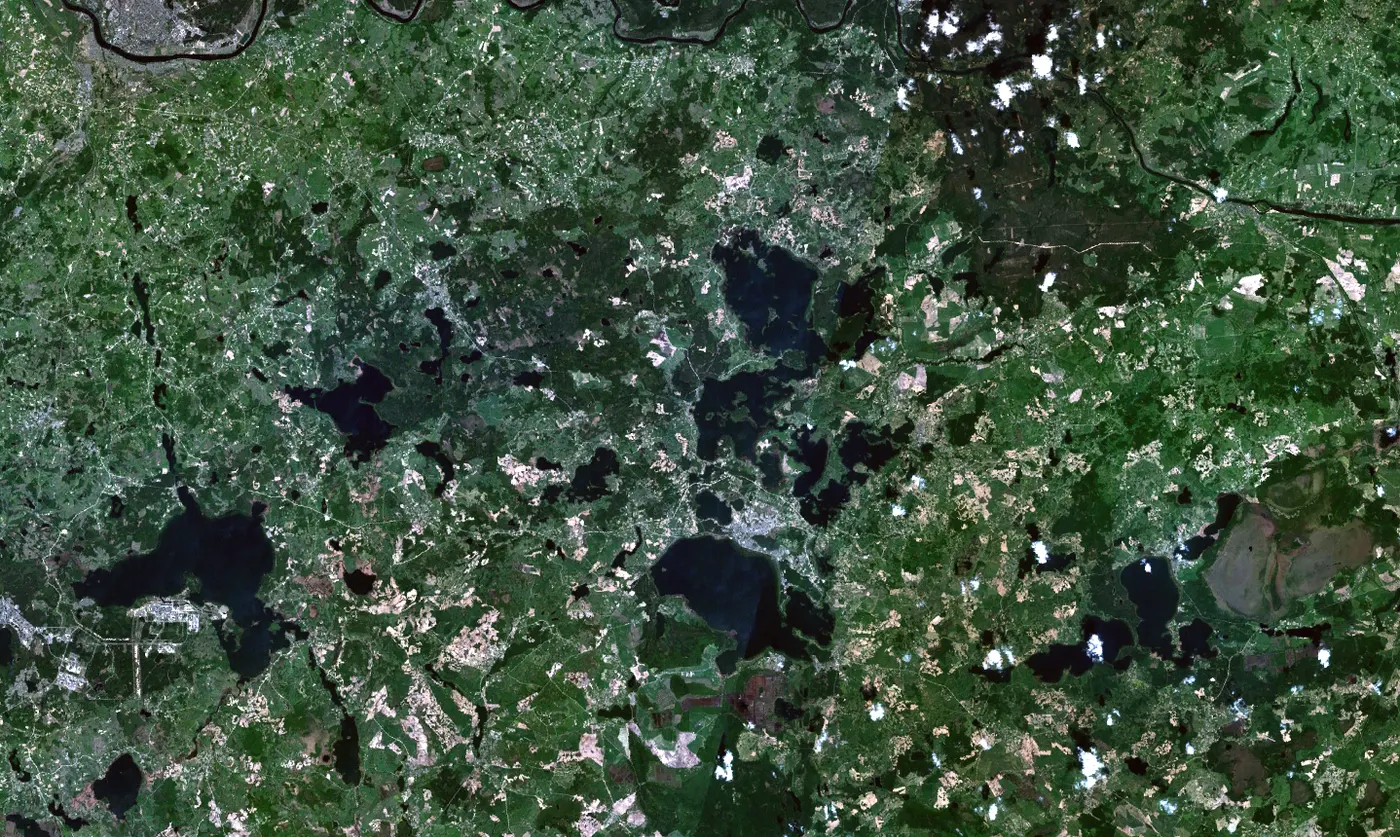
Braslav Lakes National Park in the Vitebsk Region of Belarus is a scenic expanse of glacial lakes, rolling ridges, and island labyrinths steeped in ancient Baltic-Slavic folklore. The region's core mythological symbol is the Tsmok—the legendary Belarusian dragon and aquatic serpent said to inhabit the deep, cold waters of local lakes such as Drivyaty and Volos.
Comments
No comments yet. Be the first.