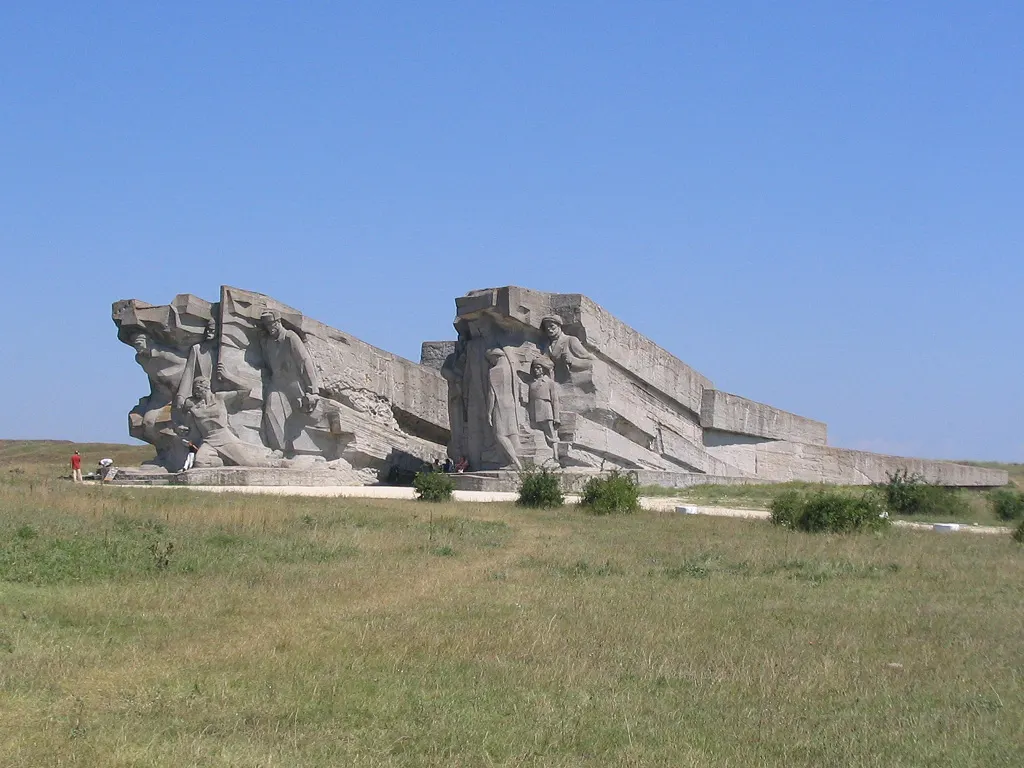
The Adzhimushkay quarries
The Adzhimushkay Quarries constitute an extensive subterranean limestone quarry system (comprising the Great and Small Adzhimushkay labyrinths) located on the outskirts of Kerch near the settlement of Adzhimushkay on the Kerch Peninsula, Crimea. Having supplied coquina building stone since antiquity, these catacombs became the site of one of World War II's most harrowing subterranean sieges: from May to October 1942, surrounded Soviet rear-guard units and local civilians mounted an unrelenting 170-day defense trapped in absolute darkness, enduring lethal dehydration, structural demolitions, and continuous chemical asphyxiation assaults by the German Wehrmacht.
The legend
Danger Level: Orange (Documented structural collapse hazards, unmapped deep vertical shafts, and active unexploded WWII ordnance in undeveloped sections) For decades, the quarries accumulated pervasive urban legends and speculative lore. Regional myths alleged that the labyrinth extended across dozens of subterranean levels, allegedly bridging the Kerch Strait beneath the seafloor to Taman or opening into forgotten catacombs beneath ancient Panticapaeum. Mid-20th-century rumors claimed the depths concealed the lost gold bullion reserves of the Kerch State Bank and evacuated museum treasures (the mythical "golden suitcase"). Alternative theorists claimed that German combat engineers tested classified Ahnenerbe occult toxins or advanced neurotoxic experimental agents within the shafts. Modern subterranean folklore features tales of a "phantom garrison"—unearthly children's cries and spectral soldiers wandering the dark corridors, phantom muzzle flashes, and ghostly footsteps echoing near abandoned subterranean wells.
What actually happened?
Historical documentation, archaeological recovery, and military forensics reveal a reality far grimmer than any supernatural legend. The quarry system extends across roughly 160 to 170 kilometers of fragmented, single- and double-tier workings with zero geological connection to Taman. In May 1942, following the disastrous collapse of the Crimean Front, Colonel Pavel Yagunov's rear-guard force—comprising 10,000 to 13,000 troops and civilians in the Great Quarries and 3,000 under Lieutenant Colonel Yermakov in the Small Quarries—retreated underground to shield the army's maritime evacuation. Unable to penetrate the defensive firing points, Wehrmacht forces (notably elements of the 46th Infantry Division and the 88th Combat Engineer Battalion) enacted total siege warfare. In flagrant violation of international law, they drilled boreholes from the surface, dropping heavy aerial demolition bombs to cave in ceilings, and pumped lethal toxic smoke and chloropicrin gas mixtures underground, asphyxiating thousands in the opening days. Water depletion became catastrophic: recovering a single bucket from outside surface wells demanded armed sorties costing dozens of casualties, until the Wehrmacht choked the wells with corpses and explosives. In response, Soviet engineers manually gouged a 14-meter well through solid limestone using bayonets and entrenching tools, while survivors licked moisture off dripping coquina ceilings. Archaeological recovery missions exposed no lost treasure hoards, while the "exotic weaponry" was identified as standard German industrial toxic canisters and smoke charges. Out of more than 13,000 individuals, only a few dozen starving, skeletal survivors survived to be captured when the last subterranean bastion fell in late October 1942.
History
Extraction of porous Sarmatian coquina limestone at Adzhimushkay dates back to antiquity, expanding dramatically throughout the 19th and early 20th centuries to supply building materials for the expansion of Kerch. During the Russian Civil War, the quarries sheltered pro-Bolshevik partisan units. Following the 1942 disaster, public acknowledgment was long obscured by state secrecy surrounding the Crimean Front's collapse. Comprehensive historical inquiries gained momentum in the 1960s, initiated by writer and historian Sergey Smirnov. In May 1966, the Museum of the History of the Defense of the Adzhimushkay Quarries was officially inaugurated, followed in 1982 by a monumental brutalist sculpture complex designed by B. Klimushko, E. Gorban, and S. Mirgorodsky. Since 1972, annual specialized military-archaeological expeditions continue to excavate collapsed galleries, recovering soldier remains, personal letters, field hospital artifacts, and weapons caches.
Where is it?
Adzhimushkay district, Kerch Municipality, eastern Crimea; 36 Bratya Malchenko Street, situated approximately 5 kilometers northeast of central Kerch.
Can you visit?
Yes, the designated museum section inside the Great Adzhimushkay Quarries is fully accessible via guided tours managed by the East Crimean Historical and Cultural Museum-Reserve. The tourist route is structurally reinforced, cleared, and safe (visitors are provided with flashlights; underground temperatures remain constant at +10°C to +12°C year-round, requiring warm layers). Children under six are excluded due to the somber psychological weight of the exhibits. Unauthorized entry into off-limits "wild" quarry workings (including the Small Quarries and unexcavated collapse zones) is strictly prohibited: undeveloped shafts suffer recurrent structural cave-ins, open drops, and high risks of triggering active World War II unexploded ordnance.
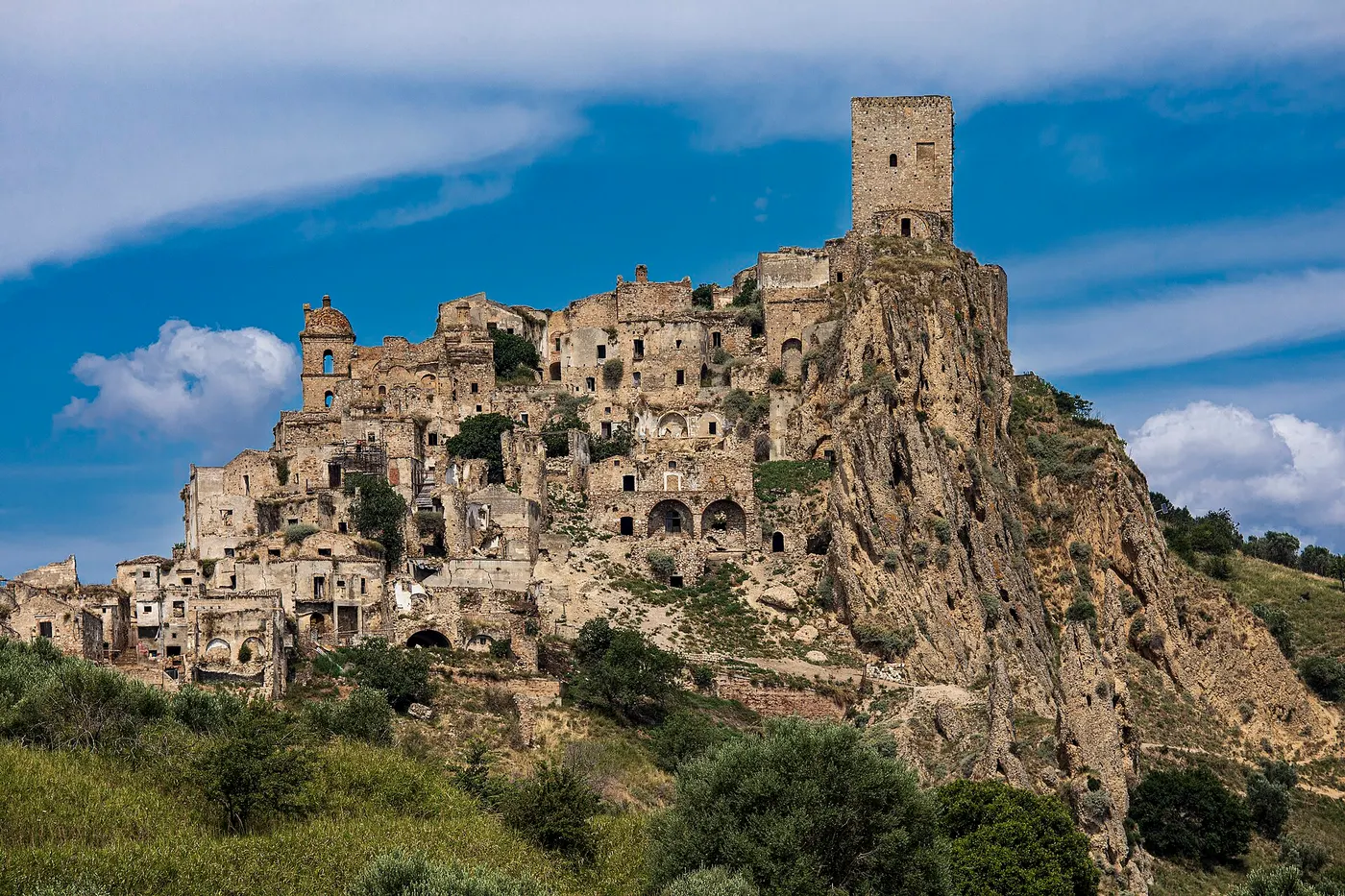
Craco
A medieval town on a rocky ridge in Basilicata, abandoned in the 1960s–70s after landslides and an earthquake. Its empty stone houses and bell tower on a bare hill have repeatedly served as a film set.
Comments
No comments yet. Be the first.