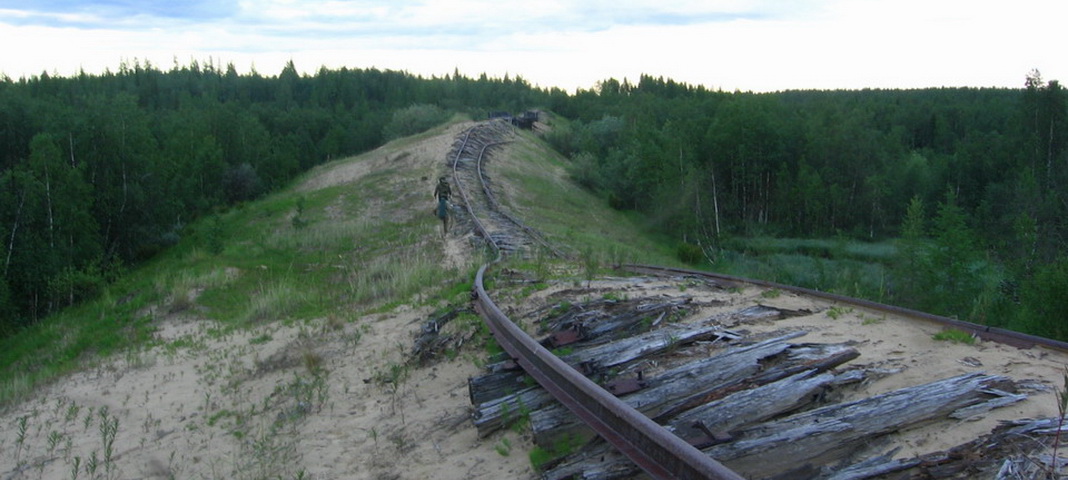
The Dead Road
Construction No. 501 and No. 503 (officially the North-Siberian Railway, popularly known as the "Dead Road" or the Transpolar Mainline) was a massive, classified Soviet Gulag megaproject executed between 1947 and 1953. Aimed at laying roughly 1,450 kilometers of railway across northern Siberia along the 66th parallel connecting Chum, Salekhard, Nadym, Novy Urengoy, Yermakovo, and Igarka, the line was built over continuous permafrost and peat bogs by tens of thousands of forced laborers. Abruptly abandoned weeks after Joseph Stalin's death, it left behind hundreds of kilometers of twisted tracks, abandoned labor camps, telegraph poles, and rusting steam locomotives stranded in the Arctic wilderness.
The legend
Danger Level: Orange (Extreme subarctic tundra wilderness, structurally unsound decaying wooden trestles, lack of cellular coverage, and delayed emergency response) Across post-Soviet folklore and sensationalist journalism, the "Dead Road" became the definitive symbol of totalitarian futility. Popular myths claimed that a human corpse was buried beneath every wooden sleeper and that the death toll ranged from 500,000 to over 1.5 million prisoners, whose bodies were allegedly used as foundational ballast inside the railroad embankments. Conspiratorial theories claimed the line was intended to supply classified intercontinental missile bases, facilitate a subterranean assault tunnel beneath the Bering Strait to Alaska, or service an underground atomic submarine base tunneled into the granite cliffs of the Yenisei at Igarka. Backcountry hunters and urban explorers trade ghost stories about phantom steam whistles piercing the blizzards of the polar night and cursed penalty barracks where magnetic compass needles spin uncontrollably.
What actually happened?
The authentic history of Project 501/503 is an intersection of early Cold War military urgency, flawed central economic planning, and forced-labor exploitation: Strategic motivation: During World War II, Kriegsmarine U-boats and the pocket battleship Admiral Scheer penetrated the Kara Sea (Operation Wunderland, 1942), sinking Soviet coastal convoys. Post-1945, Soviet military leadership anticipated potential US incursions along the Northern Sea Route, demanding an ice-free rear-guard logistical port. Planners initially broke ground on the Ob Bay at Cape Kamenny (Project 502); however, hydrographic surveys in 1947–1948 revealed that the bay was too shallow (depths of only 5 to 7 meters) and choked with shifting silt bars, preventing heavy naval vessels from mooring. In January 1949, the Council of Ministers redirected the rail project eastward toward Igarka on the deep Yenisei River, planning to connect the Norilsk mining basin to the Soviet rail network. Demographics and mortality realities: The project was partitioned into the Ob Directorate (No. 501, headquartered in Salekhard) and the Yenisei Directorate (No. 503, based in Yermakovo). At its peak in 1951–1952, the enterprise employed 70,000 to 85,000 prisoners (convicted under political Article 58, common-law offenders, and repatriated Soviet POWs) alongside roughly 20,000 civilian engineers and armed guards. Conditions were grueling: manual excavation using shovels and wheelbarrows, winter temperatures reaching -55 °C, summer mosquito swarms, and scurvy. However, archival records of the Gulag Railway Construction Department (GULZhDS) refute the sensational myth of "millions entombed in the ballast": deceased inmates were interred in segregated camp cemeteries in shallow permafrost graves marked by numbered wooden tags. Historical mortality rates in late-era Gulags averaged 1–2% annually; total deaths across the six-year project totaled an estimated 10,000 to 14,000 individuals—a documented tragedy that requires no statistical distortion. Permafrost engineering failures: Construction proceeded without comprehensive geotechnical surveys under temporary engineering specifications. Permanent bridges across the Ob and Yenisei rivers were excluded: transport utilized roll-on/roll-off ice ferries in summer and temporary tracks laid across reinforced river ice in winter. The subgrade consisted of ice lenses and sensitive peat muskeg. Stripping the insulating moss canopy triggered thermokarst subsidence: summer thawing eroded the rail beds, washed out bridge abutments, and twisted tracks into undulating waves. Facing rolling-mill shortages, crews laid recycled historical rails, including pre-revolutionary 19th-century Demidov and Putilov steel, alongside wartime US Lend-Lease rails. Post-Stalin abandonment: Following Stalin's death on March 5, 1953, Lavrentiy Beria introduced the March 1953 Amnesty, which released hundreds of thousands of inmates nationwide and deprived the Arctic project of its workforce. On March 25, 1953, the Council of Ministers decreed an immediate halt to major non-essential construction works. During the chaotic retreat, administrators abandoned regional settlements, telecommunication towers, repair shops, and dozens of Class Ov and Em steam locomotives, writing off an investment exceeding 4 billion rubles. Modern legacy: The westernmost segment from Chum to Labytnangi remains an active mainline operated by Russian Railways. The Nadym–Novy Urengoy corridor was rebuilt during the 1970s energy boom to develop the Medvezhye and Urengoy natural gas fields, while the wilderness segments between Nadym and Yermakovo remain preserved by subarctic weather as an open-air industrial relic.
History
On April 22, 1947, the Soviet Council of Ministers issued classified Decree No. 1255-331 authorizing a strategic railroad to the Gulf of Ob. In January 1949, the objective was shifted to Igarka. By early 1953, workers had laid roughly 700 kilometers of main and secondary tracks, graded over 1,000 kilometers of railbed, erected hundreds of timber bridges, and established operational service along the Salekhard–Nadym corridor. Following the project's cancellation in spring 1953, usable rolling stock was evacuated, while isolated engines were shunted into dead-end sidings. The project remained largely unexamined until the late 1980s, when expeditions by the historical society Memorial and regional researchers documented the ruins of the Yermakovo camp headquarters. In 2020, an all-season paved highway opened parallel to the historic 501 railbed between Salekhard and Nadym.
Where is it?
Northwestern and Central Siberia, Russia; traversing the Priuralsky, Nadymsky, and Purovsky districts of Yamalo-Nenets Autonomous Okrug and terminating in the Turukhansky District of Krasnoyarsk Krai. The corridor spans eastward from Chum through Salekhard, Nadym, and the abandoned settlement of Yermakovo on the Yenisei River to the port city of Igarka.
Can you visit?
Yes, though logistical access depends heavily on the chosen section: Active Western Sector (Chum to Labytnangi): Fully accessible via scheduled Russian Railways passenger trains departing Moscow and Vorkuta. Salekhard–Nadym Corridor: Accessible via the paved all-season highway. Travelers can view the parallel 501 railbed, decaying timber trestles, mechanical semaphores, and vintage telegraph lines directly from the road. Between kilometer markers 45 and 60 east of Salekhard and near the Poluy River, surviving labor camp barracks (such as the Shchuchiy siding) can be reached on foot. In Salekhard, a memorial Class Em-711-26 steam engine is installed as a monument. Eastern Wilderness Sector (Yermakovo to Igarka): Dense wilderness accessible only via chartered riverboats along the Yenisei from Igarka or Turukhansk in summer, or via utility snowmobiles and tracked vehicles in winter. The ghost settlement of Yermakovo preserves the overgrown carcasses of early-20th-century Class Ov steam locomotives sitting in the woods alongside the skeletal remains of roundhouses, isolation cells, and guard watchtowers. Venturing into this sector requires self-sufficient wilderness expedition equipment, bear deterrents, satellite emergency beacons, tick protection, and local wilderness guides.
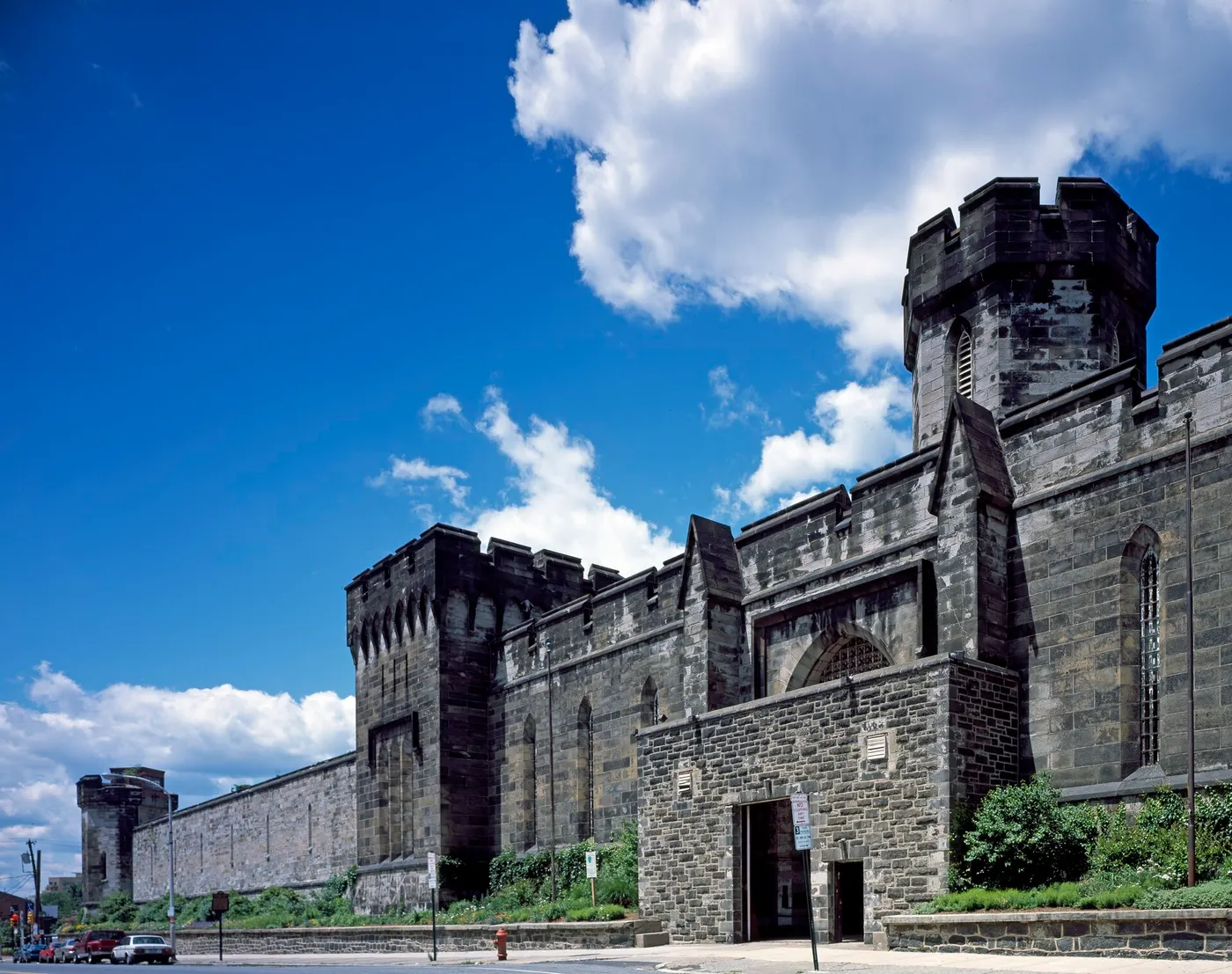
Eastern State Penitentiary
A Philadelphia prison that pioneered total solitary confinement in the 19th century. Closed in 1971 and left in ruins, its vaulted cellblocks are counted among the most reputedly haunted places in the United States.
Comments
No comments yet. Be the first.