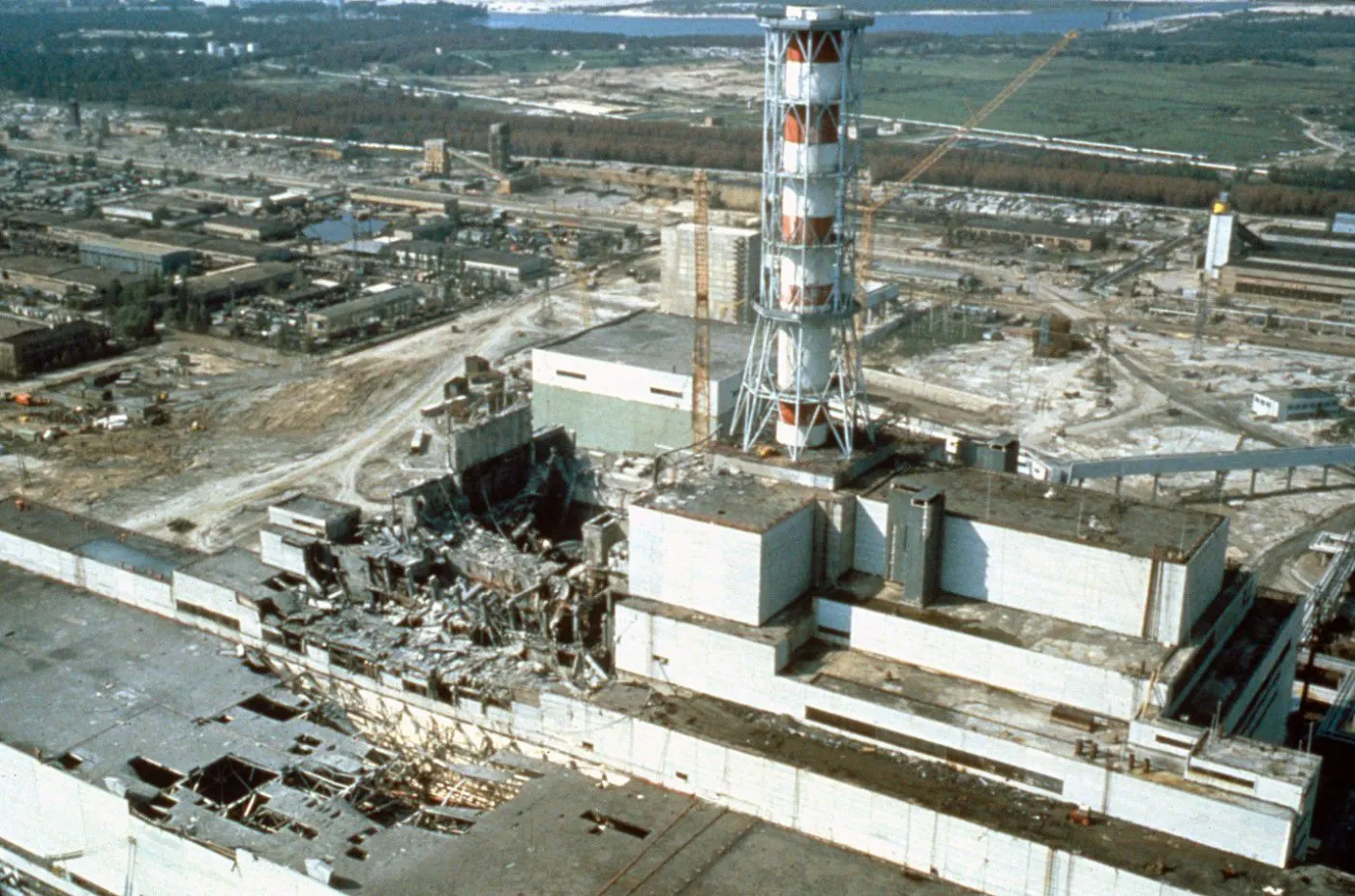
The Chernobyl Nuclear Power Plant
The Chernobyl Nuclear Power Plant (officially the V. I. Lenin Nuclear Power Station, or ChNPP) is a decommissioned nuclear energy facility located in the Vyshhorod Raion of Kyiv Oblast, Ukraine, along the Pripyat River and a man-made cooling reservoir, roughly 3 kilometers southeast of the abandoned city of Pripyat and 18 kilometers northwest of Chernobyl. On April 26, 1986, the site suffered the most catastrophic reactor breach in nuclear history (Level 7, the maximum on the INES scale), which destroyed Reactor Unit 4. Today, ChNPP is a specialized decommissioning site enclosed by the monumental New Safe Confinement arch structure.
The legend
Danger Level: Red (An industrial nuclear decommissioning facility containing hundreds of tons of high-level fuel debris, enclosed by a mined military frontier) The disaster spawned a wide array of global urban legends and conspiracy narratives. Popular retellings frequently mischaracterized the disaster as a true thermonuclear detonation, claiming that Europe narrowly avoided a multi-megaton blast that would have rendered the continent uninhabitable had molten corium breached the water-filled bubbler pool beneath the core. A widespread narrative held that the "three suicide divers" (Alexei Ananenko, Valeri Bezpalov, and Boris Baranov) knowingly sacrificed their lives and died of acute radiation sickness days after manually opening the drain valves. Conspiracists linked the disaster to the classified Duga-1 over-the-horizon radar network ("Chernobyl-2") situated 9 kilometers south, claiming the radar was an experimental psychotronic weapon or that Soviet officials staged the reactor explosion to mask the failure of the billion-ruble radar project. The petrified lava-like corium deposit known as the "Elephant's Foot" entered pop culture as a supernatural death ray rumored to kill any observer in 30 seconds through lead shielding, so impenetrable that researchers supposedly could only sample it using armor-piercing rounds fired from an AK-47.
What actually happened?
Declassified Soviet investigation files, IAEA International Nuclear Safety Advisory Group publications (INSAG-1 and INSAG-7), and field evaluations by the Institute for Safety Problems of Nuclear Power Plants of the NAS of Ukraine have documented the technical chronology: The explosion mechanism (Thermal and steam, not nuclear): The destruction was not a nuclear detonation. An uncontrollable prompt-critical neutron runaway caused thermal power output to spike to dozens of times its operational limit within seconds. Rapid boiling fragmented fuel assemblies, generating severe steam overpressurization inside pressure channels, accompanied by a zirconium-steam reaction releasing combustible hydrogen. This triggered successive high-pressure steam and hydrogen-air concussions that threw off the 2,000-ton upper biological shield ("Component Elena"). RBMK-1000 architectural defects and operational errors: The accident was driven by a fatal convergence of unstable reactor physics and regulatory violations. The RBMK reactor design exhibited a high positive void coefficient of reactivity (where steam generation increased neutron multiplication) and a dangerous control rod "positive scram" defect. The control and protection rods featured graphite displacer sections suspended beneath neutron-absorbing boron carbide; when operators pressed the emergency scram button (AZ-5) with rods fully extracted, the descending graphite displacers evacuated water from the bottom of the core first, injecting massive positive reactivity into the lower fuel channels. The "Diver Trio" reality: Mechanical engineer Alexei Ananenko, senior engineer Valeri Bezpalov, and shift supervisor Boris Baranov carried out a calculated operational intervention, wading through knee-deep radioactive floodwater to manually manipulate bubbler pool release valves. Contrary to urban folklore, none died of acute radiation sickness in the weeks that followed. Boris Baranov passed away in 2005 from congestive heart failure, while Ananenko and Bezpalov remain alive and were awarded the title Hero of Ukraine in 2019. The theorized "megaton thermal explosion" was an apocalyptic myth: corium contacting water would have provoked a severe secondary steam overpressure pulse damaging Unit 3, not a thermonuclear blast. The Elephant's Foot corium: The structure is an amorphous masses of solidified lavas—known technically as Lava-like Fuel-Containing Materials (LFCM)—formed when molten uranium dioxide, zirconium fuel claddings, control materials, and structural concrete fused at temperatures exceeding 2,000 °C. While contact radiation fields in autumn 1986 registered 8,000 to 10,000 R/h (delivering a lethal dose within minutes), scientists (notably Artur Korneyev) surveyed and photographed the chamber via remote cameras, periscopes, and timed reconnaissance entries. Liquidators did fire a rifle round at the formation to chip away specimens because the vitrified silicate resisted drill bits. Four decades later, radioactive decay (dominated by cesium-137) has lowered field intensities substantially, though the mass has cracked and is decaying into friable radioactive particulates. Continued commercial power generation: ChNPP did not shut down in 1986. Units 1, 2, and 3 resumed supplying base-load electricity across the Ukrainian grid: Unit 2 was deactivated following an electrical turbine hall fire in 1991, Unit 1 retired in 1996, and the final operating reactor, Unit 3, was officially powered down on December 15, 2000.
History
The Soviet Council of Ministers authorized the installation of a nuclear facility in 1966, surveying the site in 1967 and connecting Unit 1 to the electrical grid in 1977. By 1986, ChNPP was among the largest generation hubs in the Soviet Union (4,000 MW operational capacity), with Phase III (Units 5 and 6) under active construction. Following the April 1986 disaster, over 600,000 military and civilian liquidators erected the original reinforced concrete and structural steel "Shelter Object" (the Sarcophagus) in an unprecedented 206 days directly over the open core. By the late 1990s, the aging Sarcophagus—supported by compromised, buckled reactor walls—suffered structural fatigue and seismic vulnerability. Supported by an international fund administered by the European Bank for Reconstruction and Development (EBRD) with donations from over 40 nations, the French Novarka joint venture (Vinci Construction and Bouygues Travaux Publics) engineered the New Safe Confinement (NSC): the largest mobile ground structure in engineering history, standing 108 meters tall, 162 meters long, and weighing 36,000 tons. In November 2016, the arch was skidded along hydraulic tracks over the compromised 1986 shelter, hermetically enclosing Unit 4 for a design lifespan of 100 years to facilitate remote disassembly of unstable interior structures. In February and March 2022, the station complex was seized by the Russian military advancing out of Belarus. Operational staff maintained cooling systems under armed guard for over 600 consecutive hours without relief shifts, during which grid power lines were briefly severed, forcing the facility onto emergency backup diesel generators to maintain spent fuel pool circulation. On March 31, 2022, Russian forces evacuated the plant, restoring institutional control to State Specialized Enterprise ChNPP technicians and the Ukrainian National Guard.
Where is it?
Vyshhorod Raion, Kyiv Oblast, Ukraine; located within the 30-kilometer Chernobyl Exclusion Zone along the cooling pond banks, 110 kilometers north of Kyiv and 16 kilometers south of the Belarusian border.
Can you visit?
No, all civilian and tourist access to the Chernobyl Nuclear Power Plant is strictly barred. The plant footprint is a secure critical nuclear infrastructure facility under the physical security of the National Guard of Ukraine. Following the 2022 military campaigns, the wider 30-kilometer Exclusion Zone was designated an active fortified military border district. Access routes are restricted by checkpoints; surrounding woodland tracks remain mined with unexploded ordnance; and entry to the industrial site is limited to badged decommissioning engineers, authorized contractors, and resident inspectors of the International Atomic Energy Agency (IAEA) following physical and radiological screenings. Unauthorized entry attempts are prosecuted under martial law and national security statutes.
Found by
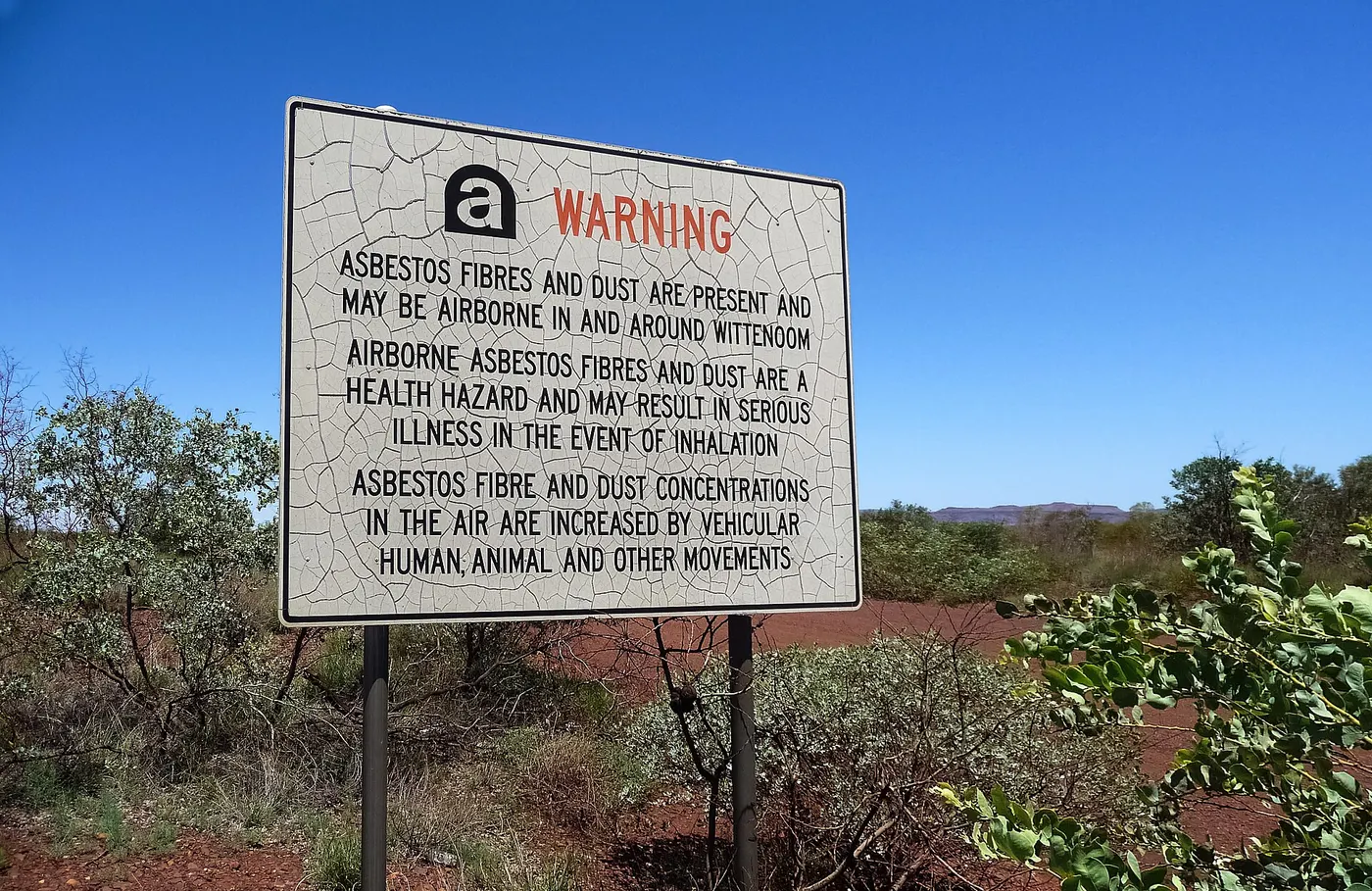
Wittenoom
An Australian town built around blue asbestos mining, judged so hazardous that it was struck from maps and cut off from the power grid. It is officially the largest contaminated site in the Southern Hemisphere.
Comments
No comments yet. Be the first.