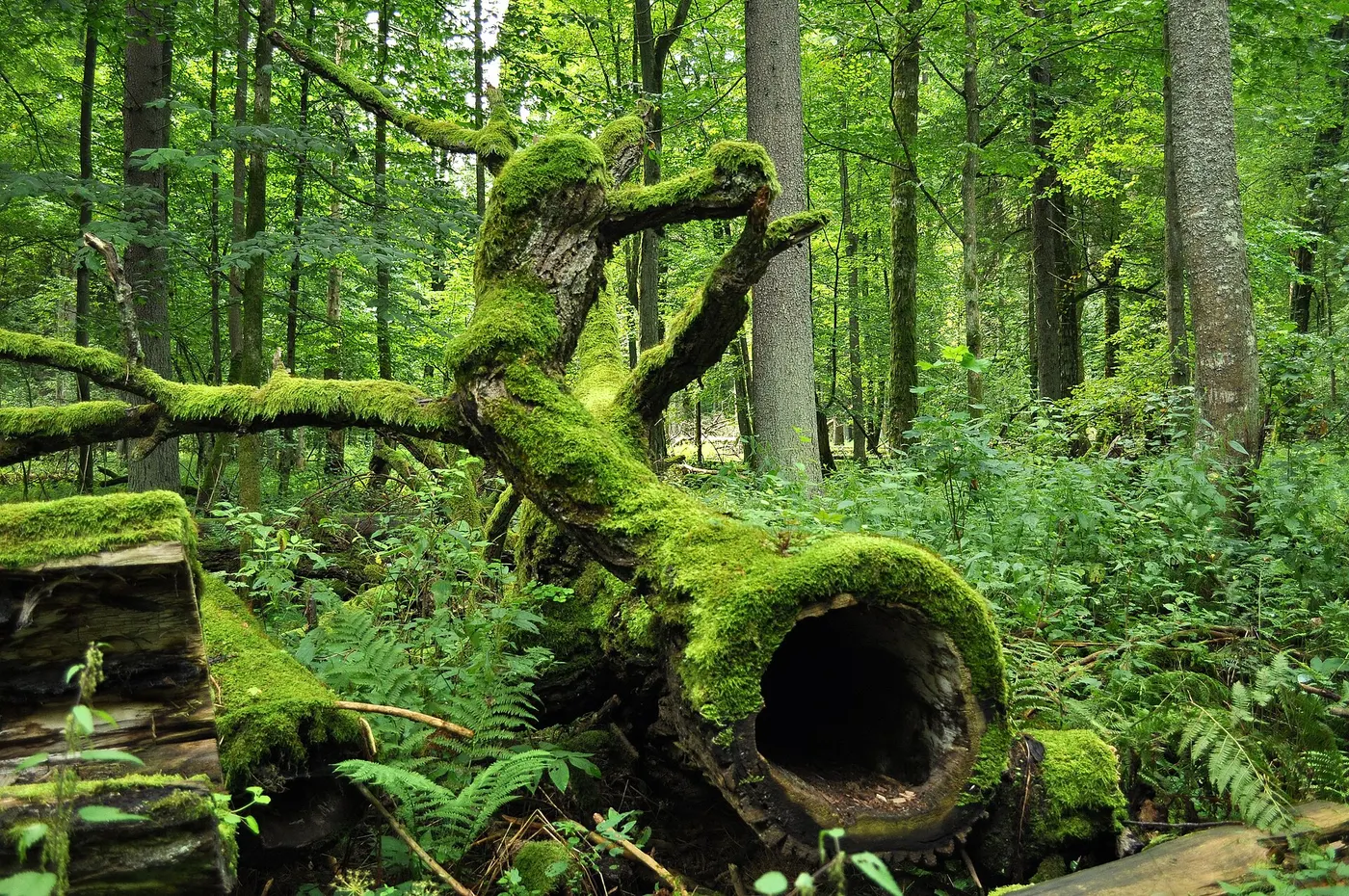
Białowieża Forest
Białowieża Forest (Belovezhskaya Pushcha) is the largest and oldest surviving expanse of primeval lowland mixed temperate forest in Europe, straddling the state border between Belarus (Brest and Grodno regions) and Poland (Podlaskie Voivodeship). Encompassing more than 150,000 hectares, this UNESCO World Heritage Site and biosphere reserve represents the last intact remnant of the prehistoric virgin woodlands that once blanketed the European Plain, home to the planet's largest free-roaming population of the European bison (wisent).
The legend
Danger Level: Green (A tranquil ecological sanctuary and historical landmark posing zero supernatural threat) For centuries, the dense canopy of the ancient forest fostered dark folklore and pagan lore. Dating back to the early Middle Ages, Baltic Yatvingian and Slavic pagan tribes held the deep woods as an inviolable natural shrine; legends told of druidic oak groves where sorcerers performed ritual sacrifices to appease primeval woodland spirits. Peasant lore preserved tales of the "Gayovy" (the primeval forest warden), hypnotic will-o'-the-wisps luring wanderers into treacherous peat bogs, and the phantom White Stag that cursed royal hunters and poachers with sudden death. In the late 20th century, folklore shifted toward modern geopolitical conspiracy: inside the secluded Viskuli state dacha in December 1991, the Belovezha Accords dissolved the Soviet Union. Conspiratorial lore portrays the summit not as high-stakes diplomacy, but as a covert Western intelligence operation, an oligarchic conspiracy, or an impromptu, alcohol-fueled coup staged inside hidden Cold War woodland redoubts.
What actually happened?
The pristine state of Białowieża is the direct product of centuries of ironclad aristocratic conservation rather than supernatural preservation. Beginning in the 15th century, Polish monarchs declared the tract a royal hunting preserve (in 1409, King Władysław II Jagiełło procured tons of salted wild game here to sustain his army ahead of the Battle of Grunwald), a protected status maintained by Russian Tsars after the partitions of Poland. Strict royal decrees imposed capital punishment for unauthorized timber felling or poaching. The European bison was driven entirely to extinction in the wild between 1919 and 1921 due to wartime famine and military harvesting. The entire modern species was miraculously salvaged through a scientific captive breeding program initiated by Polish and Soviet naturalists, successfully propagating thousands of free-ranging animals from just 12 captive zoo specimens. The 1991 Belovezha Accords in the Viskuli lodge were driven by legal realpolitik following the failed August Coup: the remote woodland estate was chosen for its secure government telecommunications and proximity to the Polish border in the event of military intervention by Soviet hardliners. Modern ecological challenges center on water table depletion from past drainage projects, European spruce bark beetle infestations, and the border barrier fence restricting international migration corridors of apex mammals.
History
Early Slavic chronicles first record the woodland basin around 983 AD. In 1588, the Third Statute of the Grand Duchy of Lithuania formally established forest conservation laws and game warden systems. Under Tsar Alexander III, an imperial hunting palace and formal park were constructed in the Polish village of Białowieża (destroyed during WWII). The forest suffered intense resource exploitation during both World Wars: German industrial logging stripped millions of cubic meters of timber, while Hermann Göring envisioned turning the woodland into a private Reich hunting estate. In 1939, the Belarusian portion was nationalized into a state reserve, and in 1944, post-war border demarcations partitioned the forest between Poland and the USSR. The Polish national park was inscribed on the UNESCO World Heritage List in 1979, with the Belarusian section added in 1992, culminating in a single unified transboundary World Heritage property in 2014.
Where is it?
Eastern Europe; transboundary territory straddling the Belarus–Poland international border. The administrative gateway for the Belarusian side is Kamenyuki (Kamenets District, Brest Region, roughly 60 km north of Brest). The administrative center of the Polish national park is the rural village of Białowieża (Hajnówka County, Podlaskie Voivodeship).
Can you visit?
Yes, both sections (Belovezhskaya Pushcha National Park in Belarus and Białowieski National Park in Poland) are open for eco-tourism. The Belarusian sector features the Museum of Nature, open-air megafauna enclosures (housing European bison, brown bears, and lynx), thematic folklore parks, and paved cycling trails. The Viskuli government estate remains an official administrative property with access restricted to authorized exterior tourist circuits. On the Polish side, the historic Palace Park is fully open to pedestrians, while access to the Strictly Protected Area (Rezerwat Ścisły)—the undisturbed heart of the primeval woods—is permitted exclusively on foot alongside certified natural heritage guides.
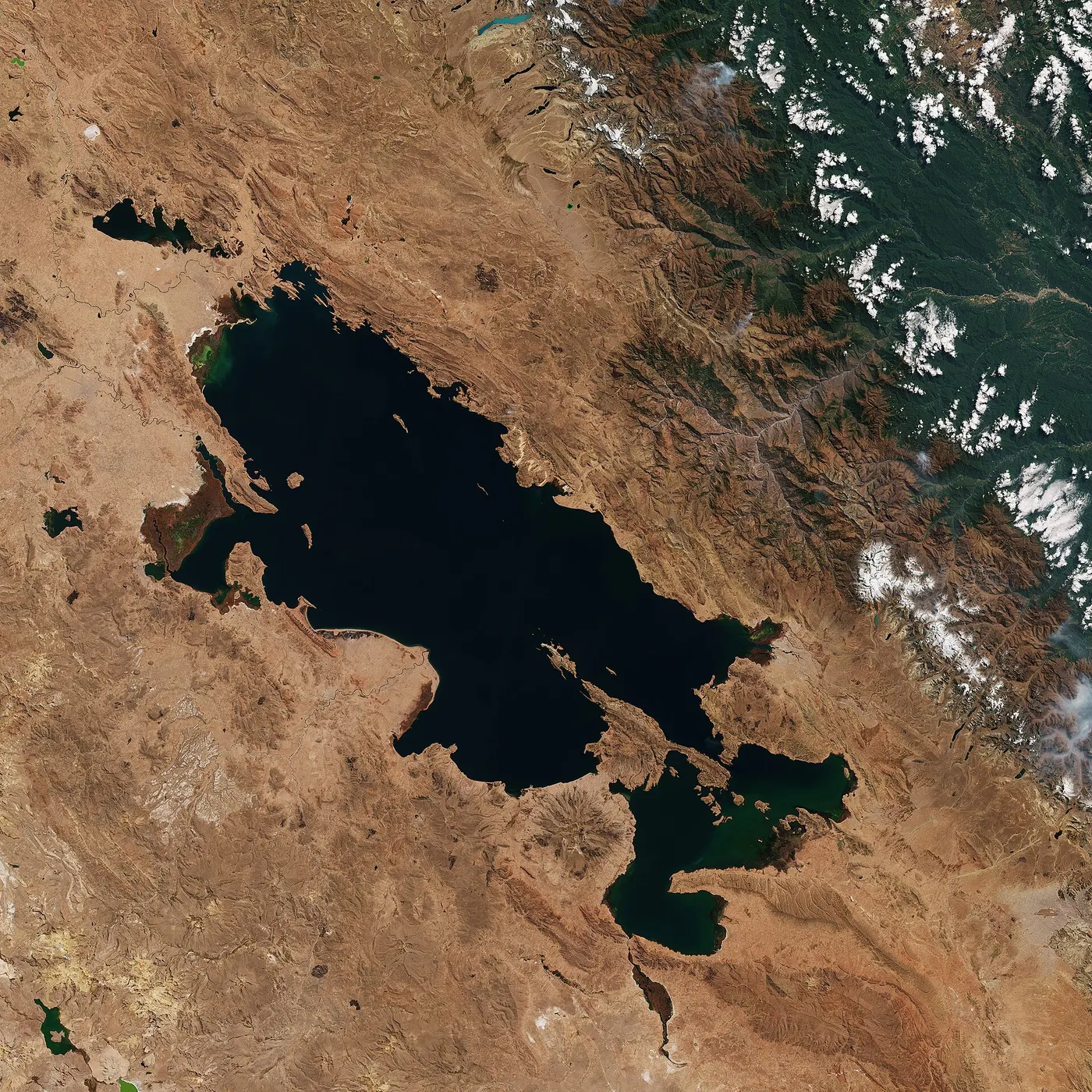
Lake Titicaca
The highest navigable lake in the world, on the Peru–Bolivia border, from which Inca tradition has Manco Cápac emerging to found their empire. In 2000 an underwater expedition found a stone terrace and a wall some eight hundred metres long on the bed near the Island of the Sun — pre-Inca Tiwanaku construction, now submerged. Offerings are still recovered from the bottom: gold figurines, incense, llama bones.
Comments
No comments yet. Be the first.