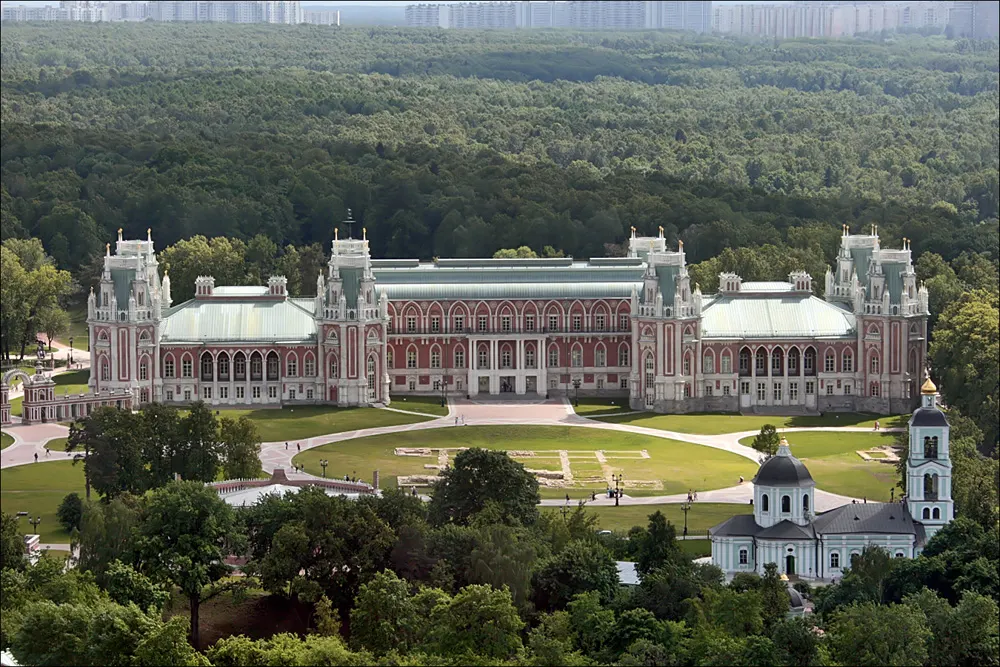
Tsaritsyno and the Rejected Palace
The Tsaritsyno State Historical, Architectural, Art and Landscape Museum-Reserve is an expansive imperial palace and park estate in southern Moscow, commissioned in 1775 by Empress Catherine the Great. It stands as Europe's largest complex built in the Russian Gothic (pseudo-Gothic romanticism) style and represents one of the most dramatic architectural sagas in Russian history: the nearly completed grand residence was abruptly rejected and ordered dismantled by the Empress herself, leaving the site as a romantic, unfinished ruin for more than two centuries.
The legend
Danger Level: Green (A safe historical landmark wrapped in court lore without physical peril to visitors) In June 1785, Catherine II made her first formal inspection of the estate, constructed over a decade by master architect Vasily Bazhenov. Upon touring the state apartments, the Empress reportedly flew into a rage, condemning the structure as unlivable, suffocating, and resembling a tomb or penitentiary. Bazhenov was instantly stripped of his duties, and the main palaces were ordered demolished. Popular urban lore and conspiracy narratives attributed Catherine's fury to covert Masonic symbolism: as a prominent Freemason, Bazhenov had supposedly encoded occult insignias across the stone tracery. Another enduring theory claims the architect committed political treason by erecting two identical twin palaces for Catherine and her estranged son, Grand Duke Paul, boldly treating mother and son as constitutional equals. Local folklore further claimed Bazhenov laid a curse on the grounds, decreeing that no Romanov sovereign would ever sleep beneath its roofs.
What actually happened?
Official imperial archives and Catherine's personal letters dissolve the Masonic and political treason conspiracies. The Empress had explicitly approved Bazhenov's architectural plans and elevations in 1776. The demolition was dictated by basic spatial inadequacy and shifting imperial ambitions. Over the ten years of construction, Russia expanded following the annexation of Crimea, demanding vast ceremonial spaces for foreign delegations; Bazhenov, conversely, had engineered an intimate, pavilion-style retreat with low ceilings (designed for heat retention), narrow service corridors, and small receiving rooms unsuited for court etiquette. The notion that twin wings for Paul triggered treason charges is baseless, as separate family quarters were mandated in the original 1775 building brief. The alleged "Masonic symbols" were standard ornamental motifs of 18th-century European Romantic Gothicism. Catherine subsequently commissioned Matvey Kazakov to design a much larger palace. However, Catherine's sudden death in 1796 and Paul I’s ascension halted all treasury funding. Tsaritsyno remained an untouched romantic ruin until the Moscow municipal government carried out a controversial, full-scale modern reconstruction between 2005 and 2007.
History
Prior to 1775, the area was known as the Black Dirt (Chyornaya Gryaz) manor, held by the noble Cantemir family. Enchanted by its rolling hills and interconnected ponds, Catherine II purchased the land and rechristened it Tsaritsyno (Tsarina’s Place). Master architect Vasily Bazhenov directed construction from 1775 until his dismissal in 1785. Architect Matvey Kazakov redesigned the Grand Palace between 1786 and 1796, but construction ground to an immediate halt upon Catherine’s death. Throughout the 19th and early 20th centuries, the picturesque Gothic ruins served as a romantic park for Muscovites, summer dacha estates, and poetic inspiration. A local history museum was established within the surviving outbuildings in 1927. The site was designated an open-air museum reserve in 1984, culminating in the massive 2005–2007 civic project that roofed the Kazakov ruins and turned them into a museum and exhibition complex.
Where is it?
1 Dolskaya Street, Tsaritsyno District, Southern Administrative District, Moscow, Russia; situated directly between the Tsaritsyno and Orekhovo metro stations.
Can you visit?
Yes, the landscaped public park surrounding the Upper and Middle Tsaritsyno ponds is open to the public daily free of charge from early morning until midnight. Access inside the restored Grand Palace, Bread House, Opera House, Third Cavalry Building, and Greenhouse complex requires paid museum tickets. All historical buildings and park paths are fully maintained, accessible, and equipped with audio and guided tours.
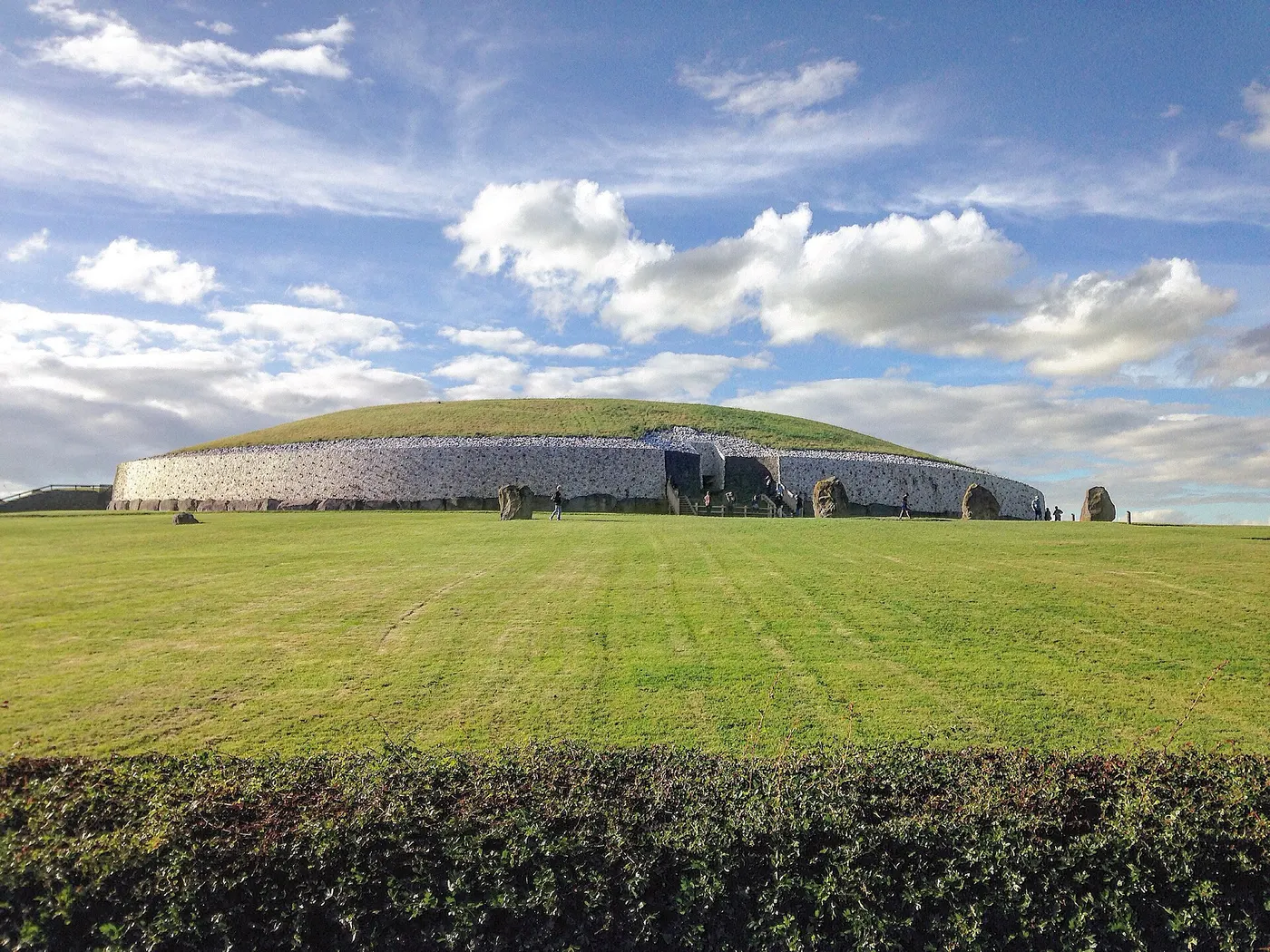
Newgrange
An Irish passage tomb built around 3200 BC — older than Stonehenge and the Egyptian pyramids. At the winter solstice a beam of rising sun passes through a narrow opening and lights the chamber deep inside.
Comments
No comments yet. Be the first.