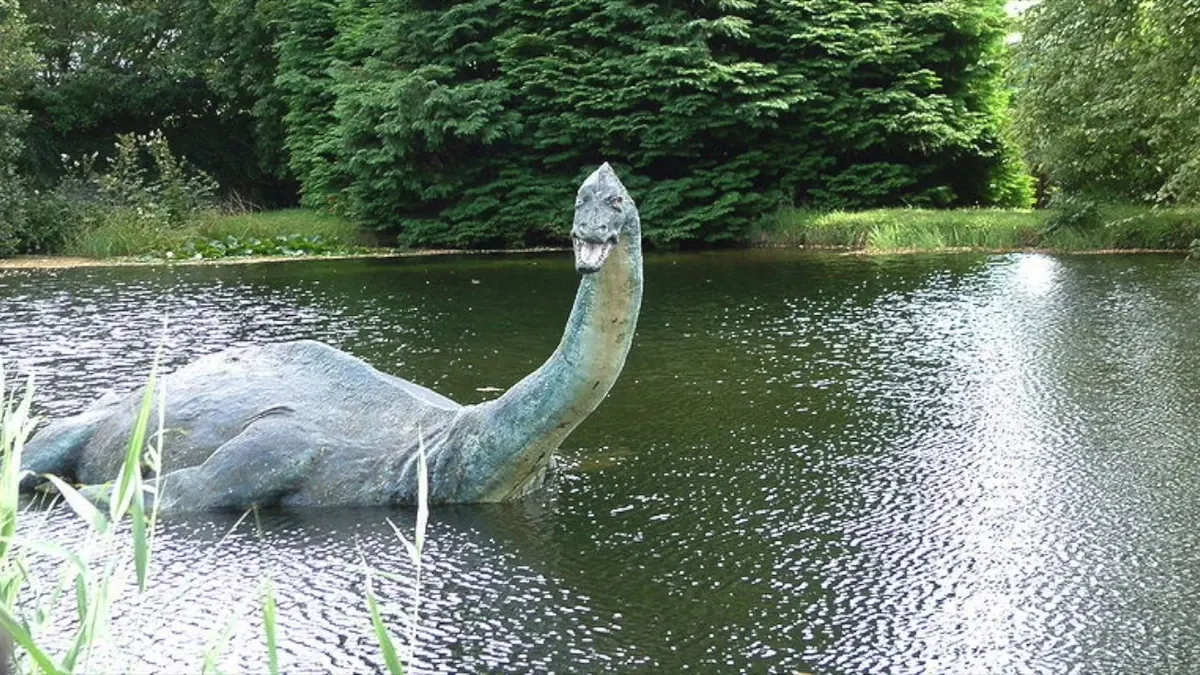
Lake Brosno and Its Dragon
Lake Brosno in the Tver Region is one of the deepest freshwater lakes in Central Russia, widely dubbed the "Russian Loch Ness." Surrounded by dense Valdai taiga and reaching depths of over 40 meters, the lake is famous for the cryptozoological legend of the "Brosno Dragon"—a mysterious giant aquatic beast said to dwell in its subterranean karst caverns.
The legend
Folklore regarding the monster spans centuries. The most prominent legend dates back to the 13th century, claiming that when the army of Batu Khan halted on the shores of Brosno, a colossal dragon emerged from the deep, devouring warriors and horses and forcing the Mongols to retreat, thus sparing Novgorod. In the 20th century, the myth expanded with tales of the creature capsizing fishing boats and even dragging a downed German warplane to the depths during World War II.
What actually happened?
Scientific expeditions and sonar mapping attributed the phenomenon to unique geology. The lakebed contains deep karst fissures and thick layers of decaying organic silt. Trapped methane and hydrogen sulfide periodically erupt to the surface in massive gas bubbles; the violently boiling water mimics a surfacing reptile's head, and the sudden explosive decompression can easily overturn a small boat.
History
While local folklore sustained the myth for generations, sensationalist media triggered a major cryptozoological boom in the late 1990s and early 2000s. Between 2002 and 2007, several research expeditions (including limnologists and the "Kosmopoisk" research group) mapped the lakebed, documented gas eruption dynamics, and definitively ruled out the existence of a living prehistoric reptile.
Where is it?
The lake is situated in the Andreapolsky District in the western part of the Tver Region (within the Valdai Hills), near the village of Brosno.
Can you visit?
Yes, the lake is open to the public for wild camping, fishing, and off-grid recreation. However, tourist infrastructure is virtually non-existent: access requires navigating rough dirt and forest tracks, making a high-clearance four-wheel-drive vehicle essential, especially during wet seasons.
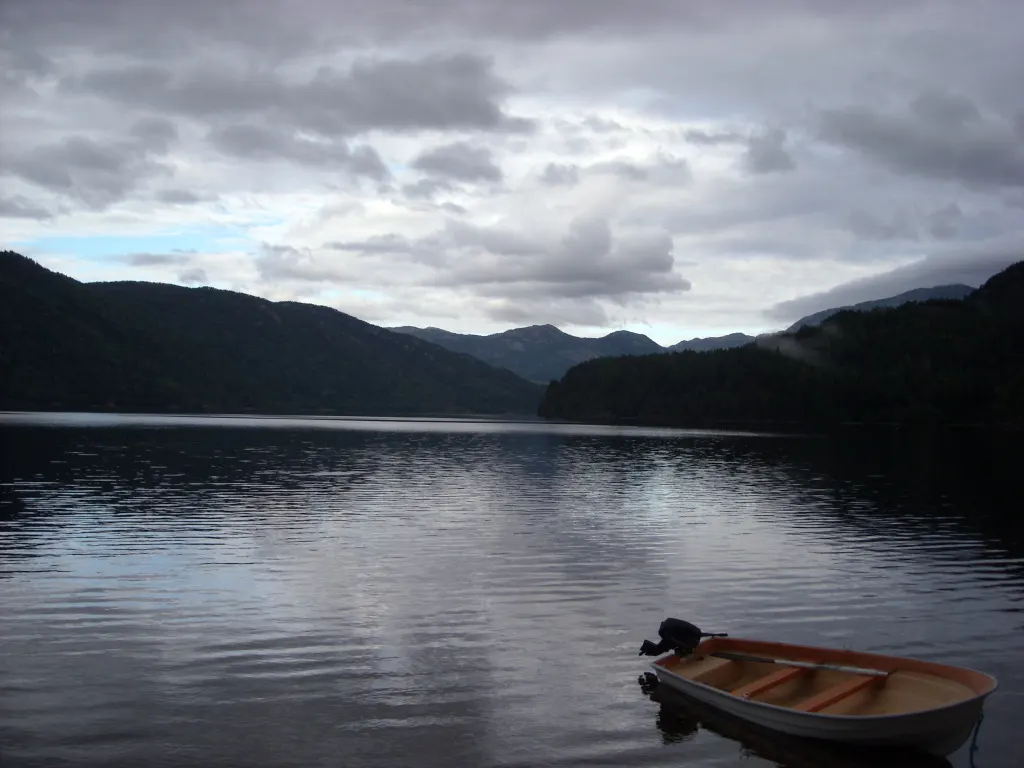
Seljordsvatnet and Selma
A lake in Norway's Telemark county where a serpent called Selma has been described since 1750. In the 1880s a woman named Gunhild Bjøge is said to have killed a young one on the shore with an axe. The serpent appears on the coat of arms of Seljord municipality — that is, in official heraldry. A sonar expedition in 2000 recorded moving objects on the bottom that it could not identify.
Comments
No comments yet. Be the first.