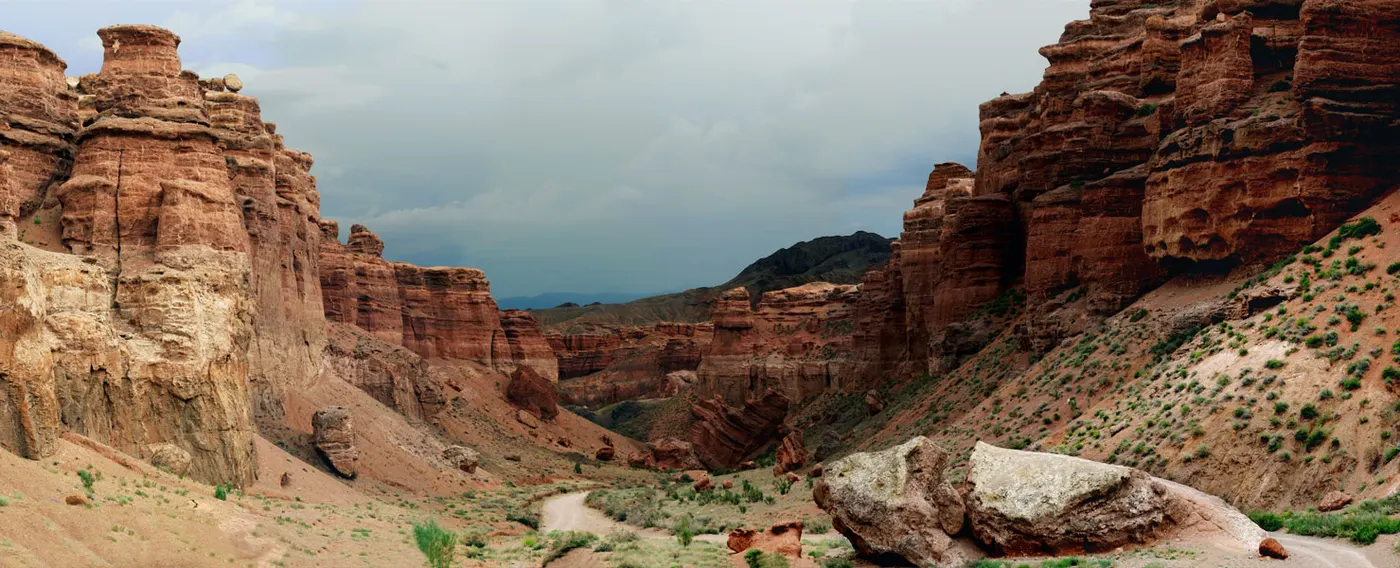
The Charyn Canyon
Charyn Canyon is an immense natural gorge system extending roughly 154 kilometers along the Charyn River within the Charyn National Natural Park in southeastern Kazakhstan (approximately 195 kilometers east of Almaty). Its most famous section, the "Valley of Castles" (spanning 2 kilometers with sheer walls dropping 150 to 300 meters), features striking layers of ochre-red sedimentary sandstone and conglomerate weathered into the shapes of towering towers, fortress parapets, and ruined ramparts, earning it global recognition as a Central Asian sibling to the American Grand Canyon.
The legend
Danger Level: Orange (Documented hazards of fatal flash floods, rockfalls, and extreme desert heat that fostered folklore of witches and malevolent canyon spirits) Nomadic folklore and modern esoteric circles have long attached paranormal significance to the canyon. Legend tells that the pillars are the petrified ruins of a citadel built by an ancient race of giant sorcerers or mountain spirits (djinns) struck dead and turned to stone. Specific side ravines, notably the "Witches' Gorge" (Devil's Gorge), were feared as taboo zones: travelers claimed that eerie shrieks, uncanny whispers, and spectral howls resonated between the sheer cliffs at night, disorienting wanderers and driving them off the edge. Regional lore explained the intense scarlet hue as the petrified blood of prehistoric dragons, while alternative theorists frequently allege the canyon walls conceal underground temples built by lost civilizations.
What actually happened?
The canyon architecture is a classic showcase of fluvial incision and differential weathering acting on layered sedimentary formations. Between 12 and 25 million years ago (during the Miocene and Pliocene epochs), the territory lay beneath the waters of an extensive inland lake basin. Over millions of years, dense beds of silt, fluvial gravel, sandstone, and mudstone accumulated; their intense red coloration stems from weathered iron oxides (hematite) under arid environmental conditions. Subsequent tectonic uplift of the northern Tien Shan mountain ranges forced the Charyn River to slice through the soft lacustrine plateau. The fortress-like towers formed because hard upper conglomerate layers sheltered the softer underlying siltstones from water erosion and wind scouring. The supposed "howling of witches" is entirely aerodynamic: rapid mountain winds whistling through narrow fractures, natural chimneys, and arches produce wind resonance (the Venturi effect and Helmholtz resonance). The genuine physical danger is environmental: severe flash floods and torrential mudflows (such as the lethal May 2021 mudslide in the Valley of Castles), rockfalls from brittle sandstone ledges, and summer temperatures often exceeding 40°C.
History
Human presence in the Charyn River basin spans millennia, evidenced by Bronze Age rock art, early Saka nomadic burial mounds, and medieval caravanserais along branches of the Northern Silk Road. Nearby sits an extraordinarily rare biological sanctuary: the ancient Sogdian Ash Grove, an intact forest ecosystem that survived the Pleistocene ice ages. The area was recognized as a regional natural monument during the Soviet period, but preservation remained fragmented until February 2004, when the government of Kazakhstan formally created Charyn State National Natural Park. In the early 2020s, eco-tourism facilities were established, adding an interpretive visitor center, engineered walking trails, and protected lookouts that transformed the site into one of Central Asia's premier natural destinations.
Where is it?
Almaty Region (Kegen and Enbekshikazakh districts), southeastern Kazakhstan; within Charyn National Natural Park along the Charyn River, accessed via the A-351 highway approximately 195 kilometers east of Almaty.
Can you visit?
Yes, the national park is open to visitors daily year-round. It is reached via a modern paved road from Almaty, taking roughly 3 to 3.5 hours by car or tour bus. An entry conservation fee is collected at the park gates. The location offers parking lots, a visitor center, rimside panoramic viewpoints, and a flight of stairs descending into the Valley of Castles with an easy 2-kilometer trail leading to the Charyn River (shuttle eco-taxis operate seasonally). Leaving the marked trail, attempting to climb fragile sandstone slopes, and entering the canyon bed during heavy rain or flood warnings is strictly prohibited due to rockslide and flash flood hazards.
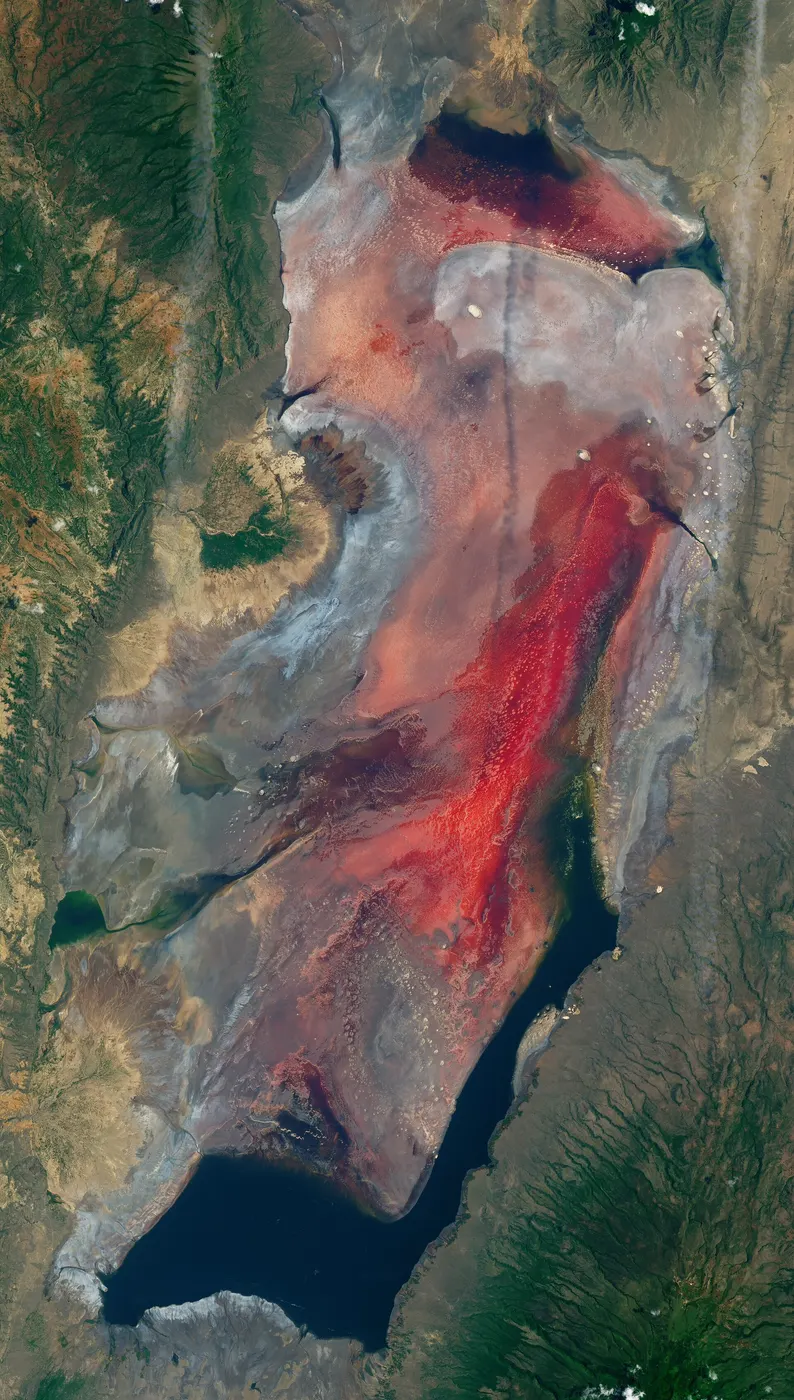
Lake Natron
An alkaline lake in Tanzania with rust-coloured water reaching 60 °C. Its chemistry preserves the bodies of dead birds under a calcified crust — the source of those photographs of "petrified" animals.
Comments
No comments yet. Be the first.