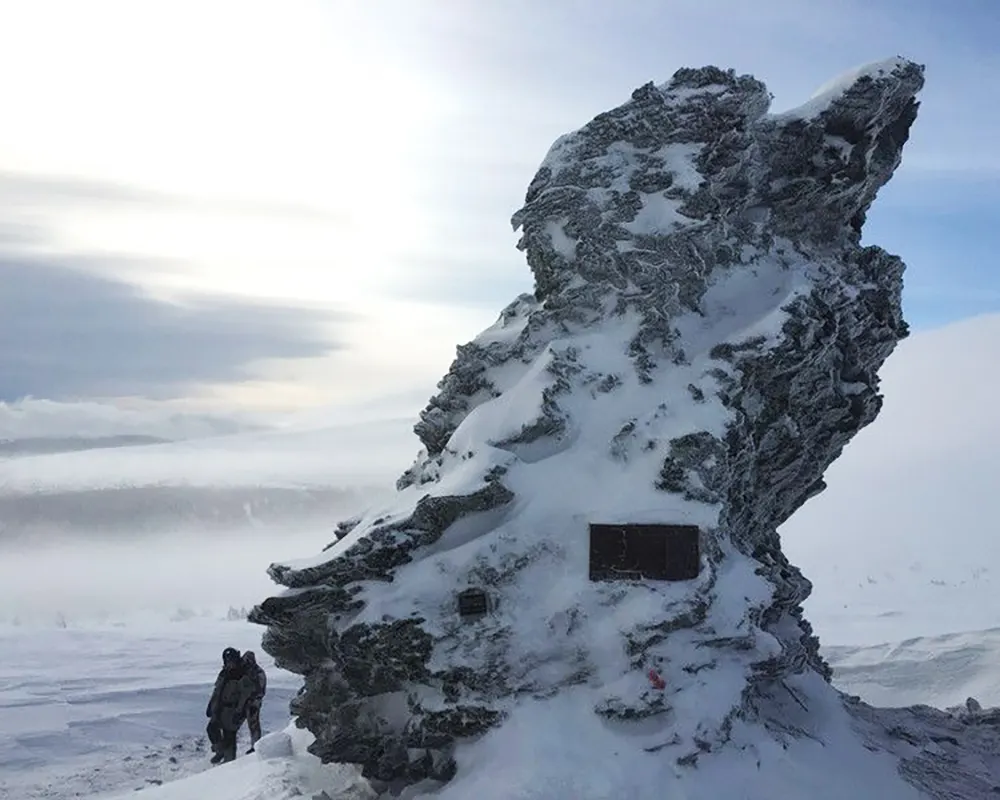
Dyatlov Pass
Dyatlov Pass is a mountain saddle situated between unnamed Peak 905 and the eastern flank of Kholat Syakhl (Mansi for "Dead Mountain") in the northern Ural Mountains of Russia's Sverdlovsk Oblast. This remote subarctic wilderness became the focal point of one of the 20th century's most persistent mysteries following the tragic and perplexing deaths of nine Soviet ski hikers in the winter of 1959.
The legend
Danger Level: Orange (Documented fatalities of nine hikers in subzero wilderness that spawned a global conspiracy mythos) On the night of February 2, 1959, nine experienced ski hikers led by Igor Dyatlov slashed their tent from the inside and fled into the subzero dark half-dressed in freezing temperatures below minus 25 Celsius. Weeks later, search teams recovered their bodies scattered hundreds of meters apart. Popular lore and sensational media amplified the mystery with chilling claims: bizarre orange-tanned skin, trace radiation on clothing, massive internal skull and rib fractures without external tissue bruising, and missing eyes and tongue on hiker Lyudmila Dubinina. For decades, folklore attributed the deaths to Mansi blood curses, Siberian Yetis, classified Soviet vacuum bomb testing, atmospheric infrasound-induced madness, glowing UFO fireballs, or covert execution by KGB and CIA hit squads.
What actually happened?
Rigorous scientific modeling—notably the 2021 study by Swiss biomechanical engineers Johan Gaume and Alexander Puzrin published in Nature Communications Earth and Environment, alongside the 2019-2020 reinvestigation by the Russian Prosecutor General's Office—decisively confirmed a delayed small-scale slab avalanche mechanism. To shield their camp from relentless winds, the hikers had excavated a ledge into the hillside, weakening the cohesive upper snowpack. Overnight, gale-force winds deposited heavy snowdrifts onto the weakened slope, triggering a compact snow slab collapse. The dense, compacted slab caved in the tent and inflicted severe blunt-force internal fractures onto sleeping members without leaving external skin abrasions. Trapped and facing suffocation, the survivors cut their way out and evacuated toward the tree line to build a sheltered fire pit in subzero blizzards exceeding minus 25 Celsius. Hypothermia set in rapidly, causing disorientation and paradoxical undressing. The minor radioactive signatures on two garments traced back to previous industrial employment at Mayak (Chelyabinsk-40) or thorium-infused camping lantern mantles. The missing soft tissues (eyes and tongue) found on bodies in the ravine were standard post-mortem decomposition artifacts caused by running meltwater and opportunistic scavenging by small rodents, birds, and aquatic microbes over the three months before their recovery in May 1959.
History
The expedition of nine students and graduates from the Ural Polytechnic Institute (UPI), led by 23-year-old engineering student Igor Dyatlov, departed on a third-class (highest difficulty) winter ski trek on January 23, 1959. A tenth hiker, Yuri Yudin, turned back early due to acute joint pain, inadvertently saving his life. When the group missed their mid-February telegraph check-in, an extensive search operation mobilized military aircraft, alpine scouts, and civilian volunteers. In May 1959, Soviet lead investigator Lev Ivanov closed the official inquest with the poetic yet ambiguous verdict that the hikers succumbed to "an elemental force that the tourists were unable to overcome." This vague Soviet phrasing directly fueled sixty years of wild speculative conspiracy theories. Today, the mountain pass bears Dyatlov's name, marked by an official bronze memorial plaque bolted to a granite outcrop.
Where is it?
Ivdel Urban Okrug, Sverdlovsk Oblast, Russia; the upper basin of the Auspiya River and the fourth tributary of the Lozva River, a mountain saddle near Kholat Syakhl (Elevation 1079), approximately 125 kilometers northwest of the outpost village of Vizhay.
Can you visit?
Yes, the pass is an established yet intensely extreme tourist destination. Summer visitors arrive on foot, via heavy off-road vehicles, or by chartered helicopter, while winter expeditions use snowmobiles or cross-country skis, typically routing from Ivdel through the abandoned base at Vizhay. The territory is wilderness: completely devoid of cellular service, paved roads, or medical services for hundreds of miles. Winter visits pose grave risks of severe frostbite, disorientation, sudden snowpack shifting, and blizzards with temperatures falling past minus 40 Celsius. All wilderness groups must register travel itineraries in advance with the Russian Ministry of Emergency Situations (EMERCOM) and carry satellite transponders.
Cape Ryty on Baikal
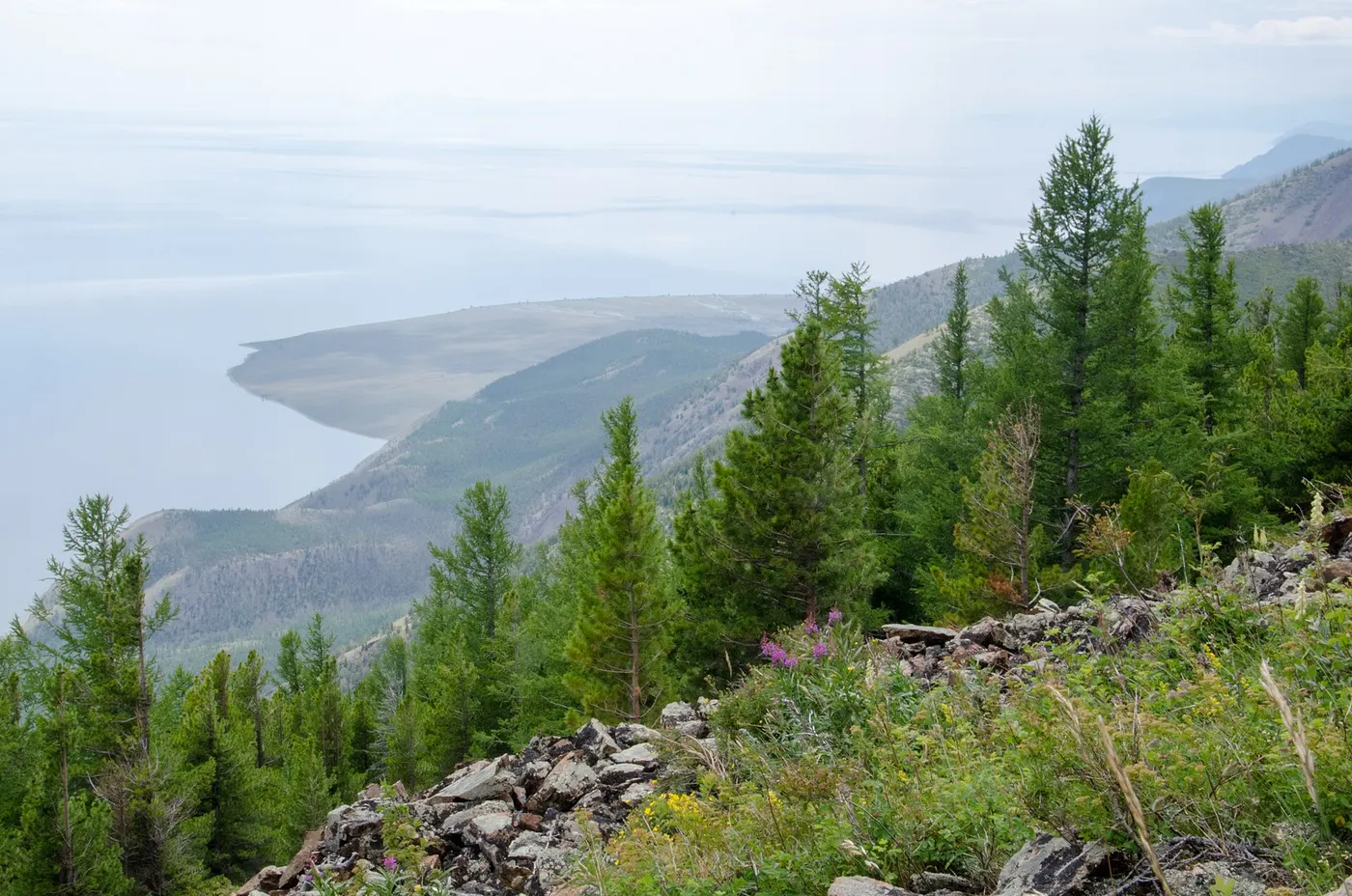
One of the most closed stretches of the Baikal shore: the Buryats hold it to be ground one does not set foot on — spirits live there, and the penalty for trespass is illness or death. Women were forbidden to approach at all. A stone wall of unknown age and purpose survives on the cape, and a compass behaves unpredictably here because of a magnetic anomaly. It lies within a nature reserve, and getting there legally is next to impossible.
Comments
No comments yet. Be the first.