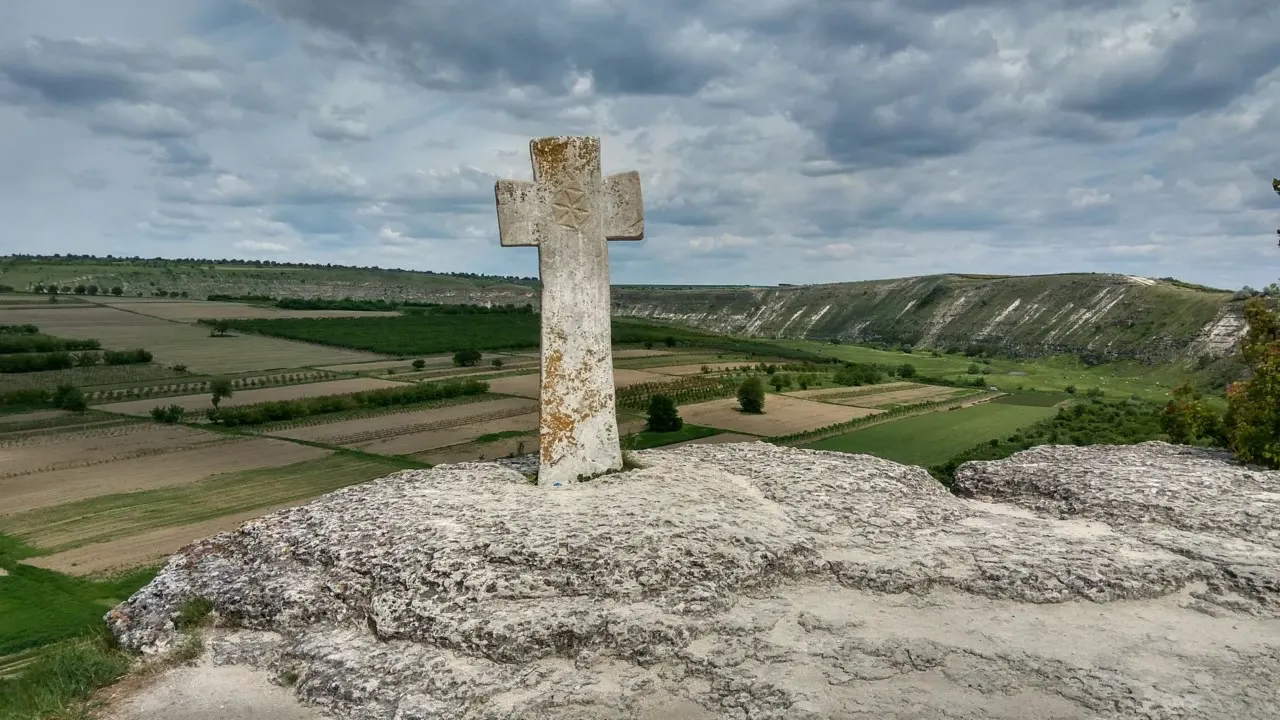
Orheiul Vechi
Old Orhei (Romanian: Orheiul Vechi) is a historical-archaeological museum-reserve and natural-cultural landscape situated within the Orhei District of the Republic of Moldova, set inside the limestone gorge of the Răut River between the villages of Butuceni, Trebujeni, and Morovaia (roughly 50–60 kilometers northeast of Chișinău). The complex forms a natural amphitheater where the meandering river bisects ancient Sarmatian limestone escarpments along the Peștere promontory. The site preserves a continuous archaeological palimpsest spanning millennia: Thracian and Geto-Dacian earthworks, the 14th-century Golden Horde stone city of Shehr al-Jedid, the medieval Moldavian fortress of Stephen the Great, and rupestral Orthodox cave monasteries carved directly into the sheer cliff walls.
The legend
Danger Level: Green (A protected, publicly accessible cultural reserve and ecotourism landmark requiring basic personal vigilance near sheer unbarricaded cliffs) The folkloric heritage of Old Orhei has long been amplified by its dramatic cliff topography and dozens of rupestral caverns: Subterranean labyrinths and Tatar treasures: Regional lore asserts that the Butuceni limestone ridges are hollowed by secret escape tunnels extending tens of kilometers toward Iași or Suceava. Local urban legends claim that before evacuating the settlement, Golden Horde rulers entombed wagons of gold, ingots, and jewelry inside sealed cliff vaults guarded by ancient curses; Esoteric "Power Spot" and Dacian astronomy: Modern occultists and neo-pagans revere Old Orhei as a major telluric energy nexus in Eastern Europe. The circular Geto-Dacian stone sanctuary atop the promontory is framed as a cosmic alignment terminal, with visitors reporting sensory tingles, spontaneous euphoric states, or localized dizziness when entering rock-hewn cells; Spectral hesychast monks: Ghost hunters frequently trade accounts of spectral Orthodox hermits in dark hoods floating past vertical cliff apertures overlooking the river at dusk, accompanied by disembodied liturgical chanting echoing from abandoned rock grottos during high-wind events; Stephen the Great's hidden cavalry: Folk tradition claims Prince Stephen III (Ștefan cel Mare) concealed entire cavalry detachments within natural subterranean caverns, ambushing Ottoman invasion columns from behind concealed rock fissures.
What actually happened?
Systematic excavations conducted by the Academy of Sciences of Moldova since 1947 (spearheaded by G. D. Smirnov, P. P. Bîrnea, and subsequent archaeological expeditions) documented the historical stratigraphy: Geological formation: The deep Sărmatian limestone canyon was carved by the meandering Răut River through an ancient Miocene barrier reef. The porous, soft coquina limestone provided workable rock that enabled early communities to easily carve defensive ditches, cisterns, and subterranean cells; Geto-Dacian hillfort (6th–1st centuries BC): The promontory accommodated a fortified settlement bounded by drystone walls and timber palisades. The circular stone sanctuary with concentric stone hearths served not as an occult locus, but as a practical solar observatory and agrarian sacrificial hearth characteristic of Thracian cultural complexes; The Golden Horde metropolis of Shehr al-Jedid (1330s–1360s): During the 1330s, the Golden Horde established an administrative trading center named Shehr al-Jedid ("New City"). Excavations uncovered an Islamic mosque, a caravanserai, mounded mausoleums, ceramic kilns, and two brick hammams (public baths) featuring hypocaust sub-floor radiant heating systems. The settlement operated its own mint striking bronze and silver dirhams until urban destruction occurred around 1369 amid internal Golden Horde fragmentation; Moldavian Orhei (15th–16th centuries): Moldavian princes erected a stone citadel over the ruined Tatar palatial footprint, complete with four corner bastions and a governor's (pîrcălab) residence. Orhei flourished as a defensive border march until frequent Crimean Tatar incursions compelled Prince Alexandru Lăpușneanu to order the deliberate destruction of the stone castle in the mid-16th century, relocating the urban population 18 km northwest to modern Orhei; Rupestral monasticism and natural acoustics: The cliff faces contain roughly 350 carved cavities forming isolated hermit networks (principally the Peștere and Bosie complexes). Orthodox hesychast ascetics excavated these cells between the 15th and 17th centuries to pursue contemplation and survive raids. The Peștere hermitage comprises an underground chapel and 11 monk cells. The auditory sensations stem from aerodynamic factors: sheer cliff embrasures act as natural acoustic funnels that amplify river turbulence, wind sheer, and distant fauna into resonant murmurs.
History
The earliest fortifications were constructed between the 6th and 3rd centuries BC by Geto-Dacian tribes. Early medieval layers confirm subsequent Slavic Tivertsi occupations. The urban apex unfolded first under the Golden Horde (Shehr al-Jedid, mid-14th century) and later under Prince Stephen the Great (15th century), who integrated the stone citadel into Moldavia's eastern border line. Following the strategic relocation of the town in the mid-16th century, secular habitation collapsed, leaving only isolated monastic communities. In 1821, villagers erected a bell tower over the Peștere cave entrance, and in 1904, the above-ground masonry Church of the Ascension of the Virgin was consecrated along the limestone crest. In 1968, the complex was granted national archaeological reserve status. In 1996, the Peștere cave chapel was reconsecrated for liturgical use. During the 2000s, Old Orhei was submitted to the UNESCO World Heritage Tentative List and grew into Moldova’s primary destination for rural heritage and archaeological tourism.
Where is it?
Orhei District, Republic of Moldova; the Old Orhei Cultural-Natural Reserve encompasses the Răut River valley between the villages of Butuceni and Trebujeni, situated 18 kilometers southeast of the city of Orhei and roughly 55 kilometers northeast of the capital, Chișinău.
Can you visit?
Yes, Old Orhei is open year-round as a designated national archaeological reserve and open-air museum. Access and transit: From Chișinău Central Bus Station, scheduled minibuses (marshrutkas) depart daily directly to Butuceni and Trebujeni (travel time ~60–75 minutes). Private transport follows the M2 highway north out of Chișinău, exiting onto regional corridor G69; Visitor attractions: The active Peștere rupestral chapel (accessed via the 19th-century bell tower), the Church of the Ascension, the traditional peasant architecture museum in Butuceni, exposed stone foundations of the Tatar public baths and palace compounds, and ridge hiking paths; Safety precautions: The primary physical hazard involves steep, unbarricaded limestone cliffs dropping 50 to 60 meters to the riverbed. High winds along the ridge line and slick rock surfaces following precipitation demand traction footwear. Approaching the edge of vertical scree slopes or attempting free climbs between unmanaged cliff apertures is hazardous; Facilities: The surrounding rural settlements feature established agritourism guesthouses. Access to the natural ridge trails and cave chapel is free, while admission fees apply to the indoor archaeological museum.
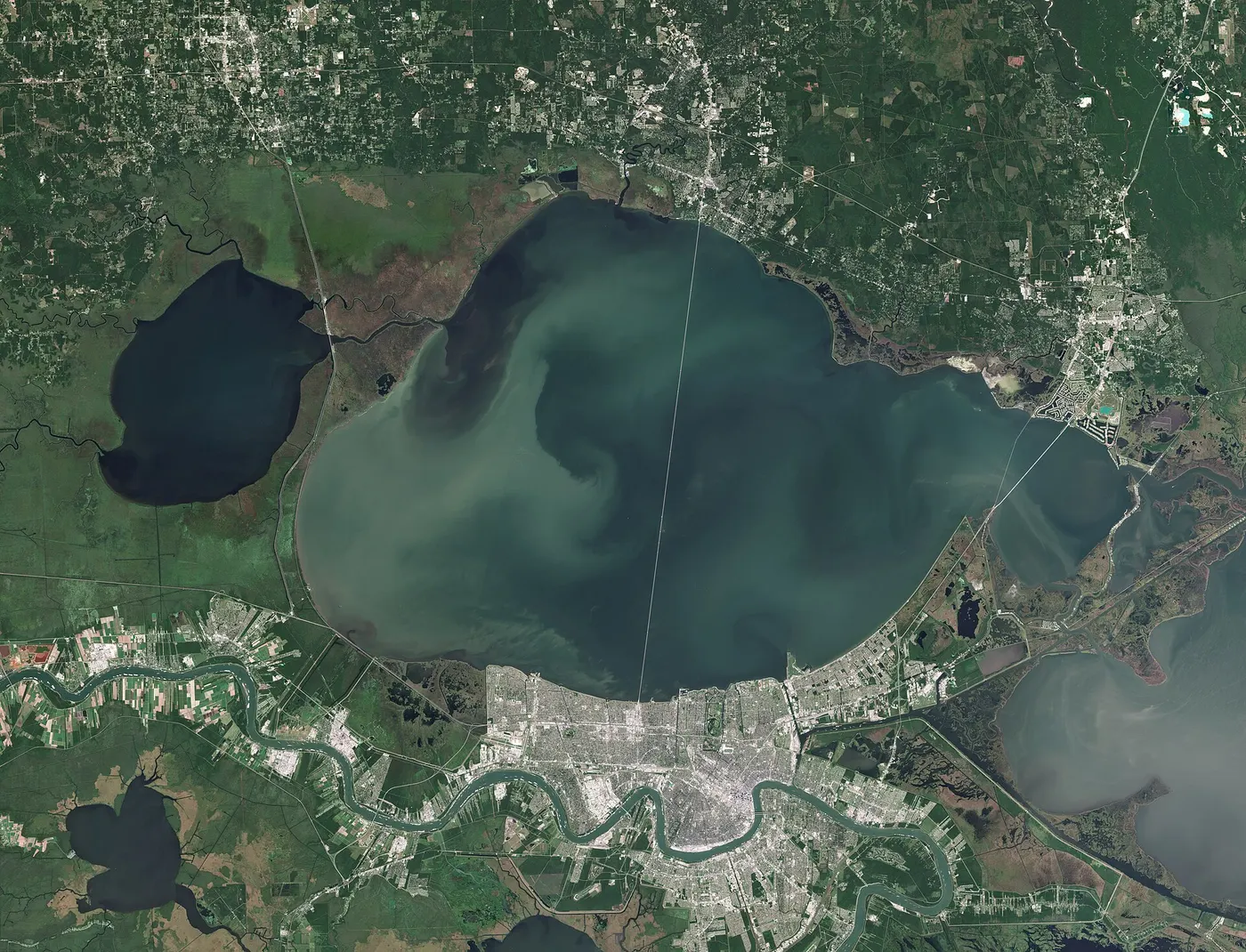
Lake Pontchartrain, at the Gates of Voodoo
The vast brackish estuary beside New Orleans, on whose shores voodoo rites were held through the nineteenth century — most famously Marie Laveau's St John's Eve gatherings at Bayou St John. Traces of offerings still turn up at night: candles, coins, bones. A causeway nearly twenty-four miles long crosses the lake, and from its middle no shore is visible at all — a sensation locals count as its own reason not to drive it in fog.
Comments
No comments yet. Be the first.