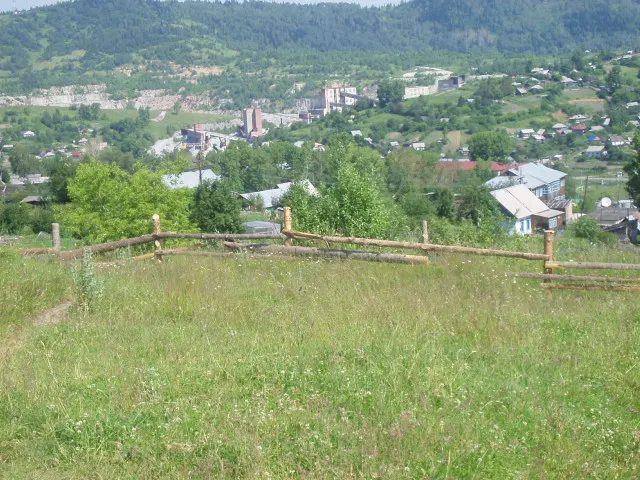
The Azass Cave and the Kuzbass Yeti
Azasskaya Cave is a karst cavern formation located at the headwaters of the Azas stream within Shorsky National Park in the Tashtagolsky District of Kemerovo Oblast (Mountain Shoria), southern Siberia. Featuring an impressive arched entryway grotto measuring up to 12 meters in height and a freezing subterranean stream flowing from its mouth, the site gained international renown in the late 2000s as the alleged primary lair of a surviving relict hominid population: the "Kuzbass Yeti."
The legend
Danger Level: Green (A scenic natural landmark wrapped in an orchestrated municipal PR campaign posing zero danger) In February 2009, the Kemerovo regional administration issued a press release claiming that indigenous Shor hunters had encountered towering, bipedal ape-men covered in thick fur deep inside the taiga, identifying Azasskaya Cave as their subterranean home. Inside the grotto and across the surrounding woods, enthusiasts documented giant footprints pressed into clay, tufts of coarse fur snagged on limestone ledges, and intricate "nesting structures"—arched and twisted young birch saplings broken high above human reach. Regional Governor Aman Tuleyev established an official regional holiday ("Yeti Day"), offered a 1-million-ruble municipal bounty for capturing a living specimen, and in 2011 sponsored an international cryptozoology conference featuring former boxing world champion Nikolai Valuev alongside researchers from the United States, Canada, Sweden, and Estonia, who famously announced they were "95% certain" the hominid existed.
What actually happened?
The "Kuzbass Yeti" was a commercially driven, state-sponsored public relations fabrication. In April 2021, former Kemerovo Governor Aman Tuleyev published an official confession admitting that the entire cryptid saga was an orchestrated marketing hoax designed to fuel domestic tourism into Mountain Shoria and boost interest in the Sheregesh ski resort. Tuleyev revealed that he had personally instructed the head of the Tashtagolsky District, Vladimir Makuta, to maintain public curiosity by dressing tall locals in inverted fur coats, ordering them to run through the peripheral woods in front of tour groups, and stamping fake tracks in the snow. The supposed "arched tree nests" were natural forest features created by heavy winter snowpacks pinning saplings to the frozen soil, supplemented by installations built by park rangers. Rigorous independent DNA assays on hair samples gathered from the cave—conducted by evolutionary geneticist Bryan Sykes of the University of Oxford and laboratories of the Russian Academy of Sciences—confirmed the specimens belonged to mundane terrestrial mammals: brown bear, domestic horse, goat, and American bison (likely shed from cold-weather workwear or hunting gear).
History
The indigenous Shor people have historically revered the taiga landscape through shamanic animism, populating peaks with spirits (Tag-eezi, masters of the mountain), though localized zoological ape-men were absent from indigenous traditions. Azasskaya Cave itself was charted and cataloged by Soviet speleologists in the late 20th century as an active hydrological karst system. Media coverage began in February 2009 driven by administrative press releases. Beginning in 2010, the town of Tashtagol established an entire souvenir industry, erected a bronze Yeti monument, and built dedicated exhibits at the Museum of Ethnography. Following the October 2011 international conference, interest peaked before settling into its current status as an established cultural tourism mascot.
Where is it?
Tashtagolsky District, Kemerovo Oblast, southern Siberia, Russia; situated within Shorsky National Park in the headwaters of the Azas stream (a tributary of the Mras-Su River), roughly 20 km northwest of the village of Ust-Kabyrza and 70 km east of the mining hub of Tashtagol.
Can you visit?
Yes, Azasskaya Cave is an officially developed eco-tourism destination within Shorsky National Park. Visitors must obtain an entry permit from the national park headquarters in Tashtagol or the ranger office in Ust-Kabyrza. A gravel road links Tashtagol to Ust-Kabyrza; from there, access routes traverse backcountry taiga: in winter via tracked snowmobiles along groomed trails, and in summer via motorboats up the Mras-Su and Pyzas rivers followed by an all-terrain vehicle track or a marked eco-trail hike (roughly 4 to 6 hours on foot). The spacious mouth of the cave is safe to explore with standard flashlights; during subzero winter months, large ice stalagmites form across the grotto floor. Progressing deeper into unmapped flooded passages requires specialized wetsuits and cave-diving qualifications.
Loveland and the Frogman
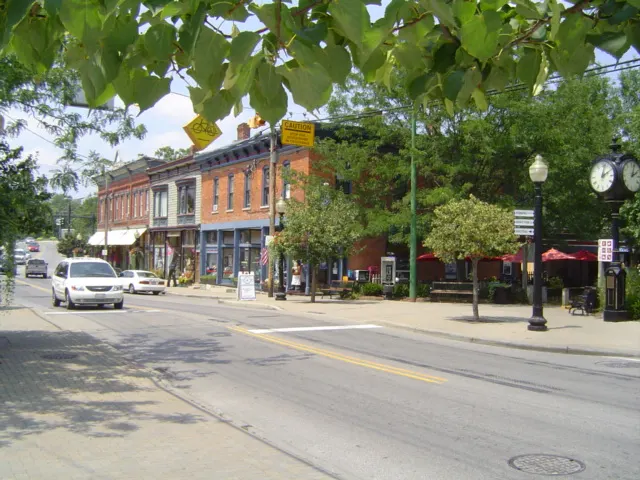
The city of Loveland in southwestern Ohio, USA, is a charming suburb of Cincinnati situated along the scenic Little Miami River. The town gained international cryptozoological fame as the home of the "Loveland Frogman"—a bizarre bipedal amphibian humanoid that became one of the most recognizable cryptids in modern American folklore.
Comments
No comments yet. Be the first.