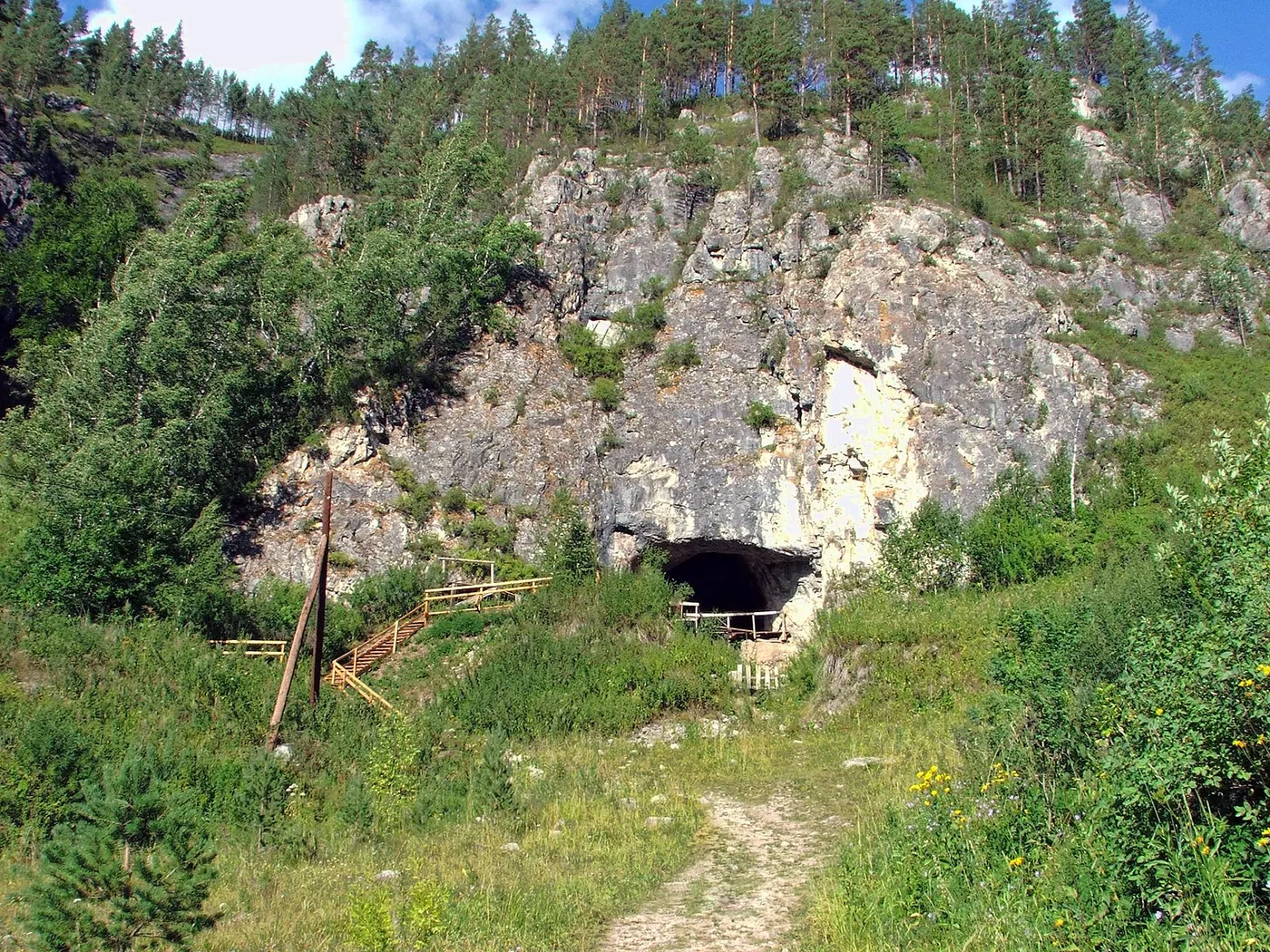
The Denisova Cave
Denisova Cave (Altai: Ayu-Tash, meaning "Bear Rock") is a karstic cave and globally renowned paleoanthropological site situated within the Soloneshensky District of Altai Krai, Russia, in the upper valley of the Anuy River in the northwestern Altai Mountains. Comprising roughly 270 square meters of horizontal chambers, the cave serves as a pristine multi-stratified Pleistocene and Holocene sediment archive that continuously accumulated archaeological deposits spanning over 300,000 years. The site attained global scientific prominence in 2010 when paleogenomic sequencing of a juvenile hominin finger bone fragment revealed a previously unidentified archaic human lineage—the Denisovans—fundamentally reshaping modern paleoanthropology and hominin evolution models.
The legend
Danger Level: Green (A stabilized, officially monitored archaeological field base and tourist site posing zero physical danger) Within traditional Altai oral folklore, the cave was revered as Ayu-Tash ("Bear Rock"), a sacred threshold separating the middle and lower worlds. Indigenous lore warned that a powerful Black Shaman inhabited the chambers, commanding storms and taking the physical form of a massive bear; local hunters traditionally avoided sheltering in the mouth to avoid disturbing mountain spirits (eezi). In the late 18th century, an Old Believer hermit monk named Dionisiy (Denis) established an ascetic cell inside, offering pastoral counsel to regional religious dissidents and giving the landmark its contemporary name. Following paleogenomic breakthroughs in the early 21st century, the cave attracted speculative and pseudo-archaeological fringe claims: The Hyperborean and Shambhala cradle: New-age occultists and Roerich-inspired esoteric groups integrated the cave into lost subterranean networks connecting to Agartha or Shambhala, framing Denisovans as metaphysical progenitors of esoteric races; The "Giant Race" misconception: The recovery of massive hominin molars (Denisova 4 and Denisova 8), which structurally dwarf the dentition of both Neanderthals and modern humans, fueled sensational tabloid claims that Denisovans were physical giants standing 2.5 to 3.5 meters tall; The "Alien Nanotechnology" trope: The unearthing of a polished Upper Paleolithic chloritolite bracelet exhibiting micro-drilled perforations led fringe theorists to claim evidence of extraterrestrial intervention or advanced machine-tool manufacturing 50,000 years in the past.
What actually happened?
The authentic significance of Denisova Cave rests on its biochemical and stratigraphic integrity, verified by peer-reviewed research in Nature and Science: Discovery of the Denisovan lineage: In 2008, excavators recovered a fragment of a juvenile hominin fifth distal phalanx (Denisova 3) within Layer 11 of the East Gallery. Directed by Academicians Anatoly Derevyanko and Michael Shunkov of the Siberian Branch of the Russian Academy of Sciences (SB RAS), researchers collaborated with the Max Planck Institute for Evolutionary Anthropology in Leipzig. Paleogeneticist Svante Pääbo (awarded the 2022 Nobel Prize in Physiology or Medicine) sequenced both mitochondrial and high-coverage nuclear genomes from the specimen. The sequencing demonstrated that Denisovans were a distinct archaic sister clade to Neanderthals, having diverged from their common ancestral lineage roughly 400,000–500,000 years ago. The natural cryogenic vault: The exceptional preservation of fragile sub-fossil DNA molecules was facilitated by the cave's microclimate. Horizontal subterranean topography maintains a constant annual temperature near 0 °C to +2 °C, while deep calcareous sedimentation buffers moisture swings, acting as a stable preservation matrix for ancient bone collagen. The three-way hominin crossroads and first-generation hybrid: Denisova Cave represents the sole confirmed geographic locality where three hominin forms—Denisovans, Neanderthals (Altai Neanderthals), and anatomically modern humans (Homo sapiens)—coexisted or rotated occupation across millennia. In 2018, genomic sequencing of specimen Denisova 11 ("Denny") provided empirical proof of direct interbreeding: the 13-year-old girl was a direct first-generation (F1) hybrid born of a Neanderthal mother and a Denisovan father. Modern genomic legacy: Denisovans left a genetic footprint in living human populations: 4% to 6% of the genome of indigenous Papuans, Melanesians, and Indigenous Australians derives from Denisovans, with lower admixture traces across Mainland East Asia. Modern Tibetans inherited their high-altitude adaptation allele in the EPAS1 gene directly from ancestral Denisovan introgression, preventing hypoxia without pathological blood thickening, while Greenlandic Inuits carry the Denisovan-derived TBX15/WARS2 cold-adaptation locus. Debunking gigantism and high-tech myths: The substantial size of Denisovan molars reflects plesiomorphic dental megadontia inherited from early Middle Pleistocene ancestors, not anatomical gigantism (skeletal proportions were robust but comparable to Neanderthals). The celebrated chloritolite bracelet and polished bone eye needles (dating to ~45,000–50,000 BP) were crafted via manual high-speed reciprocal spindle drilling using fine-grained quartz sand slurry abrasives and hide-buffing, demonstrating the technical sophistication of Upper Paleolithic humans without requiring non-human technology.
History
Initial exploratory evaluations were conducted in 1977 by paleontologist Nikolai Ovodov, who identified stratified Paleolithic flint tools. In 1982, Academician Alexey Okladnikov established a long-term excavation framework, subsequently directed by Anatoly Derevyanko. In 1984, the Institute of Archaeology and Ethnography SB RAS established a permanent research station and field laboratory along the river terrace beneath the entrance. Across four decades of continuous field operations, researchers unearthed over 150,000 lithic artifacts, personal ornaments, faunal specimens, and hominin fossil fragments. In the 2010s, researchers pioneered sediment DNA profiling here, isolating hominin genomic sequences directly from stratigraphic soil layers without requiring physical macro-fossils. Denisova Cave holds protected status as an Object of Cultural Heritage of Federal Significance and is cataloged on the UNESCO World Heritage Tentative List.
Where is it?
Soloneshensky District, Altai Krai, Siberian Federal District, Russia; positioned within the Anuy River valley 4 kilometers upstream from the border with the Altai Republic (village of Chyorny Anuy), 40 kilometers southwest of the district capital Soloneshnoye, and approximately 250 kilometers south of Biysk.
Can you visit?
Yes, Denisova Cave is publicly accessible, though interior movement is strictly controlled to preserve sensitive stratigraphic profiles: Visitor infrastructure: A railed staircase ascends the limestone cliff face from the Soloneshnoye–Ust-Kan roadway to the cave entrance. The central chamber is outfitted with raised wooden boardwalks and observation platforms. Independent access to the main chamber is permitted, while guided heritage tours led by regional guides and affiliated researchers operate during the summer months; Preservation rules: Visitors are strictly barred from descending into active excavation trenches, touching excavated profile walls, removing sediment samples, or igniting open flames; Transportation: Access is viable via standard passenger vehicles along regional highway 01K-12 from Biysk through Smolenskoye and Soloneshnoye (the final stretches past Soloneshnoye transition into graded gravel but remain maintained year-round). The optimal travel window runs from late May through September; Lodging: The permanent IAET SB RAS scientific research base sits near the base of the bluff, alongside private rustic eco-camps and guest cabins situated along the Anuy River corridor.
The Devil's Tramping Ground
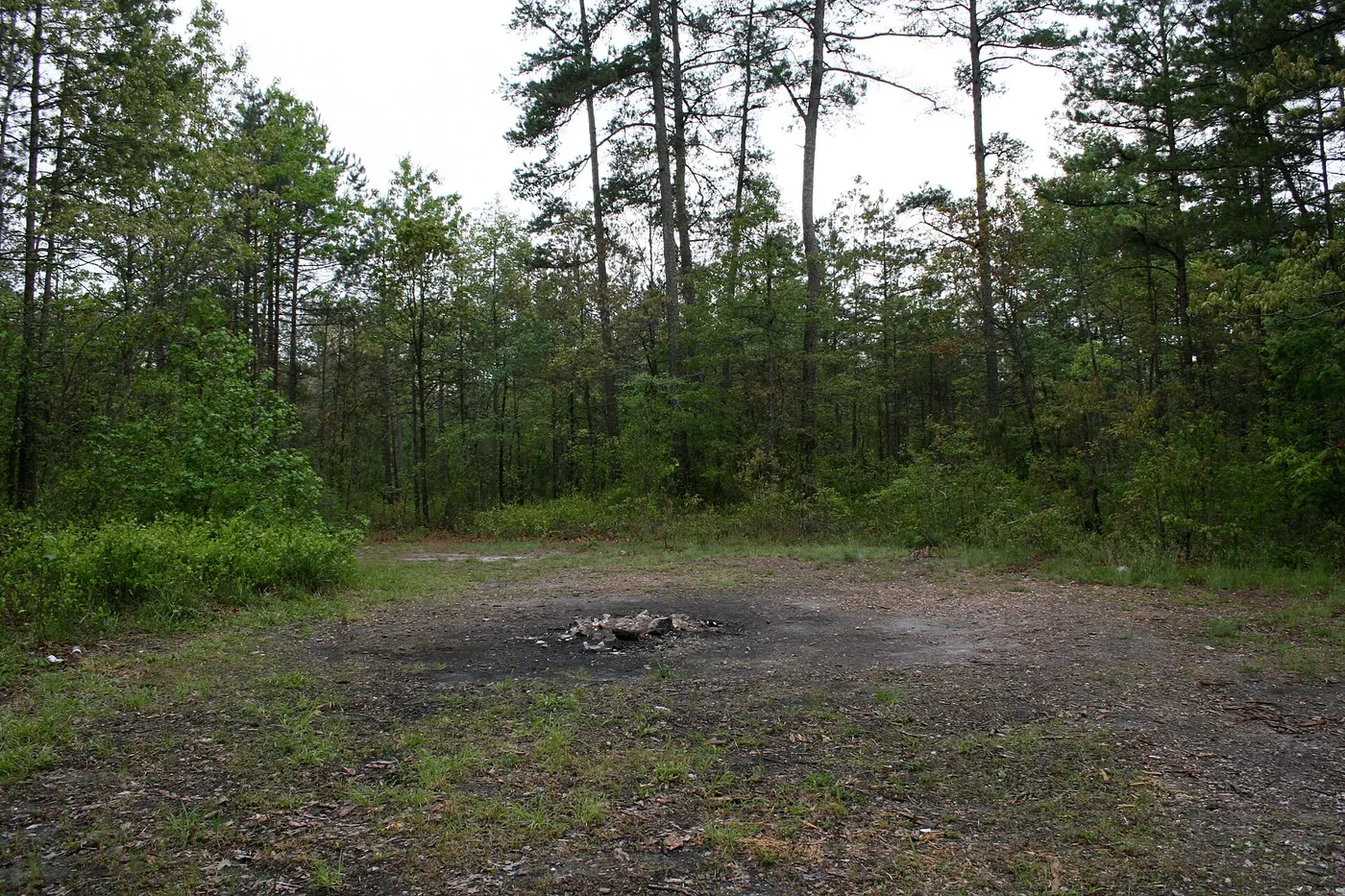
The Devil's Tramping Ground in Chatham County, North Carolina, USA, is a barren circular clearing roughly 12 meters (40 feet) in diameter in the middle of dense pine woods where vegetation has refused to grow for centuries. It is one of the oldest and most enduring paranormal landmarks in the American South, steeped in tales of demonic footprints and barren-earth anomalies.
Comments
No comments yet. Be the first.