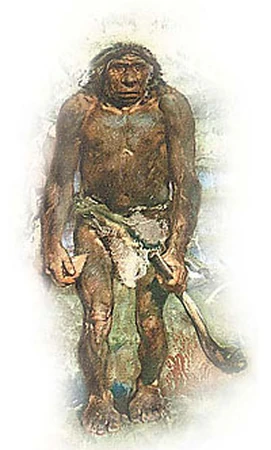
The Chuchunya of Verkhoyansk
The Chuchuna (Yakut: Chuchunaa; Evenki: Mulen) is a legendary "wild man" and relict forest wanderer pervasive in the oral traditions of indigenous populations across Northeastern Siberia. Centered within the jagged slopes of the Verkhoyansk Range and the subarctic river basins of the Yana, Adycha, Dulgalakh, and Sartang (Verkhoyansky District, Sakha Republic / Yakutia), the entity is traditionally depicted as a tall, feral nomad clad in raw reindeer hides who raided storage caches and avoided all human contact. During the 20th century, the Chuchuna transitioned into a cornerstone of Soviet cryptozoology and hominology alongside the Yeti and the Central Asian Almas.
The legend
Danger Level: Yellow (Extreme Arctic montane taiga wilderness, apex predator encounters, and rogue backcountry poachers romanticized into a relict hominid myth) Within Verkhoyansk Yakut and Even oral lore, the Chuchuna was treated not as an incorporeal spirit, but as a tangible, hostile flesh-and-blood hominid. Witnesses described an emaciated giant roughly two meters in height, exhibiting prominent brow ridges, weathered leathery skin, and matted hair concealing his features. The entity lacked human language, communicating through piercing, high-pitched whistles or avian shrieks when startled or stalking prey. Lore held that the Chuchuna dressed in ragged garments sewn from untanned reindeer hides using animal sinew, could outrun domestic reindeer herds, and possessed superhuman cold tolerance. Armed with recurve bows tipped with flaked stone or carved bone arrows, clubs, and skinning knives, the nomad raided elevated meat caches (saiba), ambushed solitary trappers, and stole livestock under cover of blizzards. Folktales attributed near-supernatural evasion abilities to the creature, alleging it could anticipate bullet trajectories and relentlessly track pursuers across hundreds of kilometers of frozen terrain.
What actually happened?
Rigorous historical and ethnographic analyses led by Sakha scholar Gavriil Ksenofontov (1920s), anthropologist Ilya Gurvich (1970s), and scientist Pyotr Dravert systematically deconstructed the legend: Feral penal escapees and outlaws: From the 18th through the early 20th centuries, the Verkhoyansk tract functioned as a penal exile frontier. Escaped convicts (varnaks) from the Okhotsk Trail, Lena goldfields, and Siberian garrisons regularly fled into the canyons of the Verkhoyansk Range. Stripped of firearms, manufactured textiles, and provisions, these desperate fugitives regressed to stone-age subsistence: stitching raw hides for warmth, constructing crude bows, and surviving through nocturnal theft from native storage platforms. Indigenous herders who spoke no Russian classified these unkempt, hostile fugitives as non-human entities. Paleo-Asiatic tribal remnants and the Chukchi frontier: Linguists and ethnographers traced the etymology of chuchuna directly to chawchu (the Chukchi ethnonym for nomadic reindeer herders). During the 17th and 18th centuries, bloody inter-tribal warfare raged across northeastern Siberia between encroaching Chukchi raiders, Yukaghirs, and Tungusic tribes. Stranded scouts, outcasts, or unassimilated Paleo-Siberian hunters surviving in montane redoubts preserved bow-and-arrow technology, stone blades, and whistle-based signaling systems to coordinate across windswept ridgelines without alerting human settlements. Anthropological xenophobia (The Demonized Outsider): In isolated nomadic societies, any unvetted wanderer existing outside customary clan law was perceived as an ontological threat. Unexplained meat cache spoils, stray arrows, or livestock deaths were routinely attributed to the folkloric specter of the Chuchuna. Zoological misidentification: In the low visibility of subarctic blizzards, emaciated winter-woken brown bears (shatuny) or wolverines navigating dense dwarf Siberian pine (Pinus pumila) groves triggered pareidolia among fatigued trappers, mistaking bear gait for a crouching humanoid.
History
The earliest written accounts of solitary feral nomads in the Siberian Northeast date to 19th-century imperial expeditions led by Richard Maack and Alexander von Middendorff. In 1928–1929, pioneering Yakut ethnographer Gavriil Ksenofontov conducted systematic field surveys across the Verkhoyansky District, publishing transcripts of witness interviews in regional periodicals. In 1933, mineralogist and regionalist Pyotr Dravert issued his treatise Chuchuna (The Yakut Savage), postulating that the phenomenon represented surviving relic populations of early Paleo-Siberian hunter-gatherers. During the 1960s and 1970s, Soviet hominologists led by Professor Boris Porshnev argued that the Chuchuna represented a surviving Pleistocene hominid. However, comprehensive investigations by the USSR Academy of Sciences' Institute of Ethnography, directed by Dr. Ilya Gurvich, proved that sightings plummeted to zero by the late 1930s following Soviet collectivization, border demarcation, and the introduction of regional bush aviation. The timeline confirmed that the phenomenon was social rather than biological: the last generation of runaway convicts and isolated tribal outcasts either perished or were integrated into municipal settlements.
Where is it?
Verkhoyansky District, Sakha Republic (Yakutia), northeastern Siberia, Russia; centered upon the eastern and central spurs of the Verkhoyansk Range, spanning the drainage basins of the Yana, Adycha, Sartang, and Dulgalakh rivers between the Orulgan and Kular mountain massifs (roughly 650 to 900 kilometers north-northeast of Yakutsk).
Can you visit?
Yes, though the Verkhoyansk Range constitutes one of the most logistically formidable and climatically hostile regions on Earth (the Northern Hemisphere's Pole of Cold): Transport and access: Scheduled regional flights (Antonov An-24/An-26) connect Yakutsk to the municipal airport at Batagay. From Batagay, an unpaved road runs 70 kilometers to the historic town of Verkhoyansk. Accessing the interior alpine canyons requires jet-pump riverboats navigating braided gravel tributaries, tracked amphibious transports, or technical backcountry trekking. In winter, transit relies on seasonal ice roads (zimniks) navigated by heavy-duty 6x6 trucks and long-range utility snowmobiles. Environmental hazards: Winter temperatures routinely plunge below -55 °C to -65 °C, demanding survival-grade Arctic apparel and multi-layer bivouac equipment. Summer conditions feature impassable dwarf pine thickets, shifting blockfields (kurums), and dense insect swarms. Wilderness safety: The district lacks cellular coverage, with emergency medical facilities separated by hundreds of kilometers of untracked wilderness. Principal hazards include sudden flash floods along gravel river channels, rockslides, hypothermia, and apex predators (Eurasian brown bears and wolf packs). Independent expeditions require registration with the regional EMERCOM rescue service and indigenous wilderness guides.
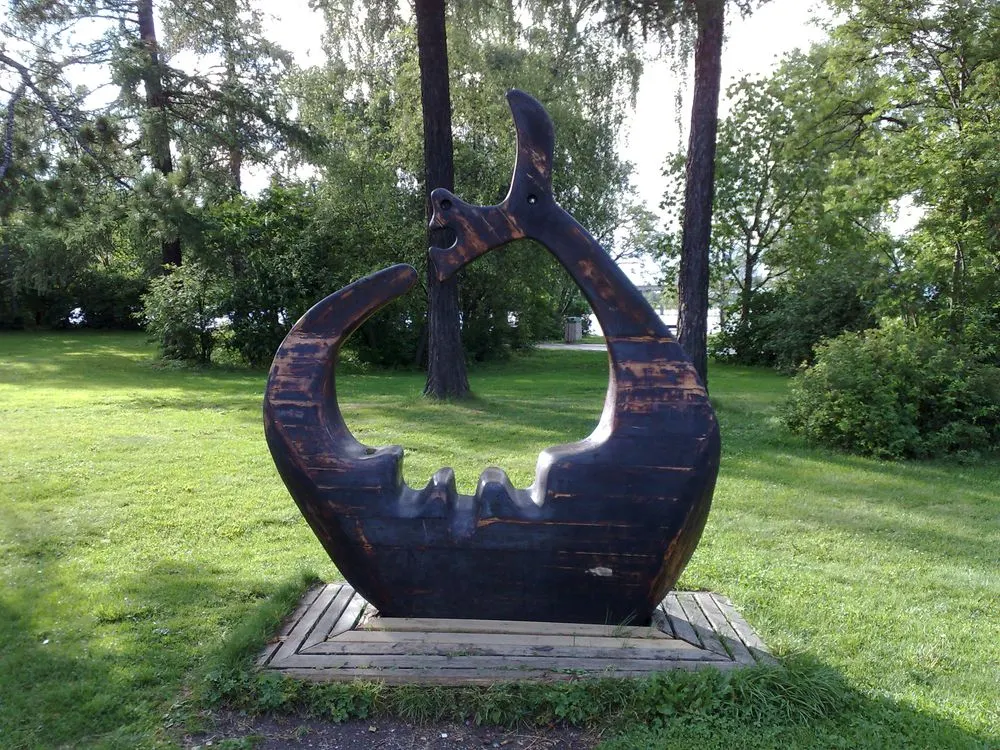
Storsjön and the Great Lake Monster
Lake Storsjön ("The Great Lake") is Sweden's fifth-largest lake, spanning roughly 464 square kilometers with a maximum depth of 74 meters, situated within the province of Jämtland in central Sweden. Characterized by glacial geology, scenic shores surrounding the central island of Frösön, and mountain panoramas, the lake is globally renowned as the home of Sweden's Loch Ness equivalent: the legendary lake serpent Storsjöodjuret (affectionately nicknamed "Birger"), historically distinguished as the only mythical cryptid ever granted statutory protection under regional wildlife conservation laws.
Comments
No comments yet. Be the first.