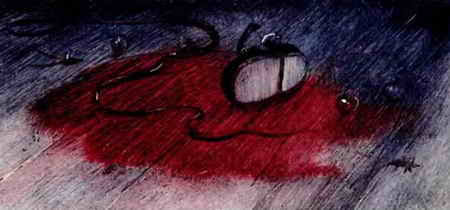
The White Sheet
Dormitory wings of Soviet pioneer summer camps (anchored symbolically by the All-Russian Pioneer Camp "Orlyonok" in the Tuapse District of Krasnodar Krai), boarding schools, and pediatric sanatoriums. Within the confined quarters of communal camp dormitories during the 1970s and 1980s, the urban myth of the "White Sheet" (a close sibling to the "Black Sheet" motif) emerged as a foundational camp horror tale, transforming an ordinary domestic textile into a levitating nocturnal predator.
The legend
Danger Level: Green (Children's camp folklore and sleep-related sensory illusions posing zero physical danger) The standard juvenile horror trope: a parent buys or inherits an immaculate, stark-white bedsheet bearing a faded embroidery or an indelible discoloration. A strict warning is delivered: "Never sleep upon this sheet during a full moon" (or "never spread it on a Friday"). The taboo is broken, and at midnight an eerie mechanical cadence emits from the walls or radio: "Girl, girl, the White Sheet is flying over your city... hunting your camp... entering your dormitory..." Silently peeling off the mattress or washing line, the fabric billows beneath the ceiling like a funerary shroud, descends over the sleeping camper, and wraps tightly around the throat and chest to drain life and breath. In the morning, camp counselors discover only an icy, drained corpse or an empty, disheveled bunk.
What actually happened?
The lethal bedsheet lore is an archetype rooted in deep subconscious associations, documented by Slavic ethnographers and sleep medicine researchers: The funerary shroud archetype: Across Slavic and broader European customs, deceased bodies were historically bound in plain white linen shrouds (savan). Within the collective unconscious, hovering white linen is fundamentally linked to revenants, wraiths, and vampires. Reimagining the ancient shroud as a mass-produced municipal bedsheet is a standard evolution of traditional folklore adapting into urban formats. Sleep paralysis and somatic panic: Disrupted routines and sensory exhaustion in summer camps frequently trigger sleep paralysis—a transient dissociation where the motor cortex remains locked while consciousness awakens. The physical weight of bedding across the chest, coupled with restricted respiration, generates tactile and visual hallucinations of a suffocating white film hovering over the face. Institutional fabric alienation: Soviet youth institutions uniformly utilized stark, bleached cotton bedding stamped with purple inventory ink. In an unfamiliar barracks, this cold, sanitized fabric felt impersonal and hostile compared to home comforts, turning the bed from a safe haven into a site of vulnerability. Psychological threshold mastery: As developmental psychologists note, formulaic horror tales provided 8- to 11-year-olds a safe framework to process separation anxiety and the reality of physical mortality, releasing acute tension through synchronized peer laughter immediately following the narrator's jump scare.
History
Field transcriptions of living sheets and predatory textiles were formally documented by Soviet folklore expeditions beginning in the 1960s, coinciding with the massive nationwide expansion of state summer camp networks. In an environment defined by rigid daily schedules, lights-out storytelling in dormitories provided an autonomous outlet for peer creativity. In 1990, celebrated children's authors Eduard Uspensky and Andrey Usachyov codified these oral cycles in the satirical horror novella The Red Hand, the Black Sheet, and the Green Fingers, permanently etching the motif into late-Soviet and post-Soviet literature.
Where is it?
Novomikhaylovsky-2, Tuapse District, Krasnodar Krai, Russia; the All-Russian Children's Center "Orlyonok" (the historic All-Union pioneer camp founded in 1960), along with the juvenile oral folklore archives preserved at the Institute of Russian Literature (Pushkin House) of the Russian Academy of Sciences in Saint Petersburg.
Can you visit?
The "Orlyonok" Children's Center is an active, year-round federal educational institution under secure perimeter access control. Entry to residential and recreational campuses is restricted to enrolled youth attending scheduled sessions. Adult visitors can enter during designated public open days, formal cultural festivals, or pre-arranged institutional tours of the camp history museum. The authentic field transcripts of these oral tales can be freely accessed through public academic libraries and folkloric publications of Pushkin House.
Tikhiy Dom
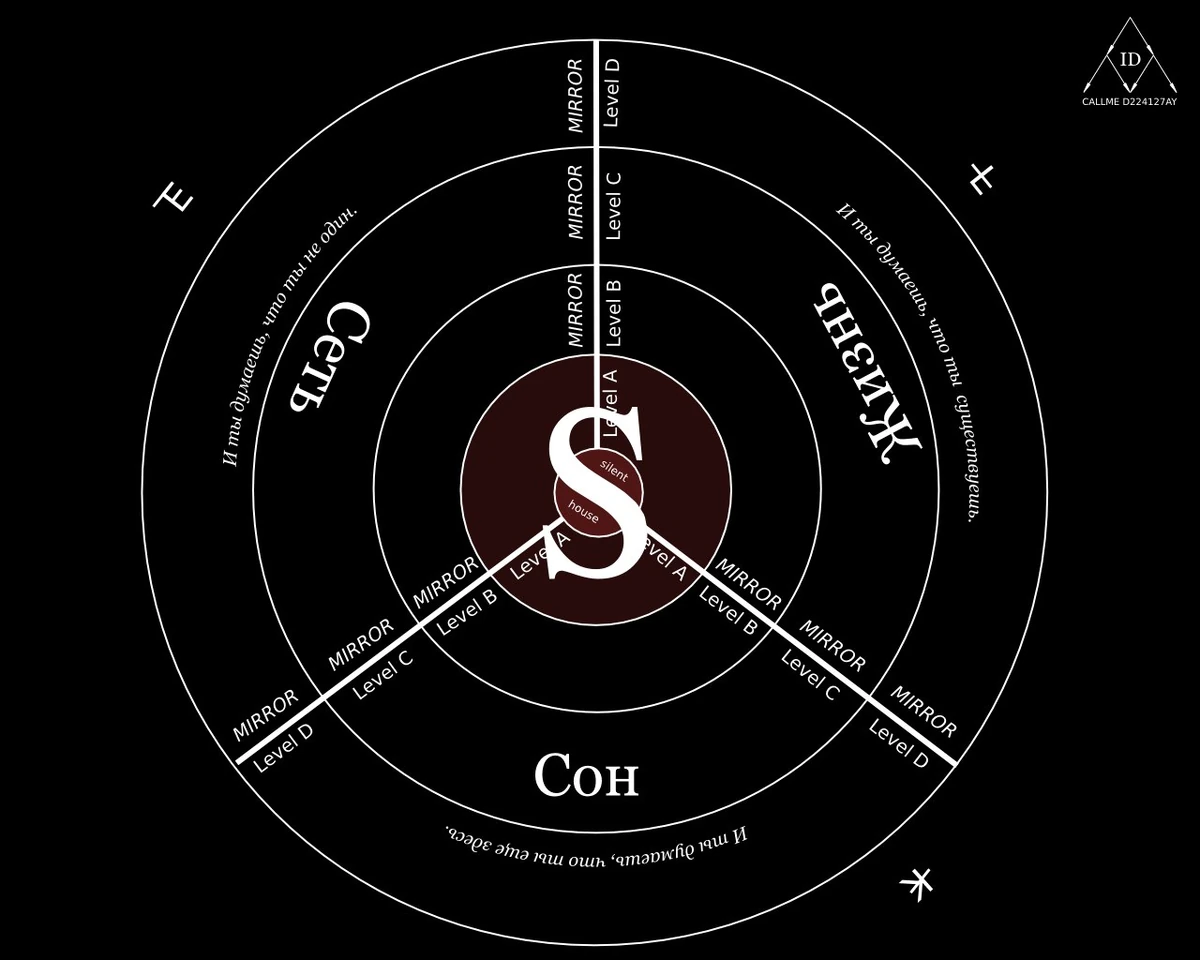
"Tikhiy Dom" (The Quiet House / Silent House) is the quintessential urban legend of Russian netlore and the netstalking subculture, signifying the mythical, absolute lowest stratum of the Deep Web. Originating in RuNet forum folklore in the early 2010s, the concept depicted a terminal ontological threshold at the "bottom of the Internet" where entry irreversibly severs human consciousness from physical reality. Between 2015 and 2016, this netstalking terminology was appropriated by malicious online actors within VKontakte alternate reality game (ARG) shock circles ("death groups", f57), transforming into a euphemistic metaphor for suicide during the moral panic surrounding the viral "Blue Whale" challenge.
Comments
No comments yet. Be the first.