Kadykchan
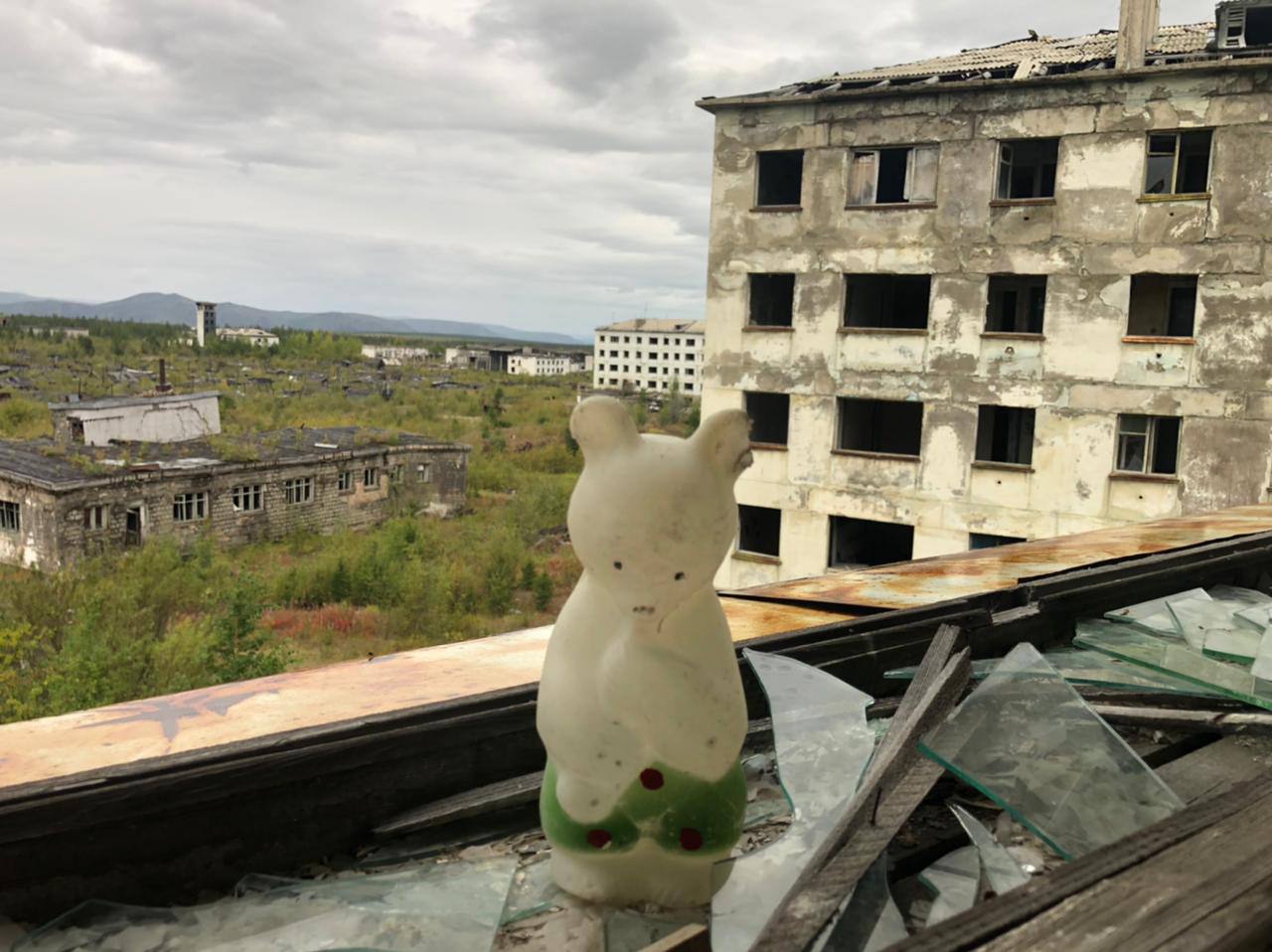
Kadykchan (derived from the Evenki Kadygchan, meaning "little canyon" or "chasm") is an entirely abandoned urban-type settlement situated within the Susumansky District of Magadan Oblast, Russia, along the 730th-kilometer mark of the R504 Kolyma Highway in the Ayan-Yuryakh river basin. Constructed during World War II by forced laborers of the Dalstroy Gulag system to extract high-grade coal from the Arkagalinskoye basin, Kadykchan grew by the 1980s into a bustling subarctic industrial town housing over 10,000 residents. Following a deadly subterranean coal-dust explosion in 1996 and the catastrophic freezing of its district heating grid, the municipality underwent rapid state-mandated abandonment, becoming Kolyma’s definitive ghost town and an open-air monument to post-Soviet deindustrialization in the Far North.
The legend
Danger Level: Orange (Extreme subarctic winter conditions down to -60 °C, absolute geographical isolation, collapsing reinforced-concrete slabs, and apex predator encounters) Across modern internet lore, travel blogs, and creepypastas, Kadykchan is routinely romanticized as the "Chernobyl of the Kolyma Highway." Sensationalist urban myths claim the town was evacuated within a frantic 30-minute window in the dead of winter under emergency civil defense protocols, forcing families to abandon possessions instantly—fueling tales of untouched dinner plates, half-empty teacups, open schoolbooks, and parked baby carriages preserved under layers of frost. Occult interpretations point to a curse cast by indigenous Evenki shamans whose ancestral hunting grounds were dynamited during the initial Dalstroy mining operations. Overlanding folklore trades stories of soot-caked spectral miners wandering the empty concrete housing blocks, sudden automotive electrical failures at the town gates, and classified military bunkers or radioactive waste disposal facilities concealed inside the submerged shafts of Mine No. 1.
What actually happened?
The demise of Kadykchan is an extensively documented post-Soviet industrial tragedy driven by economic insolvency and infrastructure collapse: The 1996 mining explosion: On November 15, 1996, an explosion of methane and coal dust detonated roughly 400 meters underground at the Kadykchanskaya Mine, killing six coal miners. Federal oversight commissions concluded that continuing operations was economically non-viable and geologically hazardous, prompting the permanent closure of the town’s primary employer. Freezing of the district heating infrastructure: Kadykchan depended entirely on centralized steam heating powered by its own coal supply. In December 1996, with ambient subarctic temperatures dropping past -45 °C to -50 °C, the municipal boiler plant suffered structural failure. Without circulating hot water, fluid inside the cast-iron plumbing froze and expanded, shattering pipe runs across every microdistrict. Apartment blocks became uninhabitable; desperate residents installed improvised wood-burning potbelly stoves (burzhuiki) venting through broken windowpanes. The "30-minute evacuation" fiction: The evacuation was neither immediate nor sudden; it spanned over a decade. Between 1997 and 2001, the Russian federal government formally condemned the settlement, issuing state housing relocation subsidies (certificates) allowing residents to purchase apartments in the European part of the country. Overland freight transport across 700 kilometers of unpaved road to the nearest seaport in Magadan was cost-prohibitive; consequently, families salvaged only identity papers, heirlooms, clothing, and small electronics, abandoning heavy cabinetry, books, pianos, and furniture. The holdout era (2000–2010): A cohort of holdouts lived off-grid for years following the formal municipal decommissioning. In 2003, the population stood at 875; by 2007, roughly 200 individuals remained, relying on localized diesel generators, hunting, and salvaged coal scrap. The final solitary resident, an elderly man living with his dogs, relocated to neighboring Susuman around 2010–2012, rendering the site completely vacant. Scrap cannibalization: Throughout the 2000s, informal salvage operations stripped the city of industrial capital, removing copper electrical feeds, cast-iron plumbing, bridge ironwork, and remaining mining plant machinery.
History
In 1937, Soviet geologist V. P. Vronsky surveyed coal seams along the Ayan-Yuryakh drainage. Construction of the initial adits and timber worker barracks broke ground in 1943 utilizing penal labor from the Sevvostlag camps; local fuel was vital to power Dalstroy gold washing installations during wartime shortages. By the 1950s, the camp evolved into an official industrial settlement, eventually expanding into three sectors: Old, New, and Newest Kadykchan. During the 1970s and 1980s, the state modernized the settlement with multi-story pre-cast panel blocks, an expansive Palace of Culture, cinemas, a hospital wing, indoor ice-skating rinks, and secondary schools. The 1989 Soviet census recorded 10,270 residents. The 1996 disaster halted regional investment. In 2003, the Magadan Oblast Duma formally deregistered the municipality, sealing its status as a decommissioned administrative zone.
Where is it?
Susumansky District, Magadan Oblast, Far Eastern Federal District, Russia; nestled inside an intermontane basin along the spurs of the Chersky Range, situated 65 kilometers northwest of Susuman and 730 kilometers northwest of Magadan via the federal R504 Kolyma Highway.
Can you visit?
Yes, Kadykchan is entirely unfenced and unmonitored: there are no checkpoints, administrative permits, or perimeter security. The access road branches directly off the R504 Kolyma Highway, rendering it accessible to passenger vehicles during the summer thaw (June to September) and heavy 4x4 trucks during winter. Physical field precautions are critical: Structural instability: Decades of subzero thermal cycling without structural heating have eroded mortar and fractured reinforced pre-cast concrete slabs. Roof decks, staircases, and floor plates are prone to collapse; unsealed elevator shafts and utility utility trenches present significant falling hazards; Wildlife: Brown bears (Ursus arctos) frequently forage through the overgrown town square and adjacent dwarf Siberian pine groves during summer. Carrying marine flares, bear bangers, and concentrated aerosol deterrents is essential; Climate and wilderness logistics: Winter temperatures routinely plunge past -50 °C to -60 °C, where mechanical breakdowns are fatal without arctic survival gear. The ruins lack cellular coverage, fuel, and municipal services: the nearest functioning hospital, petrol station, and mobile connectivity are located 65 kilometers southeast in Susuman.
Varosha
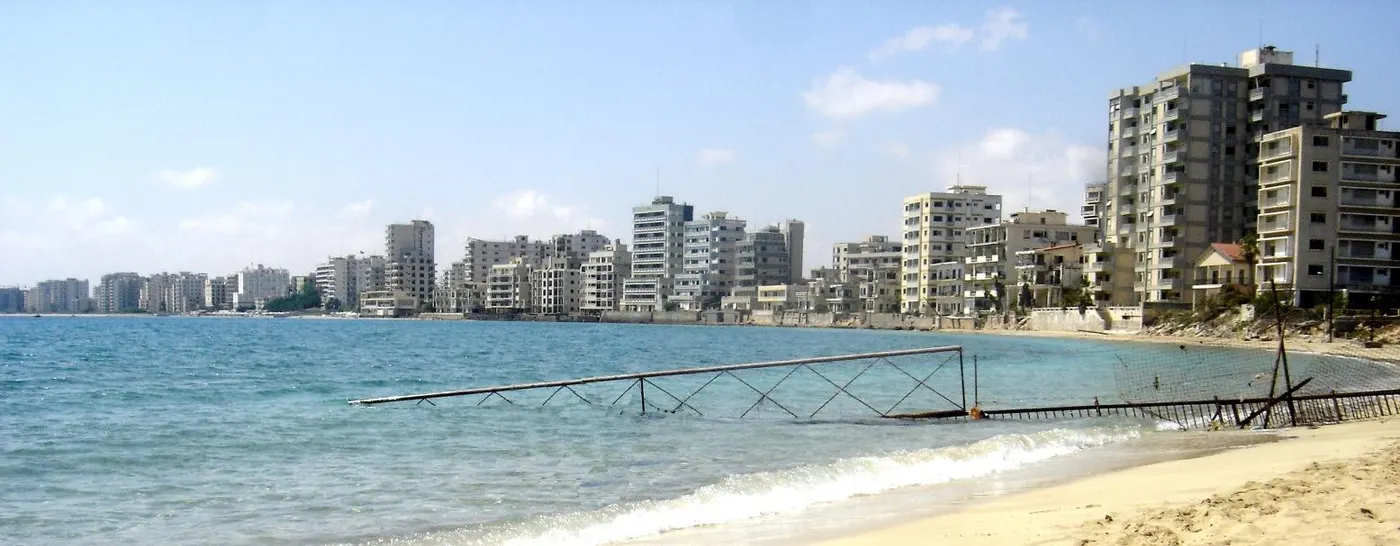
A resort quarter of Famagusta, Cyprus, hastily abandoned in 1974 and fenced off. For half a century its beachfront hotels have been crumbling behind barbed wire.
Comments
No comments yet. Be the first.