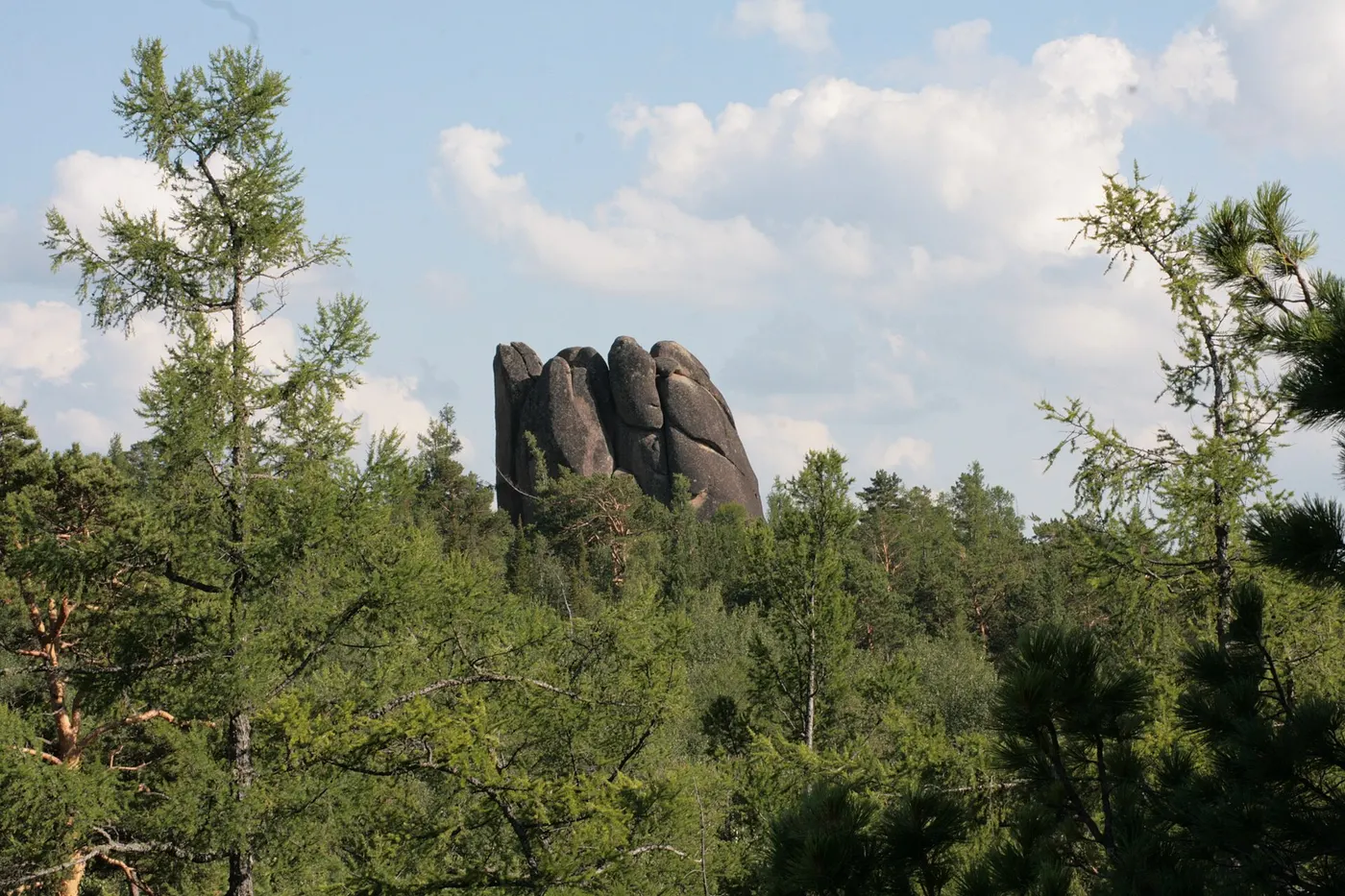
The Krasnoyarsk Pillars
Krasnoyarsk Stolby National Park (formerly a state nature reserve) is a protected ecological expanse located on the northwestern spurs of the Eastern Sayan Mountains, bordering the right bank of the Yenisei River on the southern outskirts of Krasnoyarsk, Russia. Covering nearly 47,000 hectares of Siberian taiga, the park is world-renowned for its dramatic pink-grey syenite rock pillars rising up to 100 meters above the forest canopy, as well as the birthplace of "Stolbism"—a historic community tradition of free solo rock climbing.
The legend
Danger Level: Orange (Documented fatal falls from sheer rock faces combined with persistent pseudo-archaeological and folkloric myths) Among alternative historians and fringe researchers, the towering pillars are frequently promoted as artificial cyclopean monuments constructed by an advanced prehistoric civilization, the ruins of mythical Hyperborea, or ancient extraterrestrial installations. Proponents argue that the clean horizontal and vertical joints separating the rock tiers represent precision stone masonry shaped by ancient advanced machinery. Local folklore compounds these claims with tales of subterranean energy vortexes, dimensional portals, and wandering spirits of deceased climbers—most notably the phantom of the "Black Stolbist"—allegedly luring careless hikers off sheer precipices to their deaths.
What actually happened?
The pillars are entirely natural intrusive igneous formations. Between 370 and 450 million years ago (during the Devonian and Carboniferous periods), magma welled up toward the crust but cooled and solidified subterraneanly beneath thick layers of sedimentary strata, forming an intrusive plutonic mass of syenite. As the magma slowly crystallized, it contracted, naturally fracturing along orthogonal planes into vertical and horizontal cooling joints. Over hundreds of millions of years, differential erosion and denudation stripped away the softer overlying sedimentary rocks, leaving the resilient syenite standing bare. Physical weathering—primarily freeze-thaw cycles and thermal exfoliation—gradually rounded the exposed fractures into pillow-like layers (matrassoid jointing) that untrained eyes misinterpret as cyclopean masonry. The real-world danger stems strictly from human error: untrained tourists attempting to scale sheer syenite faces without safety harnesses or specialized footwear frequently suffer severe falls and fatalities.
History
Russian explorers and Cossacks first charted the area in the early 17th century during the establishment of the Krasnoyarsk fort. By the mid-19th century, the region gave birth to "Stolbism," an authentic grassroots movement of rock climbers who scale technical granite-like routes without ropes, harnesses, or safety gear, relying purely on friction technique, personal experience, and mutual support. In the late 19th century, the inaccessible pillar summits served as secret hideouts for political dissidents: in 1899, revolutionaries famously painted the word "Freedom" (Свобода) across the sheer face of the Second Pillar, where it remains maintained today. In 1925, following a public campaign led by local naturalist Aleksandr Yavorsky, the area was designated a state nature reserve to prevent timber logging and industrial quarrying. In 2019, its status was updated to a National Park.
Where is it?
Krasnoyarsk Krai, Russia; situated immediately south of the city of Krasnoyarsk along the right bank of the Yenisei River and the basins of the Bazaikha and Mana rivers.
Can you visit?
Yes, the designated public recreational zone of the park is open year-round with free pedestrian access, reachable via municipal buses from central Krasnoyarsk (Central trailhead at Turbaza or via the Bobrovy Log chairlift). However, entry into the protected core reserve ("Wild Stolby") is strictly off-limits without official written permits. Visitors are strongly advised against free solo climbing on high pillars without seasoned guides, as slick moss, decomposing rock grains, and sudden weather shifts make descending exceptionally hazardous. In addition, the deep taiga sections host a viable population of brown bears, requiring strict adherence to designated walking trails.
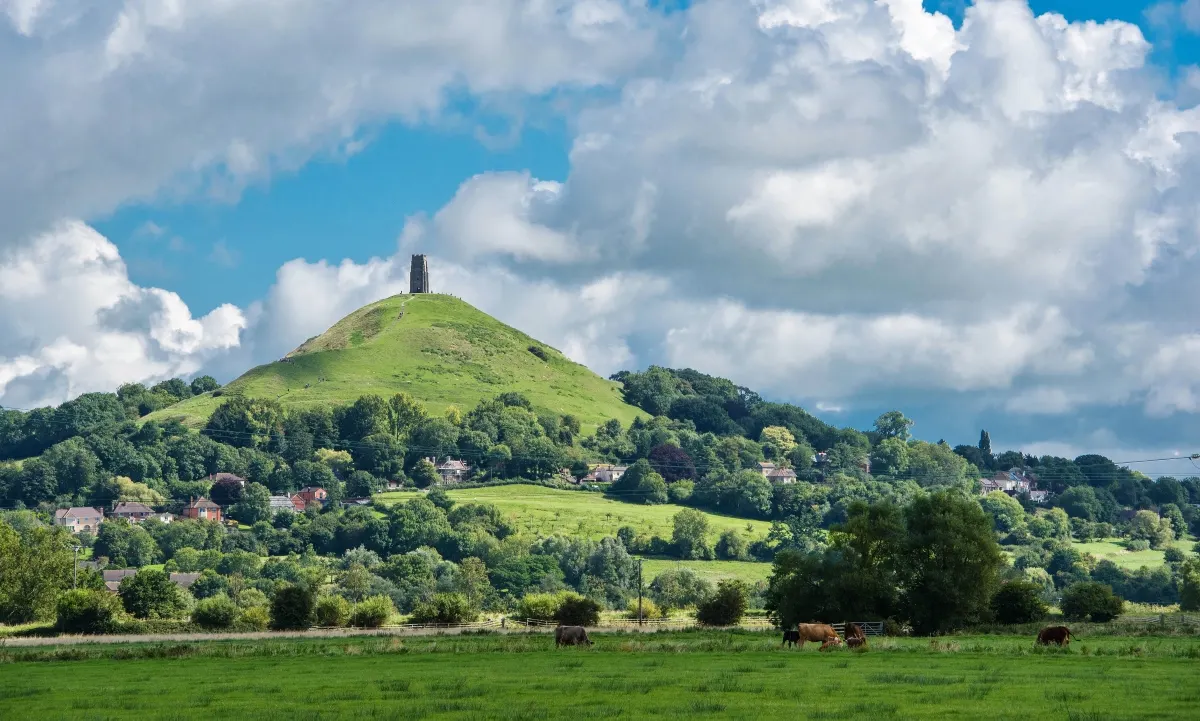
Glastonbury Tor
A Somerset hill crowned by the lone St Michael's Tower, its slopes cut into terraces. It is identified with the legendary Avalon, where the wounded King Arthur was carried, and counted a centre of Britain's Celtic mythology.
Comments
No comments yet. Be the first.