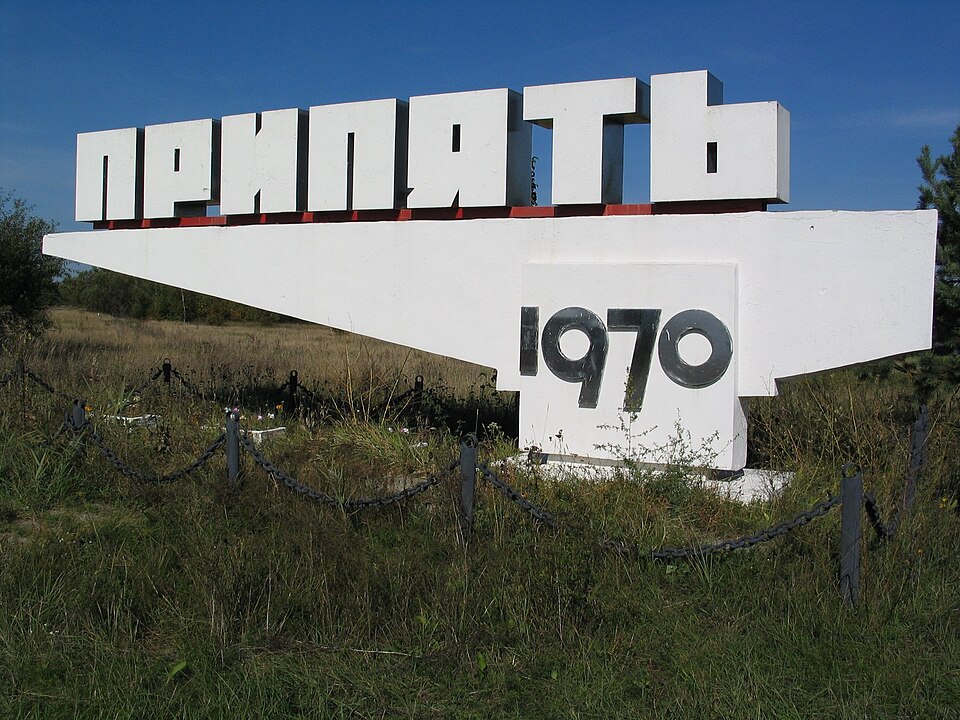
Pripyat
Pripyat is an abandoned city of regional significance situated in the Vyshhorod Raion of Kyiv Oblast, Ukraine, along the banks of the Pripyat River roughly 3 kilometers from the Chernobyl Nuclear Power Plant (ChNPP) and 16 kilometers from the border with Belarus. Founded in February 1970 as the ninth Soviet "atomgrad" (atomic company town) for power plant personnel, the municipality was completely evacuated on April 27, 1986, following the catastrophic explosion of ChNPP Reactor No. 4. Housing nearly 50,000 residents at the time of the disaster, Pripyat became the world's premier modern ghost town, serving as an open-air monument to industrial failure, a frozen time capsule of late-Soviet urban planning, and the ground zero of global urban exploration culture.
The legend
Danger Level: Red (Elevated localized radiological hotspots, severe structural masonry degradation, unexploded ordnance risks, and an active restricted military zone) Within international popular media, sensationalist publications, and video game lore (S.T.A.L.K.E.R., Call of Duty), Pripyat and the surrounding Exclusion Zone accumulated a vast fringe mythology. Stalker folklore and creepypastas claimed that nuclear fallout catalyzed biological mutations, breeding two-headed apex predators, hyper-aggressive oversized rodents, and predatory flora stalking the apartment corridors. A recurring urban myth asserted that days prior to the reactor breach, a spectral winged harbinger dubbed the "Black Bird of Chernobyl" (a Mothman analogue) was sighted circling above the reactor chimney. Other narratives claimed that clandestine research laboratories operating underneath the Jupiter factory engaged in psychotronic mind-control and telekinesis testing, framing the reactor meltdown as an engineered experiment in electromagnetic warfare. During the 1990s, rumors claimed glowing phantoms of deceased liquidators wandered past the iconic ferris wheel on moonless nights.
What actually happened?
The Chernobyl disaster and the abandonment of Pripyat are verified by reports from the IAEA, UNSCEAR, and historical investigations: The accident and fallout dispersion: On April 26, 1986, at 01:23:45, a catastrophic thermal power excursion destroyed RBMK-1000 Reactor No. 4 during a scheduled low-power test. The destruction released roughly 50 million curies of radionuclides into the biosphere (including iodine-131, cesium-137, strontium-90, and transuranic isotopes). Initial plume trajectories blew largely west and southwest, incinerating the pine forest adjacent to the plant (the "Red Forest"). Throughout Saturday, April 26, civic life in Pripyat proceeded normally: children attended classes, markets operated, and open-air weddings occurred, even as ambient ionizing radiation levels surged into milliroentgens per hour as wind vectors shifted. The evacuation operation: Soviet authorities postponed general evacuation for 36 hours. On April 27 at 13:10, a civil defense radio broadcast announced a "temporary departure for three days." By 14:00, a mobilization of over 1,200 buses and trucks staged across Pripyat; within three hours, 49,360 civilians were evacuated, taking only identification papers and small luggage. Domestic pets were barred from transport and subsequently culled by military cleanup teams to limit radioactive vector transfer. Radiation biology vs. mutant fiction: Longitudinal field research debunked popular tropes of megafaunal mutations. Acute radiation syndromes destroyed nearby flora (turning the pine forest red) and caused congenital defects in early livestock generations. However, the total absence of human agricultural and industrial activity transformed the Exclusion Zone into Europe's largest unintended wilderness sanctuary, resulting in rebounding populations of Eurasian wolves, moose, brown bears, European lynx, and reintroduced Przewalski's wild horses. While scientists documented elevated frequencies of microcephaly, cataracts, and chromosomal damage in nesting barn swallows and small rodents, no predatory macroscopic monsters ever materialized. Current radiological conditions: Following comprehensive decontamination campaigns (topsoil excavation, chemical building washes), gamma dose rates along paved thoroughfares settled between 0.15 and 0.50 µSv/h (comparable to routine background levels in many global cities). Extreme localized radiological hazards persist: sidewalk moss patches, drainage culverts, contaminated scrap (such as the abandoned excavator bucket in the park registering up to 100–300 µSv/h), and the basement of Medical Sanitary Unit No. 126 (MSCh-126), where first-responding firefighters' clothing was abandoned, which still emits lethal contact radiation fields reaching hundreds of millisieverts per hour. Structural collapse: The principal physical hazard in Pripyat is mechanical weathering. Decades without interior heating and climate control have allowed moisture penetration and freeze-thaw degradation to erode reinforced concrete slabs. Portions of Secondary School No. 1 collapsed in 2005, and major multi-story residential blocks face structural failure.
History
Groundbreaking began on February 4, 1970; the municipality was designed according to modern Soviet urban principles featuring wide arterial avenues, grade-separated pedestrian boulevards, and expansive microdistricts. Amenities included the Energetik Palace of Culture, the Polissya Hotel, the Prometey Cinema, and the Azure Swimming Pool (which continued servicing cleanup personnel until 1998). The iconic amusement park ferris wheel was scheduled to open on May 1, 1986—five days after the reactor breached—and never carried a paying passenger. To rehouse displaced plant personnel, Soviet authorities constructed the purpose-built city of Slavutych in Chernihiv Oblast. Beginning in the late 1990s, controlled tourist access expanded, transforming Pripyat by 2019 into an international dark-tourism hub hosting over 100,000 visitors annually. In February and March 2022, the Exclusion Zone and Pripyat became a theater of active warfare when Russian military forces crossed the Belarusian frontier. Heavy armor mobilized through radioactive soil in the Red Forest, disturbing radioactive particulates, while military forces excavated defensive trench systems and deployed minefields. In early April 2022, Ukrainian Armed Forces and border detachments reclaimed the zone, converting the sector into a fortified, militarized border zone.
Where is it?
Vyshhorod Raion, Kyiv Oblast, Ukraine; situated within the 30-kilometer Chernobyl Exclusion Zone on the right bank of the Pripyat River, approximately 94 kilometers north of Kyiv and 3 kilometers northwest of the Chernobyl Nuclear Power Plant industrial complex.
Can you visit?
At present (as of 2026), all civilian tourism and general access to Pripyat is strictly prohibited and physically barricaded. Following the 2022 combat operations and due to its status as a direct frontier with Belarus, the 30-kilometer Exclusion Zone operates under a classified military defense protocol. The regional wilderness and road shoulders remain heavily mined with unexploded ordnance (UXO), anti-tank devices, and tripwires; access is restricted to Armed Forces of Ukraine units, State Border Guard personnel, and certified ChNPP infrastructure technicians. Unauthorized entry ("stalking") presents immediate life-threatening mine detonation hazards, detention by military security, and criminal prosecution. Even prior to wartime closures, municipal directives strictly barred entering interior structures due to imminent structural ceiling collapses.
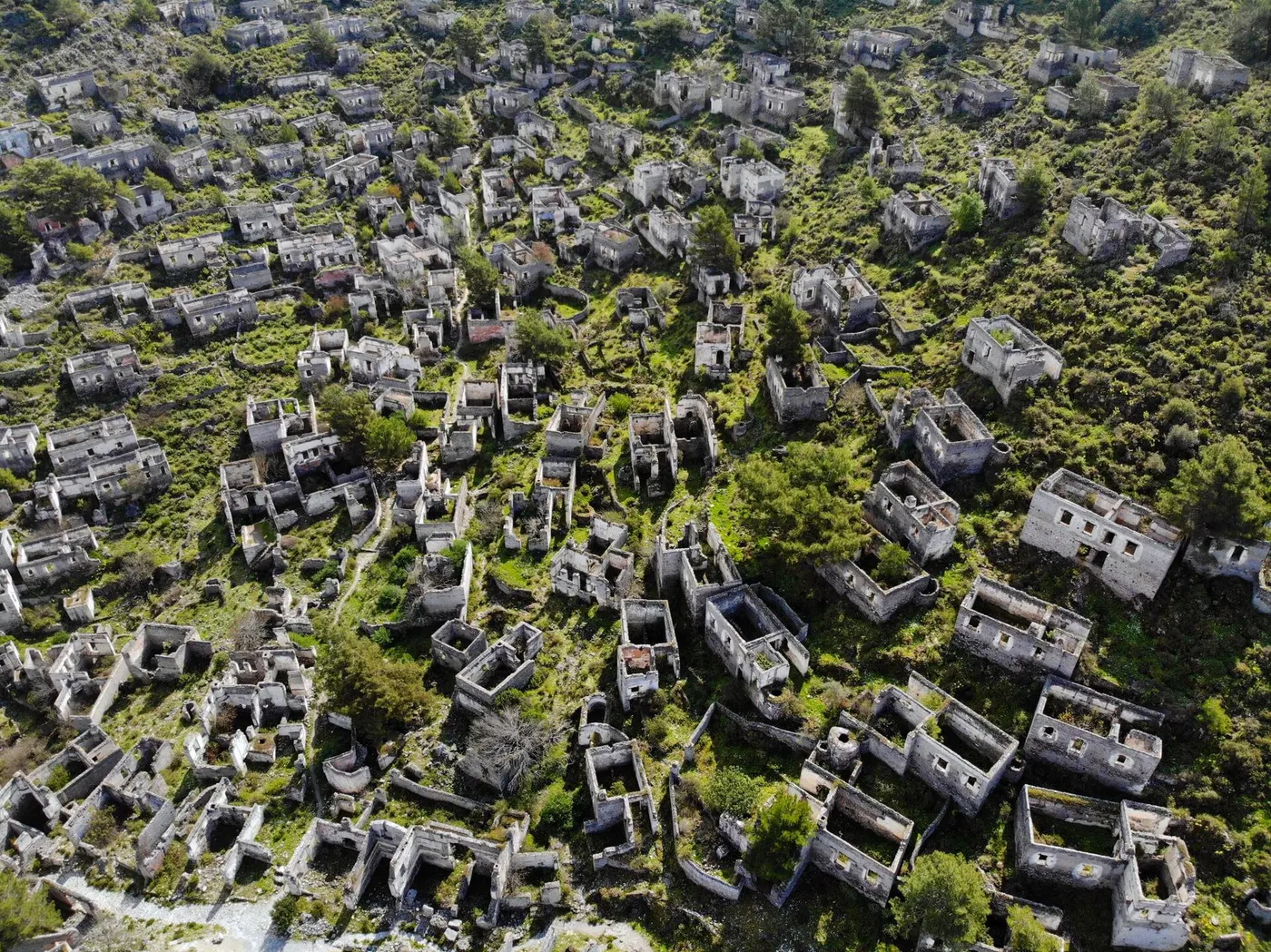
Kayaköy
A Greek village in south-western Turkey, emptied by the 1923 population exchange between Greece and Turkey. Several hundred roofless houses and two churches have stood untouched on the hillside for a century.
Comments
No comments yet. Be the first.