 Inventions — Ukraine
Inventions — Ukraine. 6 places in the catalogue, each with coordinates, the story behind it and a danger level from white to black.
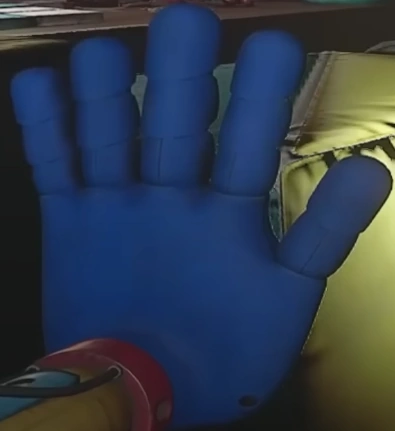
The Blue Hand
The Artek International Children's Center (formerly the All-Union Pioneer Camp Artek) on the southern coast of Crimea near Gurzuf. Covering over 200 hectares beneath the slopes of Bear Mountain (Ayu-Dag), the world's largest youth camp complex functioned as the primary creative incubator for Soviet children's oral folklore. Here, around evening campfires and along the Black Sea shore, the quintessential Soviet camp creepypasta—the tale of the "Blue Hand"—was honed and passed down across generations.

The Black Grand Piano
Children's music schools, assembly halls of Soviet pioneer camps, and youth pioneer palaces (anchored symbolically by the Moscow Pioneer Palace on Sparrow Hills). Within Soviet juvenile subculture of the 1970s and 1980s, the classical instrument of bourgeois prestige and musical education transformed into the central artifact of an iconic urban horror legend: the "Black Grand Piano" (or "Black Upright"), which secretly drained the blood of young musicians.
The White Sheet
Dormitory wings of Soviet pioneer summer camps (anchored symbolically by the All-Russian Pioneer Camp "Orlyonok" in the Tuapse District of Krasnodar Krai), boarding schools, and pediatric sanatoriums. Within the confined quarters of communal camp dormitories during the 1970s and 1980s, the urban myth of the "White Sheet" (a close sibling to the "Black Sheet" motif) emerged as a foundational camp horror tale, transforming an ordinary domestic textile into a levitating nocturnal predator.
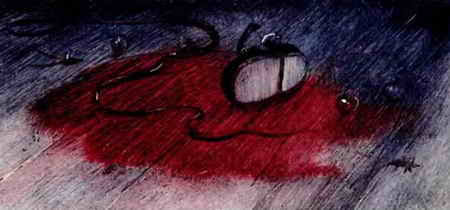
The Red Stain
One of the most widespread Soviet scary stories. A family moves into a new flat and finds a red stain on the ceiling or the wallpaper that will not wash off and will not paint over: every morning it comes through again, a little larger. At night people vanish from the room, one at a time, and after each one the stain is brighter. The moral, in the children's telling, is always the same and always said out loud: they should have called the police at once.
The Black Hand and the Red Spot
Two stories from the same body, usually told back to back: the black hand that reaches out from under the bed or out of the wall, and the red spot on the ceiling that grows every night until it swallows the people living there. Both work the same way — the threat comes not from outside but from the flat itself, from the furniture and the walls, which is the one place a child cannot get away from. Folklorists have recorded them in many variants across the Soviet Union since the 1960s, and they remain the most durable layer of children's urban folklore.
The Coffin on Wheels
The best-known Soviet children's horror story, told in pioneer camps after lights-out. A voice on the radio announces that the coffin on wheels has set off and is coming down the street, then into the yard, then up the stairs; the floors are counted aloud, and on the last line the teller grabs whoever is next to them. The device is purely theatrical — the whole structure exists for one second at the end, and the fear is generated not by the plot but by the countdown. The pin is at Artek as the country's most famous camp, but it was told everywhere.