 Inventions — Russia
Inventions — Russia. 10 places in the catalogue, each with coordinates, the story behind it and a danger level from white to black.
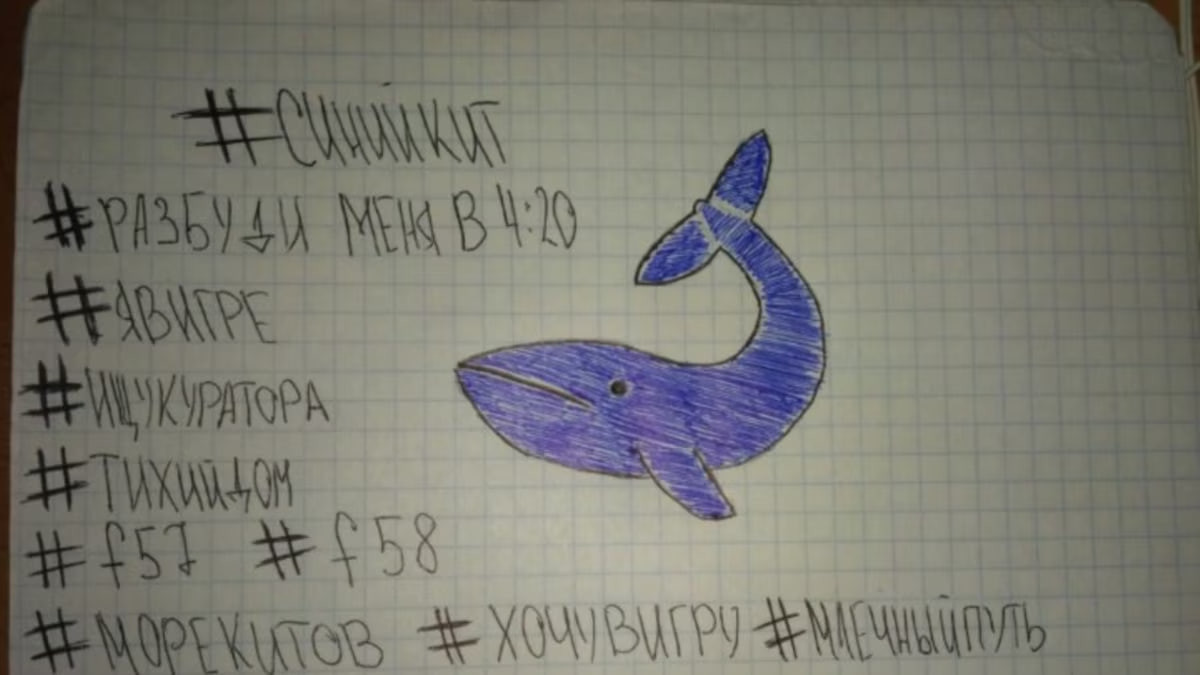
The "Blue Whale"
The "Blue Whale" phenomenon (also known as "Death Groups," "f57," "Quiet House," or "Wake Me Up at 4:20") is a viral digital urban legend, an international moral panic, and a destructive social-media alternate reality game (ARG) that originated within the Russian-speaking web (principally the VKontakte platform) in late 2015. Between 2016 and 2017, the narrative of a clandestine syndicate of online "curators" systematically coercing hundreds of teenagers into self-harm across a 50-day sequence triggered massive public panic, prompted reforms in Russian criminal law, and gained global infamy as a supposed worldwide cyber threat.
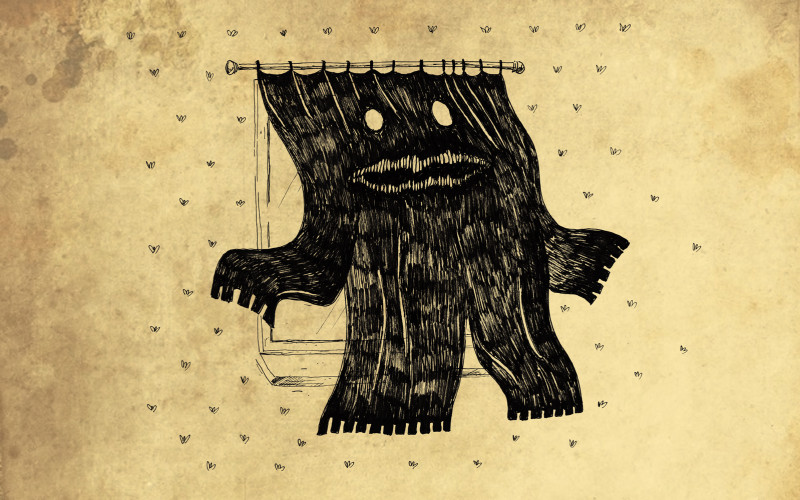
The Black Curtains
Standard apartments of Soviet prefabricated panel housing blocks (Khrushchyovkas and Brezhnevkas, epitomized by the 9th Experimental Block of Novye Cheryomushki in Moscow), state boarding schools, and summer camp dormitories. Within late-Soviet juvenile subculture during the 1970s and 1980s, the lore of the "Black Curtains" crystallized into one of the most pervasive domestic horror tales, transforming a standard household textile into an autonomous nocturnal predator.
The Tulpa
A practice Russian-language imageboards picked up from English-language ones around 2012: an imagined companion, grown over months of daily exercises until it answers on its own and becomes visible to the person who made it. The word is taken from Tibetan Buddhism, where it means something quite different; its present sense was given to it by Western occultists in the early twentieth century. The frightening part of the legend is not the practice but its retellings: the tulpa that stopped obeying, the tulpa that refused to go, and the tulpa that was there first.
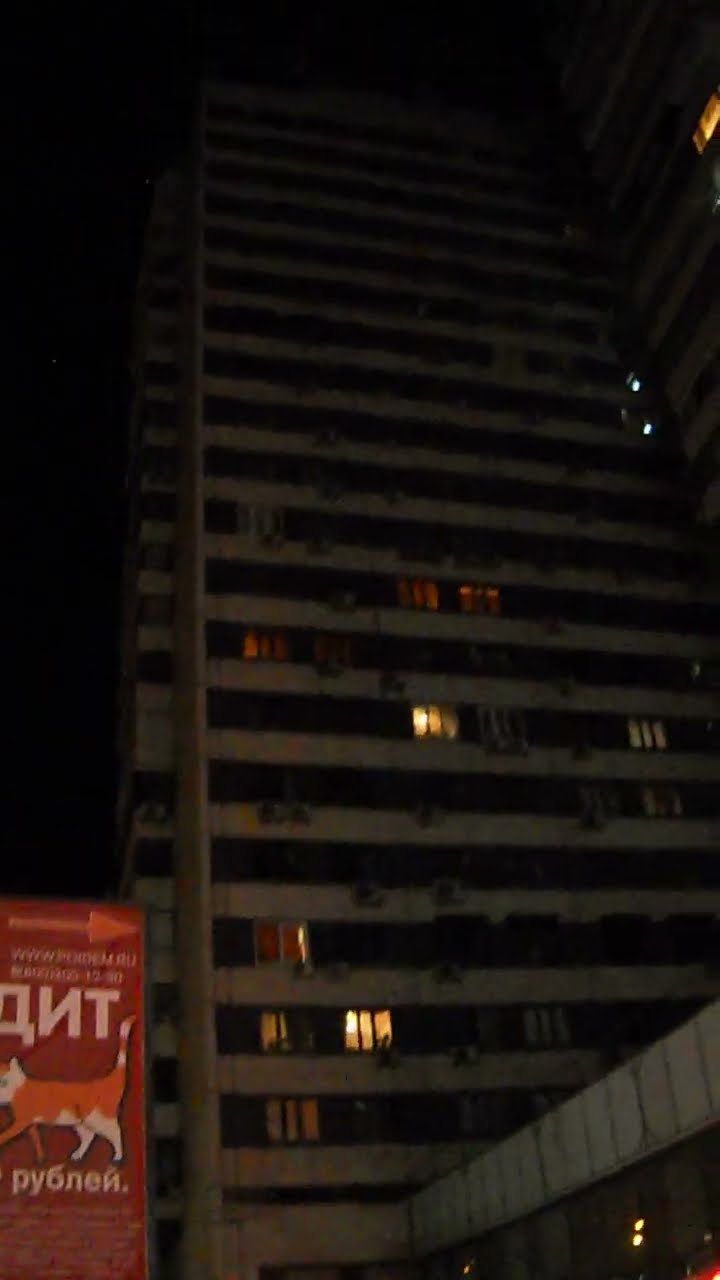
The Blinking Windows
A residential high-rise building located at 7 Krasnoznamenskaya Street in the Central District of Volgograd, Russia. Originally converted from an unfinished Soviet hotel complex near the Piramida shopping center, the tower became the epicenter of one of the Russian internet's most viral urban legends of the 2010s: the mystery of the 11th-floor windows that rhythmically flashed into the night for years on end.
The Stickman
A figure assembled from sticks — arms, legs and neck longer than a person's — that stands motionless in the forest and copies the posture of whoever saw it. The legend was born on Russian-language imageboards in the early 2010s and rests on one detail retold almost word for word: the stickman does not attack and does not move while it is watched, and the distance between you closes only in the seconds when you blinked or turned away. In ten years no photograph of it has survived examination.

The Queen of Spades: calling her in the mirror
Dimly lit domestic bathrooms, washrooms of Soviet pioneer summer camps, and the historical urban cradle of the myth: the "House of the Queen of Spades" (the mansion of Princess Natalia Golitsyna) on the corner of Malaya Morskaya and Gorokhovaya streets in Saint Petersburg. The ritual of summoning the Queen of Spades before a mirror in pitch darkness stands as the definitive supernatural invocation ritual across Soviet and post-Soviet juvenile folklore, synthesizing archaic Slavic Yuletide divinations, Alexander Pushkin's literary legacy, and psychophysiological optical illusions.
The Red Film
A late-Soviet legend: somewhere there is a special photographic film on which people come out undressed. It was usually attributed to a foreigner, a Japanese or a German, who asked to be photographed in front of a monument and then left with the film. The story rested on two things at once — on scarcity, under which any imported object was credited with impossible properties, and on adolescent curiosity, which had no other outlet in the country. No such film ever existed, of course.
The Black Volga
A black car with no plates, sometimes with white curtains or red tyres, that drives around the city taking children. The legend circulated across the Eastern Bloc from the 1960s to the 1980s — in the USSR, Poland, East Germany, Hungary — and in each country somebody different was behind the wheel: state security, priests, foreigners, vampires. The Volga itself was not chosen at random: an official car, unavailable to an ordinary person, and therefore the country's most recognisable symbol of an authority you cannot hail.
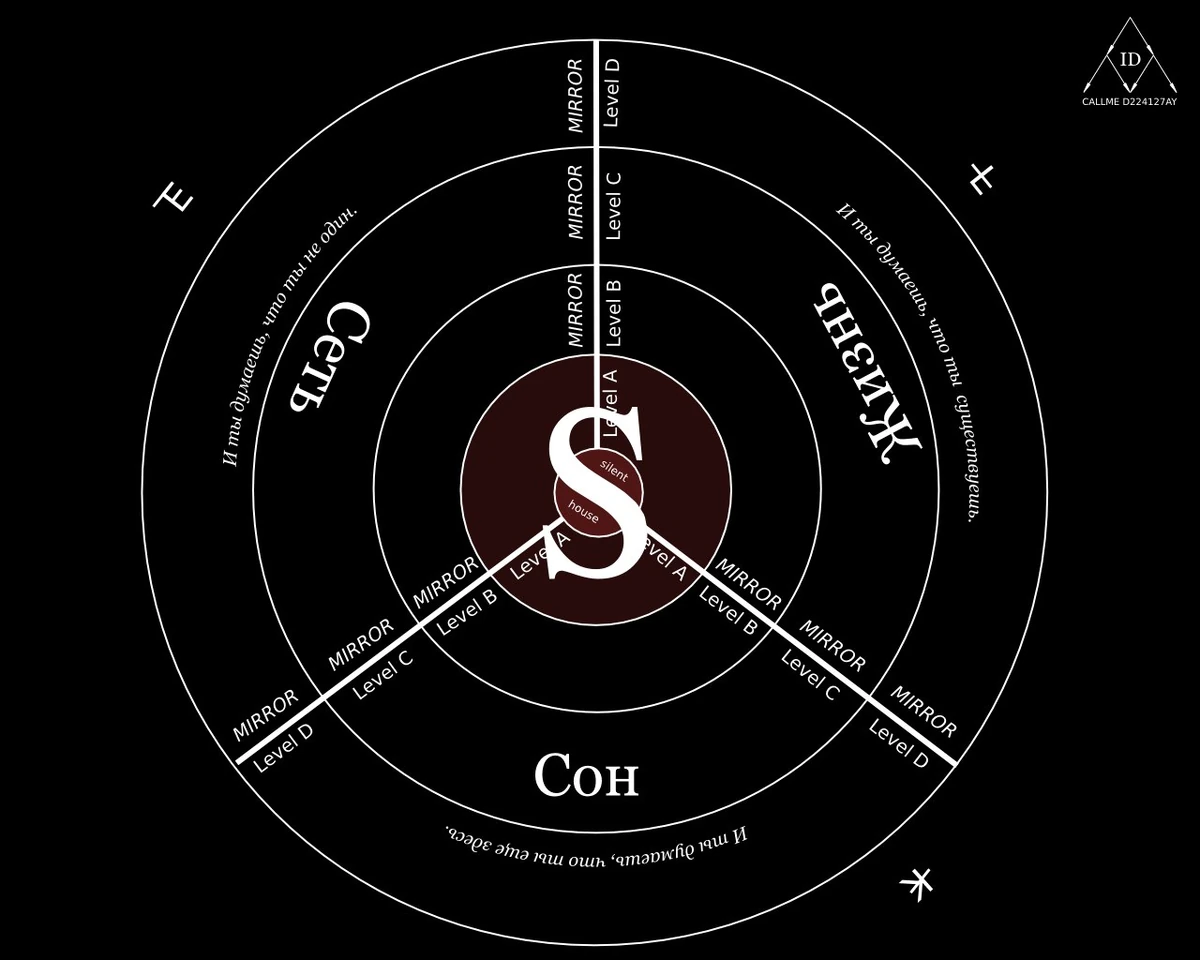
Tikhiy Dom
"Tikhiy Dom" (The Quiet House / Silent House) is the quintessential urban legend of Russian netlore and the netstalking subculture, signifying the mythical, absolute lowest stratum of the Deep Web. Originating in RuNet forum folklore in the early 2010s, the concept depicted a terminal ontological threshold at the "bottom of the Internet" where entry irreversibly severs human consciousness from physical reality. Between 2015 and 2016, this netstalking terminology was appropriated by malicious online actors within VKontakte alternate reality game (ARG) shock circles ("death groups", f57), transforming into a euphemistic metaphor for suicide during the moral panic surrounding the viral "Blue Whale" challenge.
The Russian Sleep Experiment
A text that first appeared online around 2010: five prisoners, a sealed chamber, a gas that prevents sleep, fifteen days of observation and what they become by the end of it. It is presented as a declassified report from a Soviet laboratory in the 1940s. No laboratory, no report and no mention of any of it exists before 2010, and the photograph that travels with the text is an animatronic mask sold in Halloween shops. The story spread so widely that it still resurfaces regularly as a "declassified document".