 Mystical places in Ukraine
13 legends · 4 cities
Regions and cities
Autonomous Republic of Crimea1
Donetsk Oblast1
Kyiv Oblast1
Republic of Crimea5
By kind of place
All places
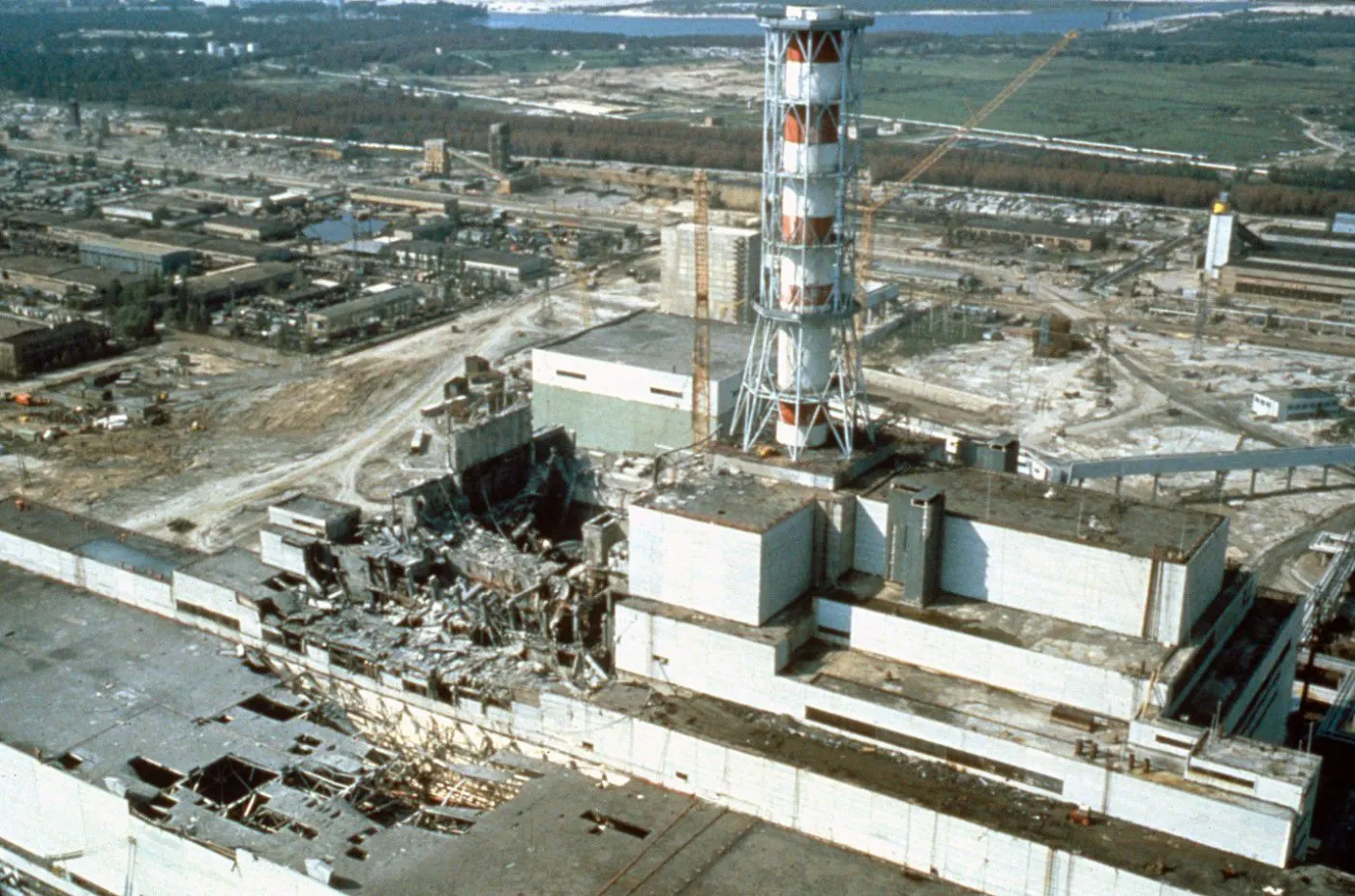
The Chernobyl Nuclear Power Plant
The Chernobyl Nuclear Power Plant (officially the V. I. Lenin Nuclear Power Station, or ChNPP) is a decommissioned nuclear energy facility located in the Vyshhorod Raion of Kyiv Oblast, Ukraine, along the Pripyat River and a man-made cooling reservoir, roughly 3 kilometers southeast of the abandoned city of Pripyat and 18 kilometers northwest of Chernobyl. On April 26, 1986, the site suffered the most catastrophic reactor breach in nuclear history (Level 7, the maximum on the INES scale), which destroyed Reactor Unit 4. Today, ChNPP is a specialized decommissioning site enclosed by the monumental New Safe Confinement arch structure.
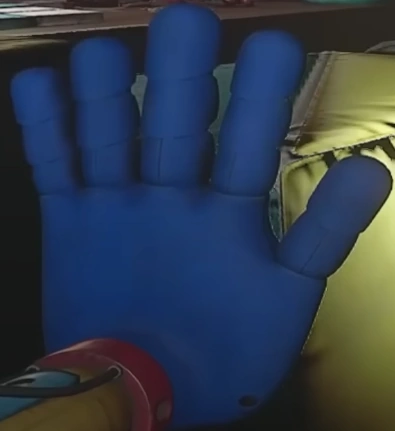
The Blue Hand
The Artek International Children's Center (formerly the All-Union Pioneer Camp Artek) on the southern coast of Crimea near Gurzuf. Covering over 200 hectares beneath the slopes of Bear Mountain (Ayu-Dag), the world's largest youth camp complex functioned as the primary creative incubator for Soviet children's oral folklore. Here, around evening campfires and along the Black Sea shore, the quintessential Soviet camp creepypasta—the tale of the "Blue Hand"—was honed and passed down across generations.

The Black Grand Piano
Children's music schools, assembly halls of Soviet pioneer camps, and youth pioneer palaces (anchored symbolically by the Moscow Pioneer Palace on Sparrow Hills). Within Soviet juvenile subculture of the 1970s and 1980s, the classical instrument of bourgeois prestige and musical education transformed into the central artifact of an iconic urban horror legend: the "Black Grand Piano" (or "Black Upright"), which secretly drained the blood of young musicians.
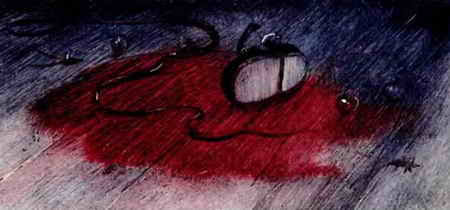
The White Sheet
Dormitory wings of Soviet pioneer summer camps (anchored symbolically by the All-Russian Pioneer Camp "Orlyonok" in the Tuapse District of Krasnodar Krai), boarding schools, and pediatric sanatoriums. Within the confined quarters of communal camp dormitories during the 1970s and 1980s, the urban myth of the "White Sheet" (a close sibling to the "Black Sheet" motif) emerged as a foundational camp horror tale, transforming an ordinary domestic textile into a levitating nocturnal predator.
The Red Stain
One of the most widespread Soviet scary stories. A family moves into a new flat and finds a red stain on the ceiling or the wallpaper that will not wash off and will not paint over: every morning it comes through again, a little larger. At night people vanish from the room, one at a time, and after each one the stain is brighter. The moral, in the children's telling, is always the same and always said out loud: they should have called the police at once.
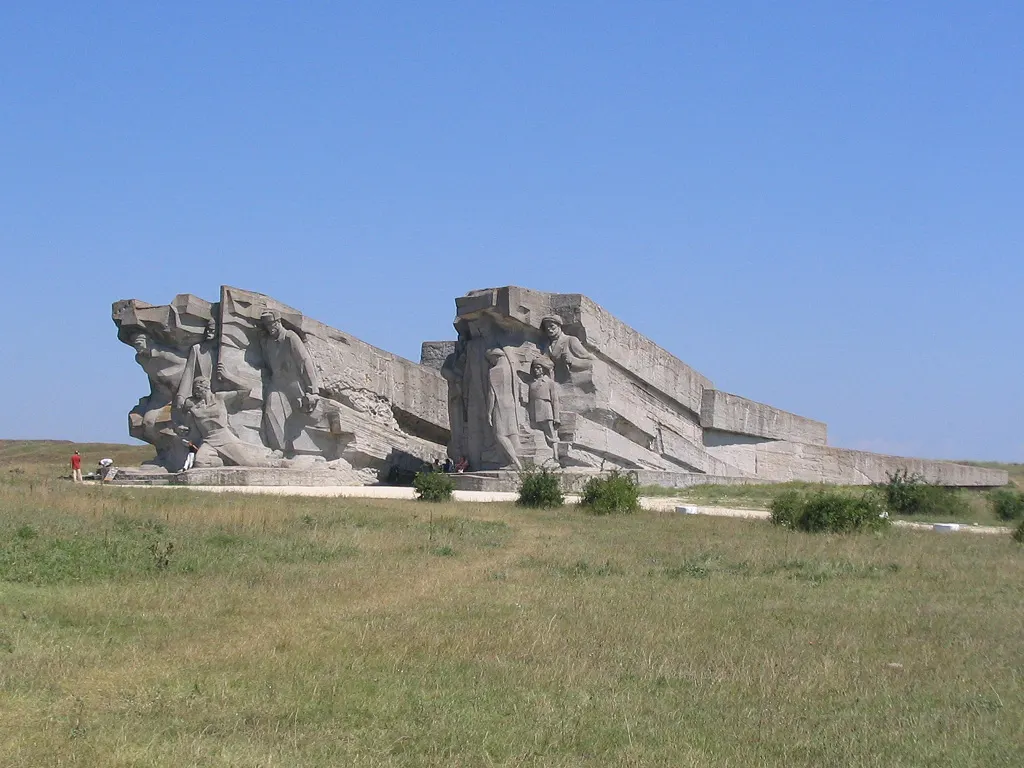
The Adzhimushkay quarries
The Adzhimushkay Quarries constitute an extensive subterranean limestone quarry system (comprising the Great and Small Adzhimushkay labyrinths) located on the outskirts of Kerch near the settlement of Adzhimushkay on the Kerch Peninsula, Crimea. Having supplied coquina building stone since antiquity, these catacombs became the site of one of World War II's most harrowing subterranean sieges: from May to October 1942, surrounded Soviet rear-guard units and local civilians mounted an unrelenting 170-day defense trapped in absolute darkness, enduring lethal dehydration, structural demolitions, and continuous chemical asphyxiation assaults by the German Wehrmacht.
The Black Hand and the Red Spot
Two stories from the same body, usually told back to back: the black hand that reaches out from under the bed or out of the wall, and the red spot on the ceiling that grows every night until it swallows the people living there. Both work the same way — the threat comes not from outside but from the flat itself, from the furniture and the walls, which is the one place a child cannot get away from. Folklorists have recorded them in many variants across the Soviet Union since the 1960s, and they remain the most durable layer of children's urban folklore.
The Coffin on Wheels
The best-known Soviet children's horror story, told in pioneer camps after lights-out. A voice on the radio announces that the coffin on wheels has set off and is coming down the street, then into the yard, then up the stairs; the floors are counted aloud, and on the last line the teller grabs whoever is next to them. The device is purely theatrical — the whole structure exists for one second at the end, and the fear is generated not by the plot but by the countdown. The pin is at Artek as the country's most famous camp, but it was told everywhere.
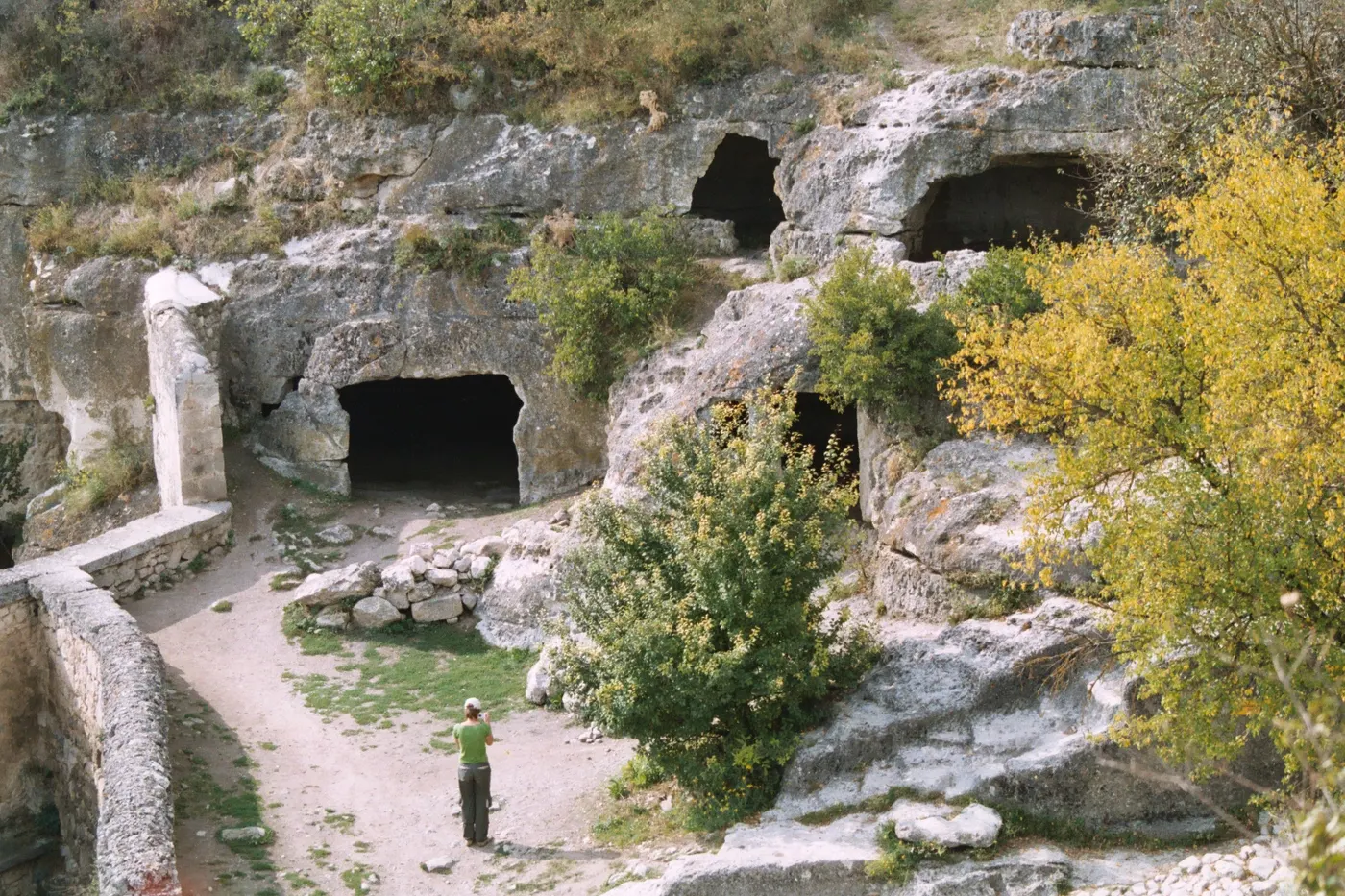
Chufut-Kale
A cave town on a Crimean plateau, inhabited from the sixth century and abandoned in the nineteenth. The name means Jewish fortress — the Karaites were the last to live here. Houses, cisterns, a prison and the mausoleum of the khan's daughter Canike Hanım are cut into the rock. Beside it lies the Karaite cemetery of Balta Tiymez, "the axe shall not touch" — a protected oak grove where felling was absolutely forbidden, which is why it outlived every wood around it.
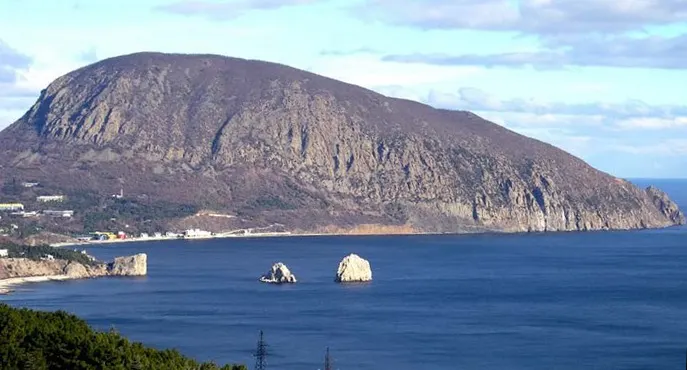
Ayu-Dag, the Bear Mountain
A volcano that never happened on Crimea's south coast: the magma rose but never broke out and set as a dome. From the sea the mountain reads as an enormous bear drinking. A Crimean legend takes that literally — the leader of a bear pack turned to stone, punished for trying to drink the sea dry rather than let a runaway girl go. Remains of a medieval monastery and fortifications survive on it, and the magnetic field in places pulls a compass off true.
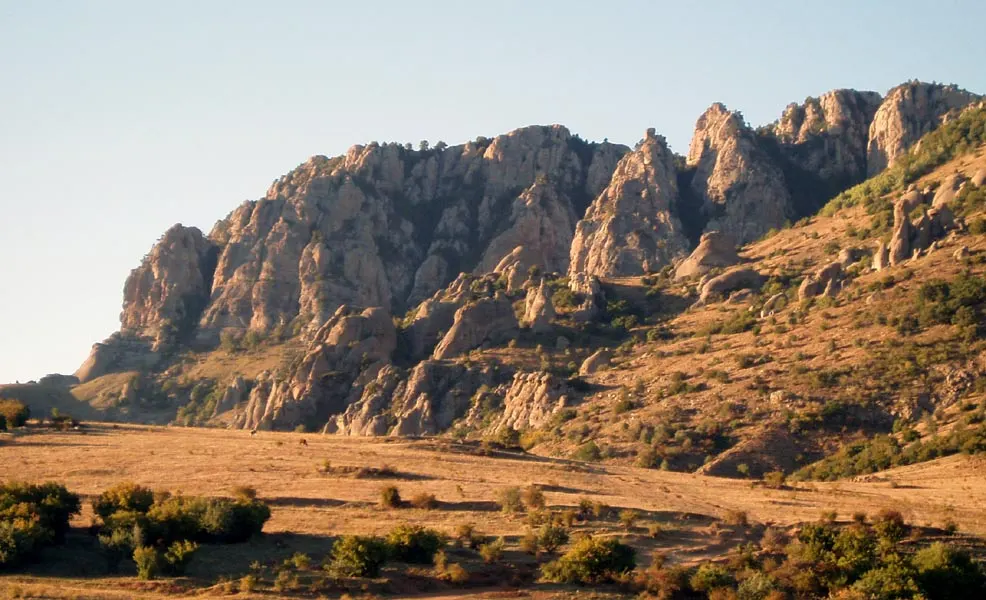
The Valley of Ghosts on Demerdzhi
A slope of the Crimean mountain Demerdzhi scattered with hundreds of stone pillars up to twenty-five metres high — conglomerate from which the rain has washed the softer rock. In mist and at sunset the shapes read as people and animals, and the outlines shift with the light. A Crimean Tatar tradition explains them by the curse of a blacksmith who settled on the mountain; the name means blacksmith. In 1966 the mountain slid and buried part of the village of Lavanda.
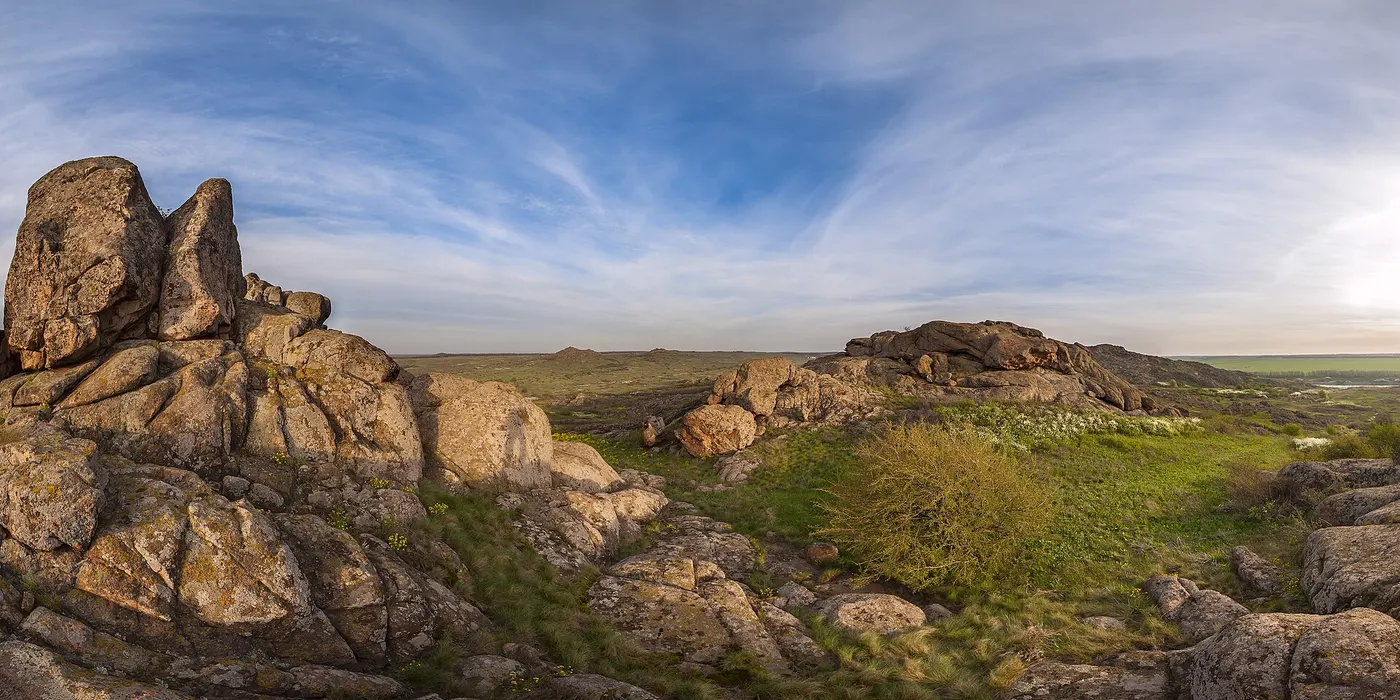
The Stone Graves
The Kamiani Mohyly ("Stone Tombs") Nature Reserve is a compact granitic inselberg formation spanning approximately 400 hectares, rising dramatically above the open Priazovian steppe along the Karatysh River (at the border of Donetsk and Zaporizhzhia Oblasts). For over a century, local historians, geographers, and travelers linked this 100-meter-tall labyrinth of pink granite crags to the chronicle-attested Kalka River and the tragic Battle of 1223—the first catastrophic clash between combined Kievan Rus'-Cuman forces and the Mongol reconnaissance vanguard led by Jebe and Subutai.
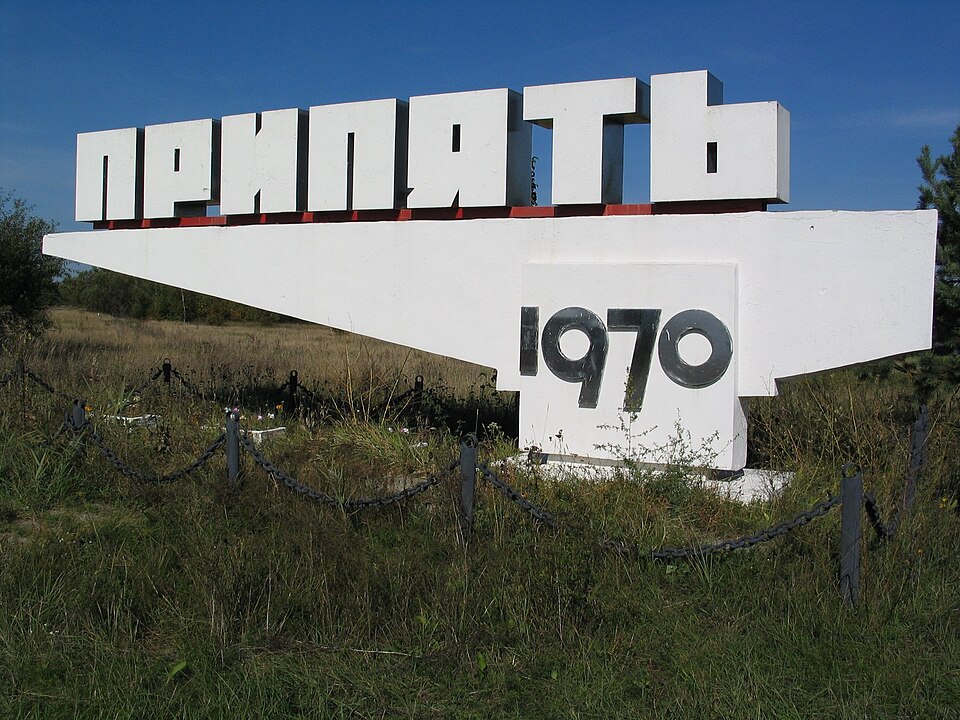
Pripyat
Pripyat is an abandoned city of regional significance situated in the Vyshhorod Raion of Kyiv Oblast, Ukraine, along the banks of the Pripyat River roughly 3 kilometers from the Chernobyl Nuclear Power Plant (ChNPP) and 16 kilometers from the border with Belarus. Founded in February 1970 as the ninth Soviet "atomgrad" (atomic company town) for power plant personnel, the municipality was completely evacuated on April 27, 1986, following the catastrophic explosion of ChNPP Reactor No. 4. Housing nearly 50,000 residents at the time of the disaster, Pripyat became the world's premier modern ghost town, serving as an open-air monument to industrial failure, a frozen time capsule of late-Soviet urban planning, and the ground zero of global urban exploration culture.