Inventions — mystical places on the map
Legends whose author is known. Some began on a forum, some in a horror-story contest, some in an advertising campaign — and then went out into the world and acquired eyewitnesses. Marked separately so an invention is not mistaken for something people genuinely believe.
33 places
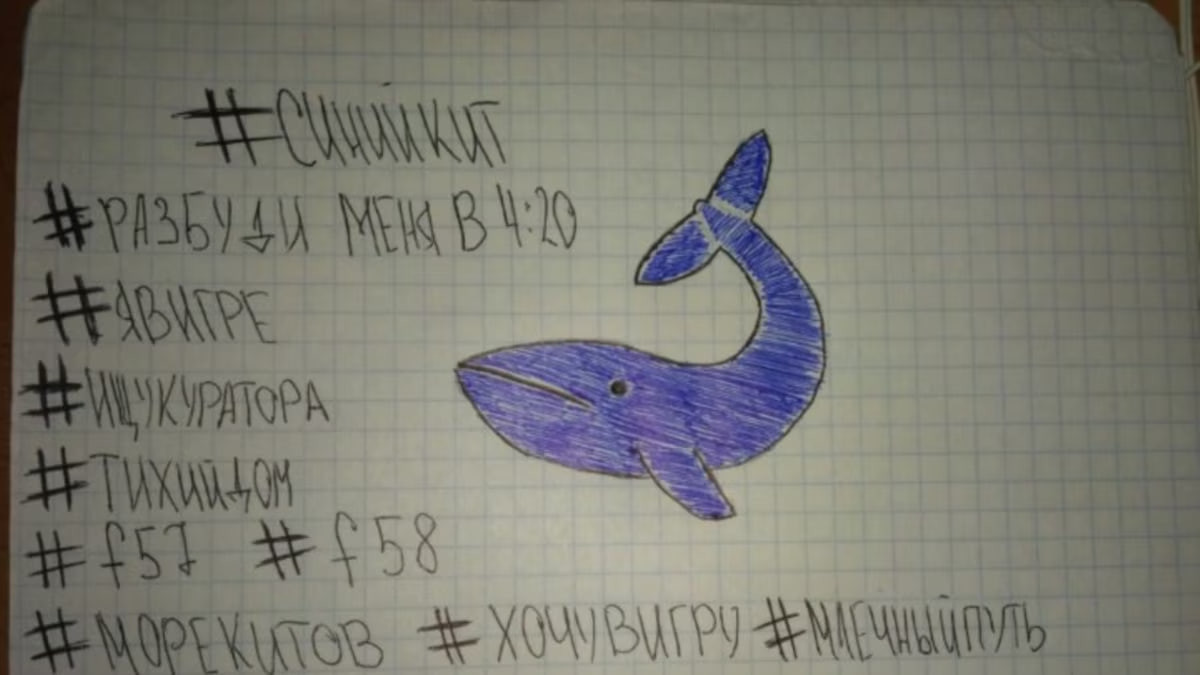
The "Blue Whale"
The "Blue Whale" phenomenon (also known as "Death Groups," "f57," "Quiet House," or "Wake Me Up at 4:20") is a viral digital urban legend, an international moral panic, and a destructive social-media alternate reality game (ARG) that originated within the Russian-speaking web (principally the VKontakte platform) in late 2015. Between 2016 and 2017, the narrative of a clandestine syndicate of online "curators" systematically coercing hundreds of teenagers into self-harm across a 50-day sequence triggered massive public panic, prompted reforms in Russian criminal law, and gained global infamy as a supposed worldwide cyber threat.
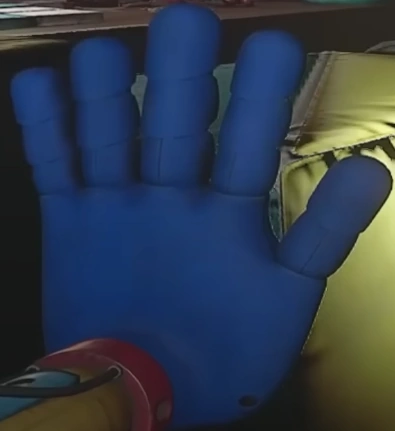
The Blue Hand
The Artek International Children's Center (formerly the All-Union Pioneer Camp Artek) on the southern coast of Crimea near Gurzuf. Covering over 200 hectares beneath the slopes of Bear Mountain (Ayu-Dag), the world's largest youth camp complex functioned as the primary creative incubator for Soviet children's oral folklore. Here, around evening campfires and along the Black Sea shore, the quintessential Soviet camp creepypasta—the tale of the "Blue Hand"—was honed and passed down across generations.

The Black Grand Piano
Children's music schools, assembly halls of Soviet pioneer camps, and youth pioneer palaces (anchored symbolically by the Moscow Pioneer Palace on Sparrow Hills). Within Soviet juvenile subculture of the 1970s and 1980s, the classical instrument of bourgeois prestige and musical education transformed into the central artifact of an iconic urban horror legend: the "Black Grand Piano" (or "Black Upright"), which secretly drained the blood of young musicians.
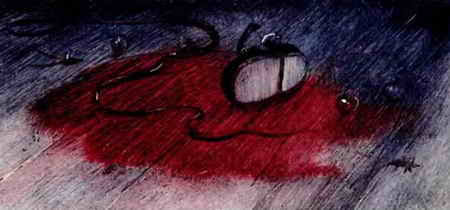
The White Sheet
Dormitory wings of Soviet pioneer summer camps (anchored symbolically by the All-Russian Pioneer Camp "Orlyonok" in the Tuapse District of Krasnodar Krai), boarding schools, and pediatric sanatoriums. Within the confined quarters of communal camp dormitories during the 1970s and 1980s, the urban myth of the "White Sheet" (a close sibling to the "Black Sheet" motif) emerged as a foundational camp horror tale, transforming an ordinary domestic textile into a levitating nocturnal predator.
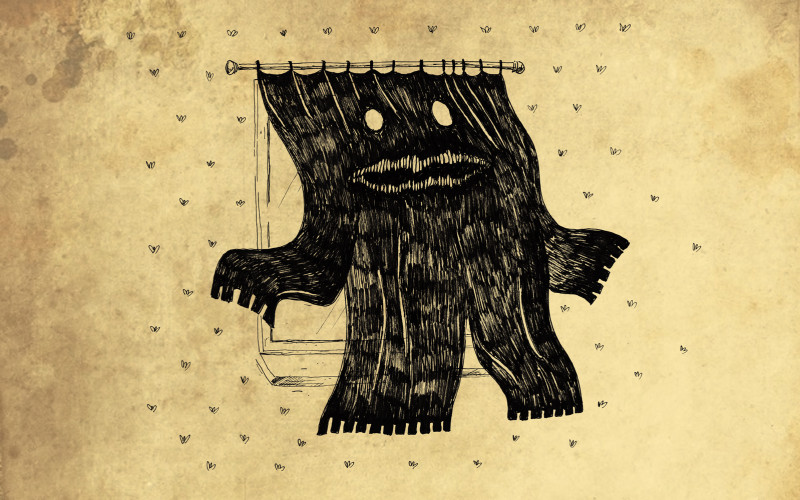
The Black Curtains
Standard apartments of Soviet prefabricated panel housing blocks (Khrushchyovkas and Brezhnevkas, epitomized by the 9th Experimental Block of Novye Cheryomushki in Moscow), state boarding schools, and summer camp dormitories. Within late-Soviet juvenile subculture during the 1970s and 1980s, the lore of the "Black Curtains" crystallized into one of the most pervasive domestic horror tales, transforming a standard household textile into an autonomous nocturnal predator.
The Red Stain
One of the most widespread Soviet scary stories. A family moves into a new flat and finds a red stain on the ceiling or the wallpaper that will not wash off and will not paint over: every morning it comes through again, a little larger. At night people vanish from the room, one at a time, and after each one the stain is brighter. The moral, in the children's telling, is always the same and always said out loud: they should have called the police at once.
The Tulpa
A practice Russian-language imageboards picked up from English-language ones around 2012: an imagined companion, grown over months of daily exercises until it answers on its own and becomes visible to the person who made it. The word is taken from Tibetan Buddhism, where it means something quite different; its present sense was given to it by Western occultists in the early twentieth century. The frightening part of the legend is not the practice but its retellings: the tulpa that stopped obeying, the tulpa that refused to go, and the tulpa that was there first.
The Blinking Windows
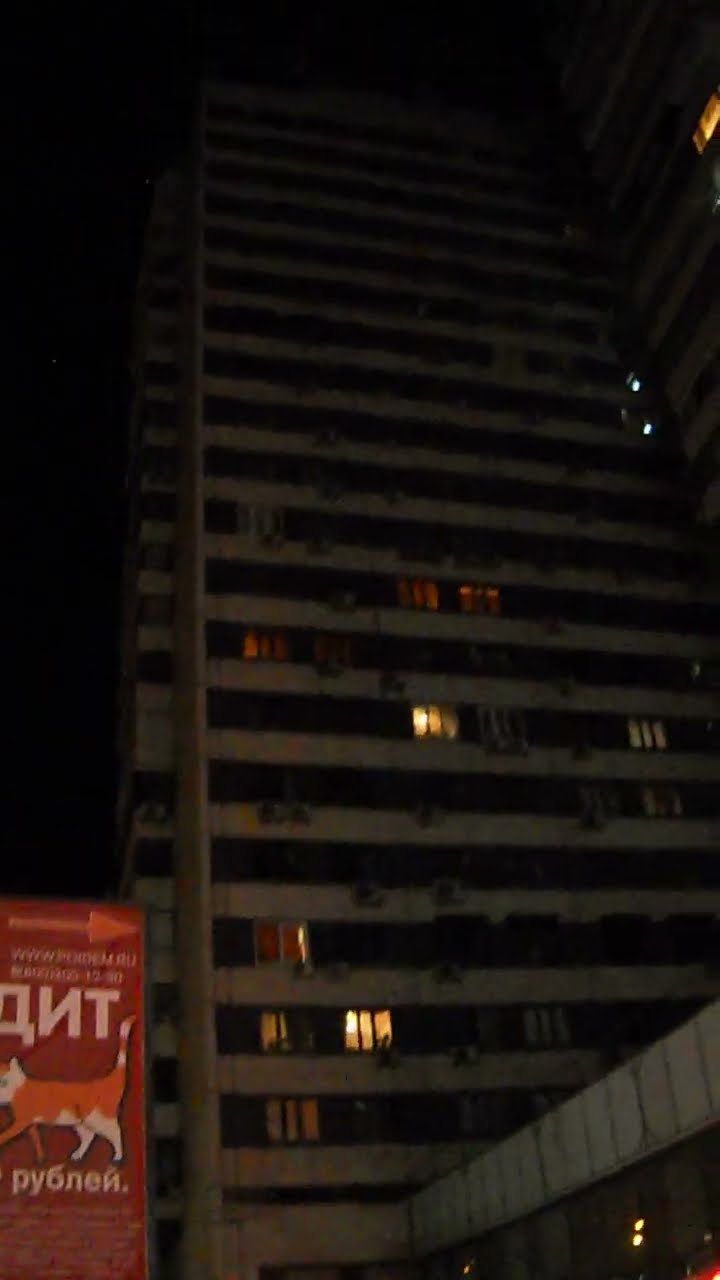
A residential high-rise building located at 7 Krasnoznamenskaya Street in the Central District of Volgograd, Russia. Originally converted from an unfinished Soviet hotel complex near the Piramida shopping center, the tower became the epicenter of one of the Russian internet's most viral urban legends of the 2010s: the mystery of the 11th-floor windows that rhythmically flashed into the night for years on end.
The Stickman
A figure assembled from sticks — arms, legs and neck longer than a person's — that stands motionless in the forest and copies the posture of whoever saw it. The legend was born on Russian-language imageboards in the early 2010s and rests on one detail retold almost word for word: the stickman does not attack and does not move while it is watched, and the distance between you closes only in the seconds when you blinked or turned away. In ten years no photograph of it has survived examination.
The Black Hand and the Red Spot
Two stories from the same body, usually told back to back: the black hand that reaches out from under the bed or out of the wall, and the red spot on the ceiling that grows every night until it swallows the people living there. Both work the same way — the threat comes not from outside but from the flat itself, from the furniture and the walls, which is the one place a child cannot get away from. Folklorists have recorded them in many variants across the Soviet Union since the 1960s, and they remain the most durable layer of children's urban folklore.

The Queen of Spades: calling her in the mirror
Dimly lit domestic bathrooms, washrooms of Soviet pioneer summer camps, and the historical urban cradle of the myth: the "House of the Queen of Spades" (the mansion of Princess Natalia Golitsyna) on the corner of Malaya Morskaya and Gorokhovaya streets in Saint Petersburg. The ritual of summoning the Queen of Spades before a mirror in pitch darkness stands as the definitive supernatural invocation ritual across Soviet and post-Soviet juvenile folklore, synthesizing archaic Slavic Yuletide divinations, Alexander Pushkin's literary legacy, and psychophysiological optical illusions.
The Red Film
A late-Soviet legend: somewhere there is a special photographic film on which people come out undressed. It was usually attributed to a foreigner, a Japanese or a German, who asked to be photographed in front of a monument and then left with the film. The story rested on two things at once — on scarcity, under which any imported object was credited with impossible properties, and on adolescent curiosity, which had no other outlet in the country. No such film ever existed, of course.
The Coffin on Wheels
The best-known Soviet children's horror story, told in pioneer camps after lights-out. A voice on the radio announces that the coffin on wheels has set off and is coming down the street, then into the yard, then up the stairs; the floors are counted aloud, and on the last line the teller grabs whoever is next to them. The device is purely theatrical — the whole structure exists for one second at the end, and the fear is generated not by the plot but by the countdown. The pin is at Artek as the country's most famous camp, but it was told everywhere.
The Black Volga
A black car with no plates, sometimes with white curtains or red tyres, that drives around the city taking children. The legend circulated across the Eastern Bloc from the 1960s to the 1980s — in the USSR, Poland, East Germany, Hungary — and in each country somebody different was behind the wheel: state security, priests, foreigners, vampires. The Volga itself was not chosen at random: an official car, unavailable to an ordinary person, and therefore the country's most recognisable symbol of an authority you cannot hail.
Tikhiy Dom
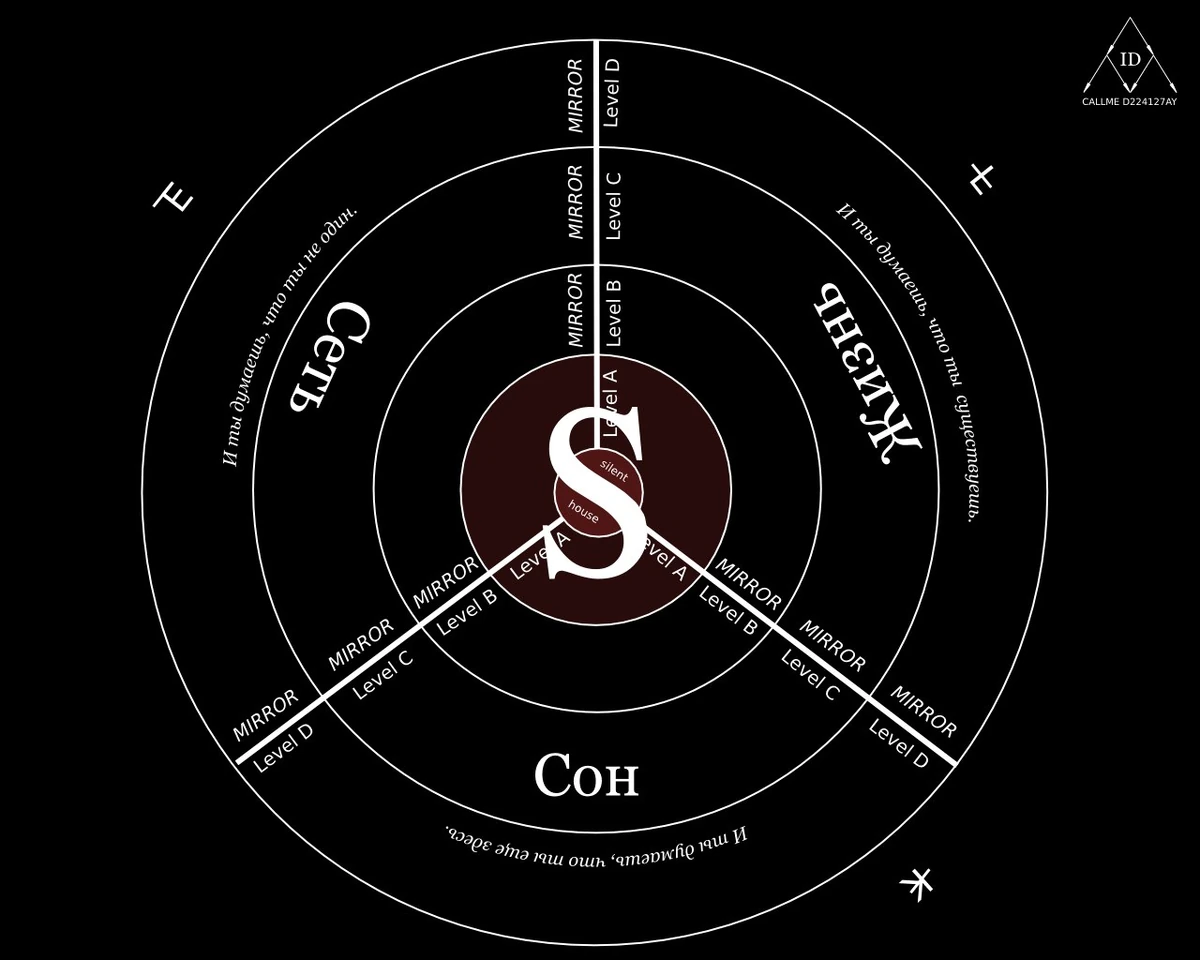
"Tikhiy Dom" (The Quiet House / Silent House) is the quintessential urban legend of Russian netlore and the netstalking subculture, signifying the mythical, absolute lowest stratum of the Deep Web. Originating in RuNet forum folklore in the early 2010s, the concept depicted a terminal ontological threshold at the "bottom of the Internet" where entry irreversibly severs human consciousness from physical reality. Between 2015 and 2016, this netstalking terminology was appropriated by malicious online actors within VKontakte alternate reality game (ARG) shock circles ("death groups", f57), transforming into a euphemistic metaphor for suicide during the moral panic surrounding the viral "Blue Whale" challenge.
The Rake
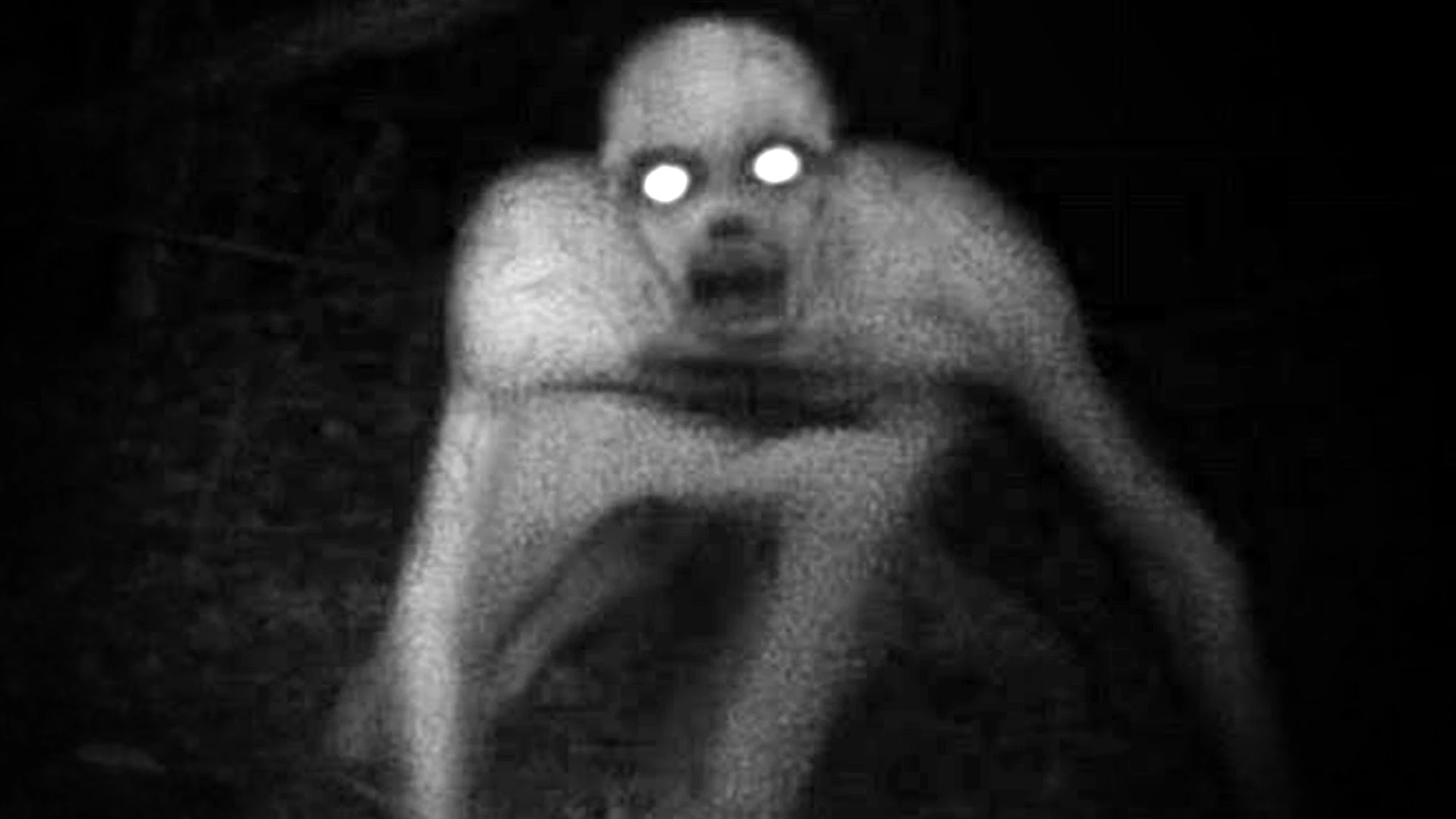
A hairless creature on four limbs, sitting beside a sleeping person's bed. It appeared around 2005 as a collaborative forum project: several users agreed to invent a monster and supply it with "historical evidence" — extracts from a 1691 ship's log, Spanish chronicles, diaries. Every document is fictional and was written the same evening. The case is interesting as a rare documented example of folklore being manufactured deliberately and from nothing.
Smile Dog
One of the first internet horror stories built around a file rather than a text. It appeared around 2008: a journalist visits a woman to ask about a picture called smile.jpg that drives mad everyone who sees it; the woman refuses to talk and eventually sends the file. The trick is that the file does not exist — every "original" circulating online appeared after the story did. The reader has to imagine the image, and imagination does the job better than any drawing.

The Dybbuk Box
A wine cabinet listed on eBay in 2003 with a long description: supposedly it had belonged to a Holocaust survivor and contained a possessing spirit from Jewish folklore. The lot was resold repeatedly, each owner adding fresh misfortunes to the listing, the auction spread across the internet and eventually became a Hollywood film. In 2021 the original seller, the writer Kevin Mannis, publicly acknowledged that the whole thing was fiction he had written — a literary project that accidentally became a modern legend.
The Russian Sleep Experiment
A text that first appeared online around 2010: five prisoners, a sealed chamber, a gas that prevents sleep, fifteen days of observation and what they become by the end of it. It is presented as a declassified report from a Soviet laboratory in the 1940s. No laboratory, no report and no mention of any of it exists before 2010, and the photograph that travels with the text is an animatronic mask sold in Halloween shops. The story spread so widely that it still resurfaces regularly as a "declassified document".
Lavender Town Syndrome
The legend says that in the Japanese release of Pokémon Red and Green in 1996 the music of the graveyard town carried high frequencies that gave children headaches and worse, and that the score was rewritten after a wave of complaints. Only one part of it checks out: the Japanese version does sound different from the international one — but the music was reworked for release abroad for ordinary technical reasons. No medical records, no cases, no names. The story appeared online a decade and a half after the game did.
Herobrine
A character that was never in the game. In 2010 an anonymous user posted a Minecraft screenshot of a player figure with no pupils standing in fog, and a story that it was the creator's brother. The rumour outlived every denial: for years players sent in evidence — squares of felled forest, sand pyramids, tunnels nobody built — and the developers eventually took to adding "Removed Herobrine" to their patch notes as a joke, though there was nothing to remove. His code has never existed in any version of the game.
Ted the Caver
One of the earliest examples of the form, and possibly the first that really worked. In 2001 a diary appeared on the free host Angelfire: a man and a friend clearing a narrow side passage in a cave. The entries are matter-of-fact, with photographs and measurements, page after page; the tone shifts slowly over several weeks, and the disaster arrives well after the reader has stopped expecting one. It works because until the very end it does not look like a story — it looks like somebody's abandoned website.
Candle Cove
Kris Straub's 2009 story, written entirely as a forum thread: several people reminisce about a children's puppet show a local station ran in the late sixties. The memories agree on the details, then get worse, and in the last post one participant's mother says there was no programme — the television showed static in those hours, and the child sat watching it. The form matters more than the plot: the text does not pretend to be a story, it pretends to be somebody else's conversation.
Slender Man
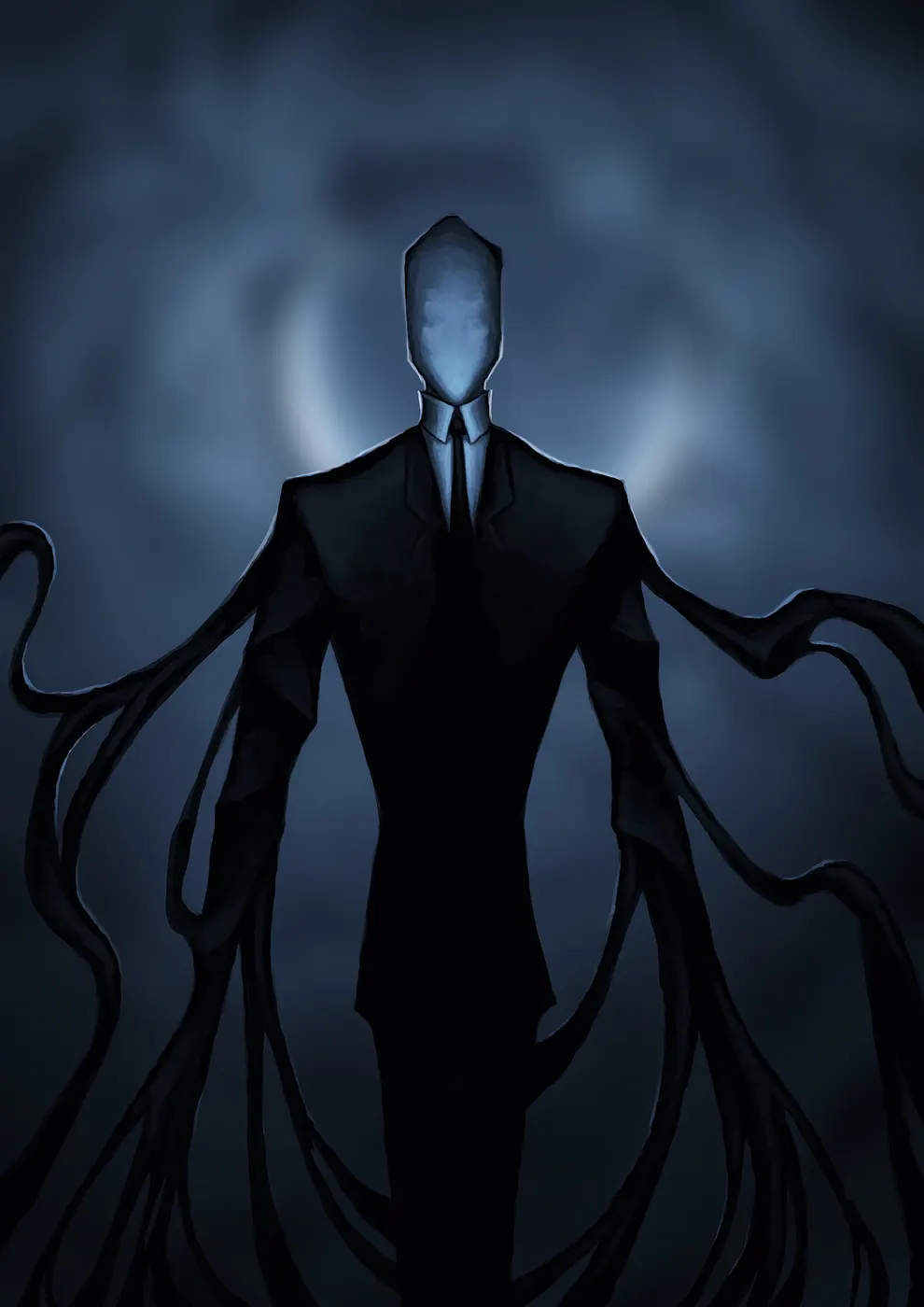
Invented in June 2009 by Eric Knudsen, posting as Victor Surge, for a photo-manipulation contest on the Something Awful forums: two black-and-white photographs of children with a tall thin figure in a suit added to them, and a couple of lines of caption attributed to witnesses who did not exist. The brief was to make an image look paranormal. Three years later Slender Man was living on his own — hundreds of stories, games and web series the author had nothing to do with. One of the first cases of internet folklore outgrowing any source it came from. The legend has no geography of its own: the pin sits in Pleasant Hill, Missouri, where the forum itself was run from.