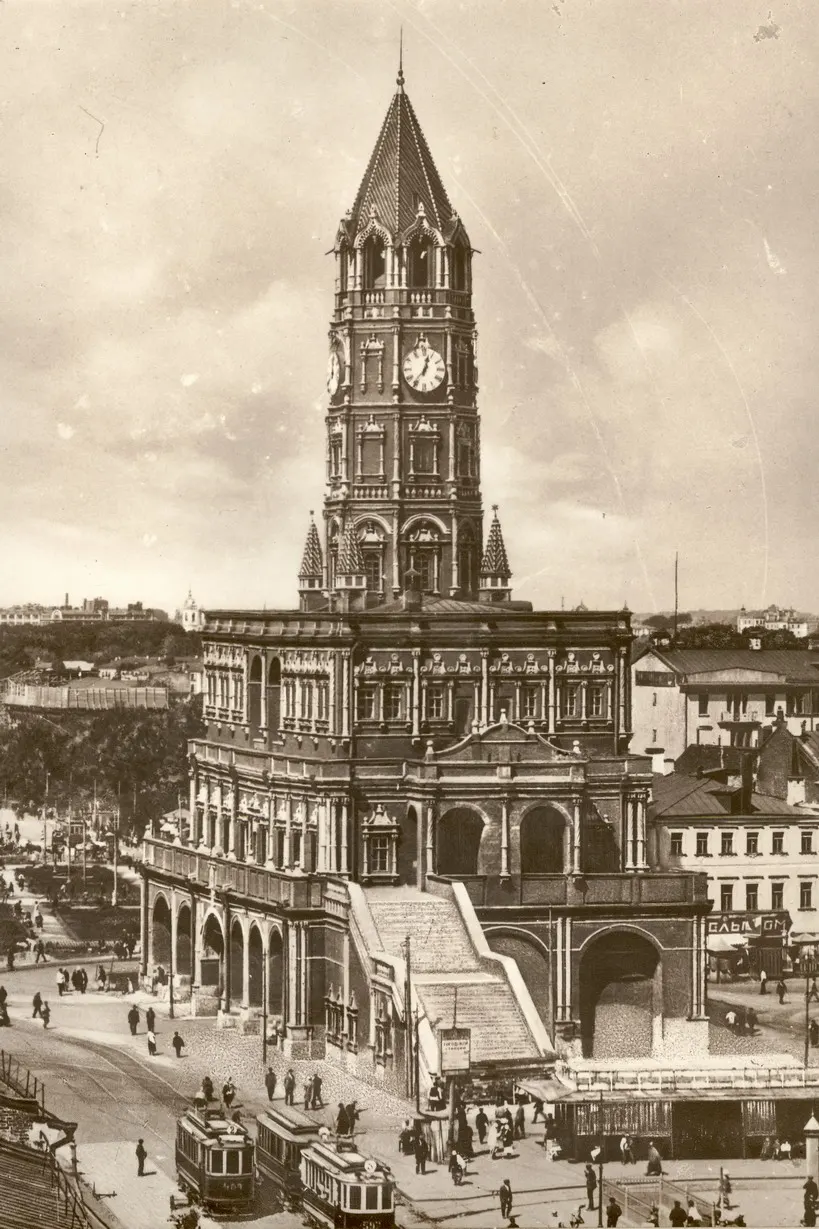
The Site of the Sukharev Tower
Sukharevskaya Square in Moscow is the historic site where the famed Sukharev Tower stood from the late 17th century until its demolition in 1934. A masterpiece of Naryshkin Baroque architecture, it served alternately as a triumphal gate, astronomical observatory, and Russia's first naval navigation academy, while enduring in city folklore as Moscow's premier occult epicenter tied to Peter the Great's polymath advisor and alleged "warlock," Jacob Bruce.
The legend
Danger Level: Yellow (Anomalies are observed, but no one is harmed) For centuries, the tower was regarded in local lore as Jacob Bruce’s sorcery lair. Legends claimed that in its topmost chamber, the alchemist constructed a mechanical flying brass bird, penned prophesies in his occult calendar, and immured the fabled "Black Book" of esoteric incantations within the tower's foundations. Urban myths assert that Joseph Stalin ordered the tower dismantled brick-by-brick specifically to find Bruce's grimoire, and locals still report sightings of Bruce’s phantom in 18th-century attire drifting across the square at dusk.
What actually happened?
Jacob Bruce was not a sorcerer, but an Enlightenment polymath, astronomer, cartographer, and field marshal. He established Russia's first scientific observatory and optical laboratory in the tower's upper tiers; his late-night observations through telescopes and complex brass instruments bewildered superstitious Muscovites, spawning rumors of witchcraft. The 1934 demolition was driven entirely by utilitarian urban planning to widen the Garden Ring highway under the Moscow Reconstruction Plan, not an esoteric quest for occult manuscripts.
History
The tower was constructed between 1692 and 1695 by order of Peter the Great to honor the loyal Streltsy regiment commanded by Lavrenty Sukharev. In 1701, it became home to the School of Mathematics and Navigation, and later housed the municipal water reservoir and the Moscow City Museum. Despite intense protests from prominent architects and preservationists (including Alexey Shchusev and Igor Grabar), the landmark was razed in mid-1934. In 2006, archaeological excavations for a pedestrian underpass unearthed the tower’s intact white-stone foundations.
Where is it?
Sukharevskaya Square, Moscow (the intersection of the Garden Ring with Sretenka Street and Prospekt Mira), situated directly above Sukharevskaya metro station.
Can you visit?
Yes, the square and its pedestrian network are open to the public 24/7. While the tower itself no longer stands, visitors can inspect preserved sections of the original white-stone foundations inside the underground walkway beneath the square, alongside a historical display featuring archival blueprints and scale models.
The Sukharev Tower and Jacob Bruce
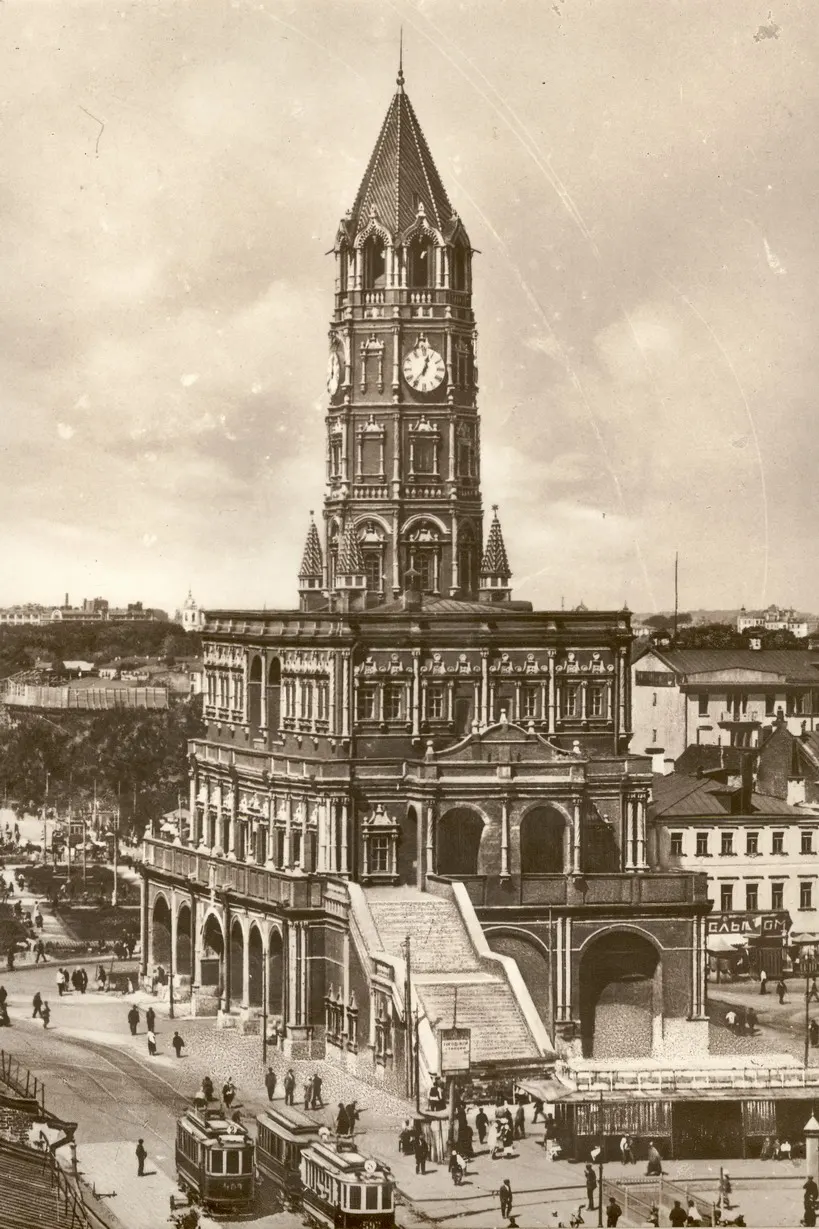
The Sukharev Tower was a masterpiece of late-17th-century Russian civil architecture, formerly standing at the junction of Moscow's Garden Ring, Sretenka Street, and Prospekt Mira. Commissioned by Peter the Great and designed in the ornate Naryshkin Baroque style, the 60-meter-tall red-and-white monument functioned as a ceremonial city gate, the administrative birthplace of the Russian Imperial Navy, and the nation’s first astronomical observatory. In folk memory, the landmark is permanently tied to one of Peter's closest intellectual confidants, Field Marshal Jacob Bruce, who was mythologized as the supreme warlock and sorcerer of the Russian Empire.
Comments
No comments yet. Be the first.