 Folklore — United States
Folklore — United States. 8 places in the catalogue, each with coordinates, the story behind it and a danger level from white to black.
Cropsey
A children's bogeyman with a hook, told on Staten Island for generations — until children began disappearing in the neighbourhood in the 1980s and it emerged that a former orderly from the abandoned Willowbrook school was living beside it. Willowbrook was a real institution, closed after a 1972 investigation exposed appalling conditions. A rare and unpleasant case of a local bogeyman and a documented local history meeting at the same point on the map.
Bunny Man Bridge
A single-track railway underpass in Fairfax County, Virginia, known locally as Bunny Man Bridge. The legend puts a man in a rabbit suit with an axe here. There is a real basis and it is a modest one: in October 1970 county police logged two reports of a man in a white suit with rabbit ears who swung an axe at people near their cars and broke a window in a house under construction. He was never found. In half a century two police reports have grown into hanged children, an escaped asylum patient and a compulsory visit to the bridge on Halloween night.
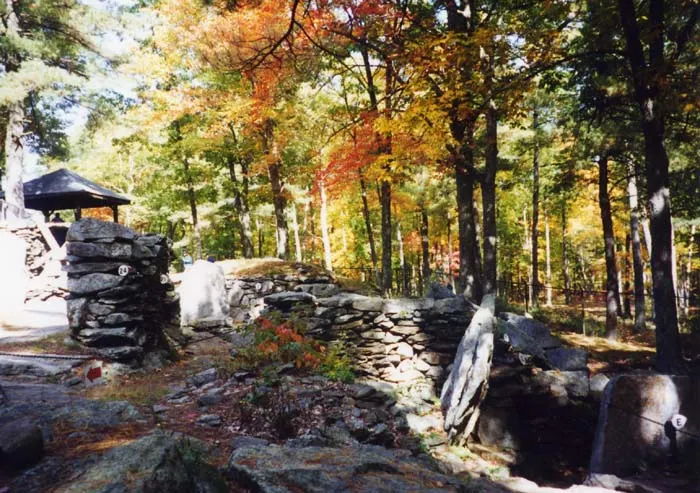
America's Stonehenge
A cluster of stone chambers, walls and slabs on a New Hampshire hill whose purpose has been argued for a century. Some read it as a pre-Columbian observatory aligned to the solstices, others as colonial farm structures and a nineteenth-century soap works. The central slab with a channel cut round its edge is known as the sacrificial table; it could equally be a lye press. The site works as an attraction and as an argument that does not resolve.
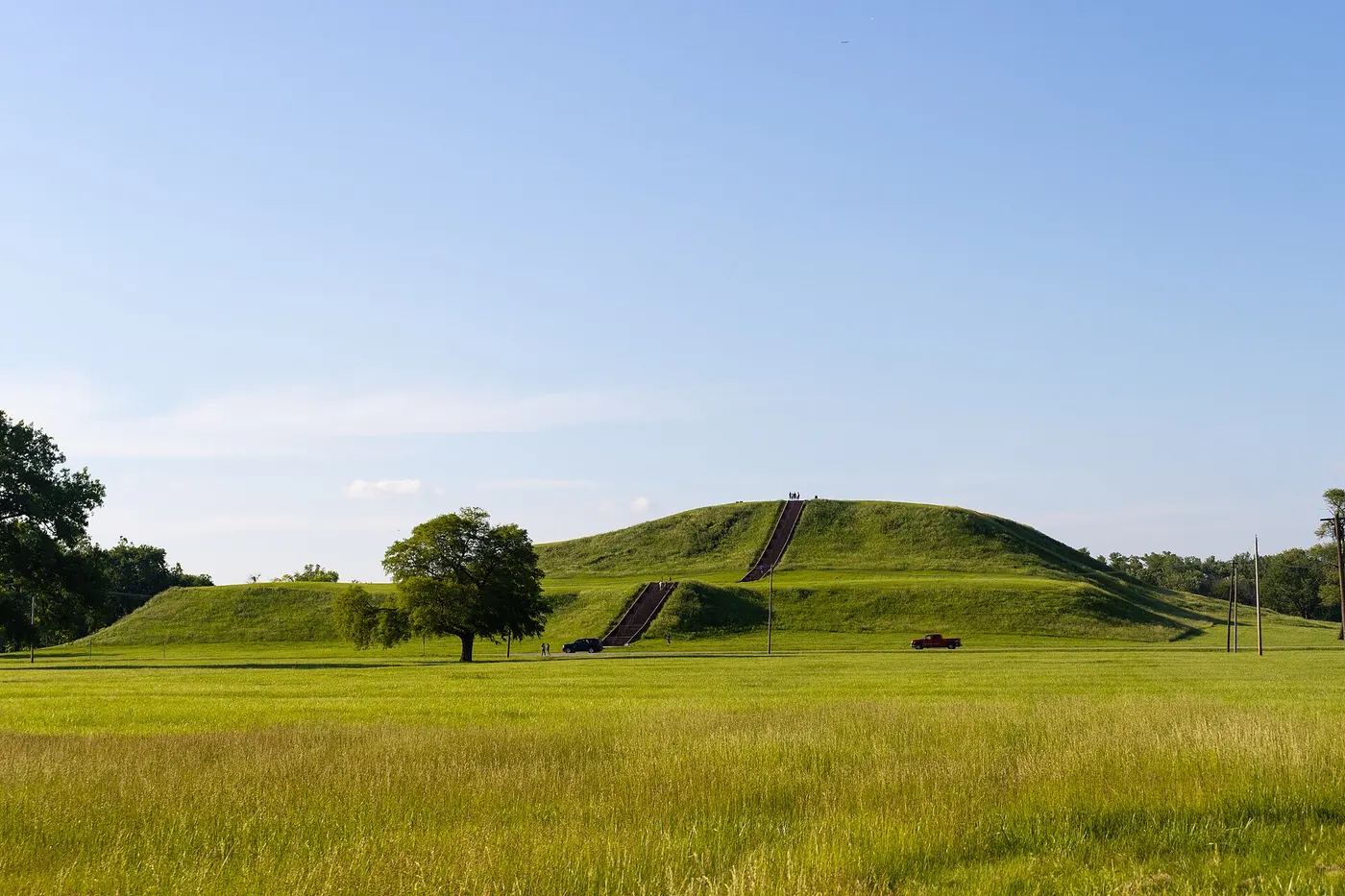
Cahokia
The largest pre-Columbian city north of Mexico: at its height around 1100 it held perhaps twenty thousand people, more than London at the time. Monks Mound has a larger base than the Great Pyramid. Mound 72 contained a burial with over fifty young women laid out in rows, almost certainly sacrificed. By 1350 the city was empty, for no clear reason, and it has never been explained.
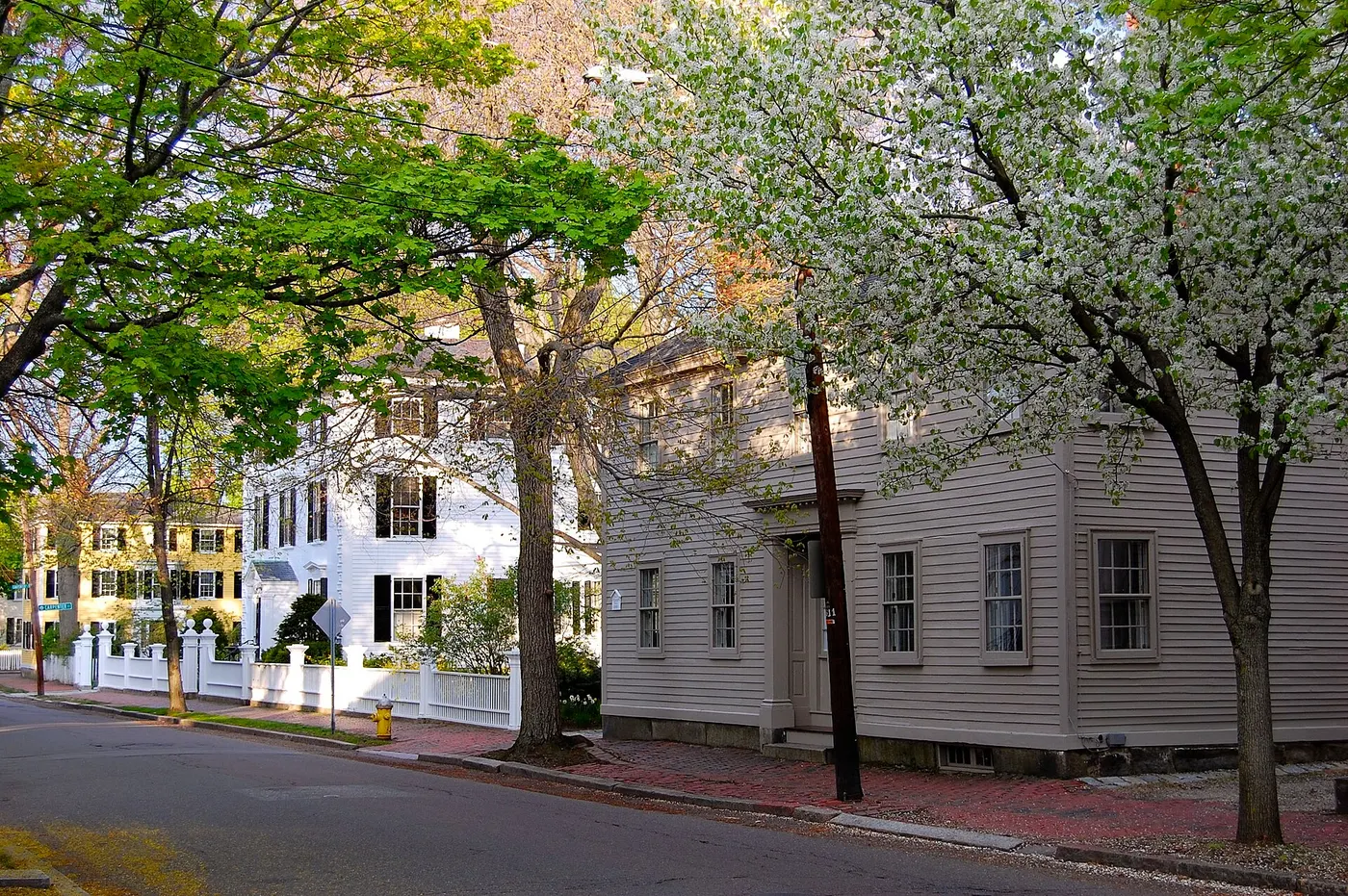
Salem
In 1692 nineteen people were hanged here for witchcraft, one was pressed to death under stones, and several more died in gaol. It began with the fits of two girls and evidence the court accepted without proof — including "spectral" testimony, meaning a claim that the accused's spirit had appeared to a witness. Salem lives on the story openly now: museums, a memorial on the execution ground, and a reputation that fills the town every October.
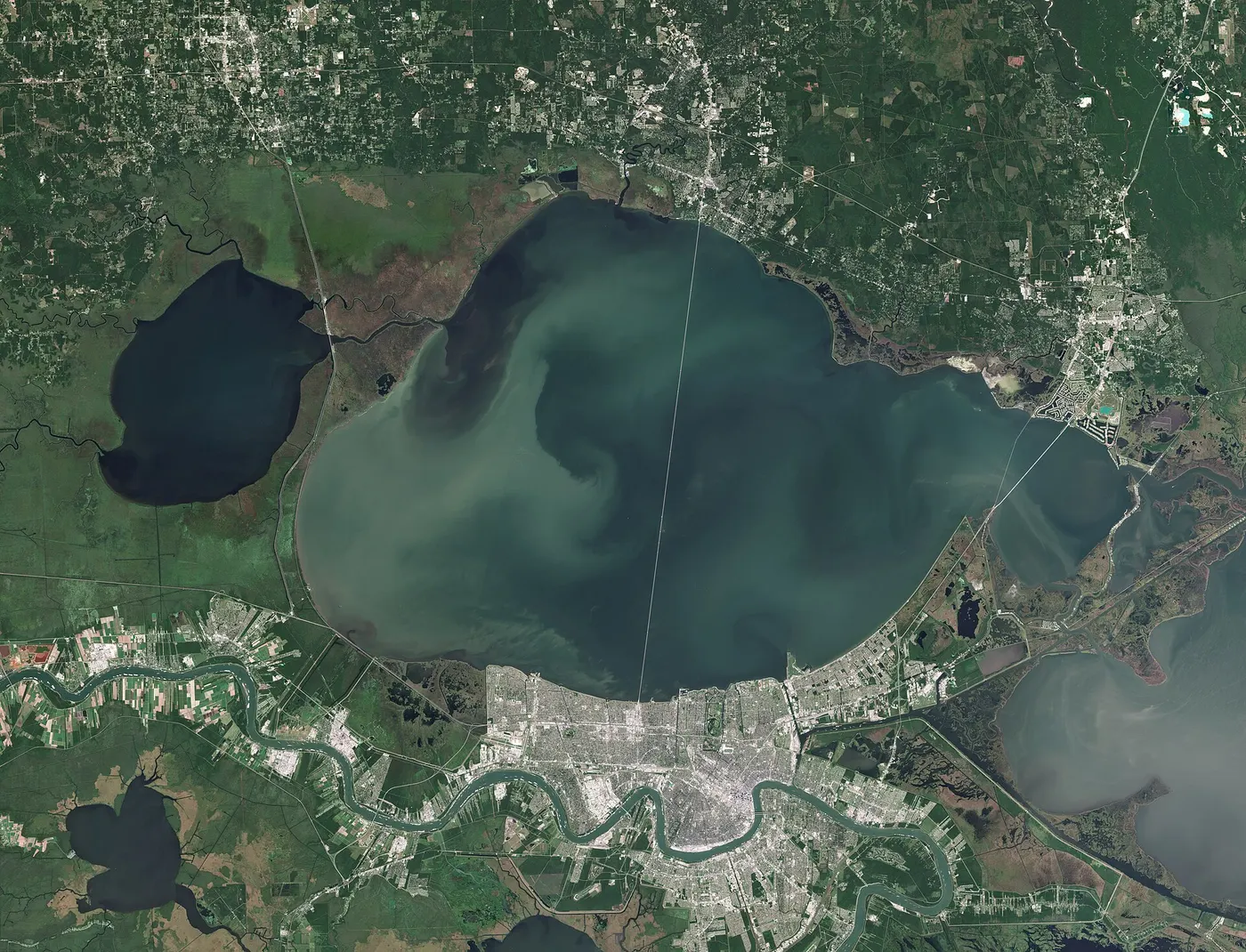
Lake Pontchartrain, at the Gates of Voodoo
The vast brackish estuary beside New Orleans, on whose shores voodoo rites were held through the nineteenth century — most famously Marie Laveau's St John's Eve gatherings at Bayou St John. Traces of offerings still turn up at night: candles, coins, bones. A causeway nearly twenty-four miles long crosses the lake, and from its middle no shore is visible at all — a sensation locals count as its own reason not to drive it in fog.
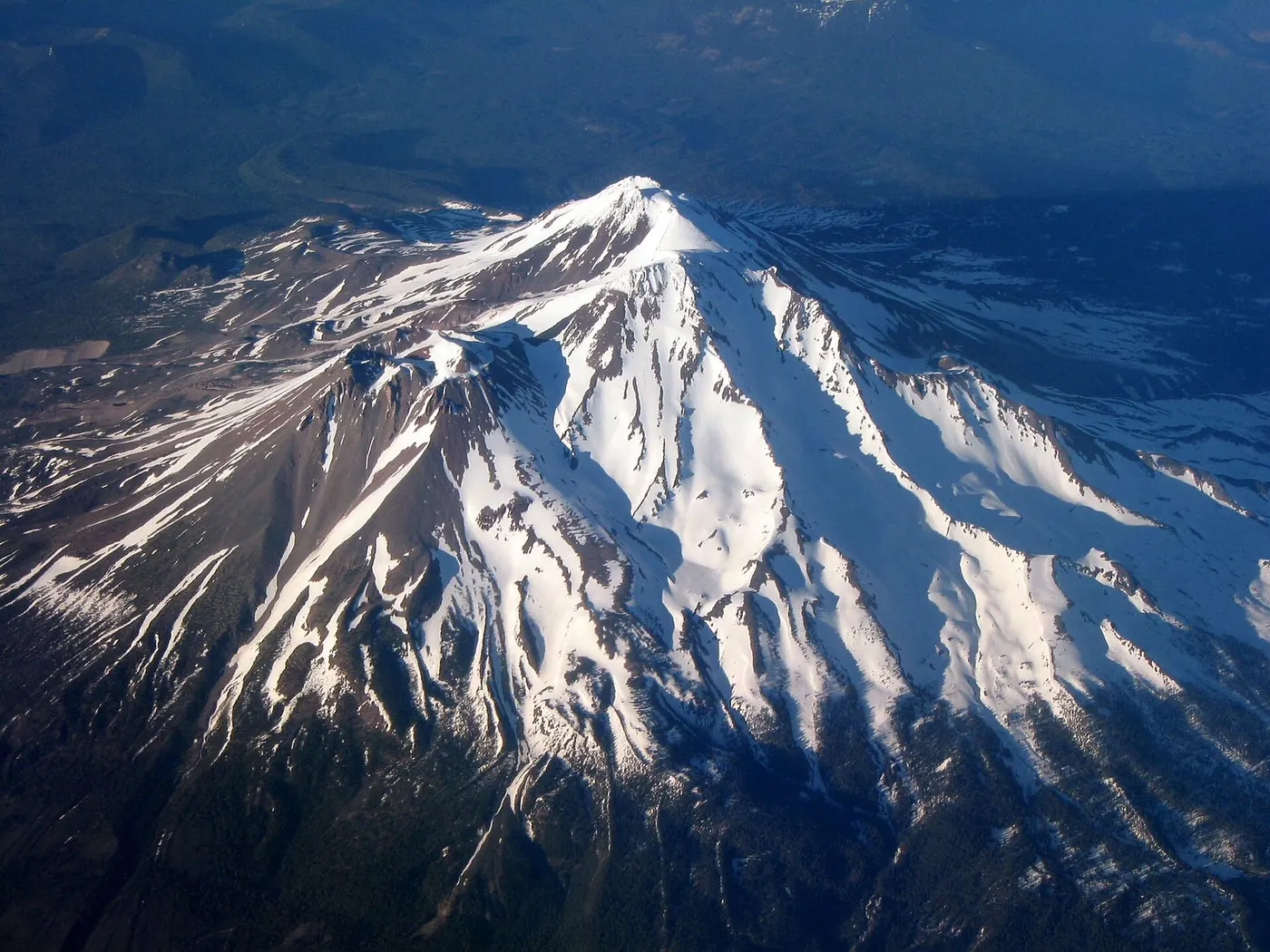
Mount Shasta
A volcano in northern California surrounded by perhaps the densest tangle of esoteric legend in America — from Telos, an underground Lemurian city, to reports of glowing objects above the summit.
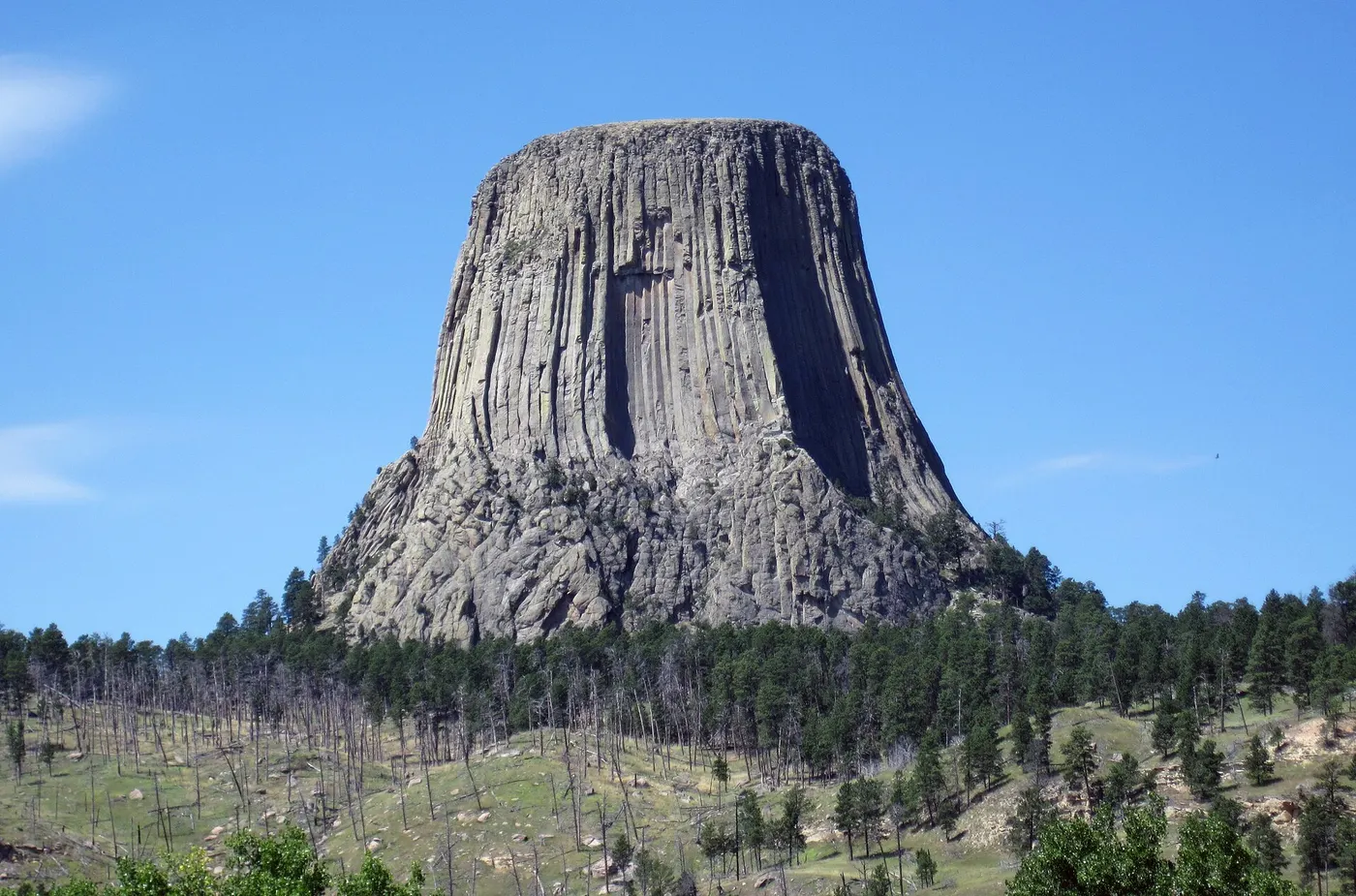
Devils Tower
Devils Tower is a colossal columnar igneous monolith rising 386 meters (1,267 feet) above the Belle Fourche River valley in northeastern Wyoming, USA. It holds historic significance as the very first designated U.S. National Monument (established in 1906). Formed of striking vertical phonolite columns, the formation serves as a sacred cultural sanctuary for indigenous tribes and a global icon of pop culture and ufology.