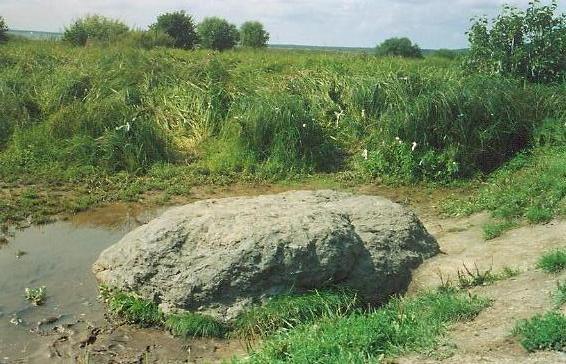
The Blue Stone
The Blue Stone (Sin-Kamen) is a sacred ritual megalith of glacial origin resting on the northeastern shore of Lake Pleshcheyevo in the Yaroslavl Region. Weighing approximately 12 tons, this quartzite-slate boulder is widely known for its unique optical effect: while dull gray when dry, it takes on a distinct bluish-steel sheen when wet.
The legend
Local folklore long regarded the stone as a living, healing presence. Its most persistent legends center on its miraculous ability to "travel." Orthodox clergy repeatedly attempted to suppress the pagan relic: in the early 17th century, it was buried in a deep pit, only to resurface decades later. In the winter of 1788, while being transported across the frozen lake for a church foundation, the heavy boulder broke through the ice and sank, yet over the following decades, it mysteriously "crawled" along the lakebed back to the shore.
What actually happened?
The stone’s movements are the result of natural lake hydrodynamics and ice tectonics. The submerged boulder was pushed ashore by powerful spring ice floes: firmly frozen into heavy sheets of ice, the monolith gradually drifted shoreward driven by winter ice pressure and seasonal storms. Its earlier emergence from underground was caused by frost heaving and soil erosion washing away the top layers of sand and clay.
History
Originally perched atop Alexandrova Gora (Yarilo's Mount), the stone served as the primary sanctuary for the Finno-Ugric Merya tribe and later the early Slavs of the historic town of Kleshchin. Thrown down the slope during Christianization, it continued to be venerated. In modern times, the Blue Stone remains a major pilgrimage destination for tourists and neo-pagans, though human foot traffic and its sheer weight are causing it to slowly sink into the waterlogged ground.
Where is it?
The boulder is located on the northeastern shore of Lake Pleshcheyevo in the Pereslavsky District of the Yaroslavl Region, approximately 2 kilometers northwest of Pereslavl-Zalessky, near the village of Kriushkino.
Can you visit?
Yes, the site is open to visitors year-round within the Pleshcheyevo Ozero National Park. To protect both the megalith and the sensitive marshy shoreline from erosion, wooden boardwalks and viewing platforms have been installed. Access requires a standard national park entrance ticket purchased at the gate.
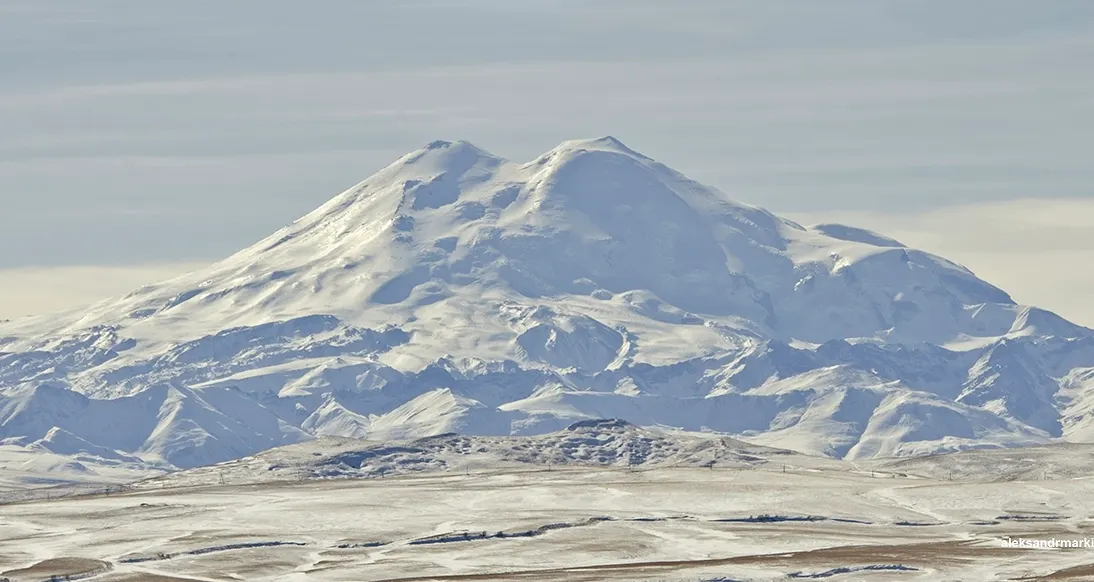
Mount Elbrus
The highest peak in Europe and a dormant volcano to which, in one version of the tradition, Prometheus was chained. The mountain has accumulated a body of stories of its own: the Priyut 11 hut that burned in 1998, the bodies of German Edelweiss division troops found where they planted a flag in 1942, and figures in the mist that climbers describe in almost the same words used on Scotland's Ben Macdui.
Comments
No comments yet. Be the first.