 Mystical places in United Kingdom
50 legends · 32 cities
Regions and cities
England37
Northern Ireland2
Scotland8
Wales2
By kind of place
All places

Ghostwatch on the BBC
BBC Elstree Studios and the suburban district of Northolt in Greater London, UK, are the defining locations of one of the most controversial media hoaxes in broadcast history. On Halloween night in 1992, the BBC aired "Ghostwatch," a mock live investigative special into a haunted council home that triggered nationwide public hysteria, regulatory sanctions, and real-world tragedy.

Alternative 3
Anglia House in the historic center of Norwich, Norfolk, UK—the former central broadcast headquarters of Anglia Television. It was from this building in the summer of 1977 that the network aired "Alternative 3," one of the most elaborate television mockumentaries in British broadcast history, which inadvertently laid the groundwork for modern conspiracy lore regarding secret space programs and elite off-world colonies.
The Crying Boy and the Fires
On 4 September 1985 the Sun printed the story of the Hall family of Rotherham: their house burned to the ground and a cheap print of The Crying Boy by the Spanish painter Bruno Amadio survived on the wall. Firefighters confirmed they had seen such pictures in the ashes more than once. The paper gathered hundreds of letters and staged a public burning of the prints. The explanation was simple and was tested in 2010 at the Building Research Establishment: the prints were made on dense board coated with a fire-resistant varnish and hung on a cord, which burns through first — the picture falls face down onto the floor, where the temperature is lowest. More than fifty thousand copies of The Crying Boy were sold, and most of them hung in kitchens.
Operation Blackbird
In the summer of 1990 the BBC and Japan's Nippon TV, with the British Army, set up round-the-clock surveillance of the fields near Bratton in Wiltshire: image intensifiers, thermal cameras, radar and a camp on the hill. It was called Operation Blackbird and broadcast live. On the fifth morning, 25 July, a flawless pattern of circles was found in the field beneath the cameras, and the breakfast bulletin went out announcing a breakthrough. Within hours it emerged that a wooden Ouija board and a cross of sticks lay at the centre of each circle: a hoax carried out in the night directly under observation. None of the equipment had recorded anything at all.
Cheesefoot Head and the First Crop Circles
Circles in wheat began appearing in Hampshire and Wiltshire in the late seventies; they were explained by plasma vortices, landing craft and earth energies, and by the end of the eighties scientists and television crews were driving out to the fields. On 9 September 1991 the newspaper Today printed the confession of two pensioners from Southampton, Doug Bower and Dave Chorley: they had been making the circles at night since 1978, starting near Cheesefoot Head, where Bower had bet in a pub that he could cause a commotion. The tool was a plank on a rope pulled with the foot, and a wire sight on a cap to keep the line straight. In front of reporters they made a circle that the leading researcher Pat Delgado immediately pronounced genuine.
The Unlucky Mummy and the Titanic
The painted coffin lid of a priestess of Amun-Ra, acquired by the British Museum in 1889 as EA22542. By the early twentieth century a story had grown around it: everyone who owned it was ruined or died, the photographer who took its picture shot himself, and in April 1912 the museum was said to have shipped it secretly to America aboard the Titanic. None of it happened. The lid is a flat board, not a mummy, and no body was ever attached to it; it has not left London except for wartime and 1990s storage, as the accession registers show. The story was got up privately by the journalist Bertram Fletcher Robinson and the editor W. T. Stead, who liked to tell it at dinner; Stead himself died on the Titanic.
The British Museum Crystal Skull
A life-size rock crystal skull, bought by the British Museum from Tiffany & Co. in 1897 and displayed for half a century as Aztec work. In the nineties the museum's researchers traced it to the Paris dealer Eugène Boban, who sold Mexican antiquities in the second half of the nineteenth century and had connections to the German lapidary workshops of Idar-Oberstein. In 2005 a joint study by the British Museum and the Smithsonian found the regular marks of a rotary wheel under the microscope, and the inclusions showed the quartz to be Brazilian — unavailable to pre-Columbian Mexico. The label in the gallery was rewritten.
William Roy Sells His Method to a Newspaper
William Roy, in fact William George Holloway, was the highest-earning British medium of the forties and fifties: he named sitters' dead relatives with an accuracy that was taken as unanswerable. In 1958 he sold the Sunday Pictorial a series describing his whole business for £30,000. A microphone was hidden in the cloakroom where the sitters left their coats; an assistant listened to their conversation and fed it to Roy's earpiece down a wire run through the leg of his chair. Beyond that, Roy kept years of card files built from newspaper obituaries and parish records. He wrote that he regretted nothing except being caught, and a few years later went back into practice under another name.
Kathleen Goligher and the Belfast Circle
From 1914 the Belfast engineer William Jackson Crawford studied the Goligher family circle and wrote three books about the psychic rods with which sixteen-year-old Kathleen raised the table; he weighed her, photographed her by red light and worked out an entire mechanics. After Crawford's death in 1920 the physicist Edmund Edward Fournier d'Albe took over the circle. He sat twenty times and published his report: the ectoplasm in the photographs was ordinary white cloth hanging from under her skirt, and Kathleen lifted the table with her foot, which he once saw plainly. She was not seen in public again.
Florence Cook and the Spirit Katie King
The London medium Florence Cook would go behind a curtain and Katie King would come out — a full materialisation, photographed and vouched for by the physicist William Crookes. Everyone remarked on the resemblance between the medium and the spirit. In December 1873 William Volckman seized Katie round the waist and held on until confederates pulled her away; when the curtain was opened, Cook lay there with her clothing disarranged. In January 1880, at a sitting in Hackney, Sir George Sitwell caught the spirit Marie and did not let go: it was Cook in her underclothes, and her corset and dress were found in the cabinet. Her career ended there.
Helen Duncan and the Last Witchcraft Trial
The Scottish medium Helen Duncan produced ectoplasm from her mouth, out of which the shapes of the dead were formed. In 1931 Harry Price obtained a sample after a London sitting: cheesecloth stitched to paper and stiffened with egg white. On 19 January 1944 police arrested her in the middle of a séance in Portsmouth — above the naval port preparing for the Normandy landings, where she had been telling relatives that a ship was lost before the Admiralty said so. She was tried at the Old Bailey under the Witchcraft Act of 1735, for pretending to call up spirits, and given nine months. It was the last conviction under that Act in British history; the Act itself was repealed in 1951.
The Hexham Heads
In February 1971 two boys digging a garden behind a house on Rede Avenue in Hexham turned up two small stone heads. A neighbour soon reported seeing a half-man, half-wolf at night, the researcher Anne Ross said the same creature had appeared to her in her own house in Southampton, and the heads were declared Celtic and eighteen hundred years old. Then Desmond Craigie, a previous occupant of the house, came forward: he had made them in 1956 for his daughter Nancy, out of concrete and sand. To prove it he made a third in front of witnesses, indistinguishable from the others. Geologists confirmed the material was cast concrete with quartz sand, not carved stone.
The Hammersmith Ghost and the Smith Case
Through the winter of 1803–04 a figure in white went about Hammersmith throwing itself at passers-by; it was said to be a suicide from the churchyard. The parish organised night patrols, and in the early hours of 3 January 1804 the excise officer Francis Smith fired at a white shape in Black Lion Lane and killed Thomas Millwood, a bricklayer walking home in the white linen of his trade. Smith was sentenced to death for murder, commuted to a year's hard labour, and the case served English law for two centuries as the standard problem of whether an honest mistake can excuse force. The ghost itself was accounted for soon afterwards by a shoemaker, John Graham, who admitted wrapping himself in a sheet to frighten his apprentice.
The Stockwell Ghost
On 6 January 1772, in Mrs Golding's house at Stockwell, china began to come off the shelves, clocks fell from the walls and a ham stepped off its hook. She fled to the neighbours and it all happened again there. The two houses had one thing in common: her twenty-year-old maid Ann Robinson went with her. The maid was dismissed and the destruction stopped at once. Years later Robinson told the clergyman Samuel Horsley how it was done — horsehair tied to the crockery, wire, fixings filed through in advance, and a careful sense of when to leave the room. She had wanted the house empty so that her young man could visit.
The Cock Lane Ghost
In the winter of 1762 a house on Cock Lane near Newgate was knocked on by the ghost of Fanny Lynes, a young woman who had died and who now accused her own lover, in raps, of poisoning her. London lost its head: carriages blocked the street, money was taken at the bedroom door, the affair was discussed in Parliament. A commission that included Samuel Johnson spent a night in the vault of St John's and summoned the ghost to the coffin, where nothing happened. Eleven-year-old Elizabeth Parsons was then put in a hammock with her hands tied and the knocking stopped; watched closely, she was found with a small board hidden on her. Her father Richard Parsons was sentenced to two years and stood three times in the pillory.
Piltdown Man
In 1912 the amateur antiquarian Charles Dawson announced that a gravel pit at Piltdown in East Sussex had yielded the skull and jaw of the missing link between ape and man. British science built its evolutionary tree on it for forty years and quietly set aside the finds that did not fit. In 1953 Kenneth Oakley, Joseph Weiner and Wilfrid Le Gros Clark showed the skull was human and medieval, the jaw was an orangutan's, the teeth had been filed down, and the whole thing stained with an iron solution and chromic acid. A 2016 study using DNA and CT scanning points to a single forger: Dawson himself.
Solway Firth and the Spaceman Behind the Girl
On 23 May 1964 the fireman Jim Templeton photographed his daughter Elizabeth on Burgh Marsh beside the Solway Firth. On the developed frame a white figure in something like a spacesuit stands behind the girl. Kodak confirmed the negative had not been tampered with, and for forty years the picture was offered as evidence. The explanation is in the frame itself: it is Templeton's wife in a pale blue dress, photographed from behind and heavily overexposed — she was standing there, and she is in the same spot on other shots from the roll. Templeton never accepted it, and died in 2011 still convinced.
London and the Alien Autopsy Film
On 17 August 1995 television in twenty countries ran a black-and-white film of figures in protective suits dissecting a humanoid body, said to have been shot at Roswell in 1947. It was sold by the London music producer Ray Santilli. Kodak said the edge codes belonged to stock made in 1927, 1947 or 1967 — but only a blank offcut was ever handed over for testing. In 2006 Santilli admitted on Sky that the original had degraded and that what the world saw was filmed in a Camden flat, the dummy stuffed with sheep brains, chicken entrails and raspberry jam.
The Surgeon's Photograph
The most reproduced photograph in the history of cryptozoology: a long neck above the water of Loch Ness, published by the Daily Mail on 21 April 1934 and credited to a respectable London gynaecologist, Robert Kenneth Wilson — hence the surgeon. The neck was a Woolworth's toy submarine with a head of plastic wood, about a foot high. The story surfaced in papers in 1975, and in 1993 the ninety-year-old Christian Spurling, stepson of the hoax's organiser Marmaduke Wetherell, described building the model. Wetherell was paying back the Daily Mail, which had publicly ridiculed his own monster footprints — prints left by an umbrella stand made from a hippopotamus foot.
Cottingley and the Paper Fairies
In the summer of 1917 sixteen-year-old Elsie Wright and her nine-year-old cousin Frances Griffiths came back from the beck behind the house with five photographs of themselves sitting beside tiny winged figures. Arthur Conan Doyle, who had just buried his son, published them in the Strand Magazine and defended them for the rest of his life. The fairies were cut from card, copied from illustrations in Princess Mary's Gift Book, and held up on hatpins — one pin is visible in a print. Both women confessed in 1983, a few years before they died; Frances maintained to the end that the fifth photograph was real.
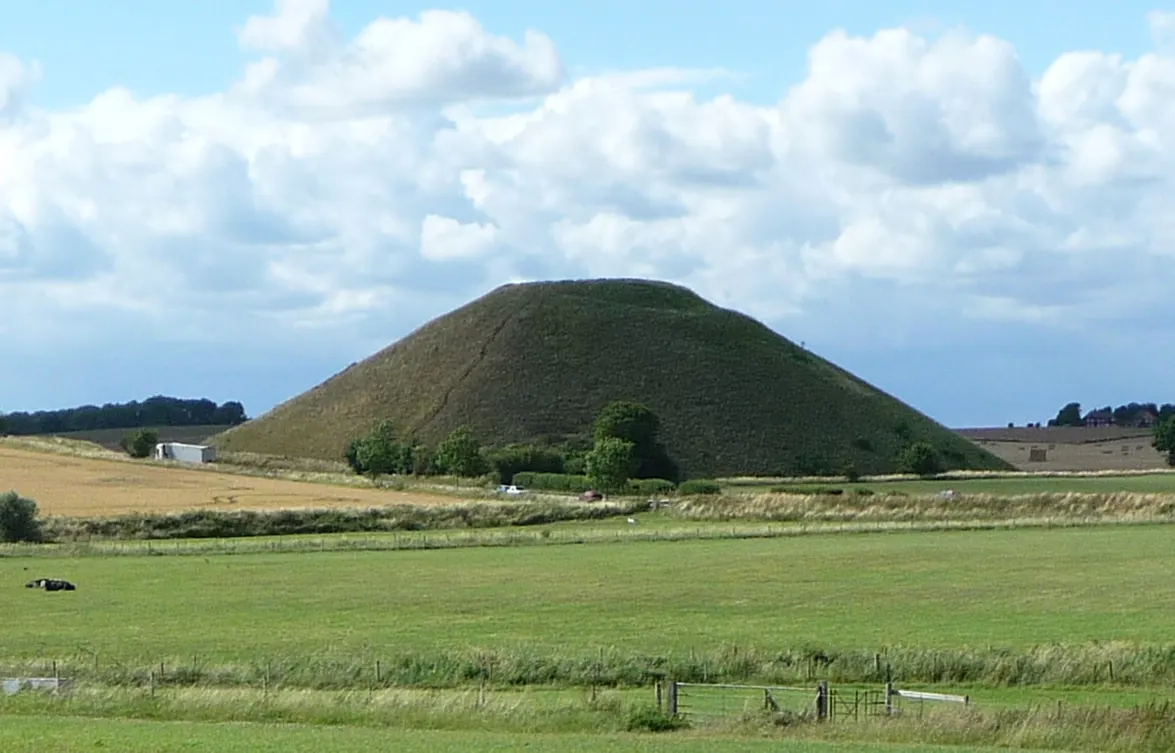
Silbury Hill and the Fields Around It
The largest man-made mound in prehistoric Europe — forty metres of earth raised around 2400 BC. Why is unknown: excavation inside found nothing. In this subject it is known for something else: the fields around Silbury and neighbouring Avebury have produced more crop circles since the 1980s than anywhere else on earth. The figures appear overnight, sometimes a hundred metres across, sometimes mathematically elaborate. In 1991 Doug Bower and Dave Chorley demonstrated how they had been making circles with planks and rope since 1978, and the question of origin largely closed. The circles still appear every summer — made openly now, with some of the makers known by name.
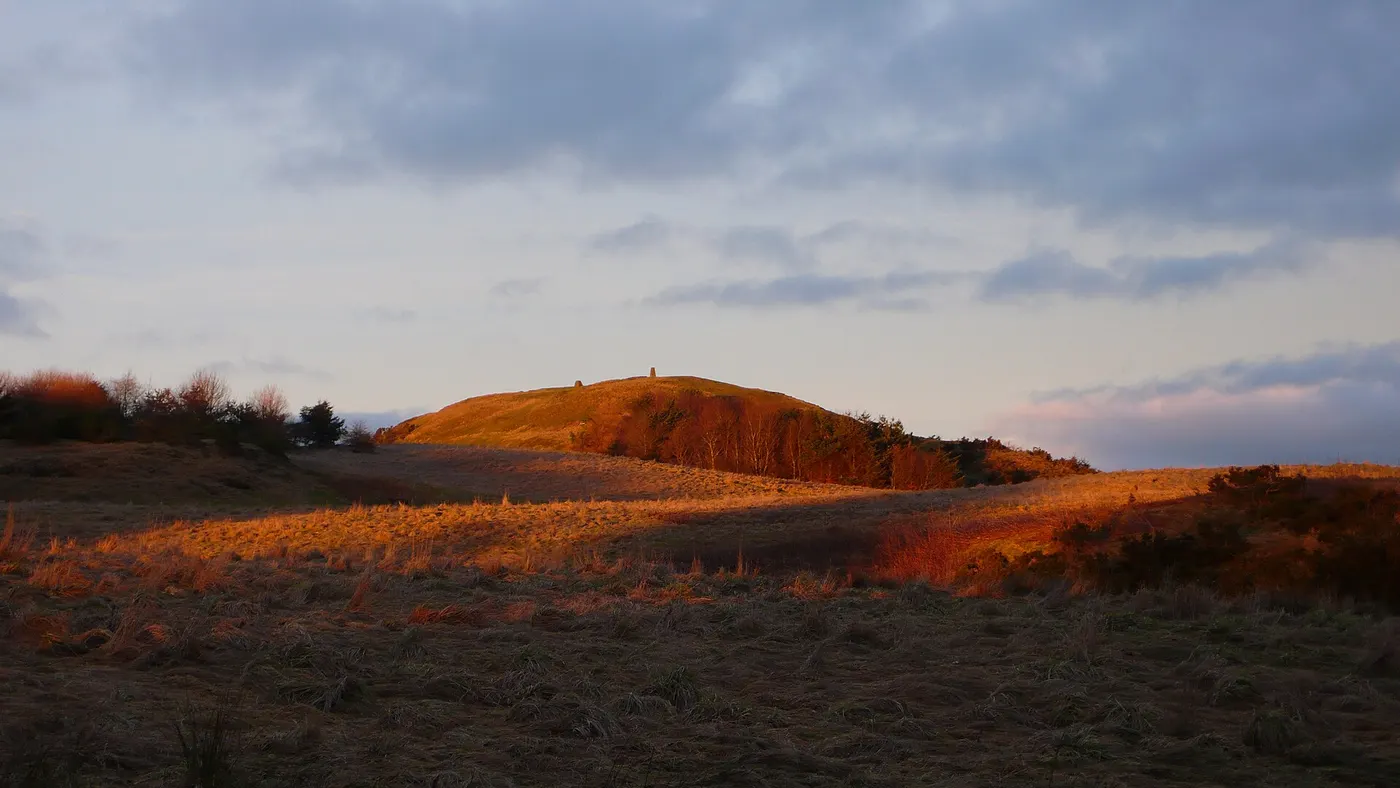
Dechmont Law and the Only Criminal Case
On 9 November 1979 a forestry worker named Robert Taylor walked up this hill outside Livingston and, by his account, came upon a dark spherical object; two spiked balls on legs detached from it, took hold of his trousers and dragged him. He lost consciousness and came round alone, with his trousers torn and grazes on his chin. Lothian and Borders Police opened a criminal case of assault — the only known instance of a UFO encounter investigated as a crime. It has never been closed. Depressions and marks were left in the ground and photographed. Taylor did not drink, had worked in forestry for decades, and never changed the account. A plaque stands at the spot.
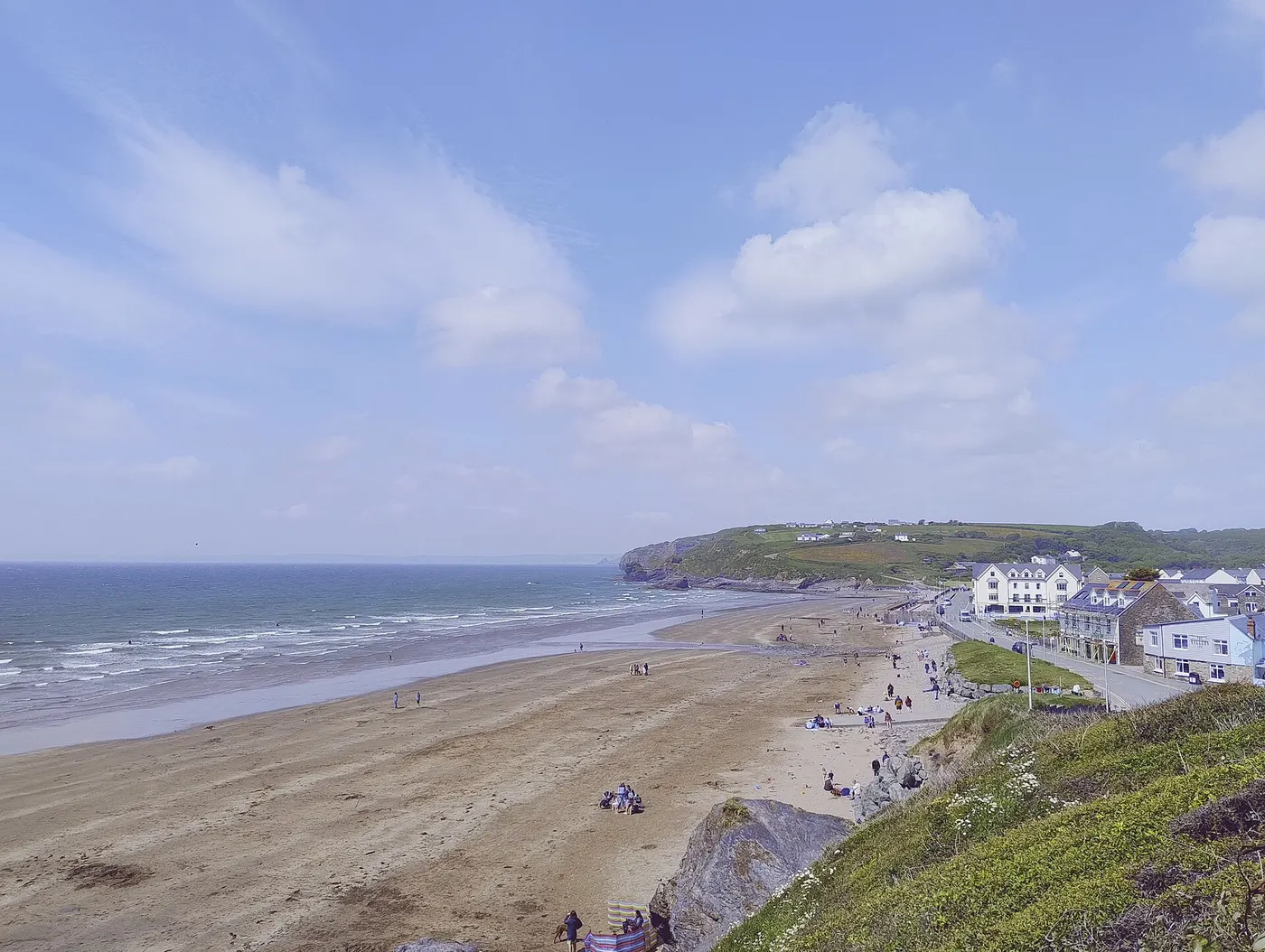
Broad Haven and the Schoolchildren's Drawings
On 4 February 1977 a group of primary school pupils in this Pembrokeshire village saw a silver object with a dome in the field beyond the fence during break. Their headmaster, not believing them, sat them apart and told them to draw what they had seen. The drawings matched. Over the following months west Wales produced so many reports that the period was called the Dyfed Triangle: lights, figures in suits by farmhouses, cattle unsettled. The Ministry of Defence received complaints and replied that there was no threat to the country. Part of the wave was later put down to trials and exercises in the area, and part to newspaper excitement that fed itself that year.
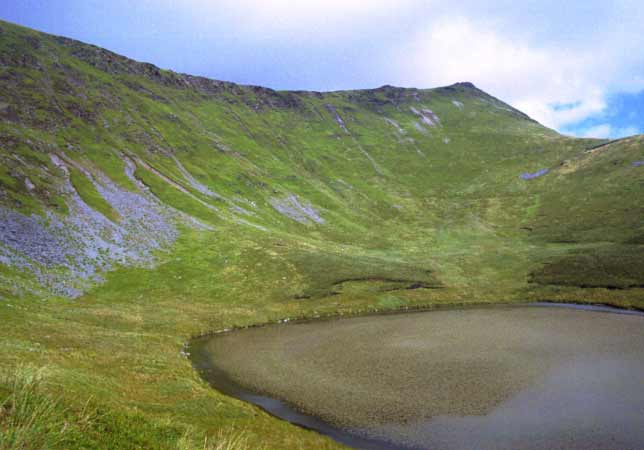
The Berwyns and the Welsh Roswell
On the evening of 23 January 1974 the ground shook in the Berwyn mountains of north Wales and lights were seen on the hillside. People assumed an aircraft had come down; police, a nurse and mountain rescue climbed in the dark and found nothing. Over the years the story acquired military lorries carrying containers away, and the nickname the Welsh Roswell. Seismic records show a real earthquake of about magnitude 3.5 that evening, and the lights fit well with a bright fireball seen across northern Britain in the same minutes. The coincidence of two events in one evening produced everything else.
Todmorden and PC Godfrey's Missing Time
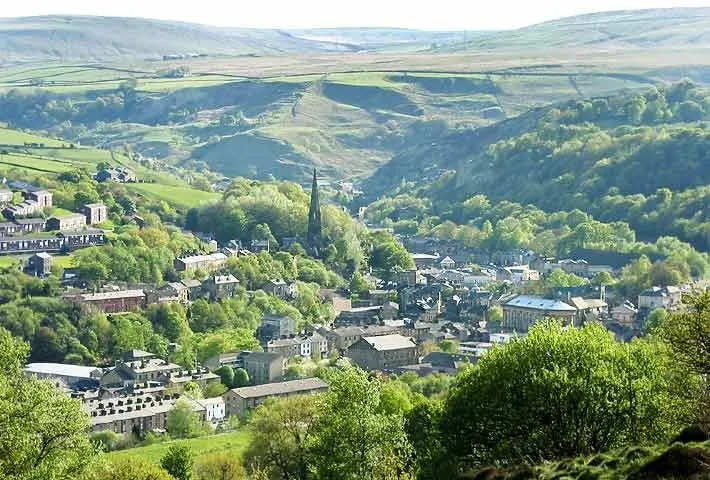
On 28 November 1980 PC Alan Godfrey was looking for stray cattle in this Yorkshire town when, by his report, he saw a rotating diamond-shaped object across Burnley Road. The next thing he remembered was driving on down the same road with a quarter of an hour missing from the clock. A dry patch was left on the tarmac on a wet night. Godfrey filed an official report and later described, under hypnosis, being examined inside a craft. The police distanced themselves from the story, and his career ended there. Six months earlier the body of a miner, Zygmunt Adamski, had been found nearby in circumstances the coroner called inexplicable; the literature links the two cases, though nothing supports the link.
Warminster and the Thing
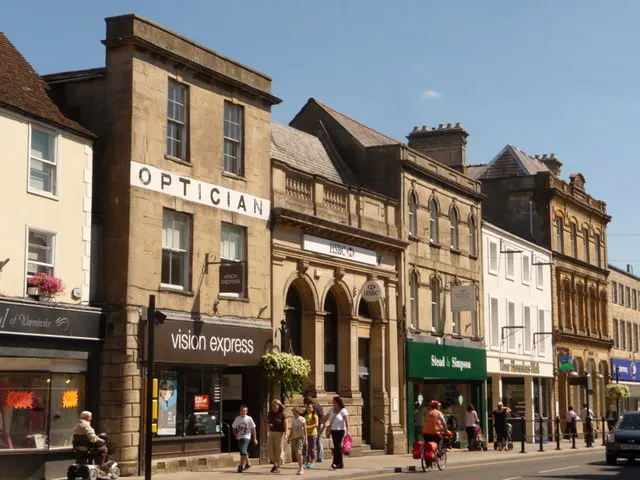
At Christmas 1964 people in this Wiltshire town began complaining of a strange noise — a low drone and crackle that shook roofs. The local paper called it the Thing, and that was the beginning. By 1965 hundreds were climbing Cley Hill above the town every night with flasks and binoculars; on the best weekends five thousand came. Warminster became Britain's first place of UFO tourism, decades before crop circles. The noise most likely came from the Salisbury Plain training area, which begins a couple of kilometres away. The lights over the hill were attributed to everything from signal flares to planets, and never entirely explained.
Bonnybridge and the Falkirk Triangle
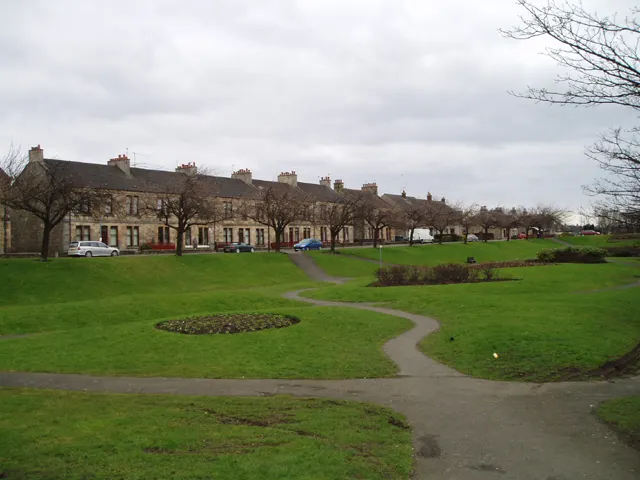
A town in central Scotland where the local authority has logged around three hundred reports of unidentified objects a year since 1992 — per head of population, probably the densest rate in the world. The wave began with one businessman's sighting and spread far enough that councillor Billy Buchanan raised it in the Scottish Parliament and pressed for a government investigation. The town came to be called the centre of the Falkirk Triangle. Explanations have been offered: approach corridors for Edinburgh and Glasgow airports pass nearby, as does a military range. None of them explains why the flow of reports here is so much higher than in neighbouring towns under the same corridors.
The Hairy Hands of Dartmoor
A stretch of the B3212 between Postbridge and Two Bridges on English Dartmoor, where unexplained crashes began in the early 1920s: drivers and motorcyclists described hairy hands seizing the wheel and wrenching it towards the verge. After several deaths in 1921 the local press took it up, and engineers who examined the road found a plainer cause — a badly cambered surface that pulled vehicles off line. The road was rebuilt, the crashes stopped, and the legend stayed.
The Edinburgh Vaults
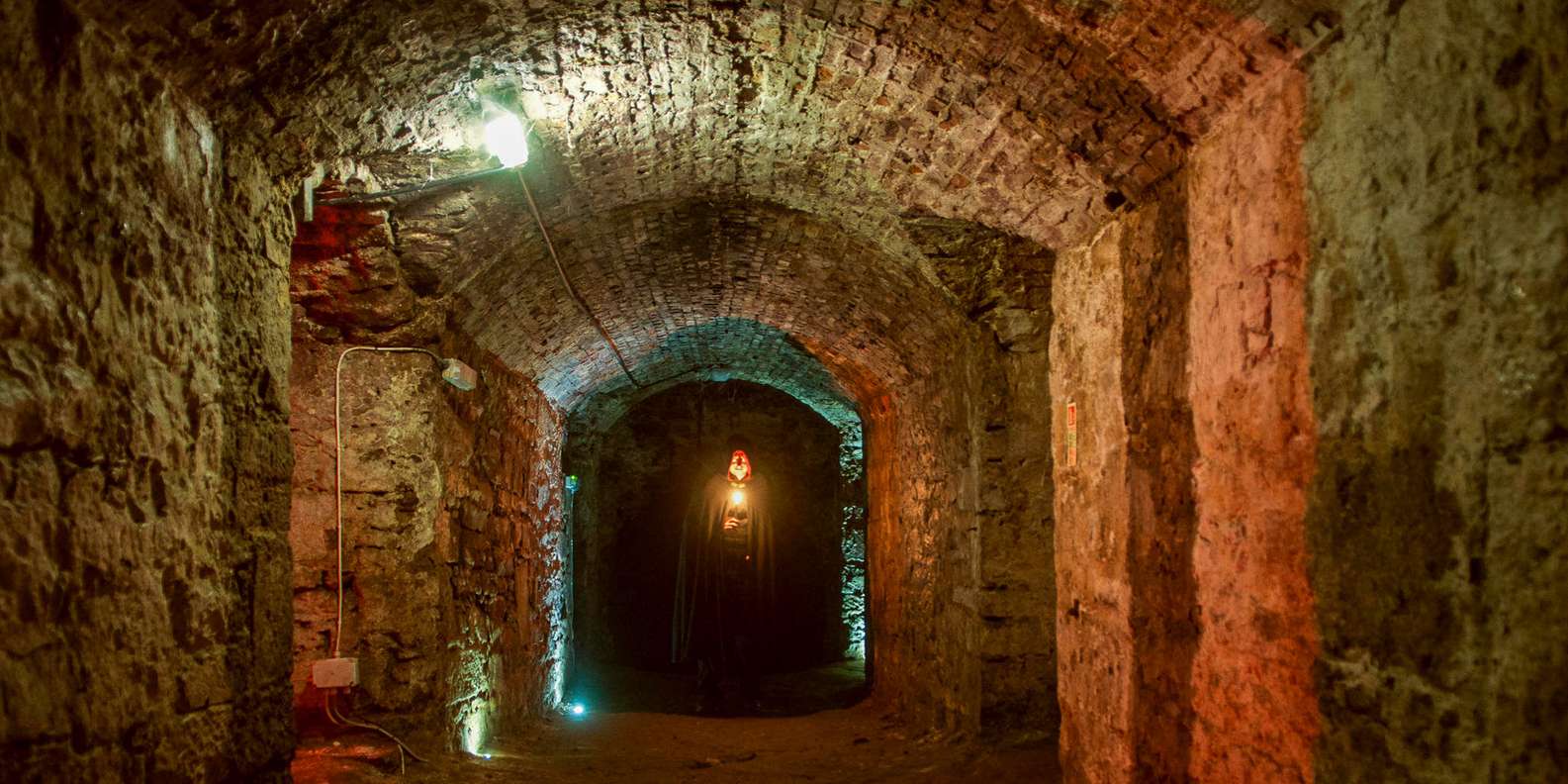
The Edinburgh Vaults (commonly known as the South Bridge Vaults) are an extensive subterranean labyrinth comprising approximately 120 stone chambers integrated inside the 19 massive masonry arches of the South Bridge viaduct in the Old Town of Edinburgh, Scotland, United Kingdom. Completed in the late 18th century to span the steep Cowgate ravine, the interior chambers were originally engineered as commercial storerooms and workshops. Rapidly rendered unlivable by catastrophic water infiltration, the vaults devolved into notorious subterranean slums, were abandoned and sealed in the mid-19th century, and lay forgotten for over a century. Since their rediscovery in the 1980s, the complex has gained international infamy as one of Europe's most prominent paranormal and dark-tourism hotspots.
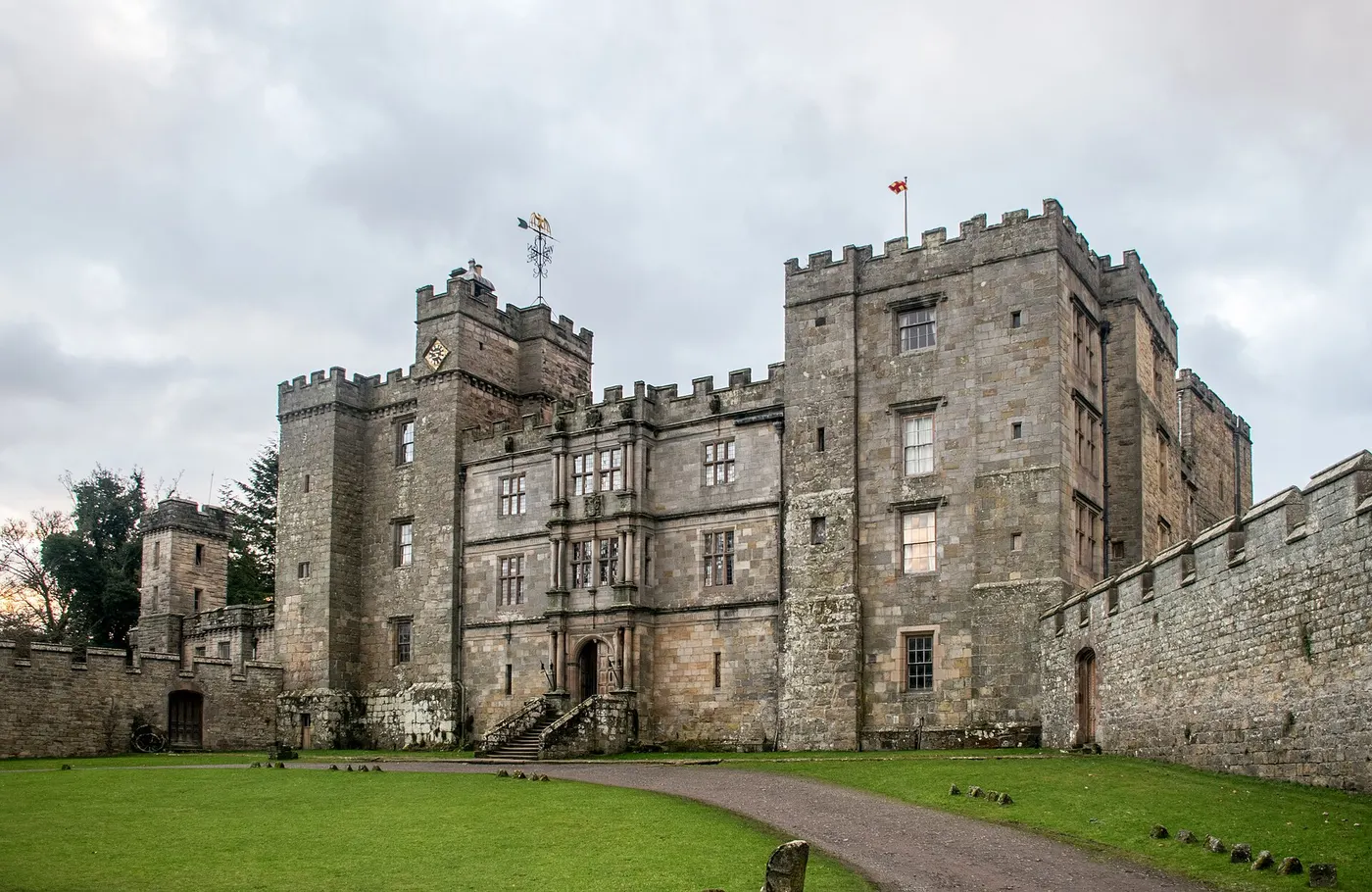
Chillingham Castle
A thirteenth-century castle in Northumberland on the Scottish border, where captured Scots were held and tortured for centuries — the torture chamber survives with its instruments. Its best-known figure is the Radiant Boy, a bluish glow by a wall of the Pink Room; during repairs a child's bones and a scrap of blue cloth were found bricked into that wall. After reburial, the owners say, it stopped.
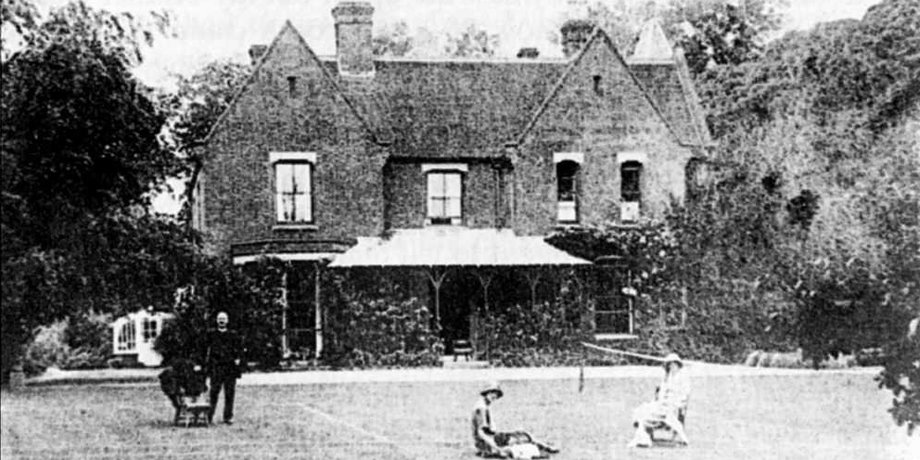
Borley, 'the Most Haunted House in England'
Borley Rectory was a demolished Victorian parish house located in the rural civil parish of Borley in Essex, southeastern England, near the River Stour. Erected in the mid-19th century in an imposing red-brick High Victorian Gothic style, the residence achieved international fame during the 1930s and 1940s through the publicized investigations of paranormal researcher Harry Price, who branded it across British tabloids and bestsellers as "The Most Haunted House in England."
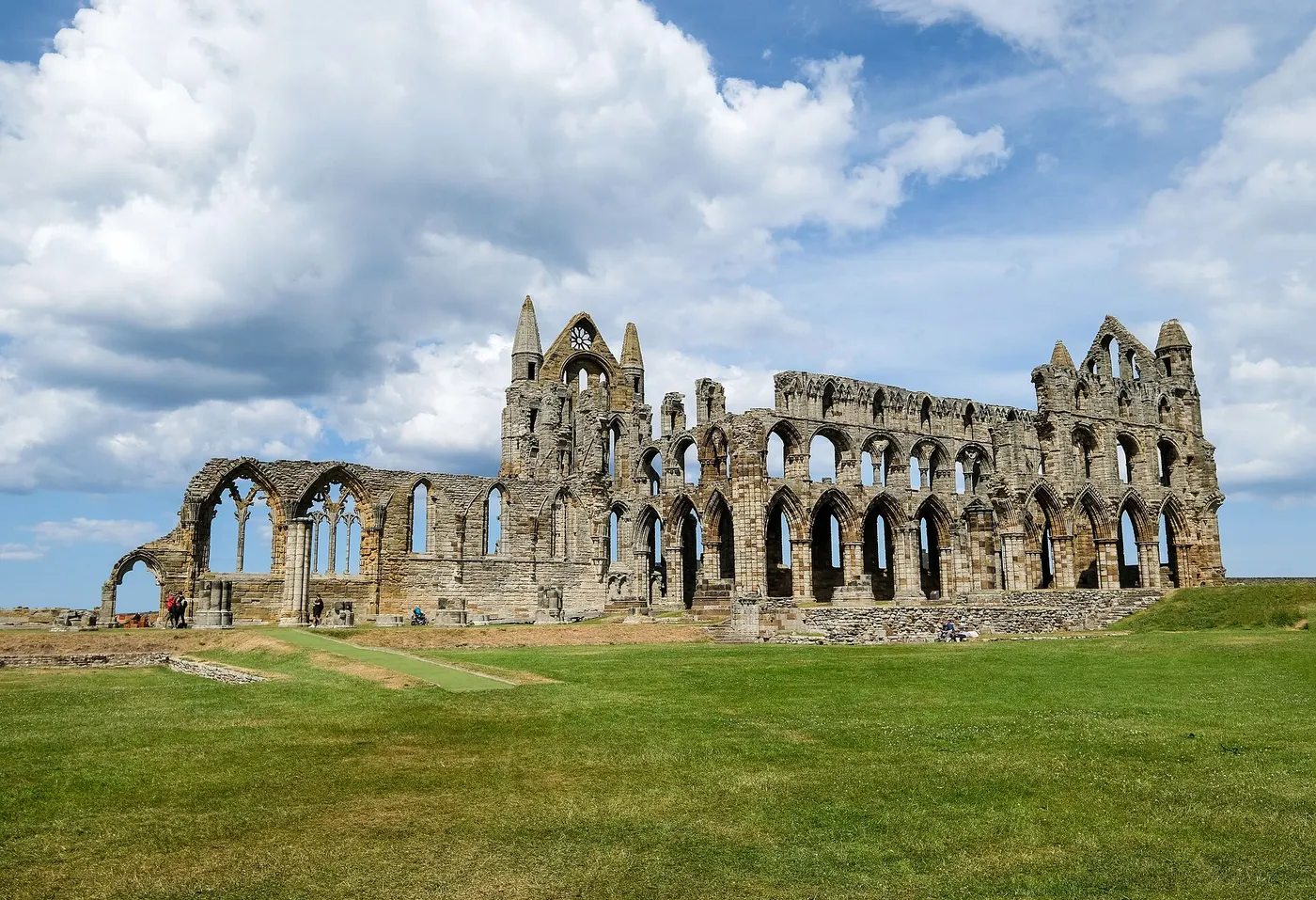
Whitby Abbey
The ruins of a Benedictine abbey on a cliff above the North Sea, where Bram Stoker spent a holiday in 1890 and found the name of the Wallachian prince Dracula in the local library. In the novel it is here that the Demeter runs aground and the count, in the shape of a black dog, bounds up the hundred and ninety-nine steps to the church. The steps are real, the abbey is real, and one of Europe's largest goth festivals gathers in Whitby every year.
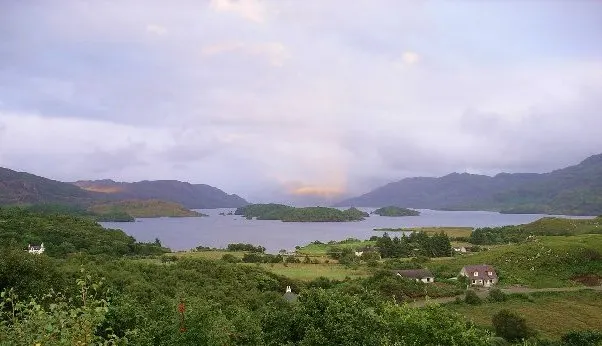
Loch Morar and Morag
The deepest freshwater lake in the British Isles — over a thousand feet, deeper than Loch Ness. A creature called Morag appears in local accounts from 1887. The best-known incident is from 1969, when two fishermen said something some thirty feet long struck their boat and one of them fired a rifle at it. The statement was made to police and recorded.
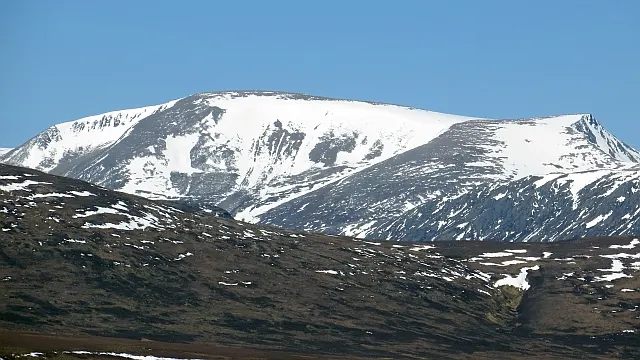
Ben Macdui and the Fear Liath Mòr
Britain's second-highest mountain, where experienced climbers have reported the same thing since the early twentieth century: a sense of presence, the sound of footsteps following in mist, and a panic that drives them down. Professor Norman Collie described his own experience publicly in 1925, at real risk to his reputation. The thing is called the Big Grey Man; an explanation involving echoes and the Brocken spectre exists, and does not convince those it has happened to.
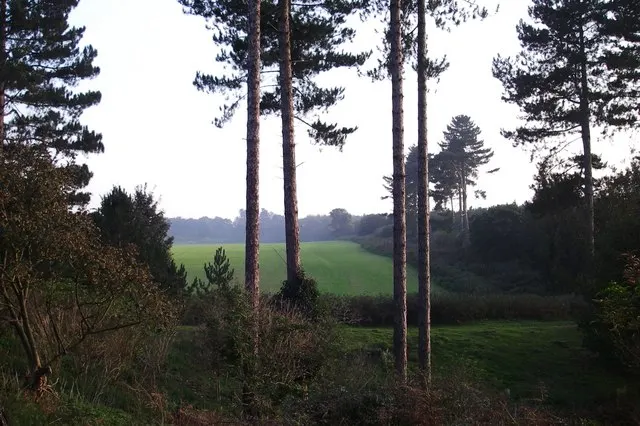
Rendlesham Forest
A Suffolk forest between two US air force bases where, over three nights in December 1980, servicemen reported lights and a landed object three times. The deputy base commander, Charles Halt, recorded events on a dictaphone in the forest itself and filed an official memorandum, later declassified. The Ministry of Defence stated there was no defence significance and the investigation ended there. It is called Britain's Roswell.
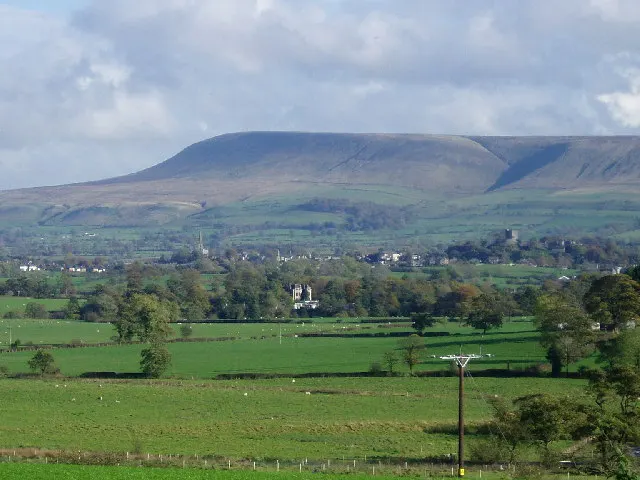
Pendle Hill
A Lancashire hill beneath which the most famous English witch trial took place in 1612: twelve accused, ten hanged, charges of ten murders by witchcraft. Much of the evidence came from a nine-year-old girl testifying against her own family. Thousands climb to the summit every Hallowe'en, and Lancashire police ask them not to every year.
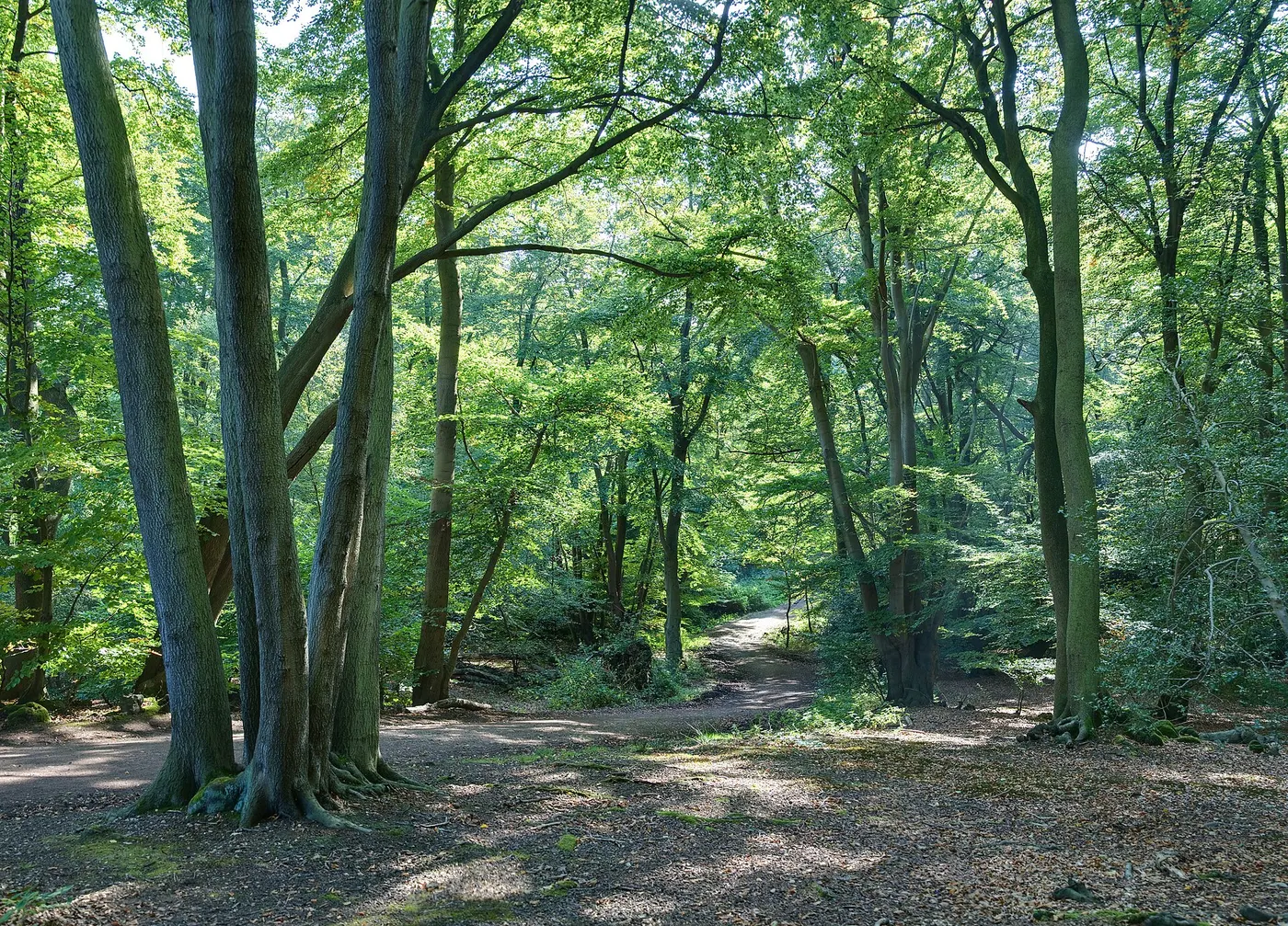
Epping Forest
An ancient forest on the boundary of London and Essex, once a highwaymen's refuge — an inn here carries Dick Turpin's name. Over the last century it became known for something else: bodies have been brought here for generations. Police have recovered the remains of several murder victims in it, and the forest has a reputation that makes accounts of figures between the trees sound more plausible than they should.
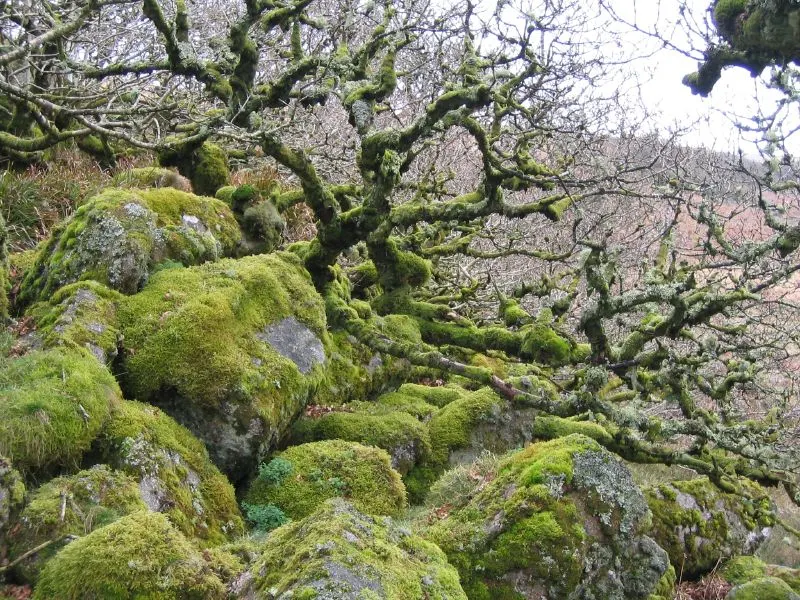
Wistman's Wood
A tiny grove of dwarf oaks on Dartmoor, growing straight out of granite boulders and covered entirely in moss and lichen. The trees are wind-twisted past recognition and there are gaps between the stones deep enough to swallow a person. The name is traced to the dialect word wisht — eerie, enchanted. It is thought to be one of the last remnants of the forest that covered Dartmoor before the Bronze Age.
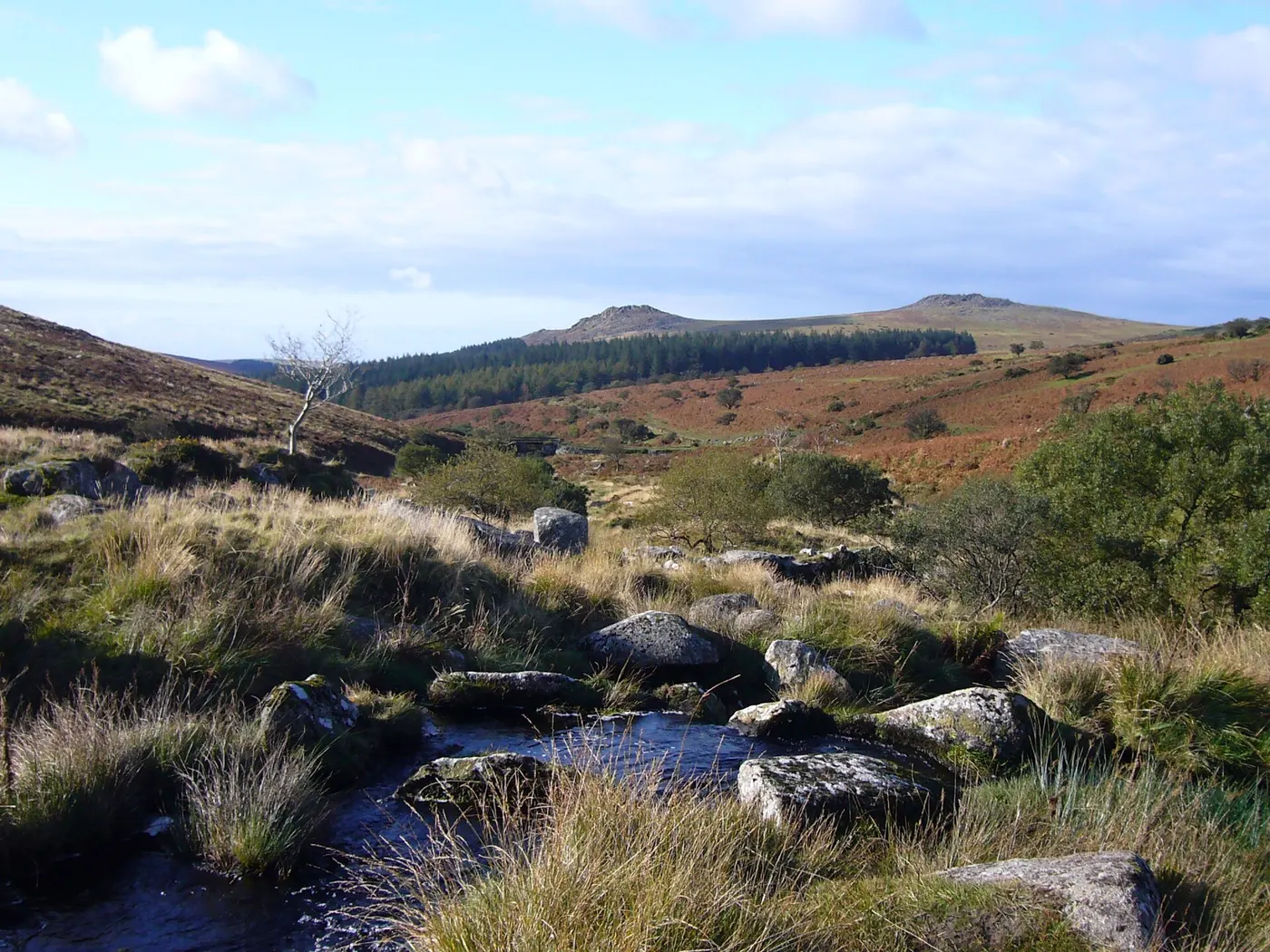
Dartmoor
The Devon moor that gave Conan Doyle The Hound of the Baskervilles: he heard here the tradition of Richard Cabell, a seventeenth-century squire whose coffin was said to have been followed by a pack of spectral hounds. They are called the Wisht Hounds and are still described along the old track. A separate story concerns the Hairy Hands on the B3212, which motorcyclists say grab at the handlebars.
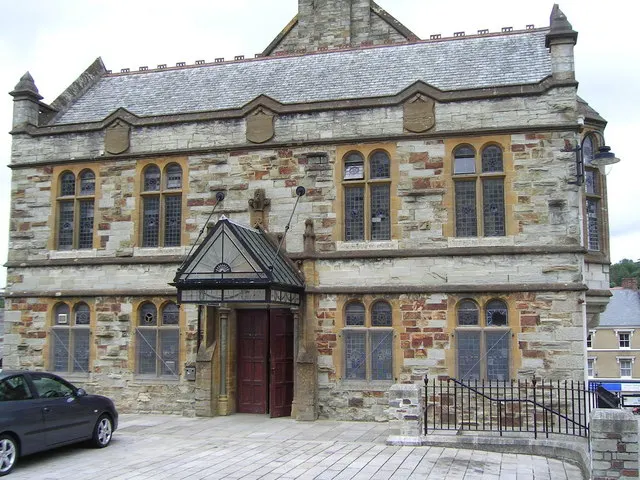
Bodmin Moor and Its Beast
A granite moor in Cornwall where, from 1978, farmers lost livestock to wounds vets called uncharacteristic of dogs. Witnesses described a large black cat. In 1995 the Ministry of Agriculture ran a formal investigation and concluded there was no evidence of a big cat; a week later a schoolboy found a skull on a riverbank that proved to be a leopard's — though it had come from an imported rug.

Cannock Chase
Fifteen hundred hectares of heath and forest in Staffordshire where, in recent decades, everything has been reported at once: black cats the size of pumas, a "werewolf" seen near the German war cemetery, and a figure with burning eyes. The county police take such calls regularly and log them. An unsolved series of child murders in the 1960s adds its own layer to the reputation.
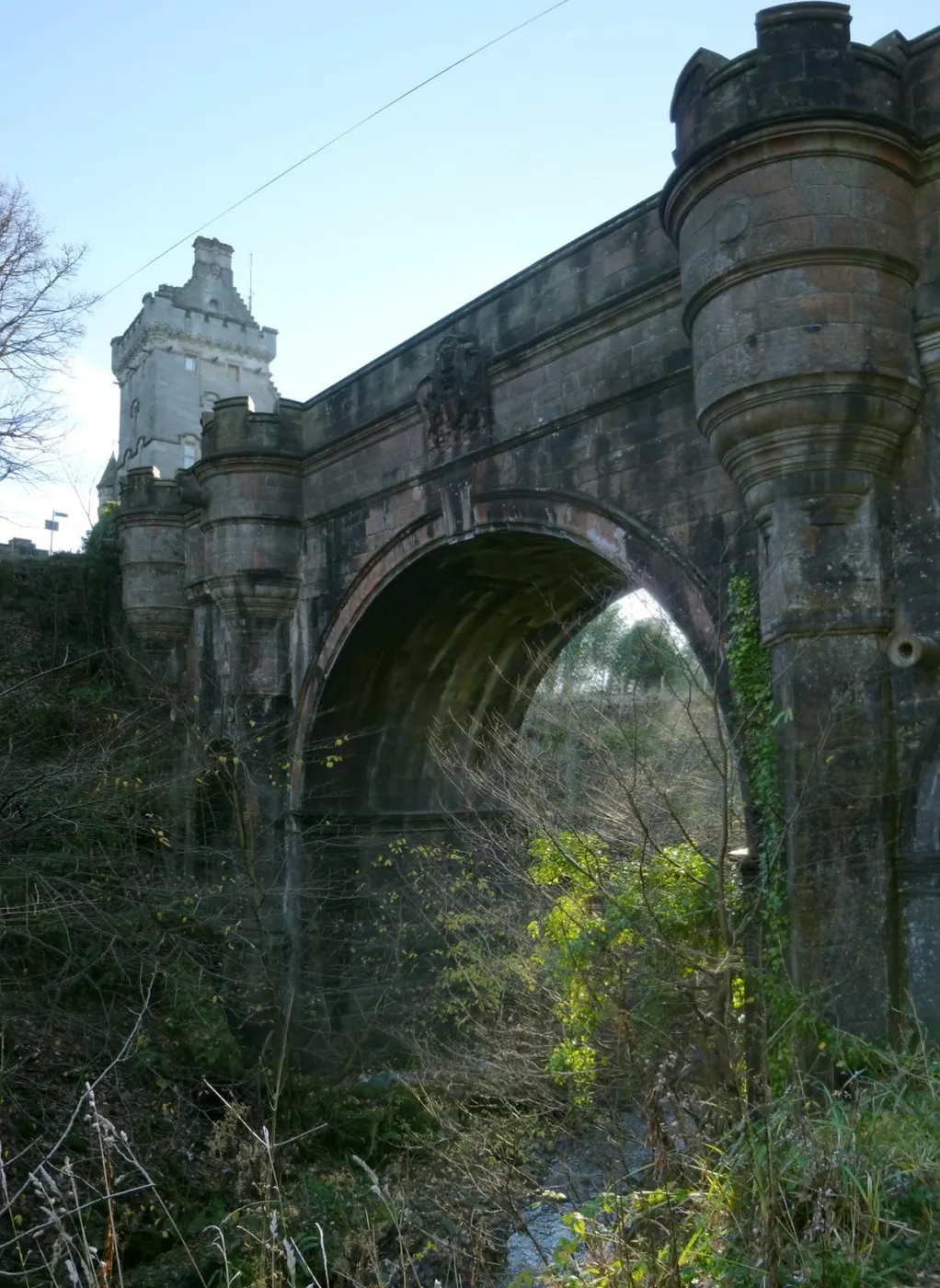
Overtoun Bridge
A Victorian bridge in Scotland from which dozens of dogs have leapt over the decades — some of them more than once. The likeliest explanation is the scent of mink below and a solid parapet that hides the drop.
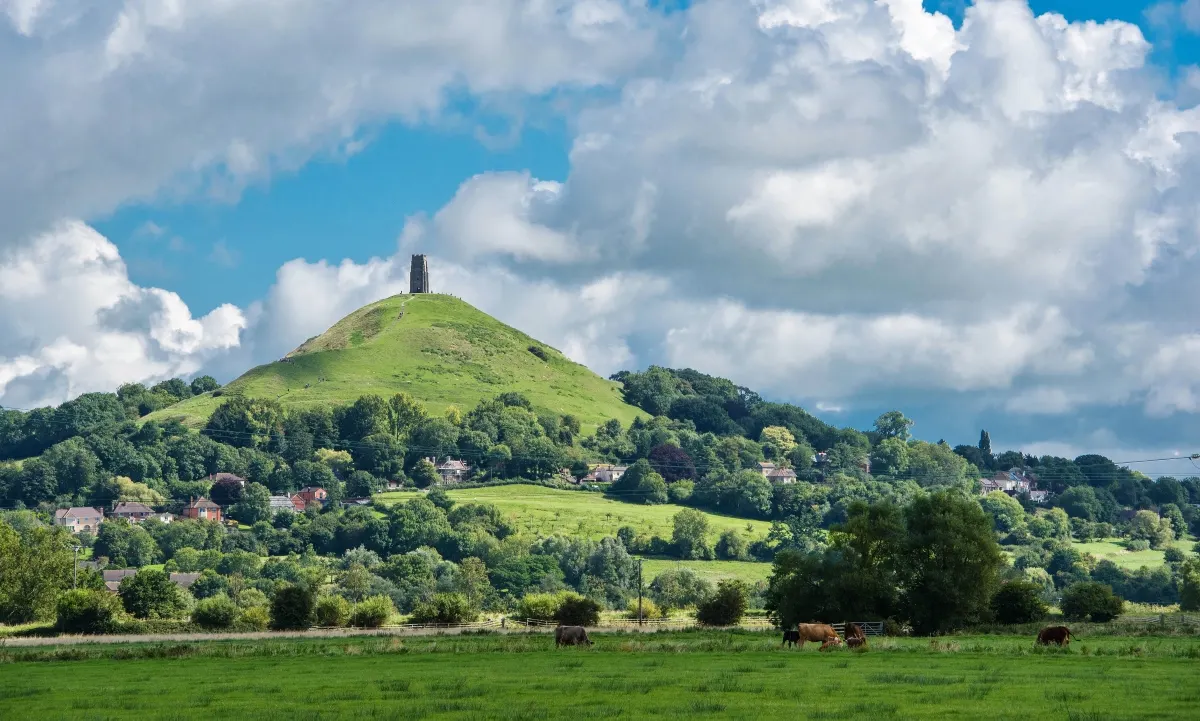
Glastonbury Tor
A Somerset hill crowned by the lone St Michael's Tower, its slopes cut into terraces. It is identified with the legendary Avalon, where the wounded King Arthur was carried, and counted a centre of Britain's Celtic mythology.
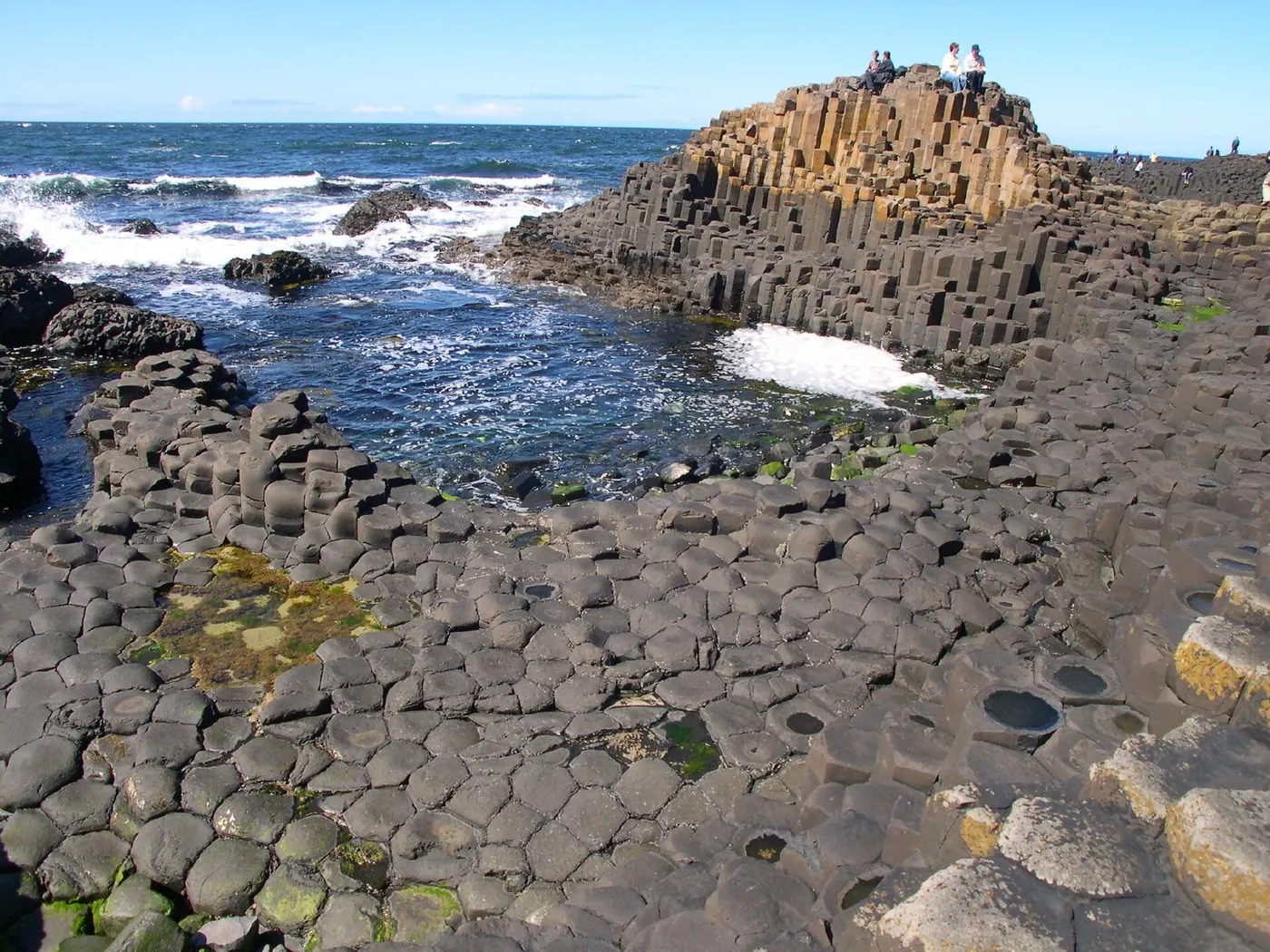
Giant's Causeway
Some 40,000 basalt columns on the coast of Northern Ireland, formed as lava cooled. Legend has it the giant Finn McCool built the causeway across the sea to reach a rival in Scotland.
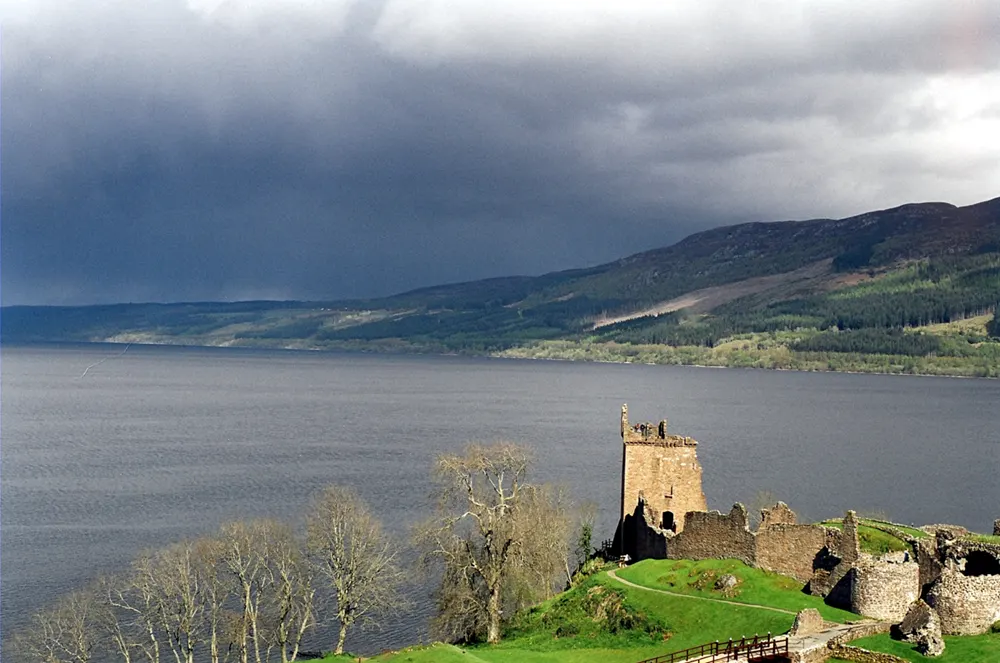
Loch Ness
A deep loch in the Scottish Highlands holding more water than every lake in England and Wales combined. Monster reports date from 1933; sonar sweeps and DNA surveys have found no such animal.
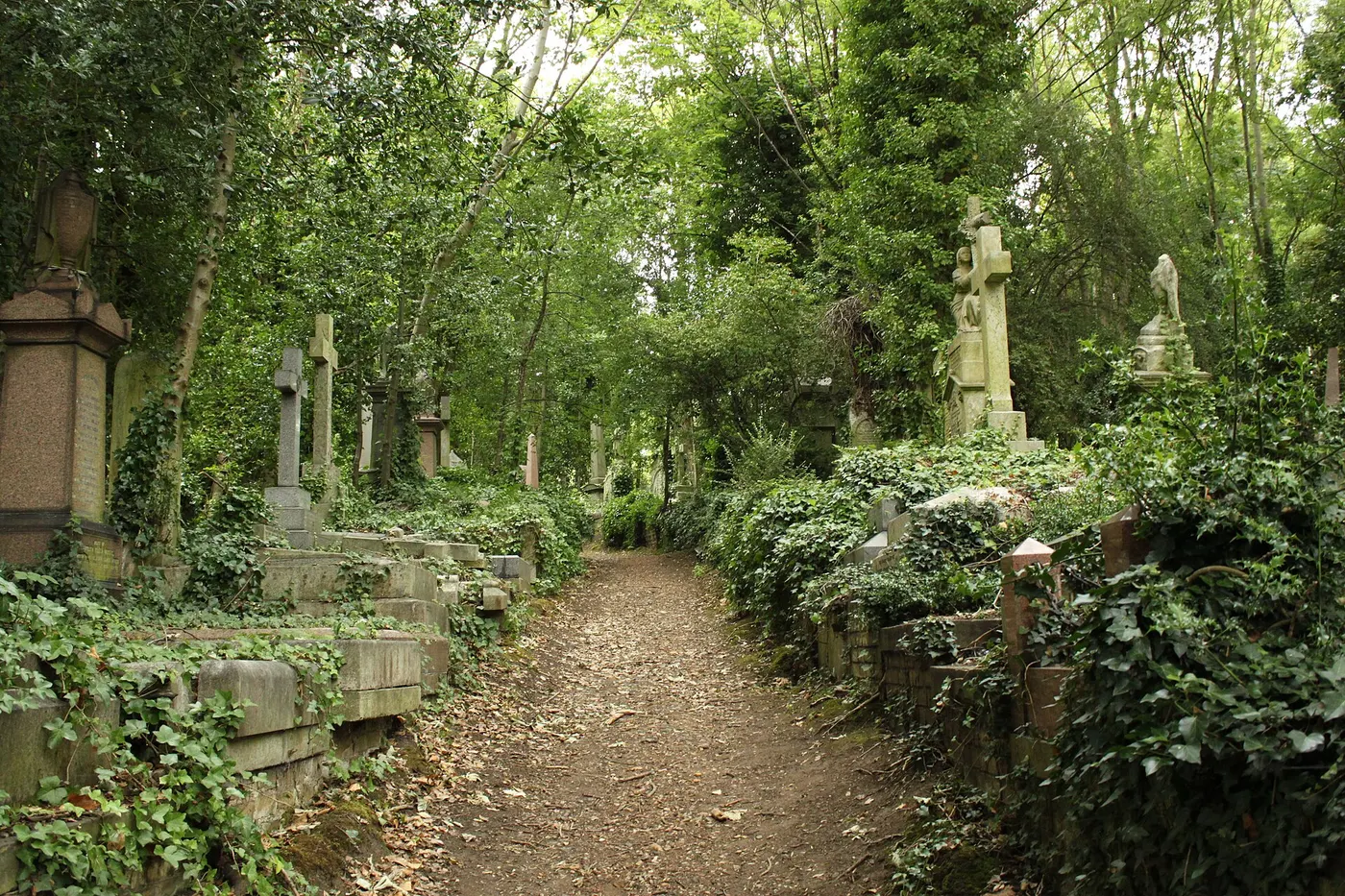
Highgate Cemetery
An overgrown Victorian cemetery in north London with gothic vaults and an Egyptian Avenue. In the early 1970s a newspaper frenzy about a "Highgate Vampire" drew crowds of hunters to its gates.
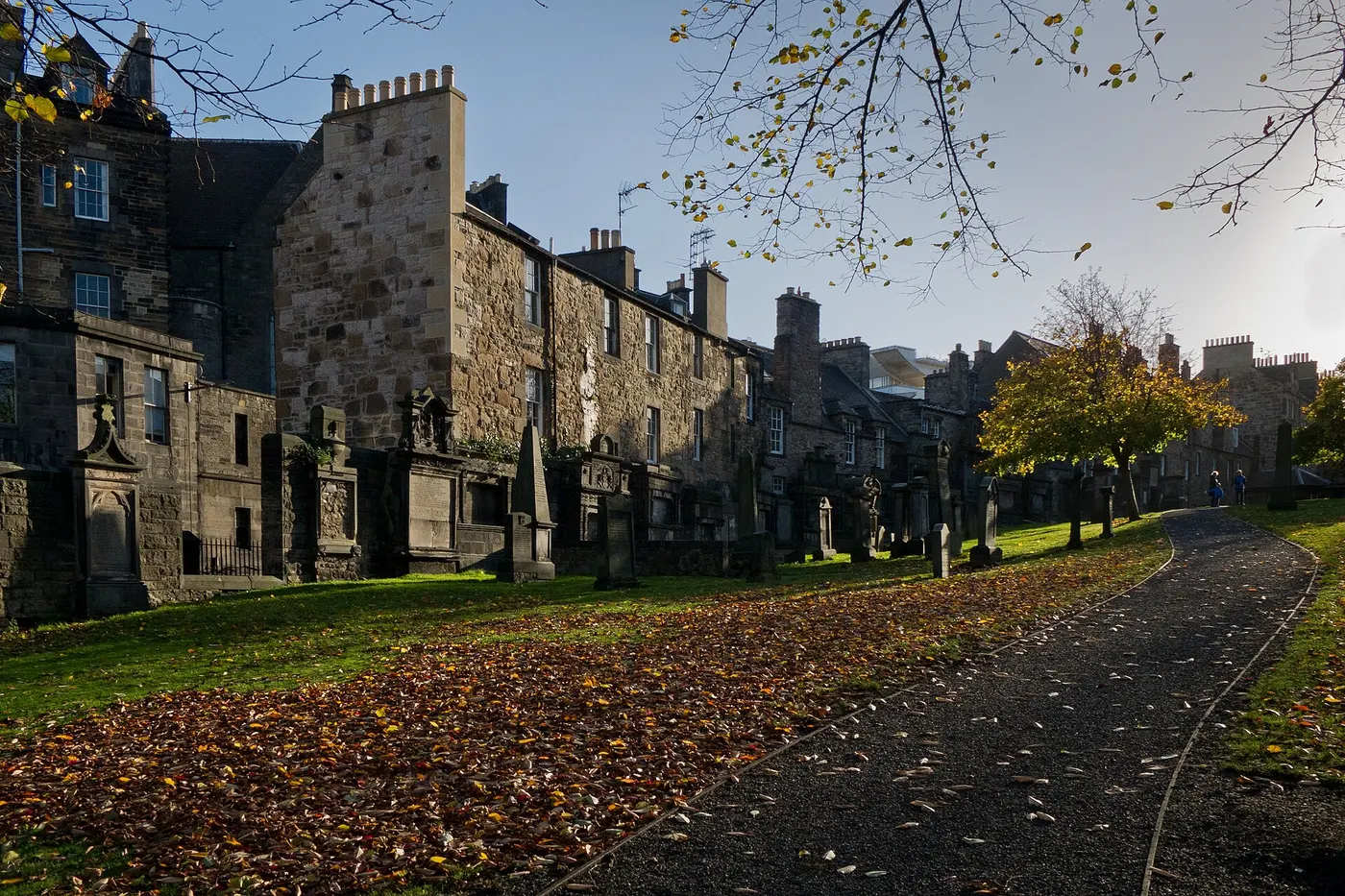
Greyfriars Kirkyard
An old graveyard in central Edinburgh with the "Covenanters' Prison" at its far end. Since 1999 visitors have reported unexplained cuts and bruises — the phenomenon nicknamed the Mackenzie Poltergeist.
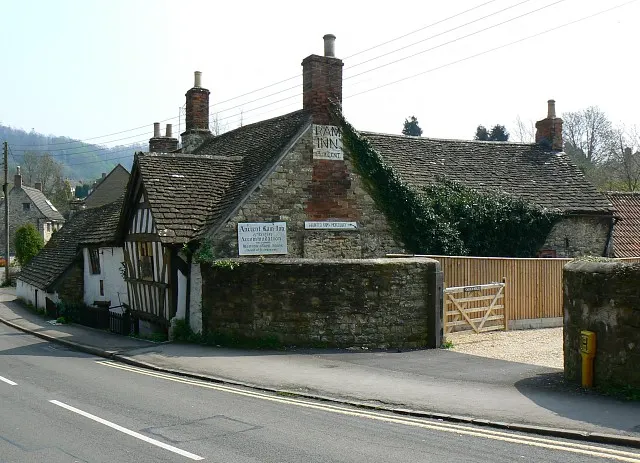
The Ancient Ram Inn
A 12th-century house in Gloucestershire, said to stand on crossing ley lines and a pagan site. Reputed one of Britain's grimmest buildings — its owners avoided sleeping on the upper floor for decades.
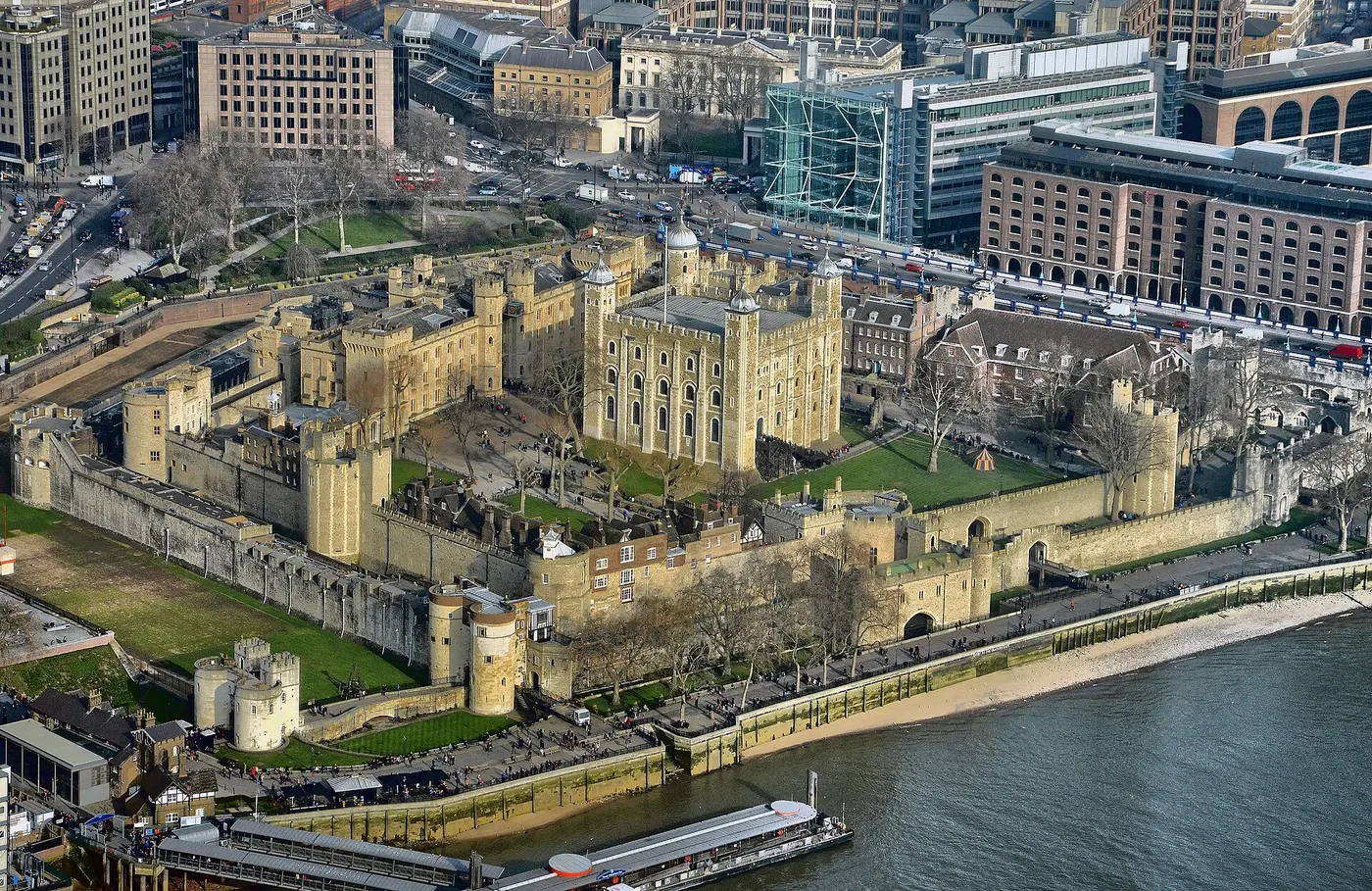
Tower of London
A medieval fortress on the Thames with nearly a thousand years of executions and imprisonments. Legend holds that the ghosts of Anne Boleyn and other prisoners still walk its grounds.
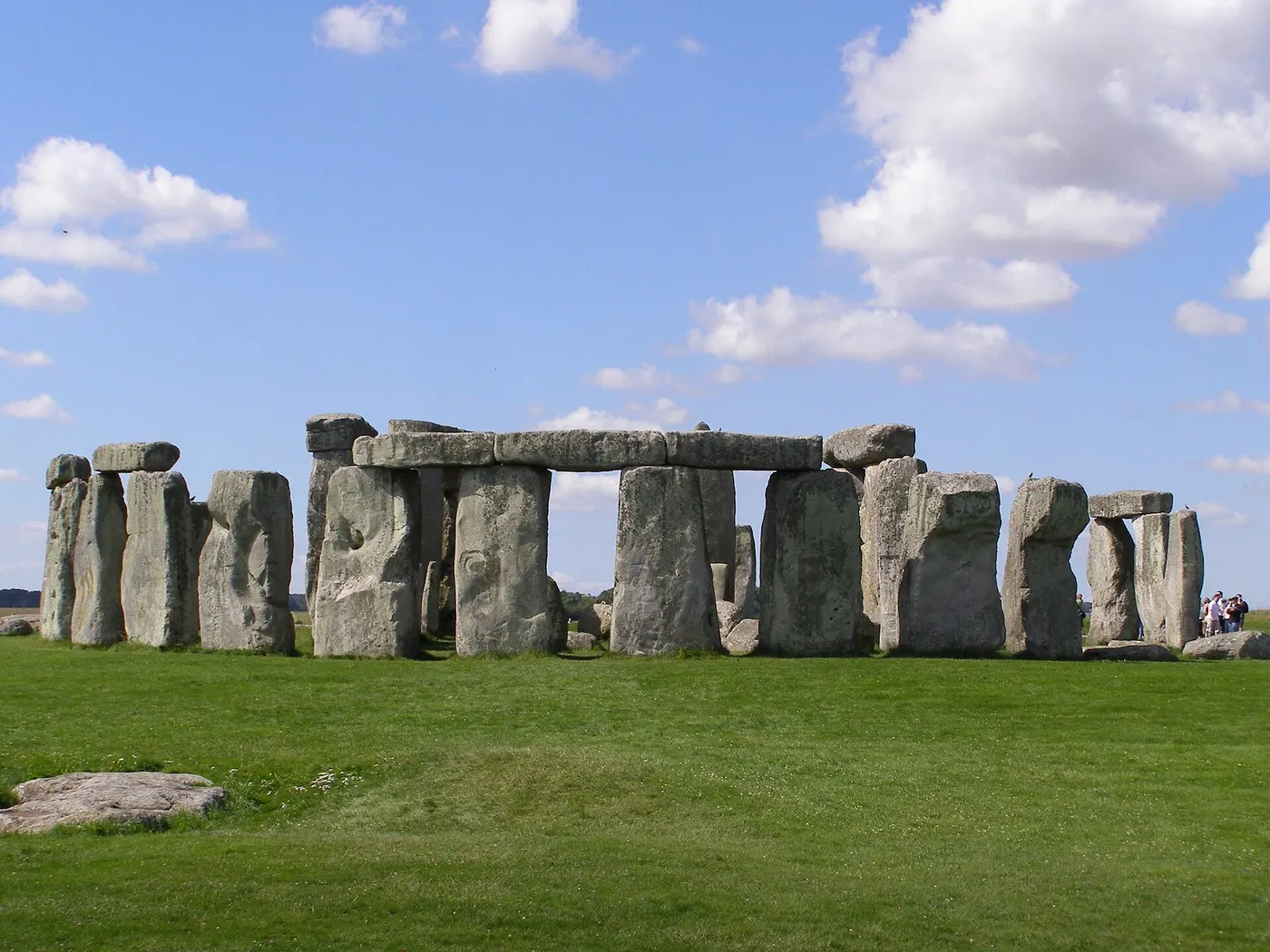
Stonehenge
Stonehenge is a world-renowned prehistoric megalithic monument situated on Salisbury Plain in Wiltshire, southern England. Constructed between 3000 and 1500 BC, the earthwork and stone circle complex consists of an outer ring and inner horseshoe of massive sarsen silcrete monoliths joined by lintels via tongue-and-groove and mortise-and-tenon joints, along with smaller volcanic bluestones. Inscribed as a UNESCO World Heritage Site, it remains the ultimate archaeological icon of the British Isles, historically enveloped in folklore involving Celtic druids, the wizardry of Merlin, extraterrestrial beacons, and modern conspiratorial "1954 construction" hoaxes.