 Abandoned buildings — Russia
. 3 places in the catalogue, each with coordinates, the story behind it and a danger level from white to black.
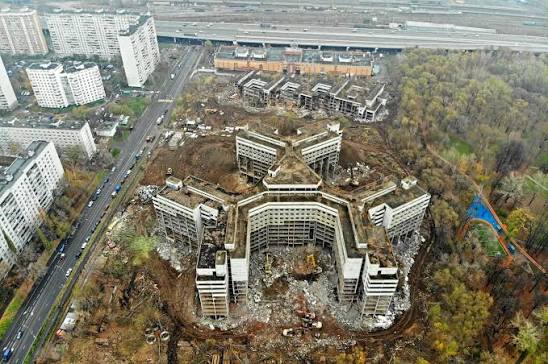
The Khovrino Hospital
The Khovrino Abandoned Hospital (colloquially known as "HZB" or "The Umbrella") was a notorious Soviet mega-scale unfinished complex, formerly situated at 2 Klinskaya Street in the Khovrino District of northern Moscow. Built in a monumental modernist and brutalist architectural style, the 1,300-bed facility famously formed a three-pointed star from the air that precisely mirrored the international biohazard symbol and the Umbrella Corporation insignia from Resident Evil. For over three decades, the derelict complex served as the ultimate urban exploration mecca in post-Soviet Russia, cultivating extensive dark urban mythology before its complete demolition in late 2018.
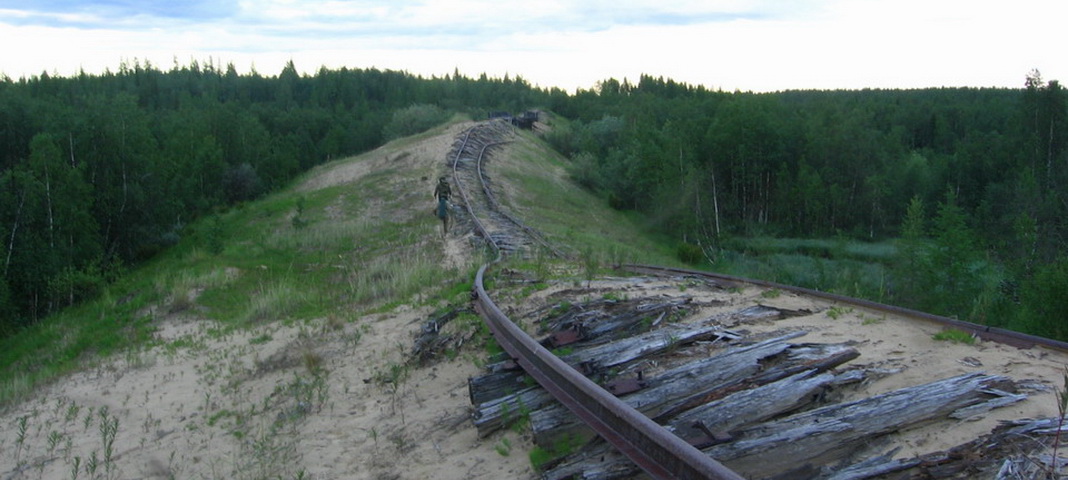
The Dead Road
Construction No. 501 and No. 503 (officially the North-Siberian Railway, popularly known as the "Dead Road" or the Transpolar Mainline) was a massive, classified Soviet Gulag megaproject executed between 1947 and 1953. Aimed at laying roughly 1,450 kilometers of railway across northern Siberia along the 66th parallel connecting Chum, Salekhard, Nadym, Novy Urengoy, Yermakovo, and Igarka, the line was built over continuous permafrost and peat bogs by tens of thousands of forced laborers. Abruptly abandoned weeks after Joseph Stalin's death, it left behind hundreds of kilometers of twisted tracks, abandoned labor camps, telegraph poles, and rusting steam locomotives stranded in the Arctic wilderness.
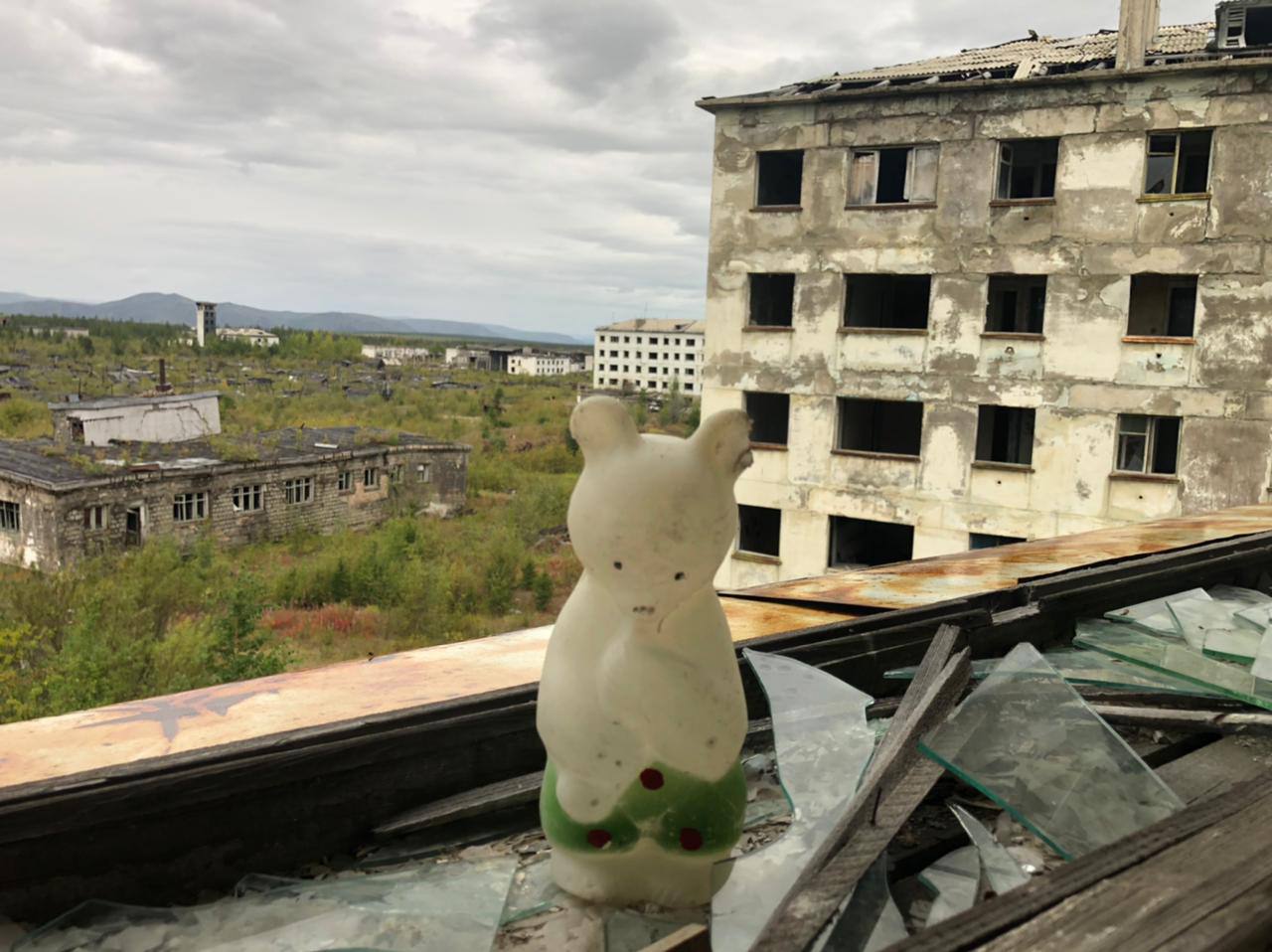
Kadykchan
Kadykchan (derived from the Evenki Kadygchan, meaning "little canyon" or "chasm") is an entirely abandoned urban-type settlement situated within the Susumansky District of Magadan Oblast, Russia, along the 730th-kilometer mark of the R504 Kolyma Highway in the Ayan-Yuryakh river basin. Constructed during World War II by forced laborers of the Dalstroy Gulag system to extract high-grade coal from the Arkagalinskoye basin, Kadykchan grew by the 1980s into a bustling subarctic industrial town housing over 10,000 residents. Following a deadly subterranean coal-dust explosion in 1996 and the catastrophic freezing of its district heating grid, the municipality underwent rapid state-mandated abandonment, becoming Kolyma’s definitive ghost town and an open-air monument to post-Soviet deindustrialization in the Far North.