All places
The full catalogue of approved places — abandoned buildings, anomalous zones, UFO sightings. Sort by rating, recency or discussion, and narrow it by category.
494 places
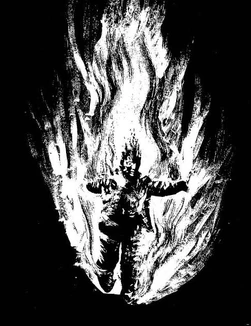
The Char Man of Ojai
The Ojai Valley in Ventura County, southern California, United States—specifically the shaded, winding rural corridor of Creek Road and the adjacent Camp Comfort Park in the Topatopa Mountains foothills. "Char Man" (or Char-Man of Ojai) is one of California's most enduring roadside urban legends, emerging in the mid-20th century against the backdrop of recurrent, devastating chaparral brushfires in the region.
The Green Man of Pennsylvania
The legend of a glowing green faceless man you can meet at night by an abandoned tunnel outside Pittsburgh. There is a real person behind it: Raymond Robinson, who at nine was catastrophically burned by an electric line on a trolley bridge and lost his face and an arm. He lived until 1985 and walked at night so as not to frighten people — while teenagers drove out specifically to find him. The order of events is worth keeping in mind: first there was a man who was unlucky, and only then the ghost story.
Cropsey
A children's bogeyman with a hook, told on Staten Island for generations — until children began disappearing in the neighbourhood in the 1980s and it emerged that a former orderly from the abandoned Willowbrook school was living beside it. Willowbrook was a real institution, closed after a 1972 investigation exposed appalling conditions. A rare and unpleasant case of a local bogeyman and a documented local history meeting at the same point on the map.
The Goatman of Maryland
A half-goat, half-man with an axe, told of in Prince George's County outside Washington. The legend took shape in 1971, when a local paper ran a piece about a missing dog and rumours of a creature near Fletchertown Road; the article was picked up, and within a couple of years the story had acquired an escaped experiment from the agricultural research centre next door. The centre is real and still operating, which has helped the legend considerably — it has a building you can point at.
The Melon Heads
Creatures with disproportionately large heads living in the woods — a legend told in three American states at once, Ohio, Michigan and Connecticut, each with its own backstory. The Ohio version is the most widespread: supposedly children from a closed institution for hydrocephalus patients who escaped after a fire. No such institution and no such fire appear in the records. What is interesting is the rest: three unconnected regions invented almost the same image, and in all three it explains the same thing — that there is someone in the woods who was once hidden there.
The Mad Gasser of Mattoon
In September 1944 residents of Mattoon, Illinois, began reporting the same thing to police: a sweetish smell in the house, nausea, numbness in the legs, a paralysing weakness. Around two dozen cases were logged in a fortnight. Police, the FBI and chemists found no substance, no traces and no man. The standard explanation is a wartime episode of mass psychogenic illness amplified by the local paper; the alternative points at emissions from a nearby plant. Neither is proven, and the case is a textbook fixture in social psychology.
The Black-Eyed Children
In 1996 the Texas journalist Brian Bethel posted an account to an internet mailing list about two teenagers who knocked on his car window in an Abilene car park. They asked for a lift, spoke too smoothly, and kept insisting they would not get in without being invited. When he looked up, both had completely black eyes. That one text created a genre: black-eyed children have been reported across the English-speaking world ever since, and nearly every version keeps the detail about the invitation — borrowed straight from vampire folklore.
Krasue
A flying woman's head with its viscera trailing beneath — one of the most recognisable images in mainland Southeast Asian folklore, known in Thailand, Cambodia and Laos under different names. By day she is an ordinary woman; at night the head detaches and goes looking for food. Her appearance was traditionally linked to night lights over rice paddies and to sickness in livestock. In Thailand she has been the subject of dozens of films and remains a living figure of popular culture rather than a museum entry.
The Pontianak
A woman who died in childbirth and came back for revenge — one of the central figures of Malay and Indonesian folklore. Her presence is identified by smell: first the sweetness of frangipani, then the smell of a corpse. She is held to live in banana trees, which is why they are not planted right against a house. The city of Pontianak in Borneo carries her name: by tradition its founder laid out the settlement on the spot where he drove these spirits off.
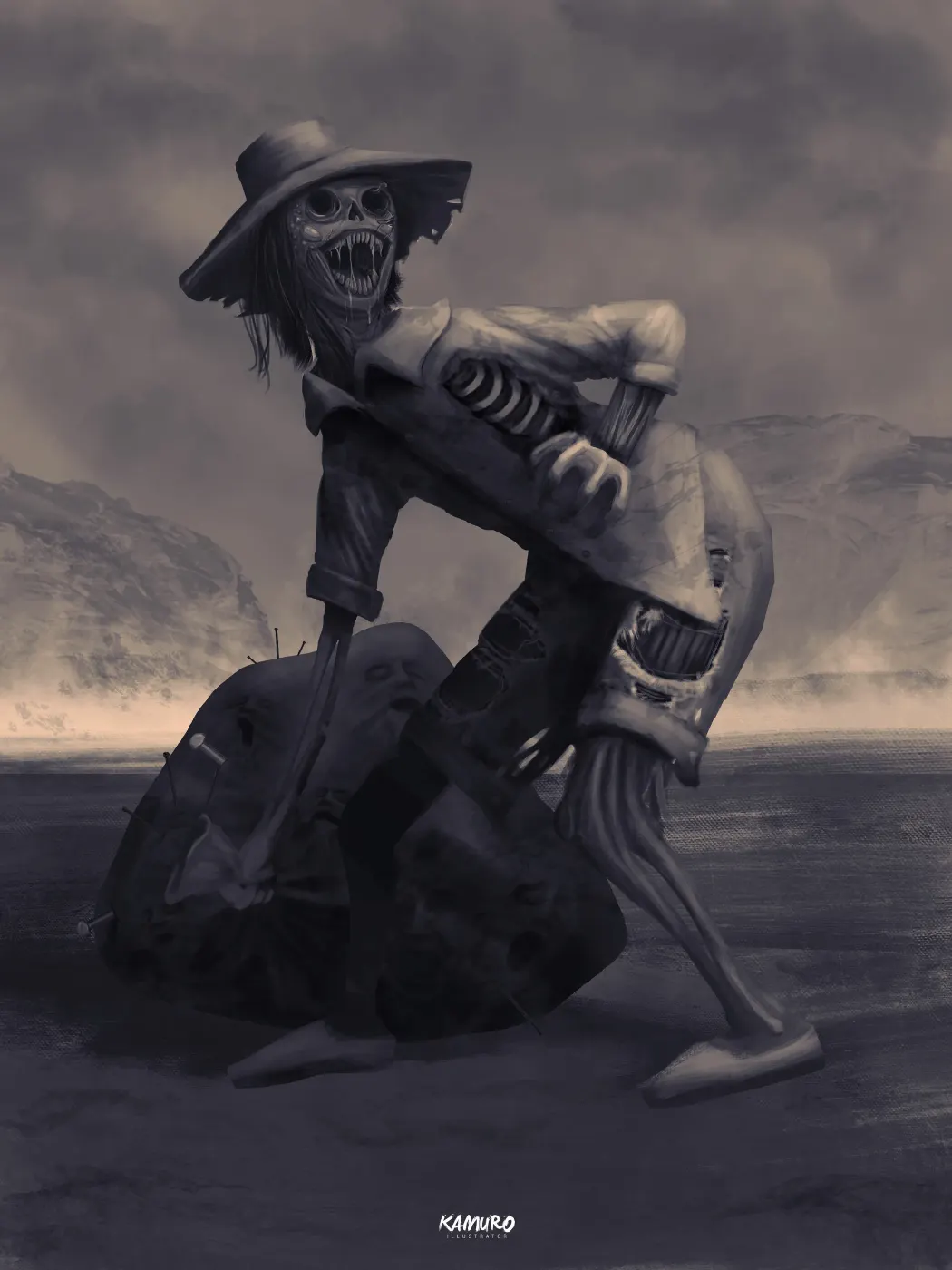
El Silbón, the Whistler
The Llanos (Los Llanos) is a vast expanse of tropical grassland plains and savanna situated within the Orinoco River basin across western Venezuela and eastern Colombia, specifically centered on the municipality of Guanarito in the state of Portuguesa, alongside Barinas and Cojedes. "El Silbón" (The Whistler) is a premier figure of northern South American folklore. Depicted as a roaming spectral patricide bearing a sack of human bones across his shoulder while emitting a chilling tonal whistle, the entity represents a foundational cultural archetype of regional Llanero cattle-ranching lore.
La Llorona, the Weeping Woman
A woman in white who walks beside water weeping for children she drowned herself. The story is known throughout Latin America, but in Mexico City it is fixed to the canals of Xochimilco — the last remains of the lake system Tenochtitlan stood on. The earliest written versions date from the colonial period and braid two layers together: a Spanish tale of an abandoned woman, and pre-Hispanic accounts of a weeping female voice heard before the conquerors came.
Teke Teke
The upper half of a woman's body, moving on its elbows with the clattering sound the legend is named for. The story makes her a schoolgirl cut in two by a train. Its persistence has a simple explanation: in a country with the densest railway network in the world everyone has a level crossing of their own where the legend becomes local. Like most Japanese urban legends of the later twentieth century it spread by word of mouth through schools, long before the internet.
Aka Manto: red paper or blue
Another inhabitant of Japanese school toilets, and the cruellest in construction. A voice from the last cubicle asks which paper you want, red or blue. Choosing red means one thing, blue another, and both are bad; refusing to answer, in most versions, does not save you either. The legend is interesting because it is built as a trap with no exit: there is no right answer, and that is the point — it is the shape of a fear of being asked something you cannot answer correctly.

Hanako-san of the school toilet
Restrooms of elementary and junior high schools across Japan (conventionally the third stall on the third floor of the girls' lavatory). Hanako-san (Toire no Hanako-san / "Hanako of the Toilet") is the definitive supernatural entity of modern Japanese school folklore (gakkō no kaidan). Emerging during the post-war decades, the spectral figure evolved into a ubiquitous national myth, synthesizing ancient Shinto animism, the collective trauma of World War II air raids, and adolescent rituals of courage testing (kimodameshi).
Kuchisake-onna, the slit-mouthed woman
A woman in a surgical mask stops a passer-by and asks: am I beautiful? Say yes and she takes the mask off, revealing a mouth slit to the ears, and asks again. The legend erupted in the spring of 1979 in Gifu Prefecture and crossed the whole of Japan within months: schools sent children home in groups, police stepped up patrols, newspapers reported the panic. The roots are older, going back to the Edo period, but the 1979 version was the country's first case of an urban legend requiring a police response.
The Brown Mountain Lights
Glows seen since the nineteenth century over a low ridge in North Carolina: they appear above the crest, rise, go out and appear again. The US Geological Survey studied them twice, in 1913 and 1922, and both times concluded they were reflections of train and settlement lights. The difficulty is that the earliest accounts date from before there was a railway or a settlement there. The ridge is accessible, there are marked viewing areas, and the lights are still being filmed.
The Hornet Spook Light
A ball of light the size of a basketball, seen for more than a century over a straight stretch of dirt road on the Missouri–Oklahoma line. It approaches, retreats, changes colour and is said to react to people. The US Army Corps of Engineers investigated in the 1940s and reached no conclusion. The most convincing explanation is atmospheric refraction of headlights from Route 66 a few miles off — but local memory of the light predates cars in the county.
The Hairy Hands of Dartmoor
A stretch of the B3212 between Postbridge and Two Bridges on English Dartmoor, where unexplained crashes began in the early 1920s: drivers and motorcyclists described hairy hands seizing the wheel and wrenching it towards the verge. After several deaths in 1921 the local press took it up, and engineers who examined the road found a plainer cause — a badly cambered surface that pulled vehicles off line. The road was rebuilt, the crashes stopped, and the legend stayed.
The Kelly–Hopkinsville goblins
On the night of 21 August 1955 the Sutton family, from a farm outside Kelly, Kentucky, ran into the police station at Hopkinsville and said they had spent hours shooting at short creatures with large ears and glowing eyes that came up to the windows and did not fall when hit. Police went out to the farm, found shot-out windows and screens, and no trace of the creatures. There were eleven witnesses including children, there was no drink in the house, and the family had nothing to gain — they turned down money for interviews. The case remains one of the most argued-over in American ufology.
Mercy Brown, the Exeter vampire
In 1892 the Brown family of Exeter, Rhode Island, was losing one member after another to tuberculosis. Neighbours convinced the father that one of the dead was feeding on the living, and in March the bodies were exhumed. Two had decomposed; nineteen-year-old Mercy, who had spent the winter in a cold crypt, had not. Her heart was burned, the ashes mixed with water and given to her dying brother to drink. He died two months later. The case is the last and best-documented episode of the New England vampire panic — an attempt to explain an epidemic for which people had no other language.
Resurrection Mary
America's best-known vanishing hitchhiker. Since the 1930s drivers on Archer Avenue outside Chicago have told the same story: a fair-haired girl in a white ball gown asks for a lift, says nothing the whole way, and disappears from the car opposite the gates of Resurrection Cemetery. Attempts have been made to attach the story to several real girls who died young, and none of the versions fits the details. The vanishing-passenger plot is older than the motor car — it is known from tales of horse-drawn carriages — but the Chicago version is fixed to one road and one gate.
Bunny Man Bridge
A single-track railway underpass in Fairfax County, Virginia, known locally as Bunny Man Bridge. The legend puts a man in a rabbit suit with an axe here. There is a real basis and it is a modest one: in October 1970 county police logged two reports of a man in a white suit with rabbit ears who swung an axe at people near their cars and broke a window in a house under construction. He was never found. In half a century two police reports have grown into hanged children, an escaped asylum patient and a compulsory visit to the bridge on Halloween night.
The Russian Sleep Experiment
A text that first appeared online around 2010: five prisoners, a sealed chamber, a gas that prevents sleep, fifteen days of observation and what they become by the end of it. It is presented as a declassified report from a Soviet laboratory in the 1940s. No laboratory, no report and no mention of any of it exists before 2010, and the photograph that travels with the text is an animatronic mask sold in Halloween shops. The story spread so widely that it still resurfaces regularly as a "declassified document".
Lavender Town Syndrome
The legend says that in the Japanese release of Pokémon Red and Green in 1996 the music of the graveyard town carried high frequencies that gave children headaches and worse, and that the score was rewritten after a wave of complaints. Only one part of it checks out: the Japanese version does sound different from the international one — but the music was reworked for release abroad for ordinary technical reasons. No medical records, no cases, no names. The story appeared online a decade and a half after the game did.