All places
The full catalogue of approved places — abandoned buildings, anomalous zones, UFO sightings. Sort by rating, recency or discussion, and narrow it by category.
494 places
Herobrine
A character that was never in the game. In 2010 an anonymous user posted a Minecraft screenshot of a player figure with no pupils standing in fog, and a story that it was the creator's brother. The rumour outlived every denial: for years players sent in evidence — squares of felled forest, sand pyramids, tunnels nobody built — and the developers eventually took to adding "Removed Herobrine" to their patch notes as a joke, though there was nothing to remove. His code has never existed in any version of the game.
Ted the Caver
One of the earliest examples of the form, and possibly the first that really worked. In 2001 a diary appeared on the free host Angelfire: a man and a friend clearing a narrow side passage in a cave. The entries are matter-of-fact, with photographs and measurements, page after page; the tone shifts slowly over several weeks, and the disaster arrives well after the reader has stopped expecting one. It works because until the very end it does not look like a story — it looks like somebody's abandoned website.
Candle Cove
Kris Straub's 2009 story, written entirely as a forum thread: several people reminisce about a children's puppet show a local station ran in the late sixties. The memories agree on the details, then get worse, and in the last post one participant's mother says there was no programme — the television showed static in those hours, and the child sat watching it. The form matters more than the plot: the text does not pretend to be a story, it pretends to be somebody else's conversation.
Slender Man
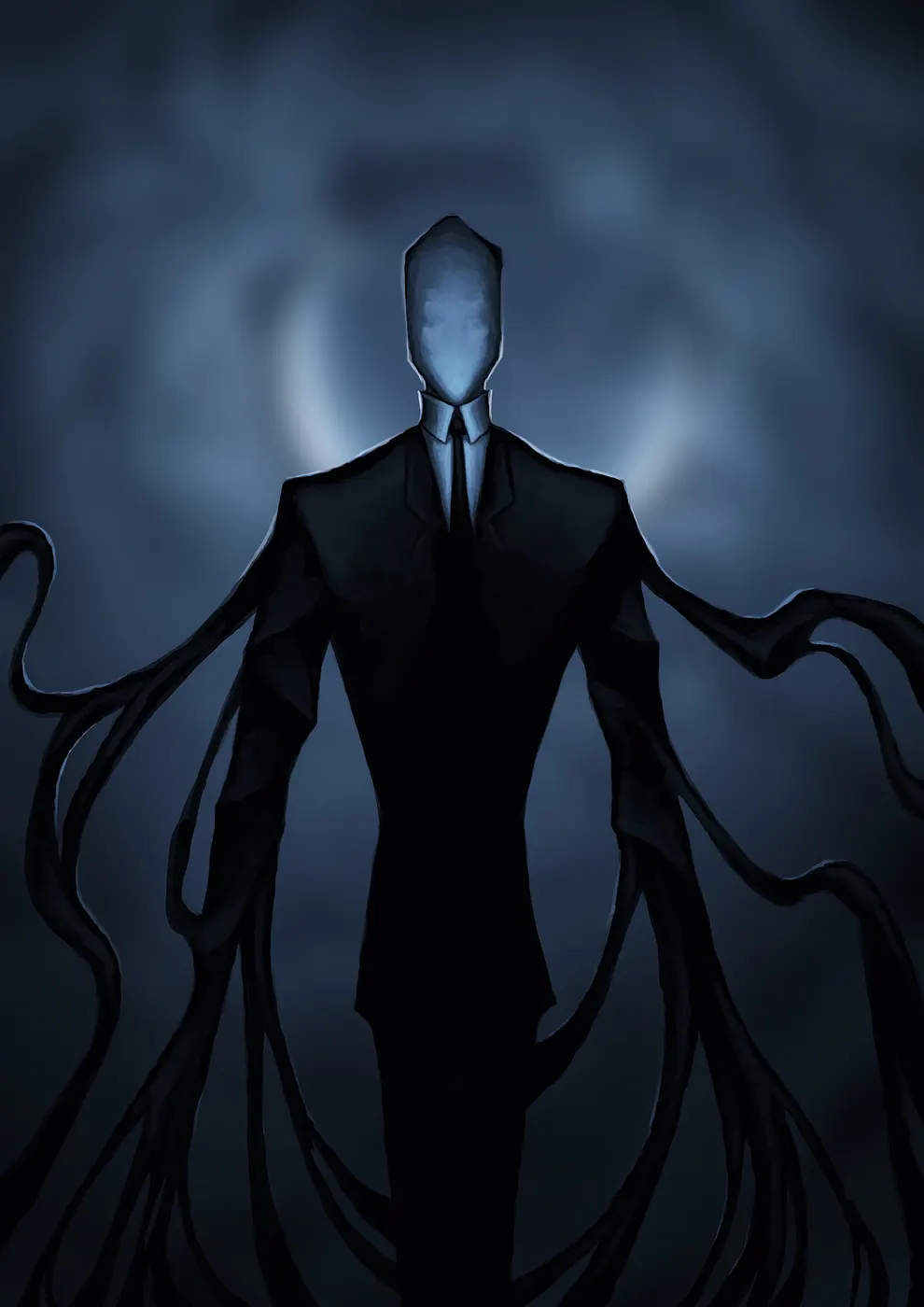
Invented in June 2009 by Eric Knudsen, posting as Victor Surge, for a photo-manipulation contest on the Something Awful forums: two black-and-white photographs of children with a tall thin figure in a suit added to them, and a couple of lines of caption attributed to witnesses who did not exist. The brief was to make an image look paranormal. Three years later Slender Man was living on his own — hundreds of stories, games and web series the author had nothing to do with. One of the first cases of internet folklore outgrowing any source it came from. The legend has no geography of its own: the pin sits in Pleasant Hill, Missouri, where the forum itself was run from.
Polybius: the arcade cabinet that never was
The story says that in 1981 a cabinet called Polybius appeared in the arcades of Portland, Oregon: no manufacturer's name on it, no usual queue — only children who afterwards suffered insomnia, seizures and gaps in their memory, and men in black who came to take readings off the machine. Not one photograph, not one board and not one document exists. The earliest written trace dates not from 1981 but from 2000, a post on an arcade collectors' site written almost twenty years after the "events".
SCP-173: the Foundation's first file
On 22 June 2007 an anonymous user posted a short text to 4chan in the form of a containment report: an object of concrete and rebar that cannot move while it is being looked at, and kills the instant you blink. The entry came with a photograph of Untitled 2004 by the Japanese artist Izumi Katō, used without asking. That single post grew into the SCP Foundation, a collaborative universe of thousands of documents written over years by thousands of people. The illustration was replaced in 2022: the artist had never given permission.
Momo: the sculpture that became a panic
The face that frightened half the world in 2018 and 2019 was never a character. It is Mother Bird, a sculpture by the Japanese artist Keisuke Aisawa of Link Factory, made in the summer of 2016 and exhibited at the Vanilla Gallery in Tokyo. In July 2018 a photograph of it was used in a YouTube video, from there it spread through messaging apps, and by 2019 it had grown into an international panic about a non-existent "challenge" supposedly pushing children towards dangerous tasks. Police forces and child-protection bodies in several countries stated publicly that no confirmed cases were found. The sculpture itself was destroyed by its maker.
The Backrooms: where the photograph was actually taken
The internet's most famous nowhere turned out to be the second floor of a furniture shop in Oshkosh, Wisconsin. The photograph of a yellow corridor under humming strip lights was posted to 4chan on 12 May 2019 in answer to a request for images that felt "a bit off", and the caption underneath it grew into thousands of stories, games and videos about endless empty rooms you fall into by taking a wrong turn. In 2024 internet researchers traced the picture to its source: a 2003 photograph of renovation work on the upper floor of the former Rohner's furniture store, taken for a local hobby shop's website. The building is still standing at 807 Oregon Street, and there is a model shop in it today.
Country Road Creature
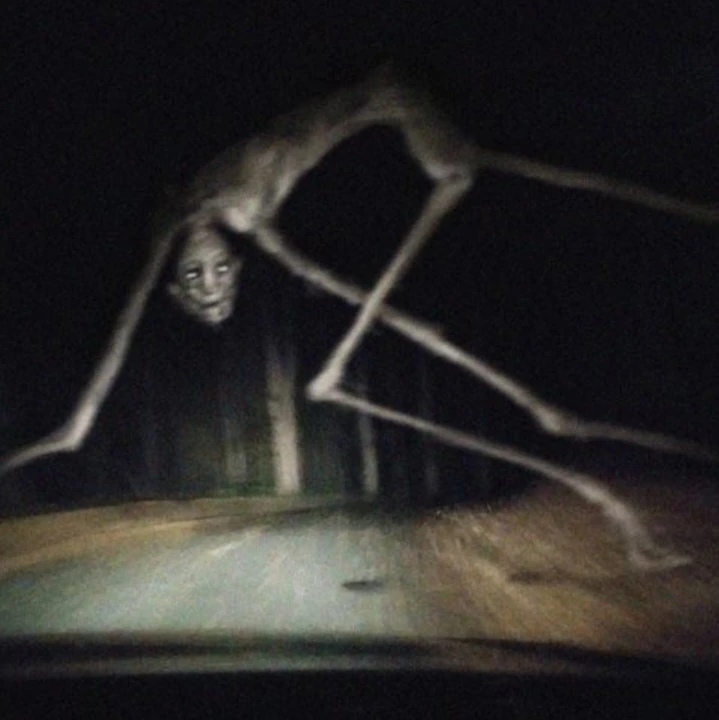
Another of Henderson's: a gaunt figure the height of a telegraph pole, caught apparently by accident through a car window on an empty road between fields. Nothing is formally known about it — no habits, no origin, no name beyond the descriptive one. That is the device: the caption under the picture is shorter than a caption normally is, and the rest is left to you.
Bridge Worm
Henderson posted it on 14 August 2019. A long segmented body, apparently assembled from human skulls and vertebrae, wound around the underside of a bridge span. The mechanism is the one all his work uses: the creature does not chase and does not attack, it is simply already there — under a structure you drive over daily and have never once looked beneath.
Long Horse
A rare thing in Henderson's bestiary: a creature that means no harm. A horse's skull on a neck tens of metres long, hanging down from somewhere above. In the mythology that accumulated around it online, Long Horse warns of danger — its appearance is a sign rather than a threat, and the only thing that hurts is the sound it makes, which it cannot help. Of the whole late-2010s internet menagerie it is the one that grew the friendliest fandom.
Cartoon Cat
Henderson drew it in August 2018, days after Siren Head. The creature is done in the visual language of 1930s American animation — rubber-hose limbs, saucer eyes, a permanent grin — but stands two storeys tall and has teeth a cartoon cat should not have. The trick is a single one and it works every time: take an idiom an entire generation associates with safety and childhood, and scale it up until it stops being funny.
Siren Head
A forty-foot figure of rusted metal with two loudspeakers where a head should be. The Canadian illustrator Trevor Henderson posted the first drawing in August 2018 and nothing happened for a year and a half — by his own account it got a couple of likes and was forgotten. It went off in the spring of 2020, when a clip of the thing towering over a city spread everywhere, and within four months it was the most recognisable monster on the internet. Its voice is playback: air-raid sirens, fragments of other people's conversations, calls for help.
The Charyn Canyon
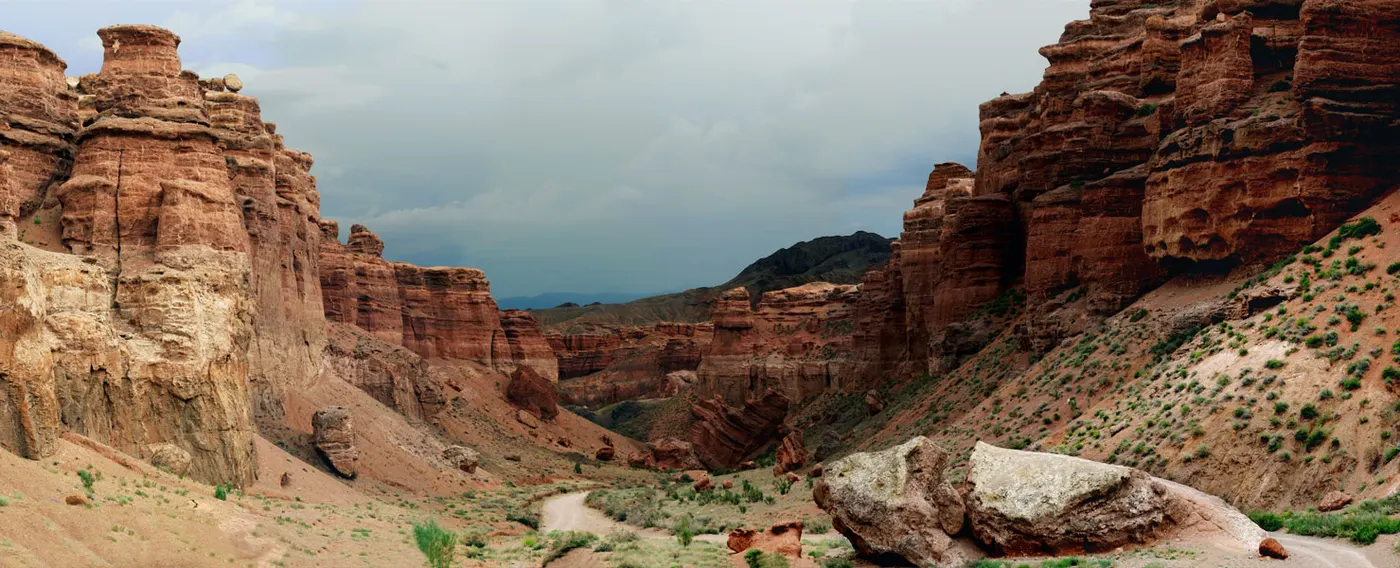
Charyn Canyon is an immense natural gorge system extending roughly 154 kilometers along the Charyn River within the Charyn National Natural Park in southeastern Kazakhstan (approximately 195 kilometers east of Almaty). Its most famous section, the "Valley of Castles" (spanning 2 kilometers with sheer walls dropping 150 to 300 meters), features striking layers of ochre-red sedimentary sandstone and conglomerate weathered into the shapes of towering towers, fortress parapets, and ruined ramparts, earning it global recognition as a Central Asian sibling to the American Grand Canyon.
Mangystau
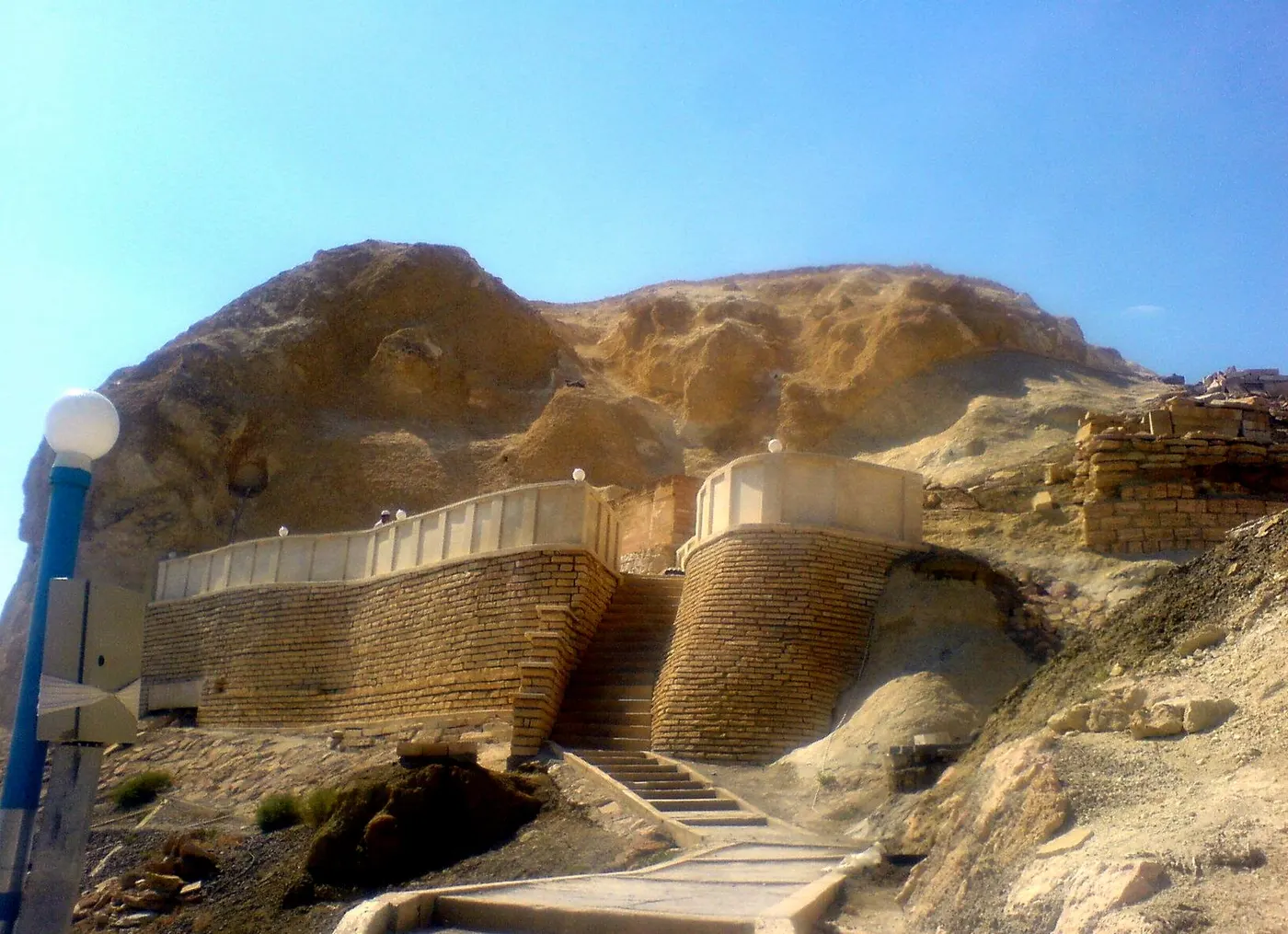
A region on the eastern shore of the Caspian where chalk outliers stand in the desert like the ruins of cities, and ridges of perfectly round stone spheres emerge from the ground — concretions up to three metres across. Beket-Ata is here too, an underground mosque cut into a chalk hill by a Sufi preacher in the eighteenth century; a steady stream of pilgrims comes to it, and tradition requires the night before a visit to be spent in the neighbouring valley.
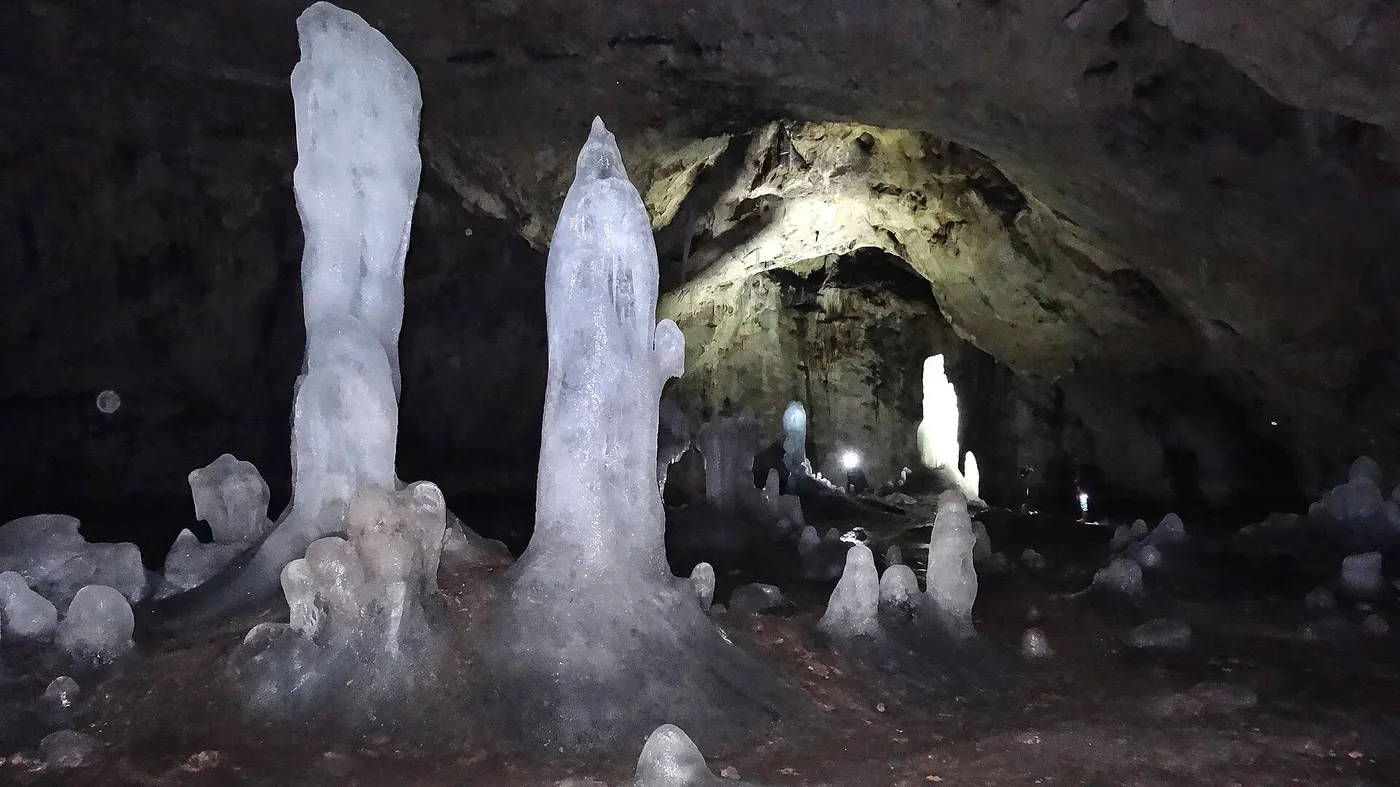
The Askinskaya Ice Cave
A cave in Bashkortostan with a single chamber holding ice columns up to eleven metres tall, grown over centuries. The temperature stays below freezing all year: cold air flows in during winter and cannot get out. Bashkir tradition places a guardian spirit here, to whom offerings were left at the mouth. In the 2010s visitor numbers damaged some of the columns and the cave was closed to open access.
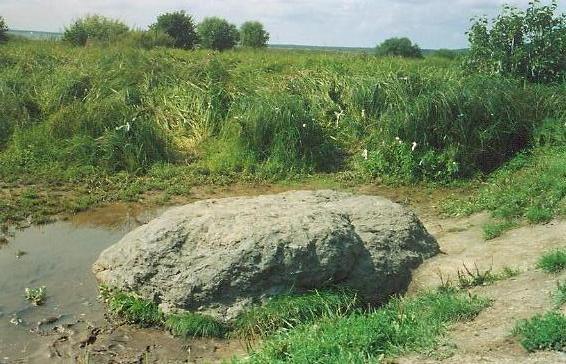
The Blue Stone
The Blue Stone (Sin-Kamen) is a sacred ritual megalith of glacial origin resting on the northeastern shore of Lake Pleshcheyevo in the Yaroslavl Region. Weighing approximately 12 tons, this quartzite-slate boulder is widely known for its unique optical effect: while dull gray when dry, it takes on a distinct bluish-steel sheen when wet.
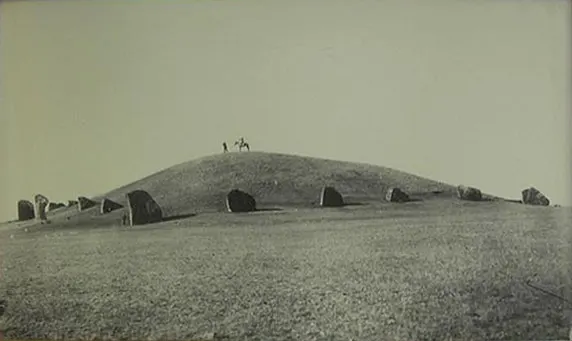
The Salbyk Kurgan
A royal kurgan in Khakassia ringed by upright slabs of Devonian sandstone weighing up to fifty tons — the stone was hauled seventy kilometres. Before excavation the mound stood twenty-five metres high. Inside was a burial with several attendants, killed, to all appearances, for the purpose. The valley around it is called the Valley of the Kings: there are several dozen kurgans here and most are untouched.
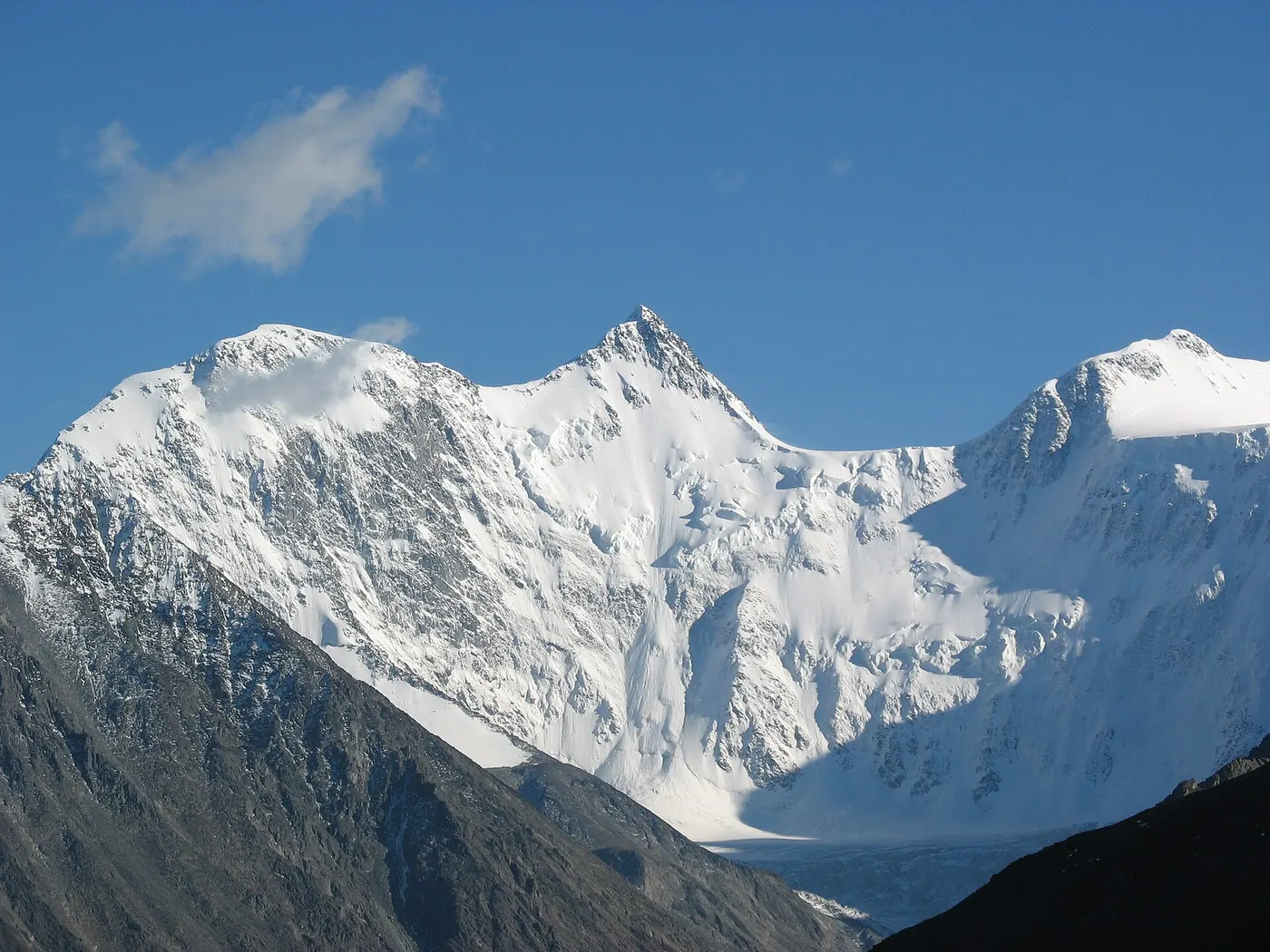
Mount Belukha
The highest point of the Altai, which the Altaians call Uch-Sumer and hold to be forbidden: one did not climb it, or speak loudly at its foot. Nicholas Roerich came here in 1926 and tied the mountain to Belovodye and Shambhala; his paintings made Belukha the centre of a Russian esoteric pilgrimage that has not dried up. The peak stands almost equidistant from three oceans — a fact the esotericists are fond of citing.
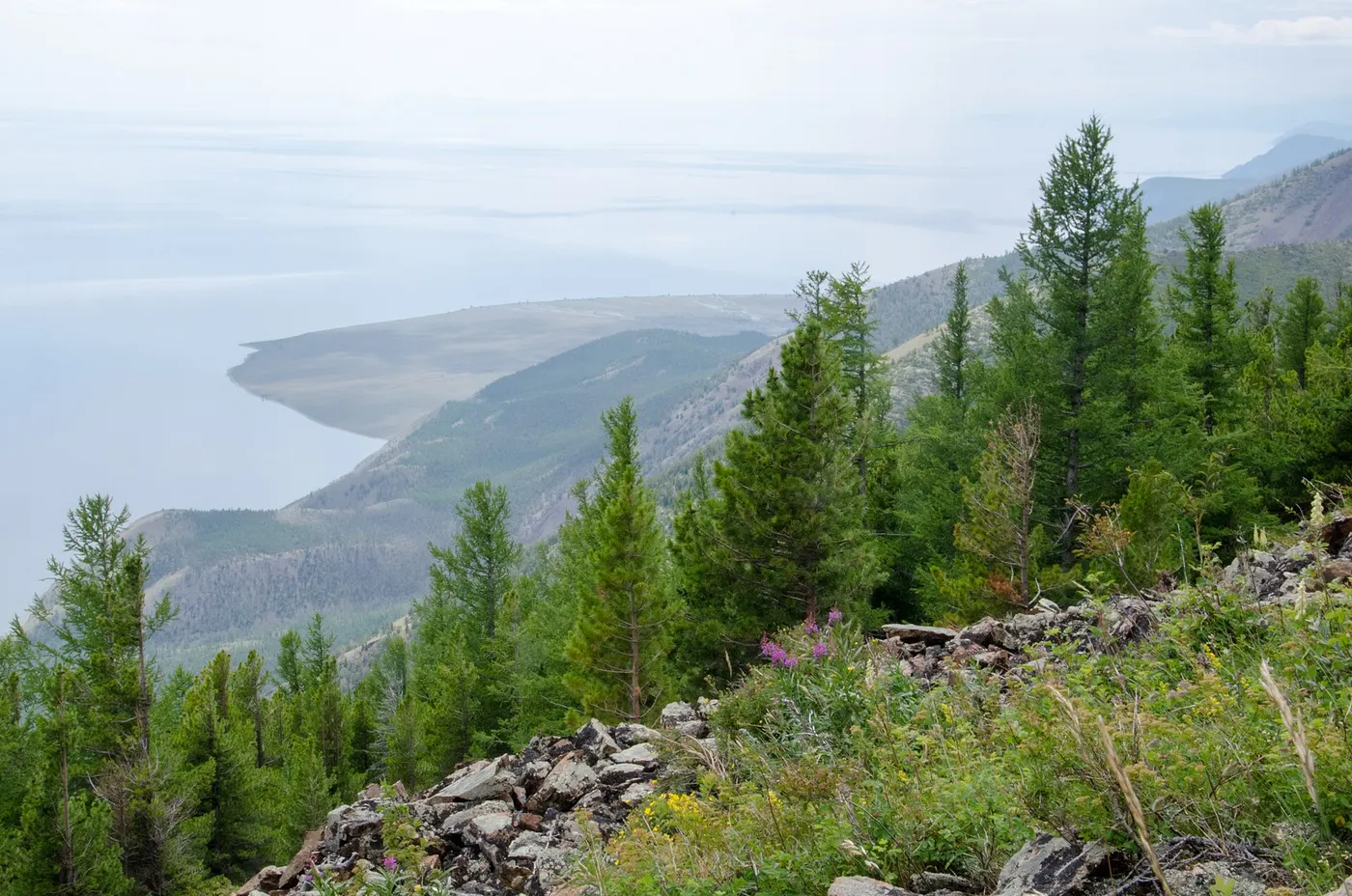
Cape Ryty on Baikal
One of the most closed stretches of the Baikal shore: the Buryats hold it to be ground one does not set foot on — spirits live there, and the penalty for trespass is illness or death. Women were forbidden to approach at all. A stone wall of unknown age and purpose survives on the cape, and a compass behaves unpredictably here because of a magnetic anomaly. It lies within a nature reserve, and getting there legally is next to impossible.
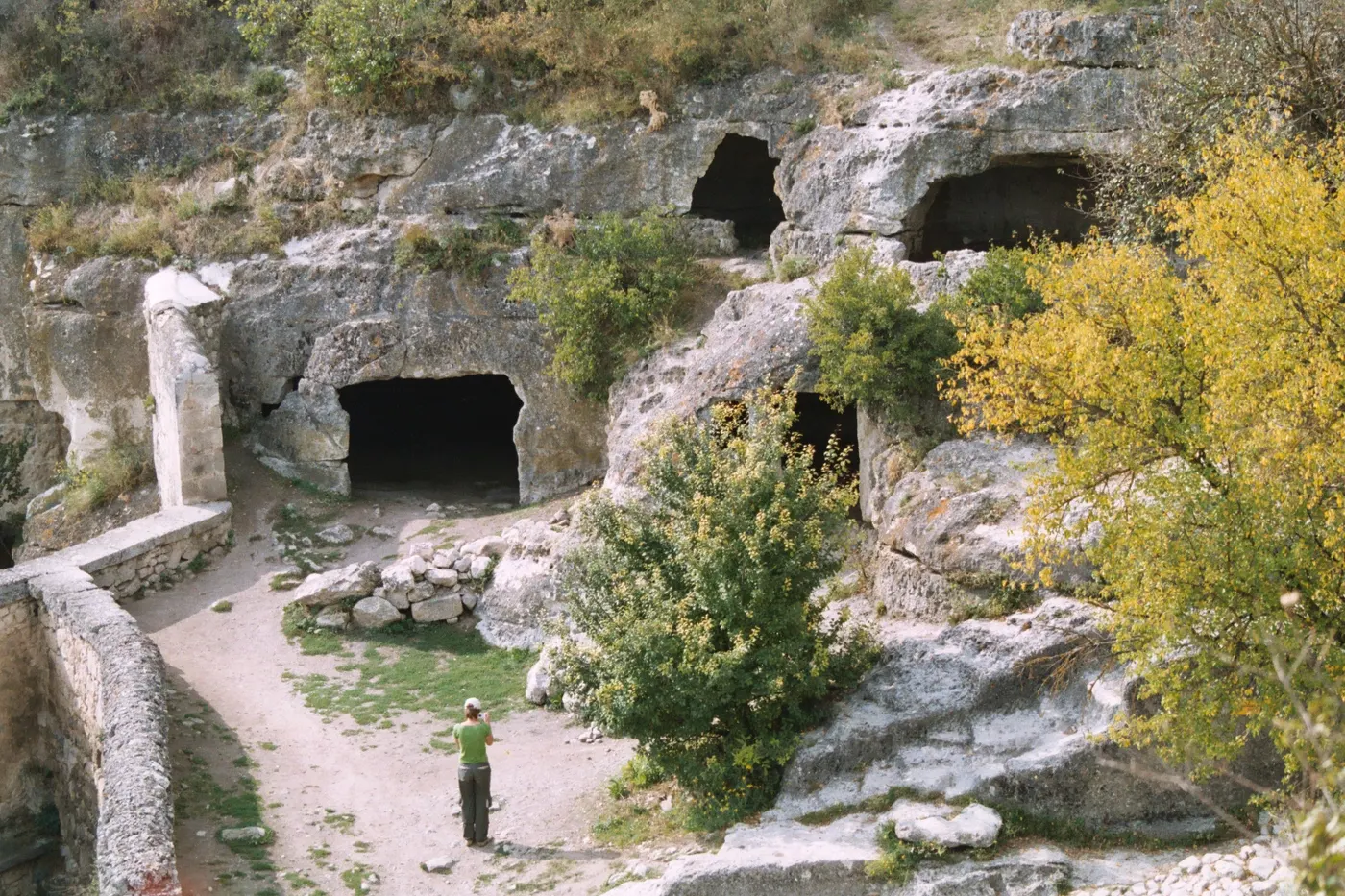
Chufut-Kale
A cave town on a Crimean plateau, inhabited from the sixth century and abandoned in the nineteenth. The name means Jewish fortress — the Karaites were the last to live here. Houses, cisterns, a prison and the mausoleum of the khan's daughter Canike Hanım are cut into the rock. Beside it lies the Karaite cemetery of Balta Tiymez, "the axe shall not touch" — a protected oak grove where felling was absolutely forbidden, which is why it outlived every wood around it.
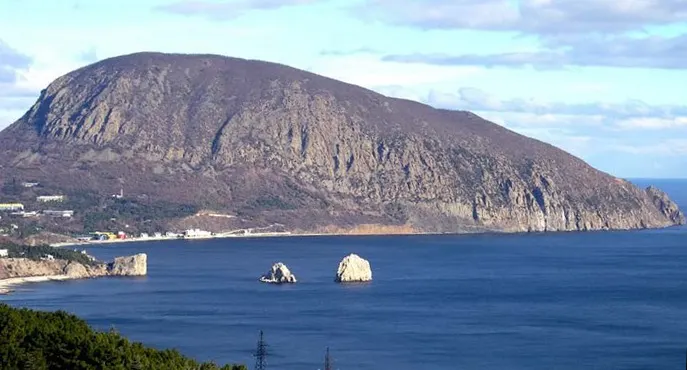
Ayu-Dag, the Bear Mountain
A volcano that never happened on Crimea's south coast: the magma rose but never broke out and set as a dome. From the sea the mountain reads as an enormous bear drinking. A Crimean legend takes that literally — the leader of a bear pack turned to stone, punished for trying to drink the sea dry rather than let a runaway girl go. Remains of a medieval monastery and fortifications survive on it, and the magnetic field in places pulls a compass off true.
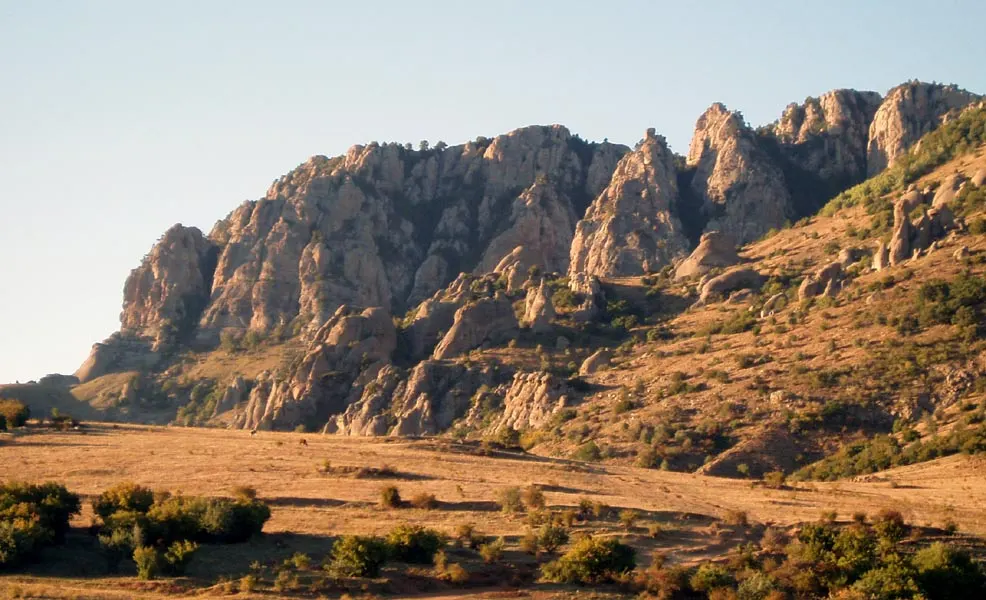
The Valley of Ghosts on Demerdzhi
A slope of the Crimean mountain Demerdzhi scattered with hundreds of stone pillars up to twenty-five metres high — conglomerate from which the rain has washed the softer rock. In mist and at sunset the shapes read as people and animals, and the outlines shift with the light. A Crimean Tatar tradition explains them by the curse of a blacksmith who settled on the mountain; the name means blacksmith. In 1966 the mountain slid and buried part of the village of Lavanda.
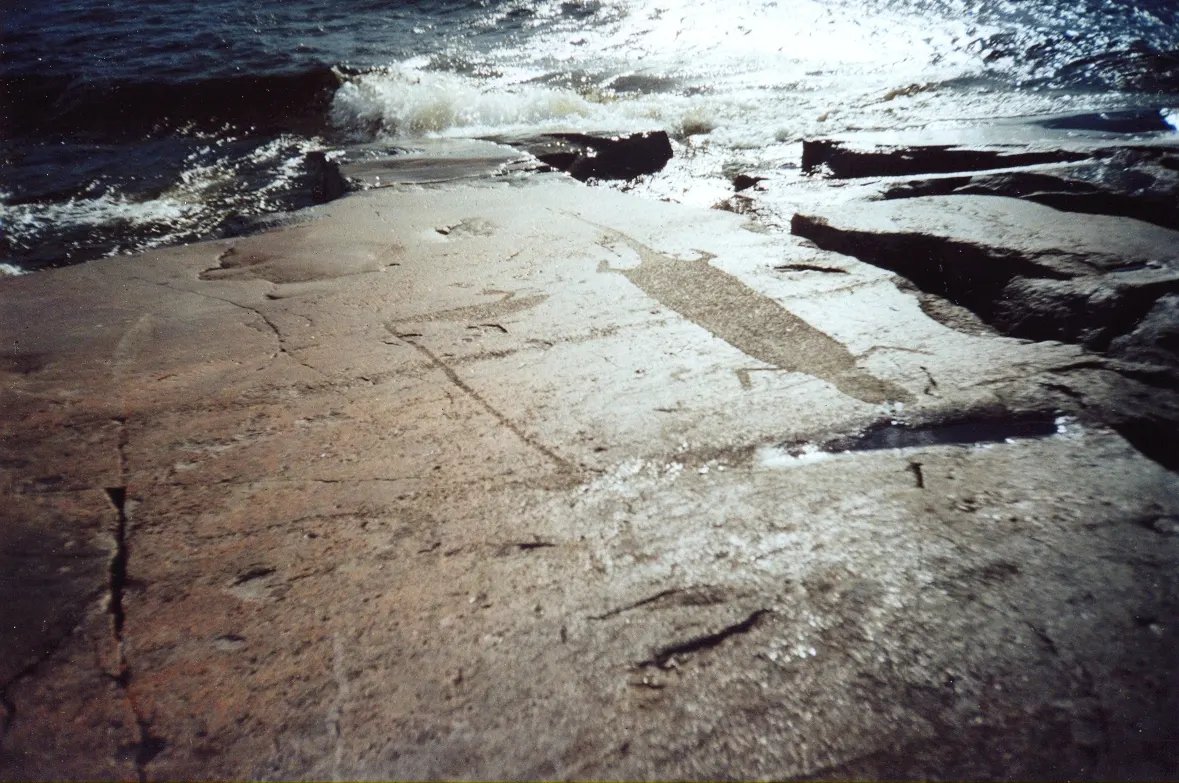
The Onega Petroglyphs and the Demon
Carvings on the shore rocks of Lake Onega, cut five or six thousand years ago. The best-known figure is the Bes — a humanoid nearly two and a half metres tall, split down the middle by a natural fissure. Monks of the Murom monastery cut a Christian cross over it in the fifteenth century to neutralise it, and both marks remain side by side on the stone, which makes this rock a rare document of one faith writing over another.