All places
The full catalogue of approved places — abandoned buildings, anomalous zones, UFO sightings. Sort by rating, recency or discussion, and narrow it by category.
494 places
The Black Lady of Nesvizh Castle
Belarus's best-known ghost is Barbara Radziwiłł, the Polish queen who died in 1551 at twenty-nine. The story goes that her husband Sigismund Augustus was so undone by her death that he had her spirit summoned; the rite went wrong, and she has walked the galleries of the family castle at Nesvizh ever since. The castle is real and on the UNESCO list, tours run daily, and the Black Lady is the one exhibit that does not appear in the museum inventory.
The Adzhimushkay quarries
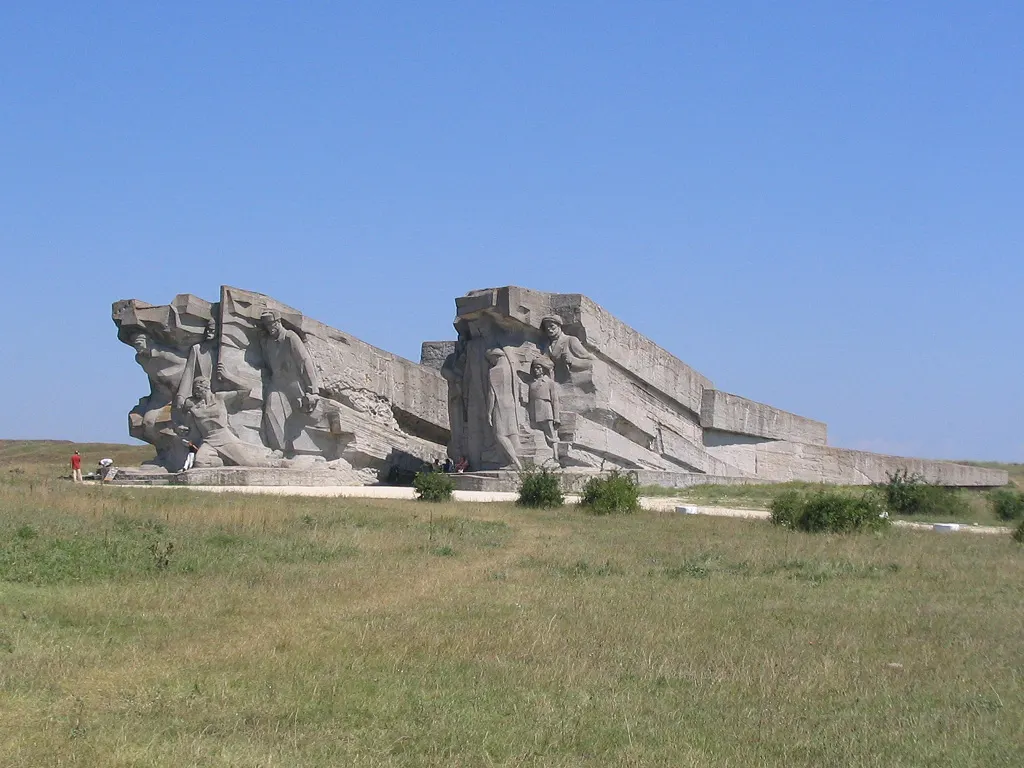
The Adzhimushkay Quarries constitute an extensive subterranean limestone quarry system (comprising the Great and Small Adzhimushkay labyrinths) located on the outskirts of Kerch near the settlement of Adzhimushkay on the Kerch Peninsula, Crimea. Having supplied coquina building stone since antiquity, these catacombs became the site of one of World War II's most harrowing subterranean sieges: from May to October 1942, surrounded Soviet rear-guard units and local civilians mounted an unrelenting 170-day defense trapped in absolute darkness, enduring lethal dehydration, structural demolitions, and continuous chemical asphyxiation assaults by the German Wehrmacht.
The White Caver
The underground counterpart of the Black Climber, known to everyone who goes into caves across the former Soviet Union. What makes him white is calcite, settled on his clothes over years below ground. Meeting him traditionally means the party has lost the route. Cavers have a half-joking initiation rite for newcomers in which he is described — a rare case of folklore whose carriers know perfectly well it is folklore, and which is none the weaker for it.
The Black Climber
A figure in black who appears in the mountains: in some accounts he helps the lost, in others he leads them off the path. The legend is common to Soviet mountaineering as a whole and has been recorded in the Caucasus, the Tian Shan and the Pamirs; each region has its own version of who he was in life — usually somebody who was abandoned on a rope. The story has a practical point, and it explains its durability: it says out loud what actually happens in mountains, and what that world fears more than dying.
The Dead Road
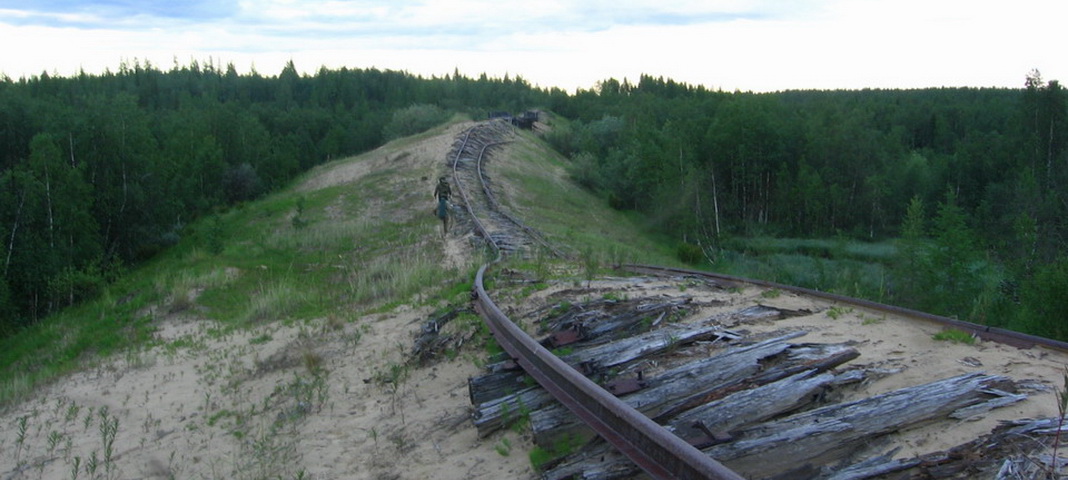
Construction No. 501 and No. 503 (officially the North-Siberian Railway, popularly known as the "Dead Road" or the Transpolar Mainline) was a massive, classified Soviet Gulag megaproject executed between 1947 and 1953. Aimed at laying roughly 1,450 kilometers of railway across northern Siberia along the 66th parallel connecting Chum, Salekhard, Nadym, Novy Urengoy, Yermakovo, and Igarka, the line was built over continuous permafrost and peat bogs by tens of thousands of forced laborers. Abruptly abandoned weeks after Joseph Stalin's death, it left behind hundreds of kilometers of twisted tracks, abandoned labor camps, telegraph poles, and rusting steam locomotives stranded in the Arctic wilderness.
Myasnoy Bor
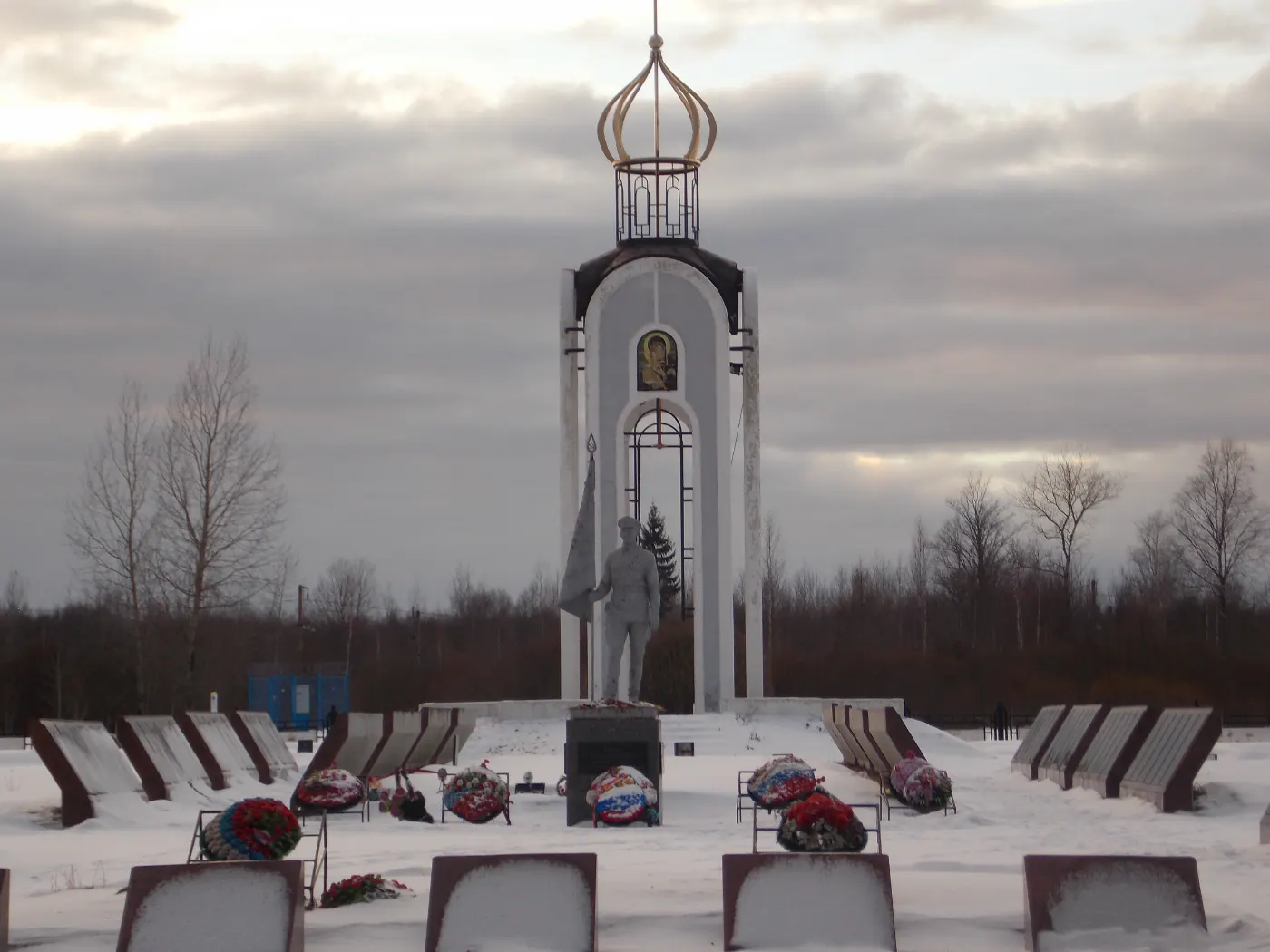
The Myasnoy Bor tract in the Novgorod Region, grimly known as the "Valley of Death," is a dense, swampy forest that became the site of one of the most harrowing tragedies of the Great Patriotic War. In 1942, during an attempt to break the Siege of Leningrad, brutal fighting unfolded here, claiming the lives of tens of thousands of Soviet soldiers.
Kapustin Yar
A missile range in the Astrakhan region, closed off since 1946 so thoroughly that the full set of stories grew up around it that grew around Area 51 in the United States: downed craft, underground hangars, tests of unknown machinery. Some of the rumours have an obvious source — rocketry really was tested here and a nuclear device detonated in 1957, and for years any flash over the steppe had no official explanation. The range is still in operation.
The Shushmor tract
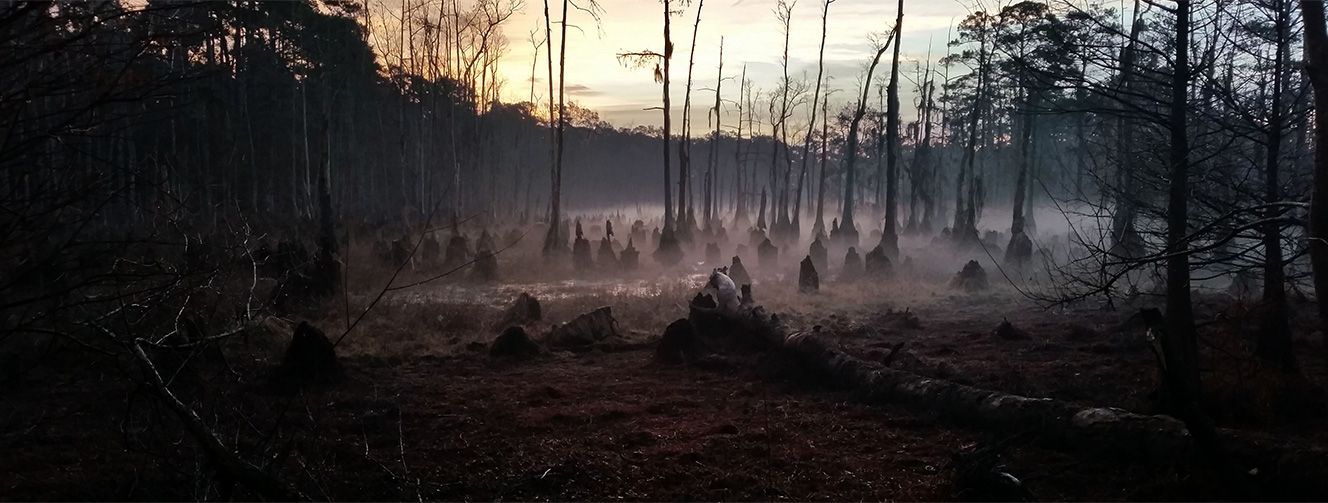
The Shushmor Tract is an isolated, swampy forest wilderness situated within the river basins of the Polya, Voymega, and Buzha rivers along the boundary of the Shatursky District (Moscow Oblast) and Gus-Khrustalny District (Vladimir Oblast) in the heart of the Meshchera Lowlands. Comprising peat bogs, dense moss woodlands, and pine ridges, the territory gained fame in the late 20th century as the Moscow region's oldest anomalous hotspot, earning the moniker of the "Meshchera Bermuda Triangle" due to enduring lore regarding disappearing travelers and a forgotten pagan megalithic shrine.

The Devil's Cemetery
The "Devil's Graveyard" (Chertovo Kladbishche, also known as the "Death Clearing") is a legendary anomalous zone located in the dense subarctic taiga of the Kova River basin (a left tributary of the Angara) in the Kezhemsky District of Krasnoyarsk Krai, Siberia. According to 20th-century accounts, the site was a circular clearing 15 to 25 meters in diameter of charred, ash-covered earth completely devoid of plant life and strewn with animal skeletons that mysteriously accumulated on the ground
The Medveditskaya Ridge
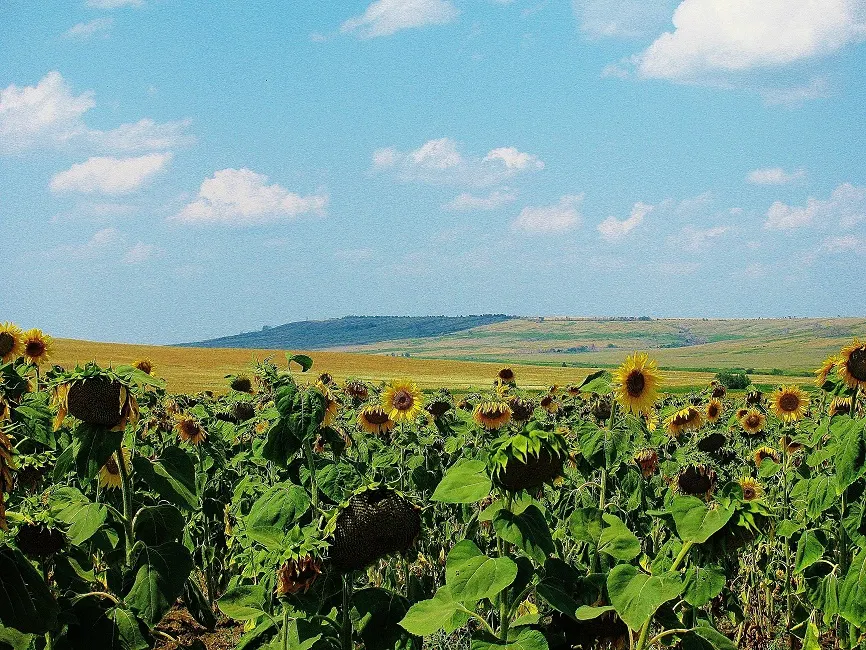
The Medveditskaya Ridge is a chain of rolling hills on the border of the Volgograd and Saratov Regions, recognized as one of Russia's most renowned anomalous zones. The area is famous for an unusually high frequency of ball lightning, the distorted trees of the "Drunken Forest," subterranean cavities, and recurring reports of geomagnetic disturbances.
The Black Hand and the Red Spot
Two stories from the same body, usually told back to back: the black hand that reaches out from under the bed or out of the wall, and the red spot on the ceiling that grows every night until it swallows the people living there. Both work the same way — the threat comes not from outside but from the flat itself, from the furniture and the walls, which is the one place a child cannot get away from. Folklorists have recorded them in many variants across the Soviet Union since the 1960s, and they remain the most durable layer of children's urban folklore.

The Queen of Spades: calling her in the mirror
Dimly lit domestic bathrooms, washrooms of Soviet pioneer summer camps, and the historical urban cradle of the myth: the "House of the Queen of Spades" (the mansion of Princess Natalia Golitsyna) on the corner of Malaya Morskaya and Gorokhovaya streets in Saint Petersburg. The ritual of summoning the Queen of Spades before a mirror in pitch darkness stands as the definitive supernatural invocation ritual across Soviet and post-Soviet juvenile folklore, synthesizing archaic Slavic Yuletide divinations, Alexander Pushkin's literary legacy, and psychophysiological optical illusions.
The Red Film
A late-Soviet legend: somewhere there is a special photographic film on which people come out undressed. It was usually attributed to a foreigner, a Japanese or a German, who asked to be photographed in front of a monument and then left with the film. The story rested on two things at once — on scarcity, under which any imported object was credited with impossible properties, and on adolescent curiosity, which had no other outlet in the country. No such film ever existed, of course.
The Coffin on Wheels
The best-known Soviet children's horror story, told in pioneer camps after lights-out. A voice on the radio announces that the coffin on wheels has set off and is coming down the street, then into the yard, then up the stairs; the floors are counted aloud, and on the last line the teller grabs whoever is next to them. The device is purely theatrical — the whole structure exists for one second at the end, and the fear is generated not by the plot but by the countdown. The pin is at Artek as the country's most famous camp, but it was told everywhere.
The Black Volga
A black car with no plates, sometimes with white curtains or red tyres, that drives around the city taking children. The legend circulated across the Eastern Bloc from the 1960s to the 1980s — in the USSR, Poland, East Germany, Hungary — and in each country somebody different was behind the wheel: state security, priests, foreigners, vampires. The Volga itself was not chosen at random: an official car, unavailable to an ordinary person, and therefore the country's most recognisable symbol of an authority you cannot hail.
The Kyshtym dwarf, Alyoshenka
In May 1996 Tamara Prosvirina, a resident of the village of Kaolinovy near Kyshtym in the Urals, brought home a creature about twenty-five centimetres long with an elongated skull and large eyes. She called it Alyoshenka, fed it, and told neighbours a son had come to live with her. She was taken to a psychiatric hospital; the body was filmed and photographed in the meantime, and that autumn it vanished without trace. What makes the case unusual is the sheer volume of material: video, photographs, dozens of interviews. Later genetic work points to human remains — most likely a premature infant with severe developmental defects.
Tikhiy Dom
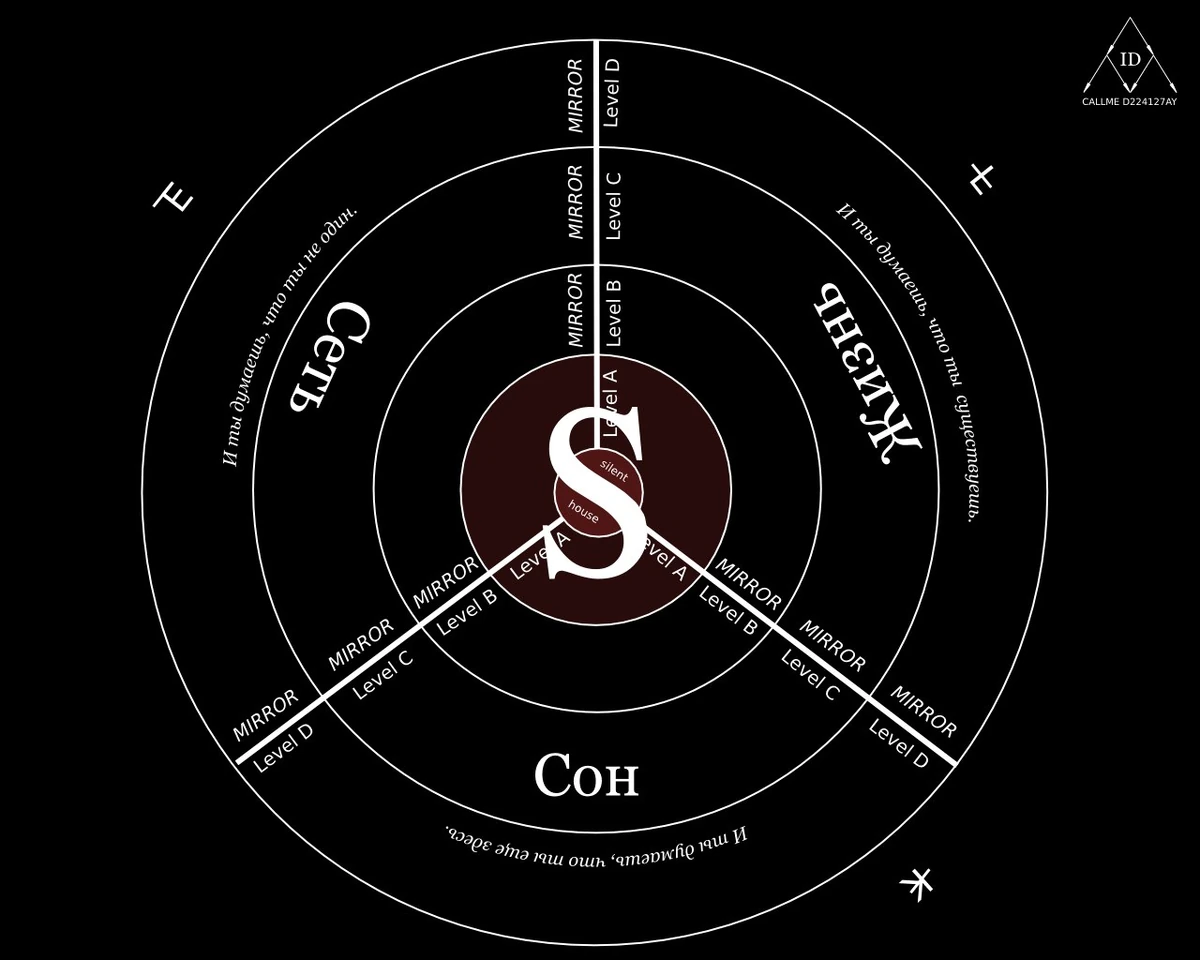
"Tikhiy Dom" (The Quiet House / Silent House) is the quintessential urban legend of Russian netlore and the netstalking subculture, signifying the mythical, absolute lowest stratum of the Deep Web. Originating in RuNet forum folklore in the early 2010s, the concept depicted a terminal ontological threshold at the "bottom of the Internet" where entry irreversibly severs human consciousness from physical reality. Between 2015 and 2016, this netstalking terminology was appropriated by malicious online actors within VKontakte alternate reality game (ARG) shock circles ("death groups", f57), transforming into a euphemistic metaphor for suicide during the moral panic surrounding the viral "Blue Whale" challenge.
The Rake
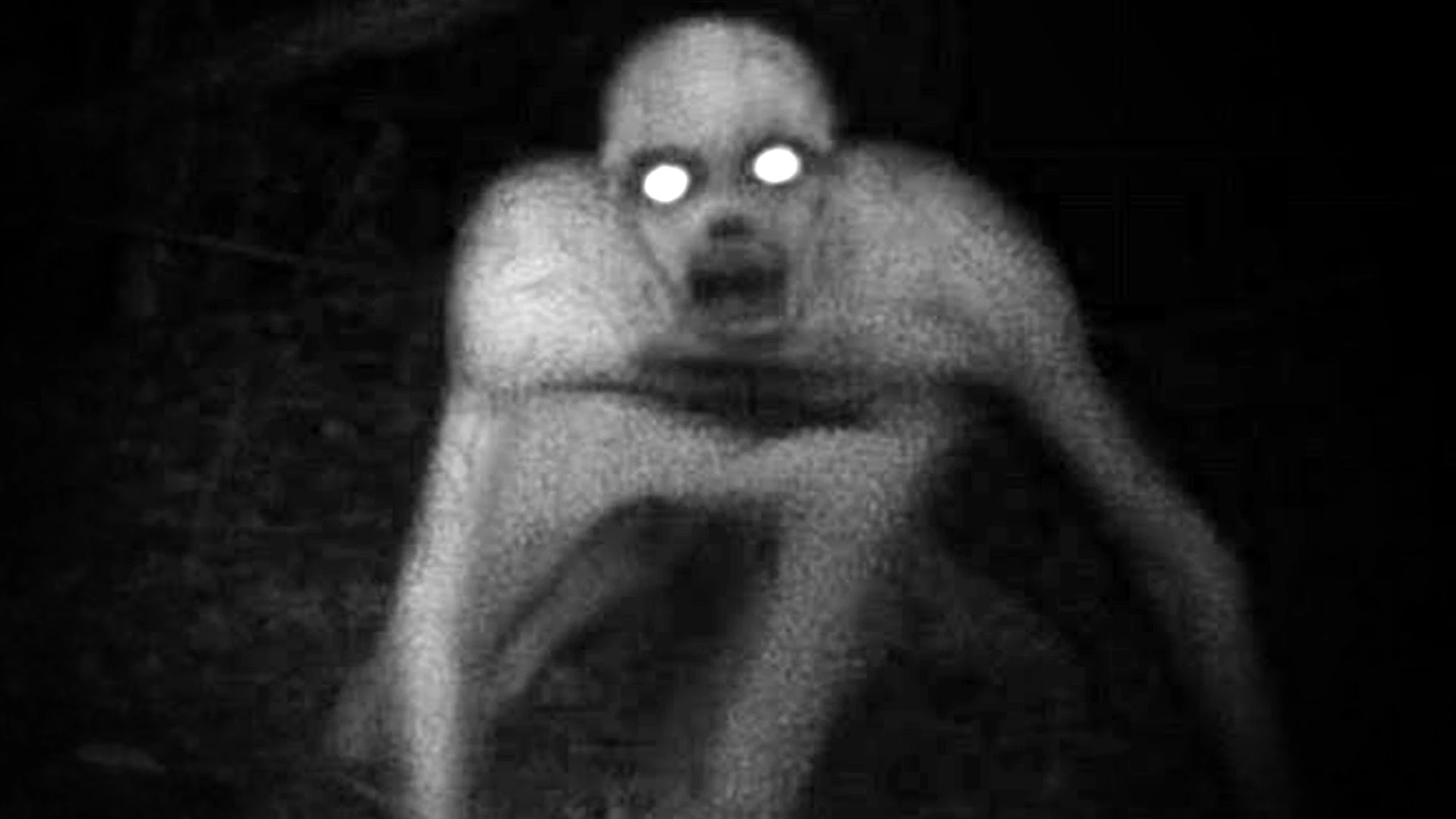
A hairless creature on four limbs, sitting beside a sleeping person's bed. It appeared around 2005 as a collaborative forum project: several users agreed to invent a monster and supply it with "historical evidence" — extracts from a 1691 ship's log, Spanish chronicles, diaries. Every document is fictional and was written the same evening. The case is interesting as a rare documented example of folklore being manufactured deliberately and from nothing.
Smile Dog
One of the first internet horror stories built around a file rather than a text. It appeared around 2008: a journalist visits a woman to ask about a picture called smile.jpg that drives mad everyone who sees it; the woman refuses to talk and eventually sends the file. The trick is that the file does not exist — every "original" circulating online appeared after the story did. The reader has to imagine the image, and imagination does the job better than any drawing.
The Bloop
In 1997 hydrophones belonging to the US National Oceanic and Atmospheric Administration recorded an ultra-low-frequency sound in the South Pacific loud enough to be picked up by sensors three thousand miles apart. Its profile resembled a biological one, and for two decades the Bloop was the leading exhibit for anyone who believes in undiscovered giants in the ocean. NOAA settled it in 2012: an icequake, an iceberg fracturing off Antarctica. The sound stopped being a mystery but remains one of the best-known audio files in internet history.
The Bélmez Faces
In August 1971, in the Andalusian village of Bélmez de la Moraleda, a human face appeared in the concrete kitchen floor of the Pereira family's house. The floor was broken up and relaid — the face came back, and then others did. The house became a place of pilgrimage and was written about across Spain. Chemical analysis in the 1990s found traces of pigments in the concrete, and investigators noted that new faces only ever appeared when somebody was in the house. The house is still there, the faces are still there, and the argument is not closed.
The Dybbuk Box
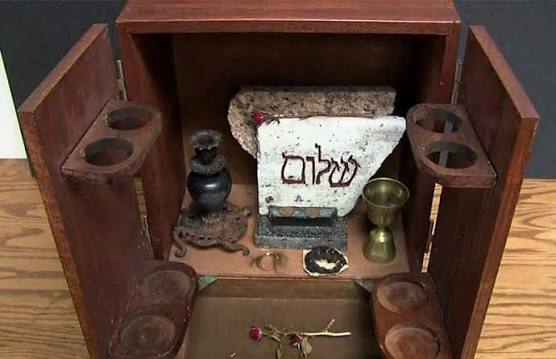
A wine cabinet listed on eBay in 2003 with a long description: supposedly it had belonged to a Holocaust survivor and contained a possessing spirit from Jewish folklore. The lot was resold repeatedly, each owner adding fresh misfortunes to the listing, the auction spread across the internet and eventually became a Hollywood film. In 2021 the original seller, the writer Kevin Mannis, publicly acknowledged that the whole thing was fiction he had written — a literary project that accidentally became a modern legend.
Annabelle at the Warrens' museum
The real Annabelle is not the porcelain doll of the films but an ordinary Raggedy Ann of the kind sold by the million in the 1960s. Her history is known solely from the accounts of Ed and Lorraine Warren, who took the doll in 1970 and put it in a glass case in their occult museum in Monroe, Connecticut. There is no independent confirmation of any episode. The museum has been closed to visitors since 2019, but the doll remains one of the most recognisable objects in American popular occultism.
Robert the Doll
A cloth doll in a sailor suit standing behind glass at Fort East Martello in Key West. It was given to the painter Robert Eugene Otto in the early twentieth century, and by family account he talked to it and blamed it for things broken and overturned in the house. The museum now asks visitors to request the doll's permission before photographing it, and the walls around the case are covered with letters from people who did not ask and connect their subsequent misfortunes to that. The doll is real, the museum is real, and there is an admission charge.