Debunked cases — mystical places on the map
Cases that are closed. Not «unexplained so far» but closed: the author of the photograph was found, the costume turned up in a garage, the film was taken apart frame by frame, the confession was given while the hoaxer was still alive. The place stays on the map because a legend usually outlives its own debunking — and here the two stand side by side: what was told, and what it turned out to be.
100 places

Ghostwatch on the BBC
BBC Elstree Studios and the suburban district of Northolt in Greater London, UK, are the defining locations of one of the most controversial media hoaxes in broadcast history. On Halloween night in 1992, the BBC aired "Ghostwatch," a mock live investigative special into a haunted council home that triggered nationwide public hysteria, regulatory sanctions, and real-world tragedy.

Alternative 3
Anglia House in the historic center of Norwich, Norfolk, UK—the former central broadcast headquarters of Anglia Television. It was from this building in the summer of 1977 that the network aired "Alternative 3," one of the most elaborate television mockumentaries in British broadcast history, which inadvertently laid the groundwork for modern conspiracy lore regarding secret space programs and elite off-world colonies.
The Beale Ciphers
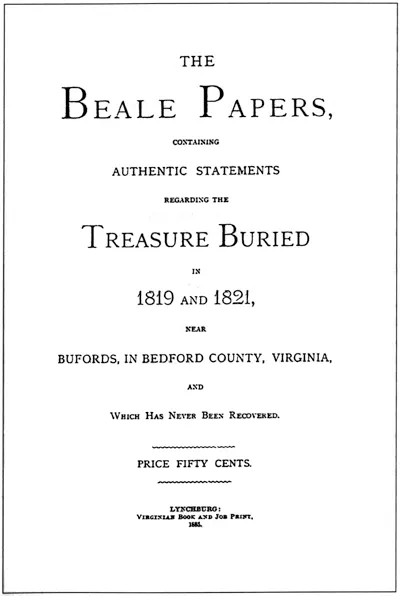
Bedford County and the city of Lynchburg in Virginia, USA, form the geographic core of one of the most famous cryptographic mysteries in American history. In 1885, an anonymous pamphlet surfaced containing three coded texts purporting to reveal the exact burial site of an enormous cache of gold, silver, and jewels buried in the 1820s by an adventurer named Thomas J. Beale.
The Mary Celeste at Gibraltar
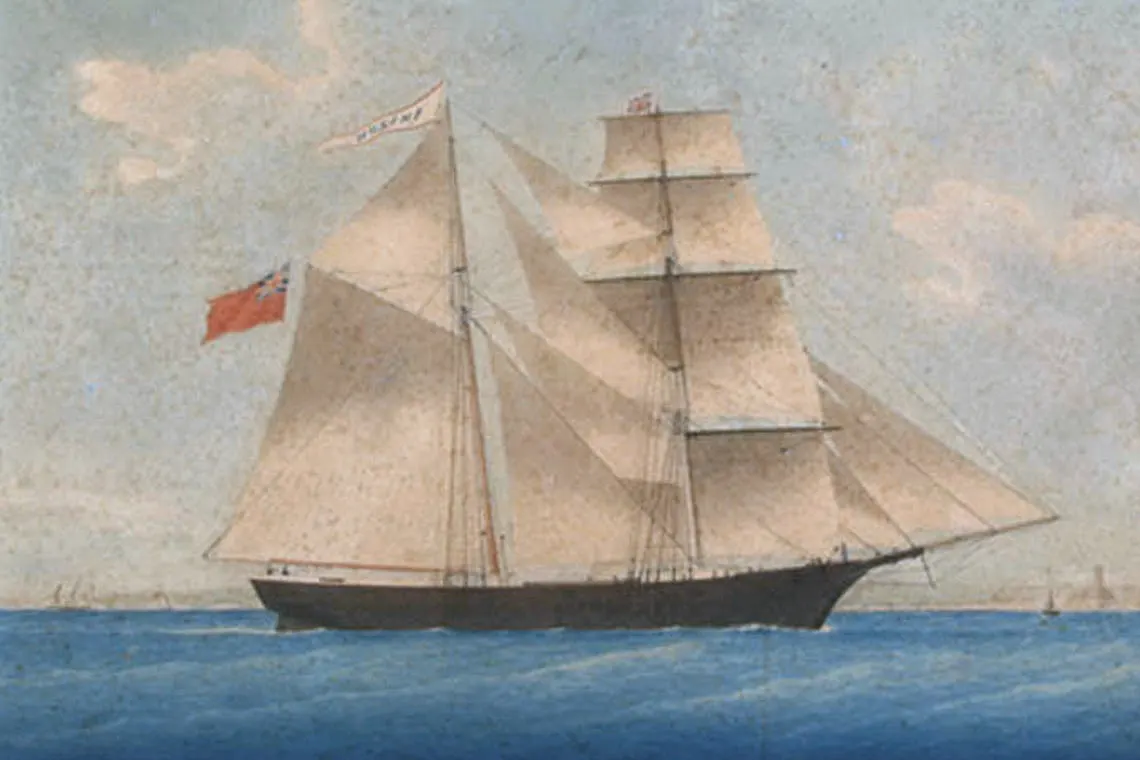
The Port of Gibraltar and the historic Gibraltar Vice-Admiralty Court represent the focal point of the greatest maritime mystery of the 19th century: the saga of the brigantine Mary Celeste. In December 1872, the derelict "ghost ship" was towed into Gibraltar Harbour, where an exhaustive British maritime inquiry took place, laying the groundwork for countless nautical legends and modern conspiracy lore.
The Betz Sphere
On 26 March 1974 the Betz family, walking a burned-over patch of woodland on Fort George Island in Florida, picked up a steel ball some twenty centimetres across. At home it behaved oddly: it rolled about the table, came back to its owner, hummed and made the dog howl. The press announced an alien device. James Randi examined and weighed it and showed that the mystery was an offset centre of gravity and a slightly sloping floor, and that any hollow ball hums. The Navy laboratory at Jacksonville identified the material as 431 stainless steel and concluded it was a ball from a ball mill. The sculptor James Durling-Jones later said he had carried such balls in his van and lost some in exactly that area.
The Crying Boy and the Fires
On 4 September 1985 the Sun printed the story of the Hall family of Rotherham: their house burned to the ground and a cheap print of The Crying Boy by the Spanish painter Bruno Amadio survived on the wall. Firefighters confirmed they had seen such pictures in the ashes more than once. The paper gathered hundreds of letters and staged a public burning of the prints. The explanation was simple and was tested in 2010 at the Building Research Establishment: the prints were made on dense board coated with a fire-resistant varnish and hung on a cord, which burns through first — the picture falls face down onto the floor, where the temperature is lowest. More than fifty thousand copies of The Crying Boy were sold, and most of them hung in kitchens.
Clever Hans
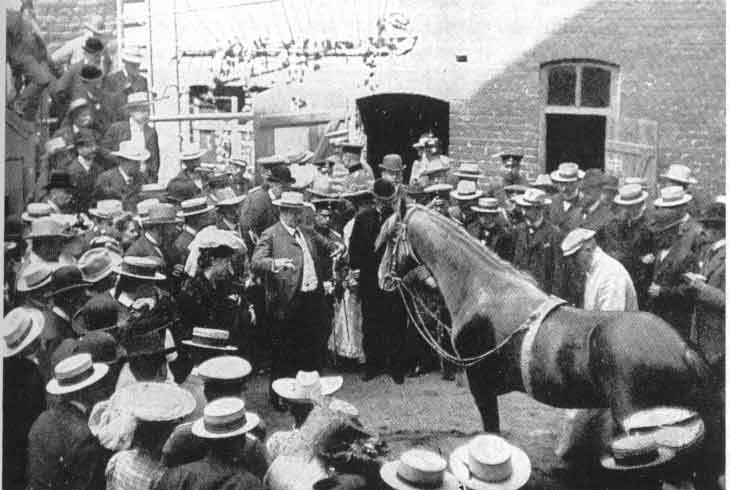
The residential inner courtyard at 10 Griebenowstraße in the Mitte district of Berlin, Germany. At the turn of the 20th century, this urban setting hosted public demonstrations of the Orlov Trotter stallion known as Clever Hans (Der Kluge Hans). The horse's apparent mastery of arithmetic and human language captivated international audiences, revolutionized animal cognition research, and led to the discovery of the observer-expectancy effect ("Clever Hans effect").
The Hindu Milk Miracle
On the morning of 21 September 1995 word went round Delhi that statues of Ganesha were drinking milk from a spoon. By midday milk was being offered to images all over India, and then in temples in Britain, Canada and Nepal; Delhi sold out of milk and the traffic stopped. That same day India's Ministry of Science and Technology sent a team to the temples, which showed that the milk leaves the spoon through surface tension and the capillary action of porous stone and marble, and then runs down the statue in a thin film. When food colouring was added to the milk the trace became visible over the whole figure. By the evening of the next day the phenomenon had stopped of itself.
The Bleeding Cross of Vile Parle
In March 2012 water began dripping from the feet of a crucifix outside the church of Our Lady of Velankanni in the Mumbai district of Vile Parle; thousands came, collecting the water in bottles and drinking it. The rationalist Sanal Edamaruku arrived with a television crew, followed the damp patch on the wall behind the cross and found a blocked washbasin drain in the room behind it: the water was rising by capillary action through porous concrete and coming out through the figure's foot. He demonstrated it live on air. The Catholic archdiocese of Mumbai filed a complaint against him for outraging religious feelings, and Edamaruku, facing arrest without bail, left for Finland.
The Philip Experiment in Toronto
In 1972 the Toronto Society for Psychical Research ran the experiment backwards: instead of looking for a real ghost, eight people under Iris Owen invented one. They wrote the biography of a seventeenth-century English aristocrat, Philip Aylesford, gave him a castle, a gypsy mistress and a suicide, drew his portrait — and sat for a year addressing a character they had made up themselves. In the second year the raps began, the table moved and rose, and all of it was filmed in front of a studio audience. The point of the experiment was precisely that Philip had never existed: the group obtained the classic phenomena of the séance room from a knowingly fictional spirit.
The Balloon Boy
On 15 October 2009 a homemade balloon shaped like a silver flying saucer rose from a garden in Fort Collins. The father, Richard Heene, said his six-year-old son Falcon was inside. The National Guard put helicopters up, Denver airport held flights, and the country watched two hours of live coverage. The balloon landed empty, the boy was found at home in the attic, and that evening in a CNN studio he told his father: you said we did this for the show. Heene, who had appeared in a reality programme about hunting UFOs, pleaded guilty in a Colorado court, served ninety days and paid $36,000 in restitution to the emergency services.
Grovers Mill and the Panic That Wasn't
On 30 October 1938 Orson Welles broadcast his radio version of The War of the Worlds on CBS, with Martians landing at the village of Grovers Mill in New Jersey — and the next morning the papers wrote of millions of Americans fleeing their homes. That second story was taken apart later. The C. E. Hooper ratings service polled five thousand people that evening: about two per cent were listening, and almost none of them called it news. The historians Jefferson Pooley and Michael Socolow showed that the scale of the panic was invented by the newspapers themselves — print was losing advertising to broadcasting and was glad to prove that radio was dangerous. The monument to the Martians at Grovers Mill was put up in 1988.
The Great Moon Hoax
From 25 August 1835 the New York Sun ran a series of six articles reporting that Sir John Herschel, from the Cape of Good Hope, had seen life on the Moon through a new telescope: forests, herds of bison, temples of sapphire and intelligent winged people four feet tall, which he called Vespertilio-homo. The material was presented as a reprint from the Edinburgh Journal of Science, which had by then been out of print for years. The Sun's circulation rose to fifteen thousand, the largest in the world. The author was the reporter Richard Adams Locke, writing satire on the fashionable speculation about inhabitants of the planets; the paper never printed a retraction, and Herschel learned of his discovery by post.
Operation Blackbird
In the summer of 1990 the BBC and Japan's Nippon TV, with the British Army, set up round-the-clock surveillance of the fields near Bratton in Wiltshire: image intensifiers, thermal cameras, radar and a camp on the hill. It was called Operation Blackbird and broadcast live. On the fifth morning, 25 July, a flawless pattern of circles was found in the field beneath the cameras, and the breakfast bulletin went out announcing a breakthrough. Within hours it emerged that a wooden Ouija board and a cross of sticks lay at the centre of each circle: a hoax carried out in the night directly under observation. None of the equipment had recorded anything at all.
Cheesefoot Head and the First Crop Circles
Circles in wheat began appearing in Hampshire and Wiltshire in the late seventies; they were explained by plasma vortices, landing craft and earth energies, and by the end of the eighties scientists and television crews were driving out to the fields. On 9 September 1991 the newspaper Today printed the confession of two pensioners from Southampton, Doug Bower and Dave Chorley: they had been making the circles at night since 1978, starting near Cheesefoot Head, where Bower had bet in a pub that he could cause a commotion. The tool was a plank on a rope pulled with the foot, and a wire sight on a cap to keep the line straight. In front of reporters they made a circle that the leading researcher Pat Delgado immediately pronounced genuine.
The Paulding Light
On a cleared corridor beneath a power line near Paulding in Upper Michigan, a single light has been seen at the far end on evenings since 1966: by tradition the lantern of a brakeman crushed by a train. The spot became a tourist site and the Forest Service put up a sign. In 2010 students from Michigan Technological University turned a telescope on the light and saw cars in the eyepiece, running on Highway 45 near Dog Meadow eight kilometres away — headlights, sidelights and brake lights all distinguishable. They then drove a car out there and flashed its lights to order over the radio: the light flashed back. An inversion layer over the corridor lifts the headlight beams above the terrain and compresses them into a single point.
The Sailing Stones of Racetrack Playa
On the dry lake of Racetrack Playa in Death Valley, stones weighing up to three hundred kilograms leave furrows hundreds of metres long, sometimes parallel, sometimes turning at right angles. Since 1948 magnetic fields, hurricanes, algae and human interference had all been proposed; nobody had ever seen one move. In 2011–13 Richard and James Norris put GPS units on the stones and a weather station with time-lapse cameras beside them. On 20 December 2013 they watched it happen: after rain the playa freezes over a few millimetres thick, the ice breaks by day into floating panels, and a wind of four or five metres per second is enough for the floes to push the stones at walking pace.
The Bosnian Pyramids at Visoko
In 2005 the businessman Semir Osmanagić announced that the hill of Visočica above the town of Visoko was the oldest pyramid in the world, 220 metres high and built twelve thousand years ago, and began excavating on donations and municipal money. In 2006 the European Association of Archaeologists issued a formal statement, signed by four leading European archaeologists, calling the project a cruel hoax and demanding a halt to work that was destroying genuine medieval and Roman layers on the hill. Geologists described Visočica as a flatiron — a natural landform of Miocene conglomerate, of which the valley has several; the paved slabs proved to be fractured sandstone.
The Mystery Spot at Santa Cruz
An attraction in the woods above Santa Cruz, opened in 1939: inside a leaning cabin balls roll uphill along a board, people change height standing on one plank, and nobody can stand straight. The owners explain it with carbon dioxide from a buried spacecraft and a break in gravity. The cabin is built at about twenty degrees and dug into the hillside, and its windows and doorframes are skewed so that not one true vertical is visible anywhere. The brain takes the walls of the room as vertical rather than the plumb line, and every effect — the uphill ball, the difference in height — reproduces in any of the dozens of such buildings around the world, including one in the next county.
The Oak Island Money Pit
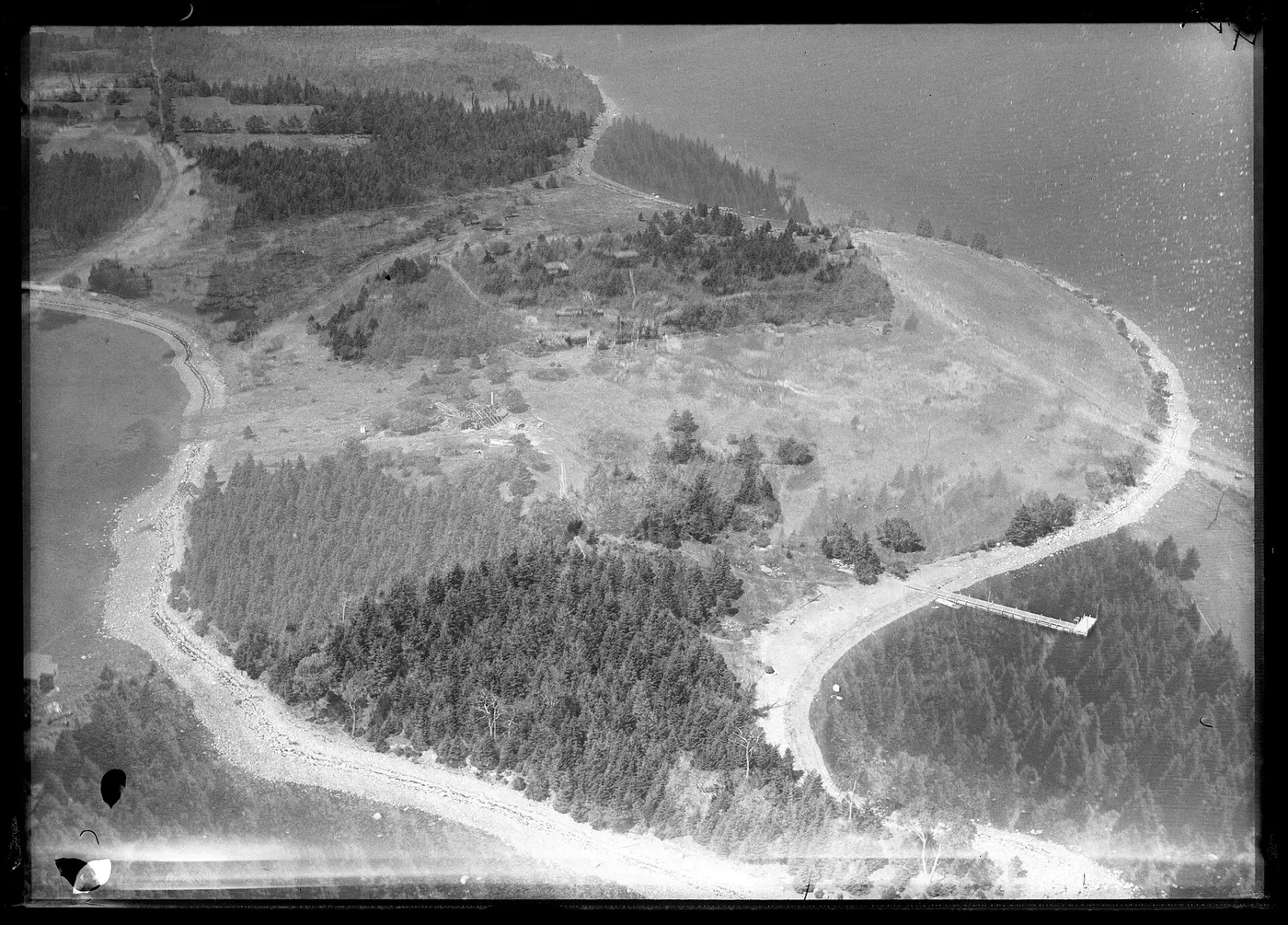
Oak Island is a small, 140-acre tree-covered island situated in Mahone Bay off the Atlantic coast of Nova Scotia, Canada. The island achieved global renown as the site of the "Money Pit"—an enigmatic subterranean shaft where treasure hunters, syndicates, and media ventures have spent hundreds of years and millions of dollars conducting the longest, most expensive treasure hunt in modern history.
The Bimini Road
In 1968 divers off North Bimini in the Bahamas found, at five metres, a half-kilometre line of rectangular limestone blocks laid out straight. Its coincidence with Edgar Cayce's prophecy that Atlantis would appear off Bimini in exactly 1968 made the find famous. The USGS geologist Eugene Shinn cored the blocks through: the internal bedding of adjacent stones continues from one to the next as in a single slab, and the radiocarbon dates increase steadily along the line. It is beachrock, cracked into rectangles as it dried, and it occurs on coastlines everywhere.

The Baltic Sea Anomaly
The Baltic Sea anomaly is an unusual disc-shaped geological formation measuring roughly 60 meters in diameter, resting at a depth of 85 to 90 meters on the seafloor of the Gulf of Bothnia between Sweden and Finland. Discovered via side-scan sonar in June 2011 by the Swedish salvage team Ocean X, the structure visibly echoed the silhouette of a fictional spacecraft, triggering an international ufological sensation and years of alternative speculation.
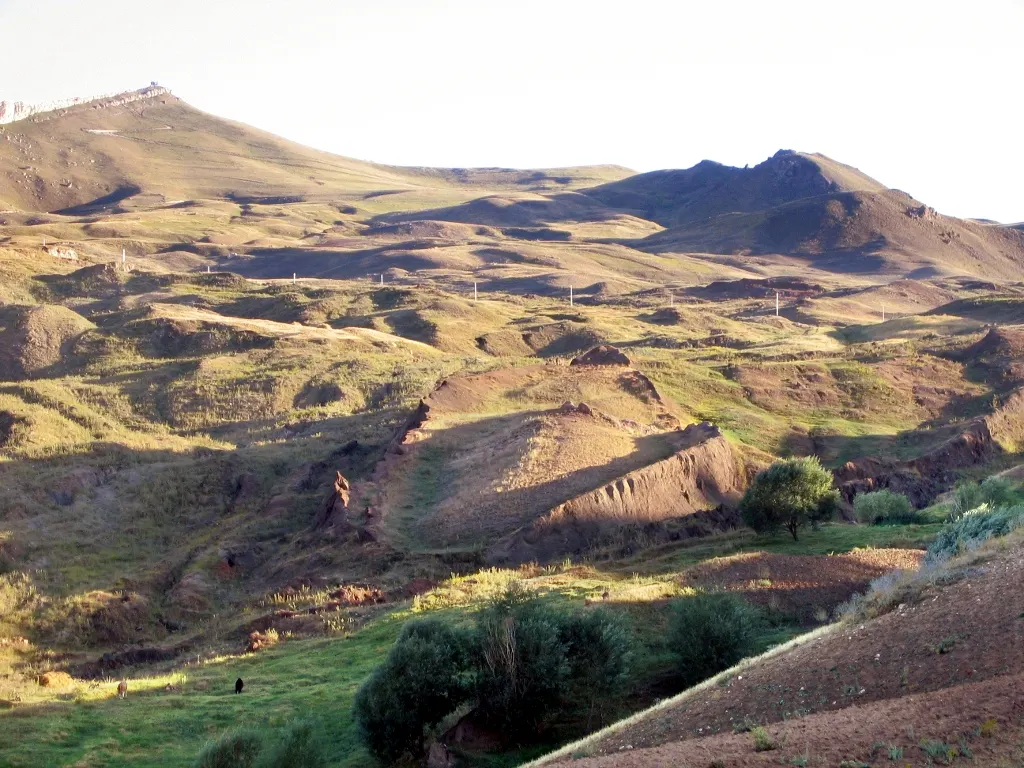
The Durupınar Formation, the Ark
The Durupınar site is a natural geological formation resembling the hull of a massive ship, roughly 160 meters (538 feet) long, situated in the Tendürek Mountains of eastern Turkey. Located 30 kilometers south of Mount Ararat, the outcrop has been promoted for decades by creationists and alternative theorists as the petrified remains of Noah's Ark.
The Curse of the Hope Diamond
The 45-carat blue diamond on show at the Smithsonian in Washington is famous as a stone that destroys its owners: prised from the eye of an Indian idol, it sent Marie Antoinette to the scaffold and ruined the Hope family. The Smithsonian historian Richard Kurin followed every episode through the documents and showed that the legend was assembled and sold by Pierre Cartier around 1910 to persuade Evalyn Walsh McLean to buy the stone — she had told him herself that unlucky things brought her luck. Half the victims never owned the diamond and some never existed. The stone really was cut from the French Blue of the crown jewels, but it was stolen from a storeroom in 1792, not taken from an idol.