Ghost sightings — mystical places on the map
Places tied to one specific apparition: a castle with its nun, a hotel with its guest, a crossroads with its hitchhiker. What matters here is less the story than the fact that it has been told about this exact address for decades, and told the same way.
49 places
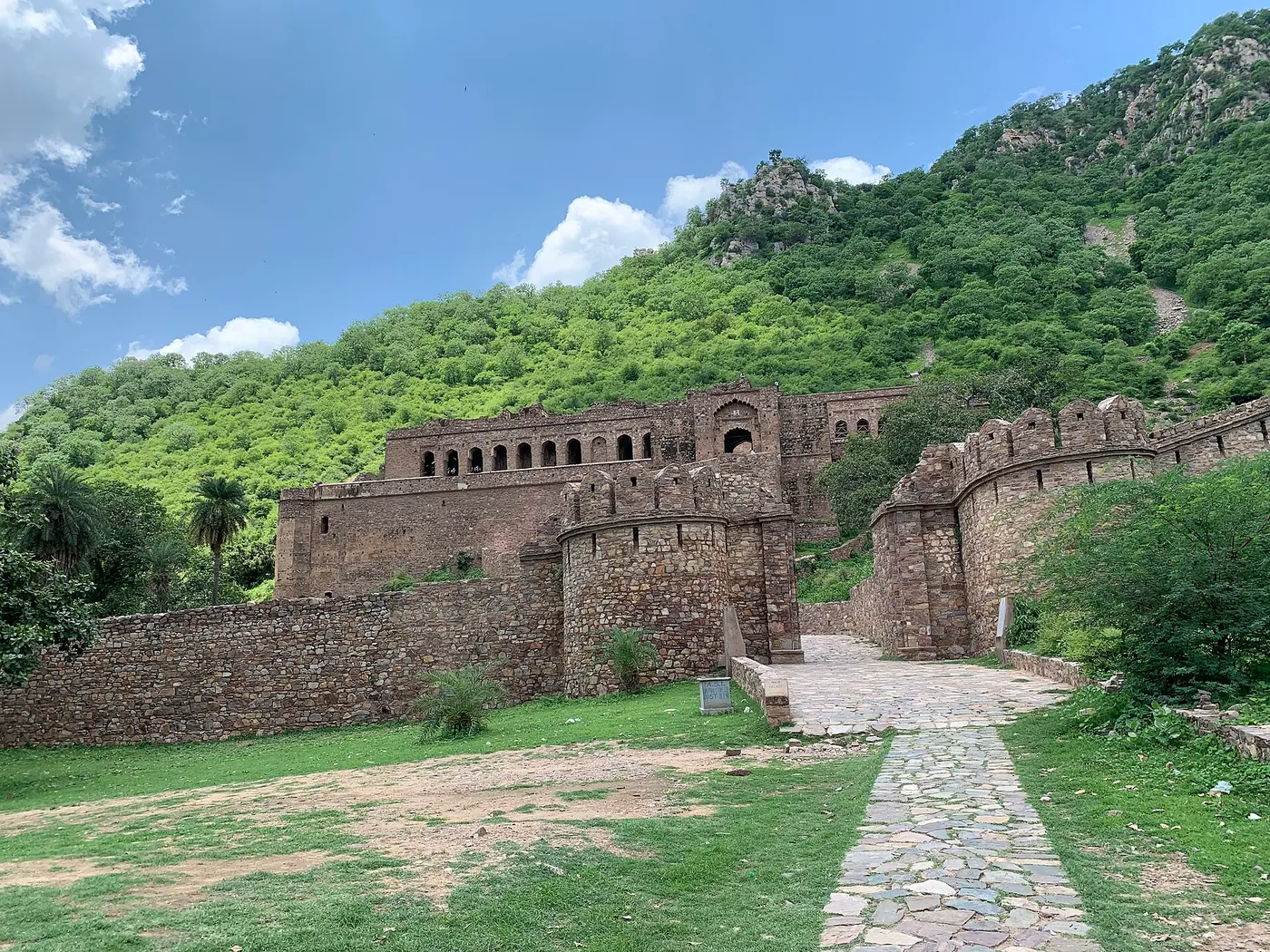
Bhangarh Fort
Bhangarh Fort is a monumental late-16th- to early-17th-century abandoned fortified city located in the Alwar district of Rajasthan, India, situated at the base of the Aravalli Range bordering the Sariska Tiger Reserve. Encompassing the ruins of a multi-tiered royal palace, stone bazaars, defensive bastions, and ornate Hindu temples, the complex is designated as a Monument of National Importance by the Archaeological Survey of India (ASI) and is globally famous as "the most haunted place in Asia."
The Black Lady of Nesvizh Castle
Belarus's best-known ghost is Barbara Radziwiłł, the Polish queen who died in 1551 at twenty-nine. The story goes that her husband Sigismund Augustus was so undone by her death that he had her spirit summoned; the rite went wrong, and she has walked the galleries of the family castle at Nesvizh ever since. The castle is real and on the UNESCO list, tours run daily, and the Black Lady is the one exhibit that does not appear in the museum inventory.
The White Caver
The underground counterpart of the Black Climber, known to everyone who goes into caves across the former Soviet Union. What makes him white is calcite, settled on his clothes over years below ground. Meeting him traditionally means the party has lost the route. Cavers have a half-joking initiation rite for newcomers in which he is described — a rare case of folklore whose carriers know perfectly well it is folklore, and which is none the weaker for it.
The Black Climber
A figure in black who appears in the mountains: in some accounts he helps the lost, in others he leads them off the path. The legend is common to Soviet mountaineering as a whole and has been recorded in the Caucasus, the Tian Shan and the Pamirs; each region has its own version of who he was in life — usually somebody who was abandoned on a rope. The story has a practical point, and it explains its durability: it says out loud what actually happens in mountains, and what that world fears more than dying.
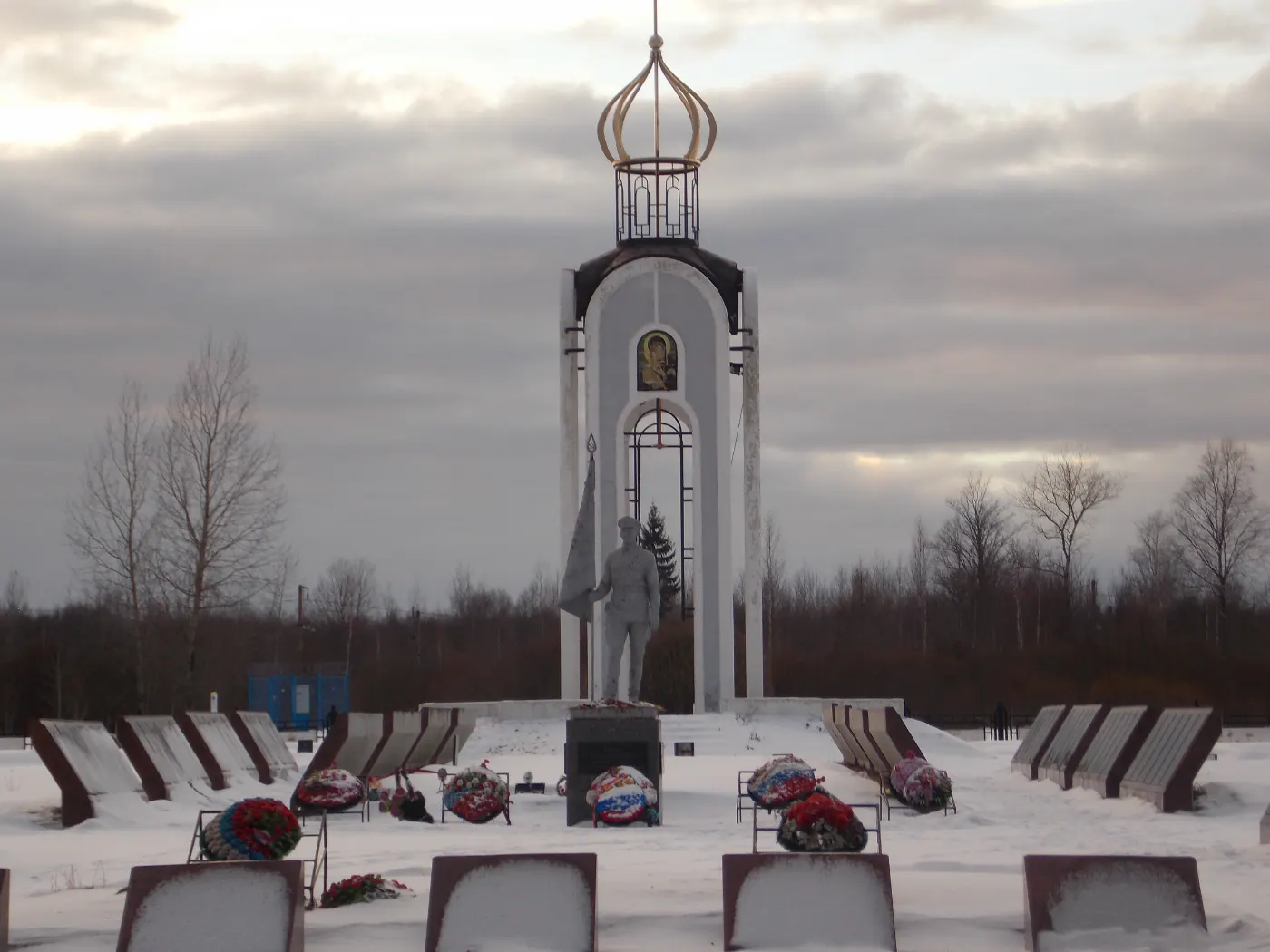
Myasnoy Bor
The Myasnoy Bor tract in the Novgorod Region, grimly known as the "Valley of Death," is a dense, swampy forest that became the site of one of the most harrowing tragedies of the Great Patriotic War. In 1942, during an attempt to break the Siege of Leningrad, brutal fighting unfolded here, claiming the lives of tens of thousands of Soviet soldiers.
Annabelle at the Warrens' museum
The real Annabelle is not the porcelain doll of the films but an ordinary Raggedy Ann of the kind sold by the million in the 1960s. Her history is known solely from the accounts of Ed and Lorraine Warren, who took the doll in 1970 and put it in a glass case in their occult museum in Monroe, Connecticut. There is no independent confirmation of any episode. The museum has been closed to visitors since 2019, but the doll remains one of the most recognisable objects in American popular occultism.
Robert the Doll
A cloth doll in a sailor suit standing behind glass at Fort East Martello in Key West. It was given to the painter Robert Eugene Otto in the early twentieth century, and by family account he talked to it and blamed it for things broken and overturned in the house. The museum now asks visitors to request the doll's permission before photographing it, and the walls around the case are covered with letters from people who did not ask and connect their subsequent misfortunes to that. The doll is real, the museum is real, and there is an admission charge.
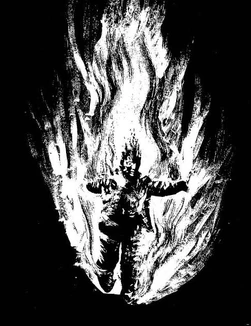
The Char Man of Ojai
The Ojai Valley in Ventura County, southern California, United States—specifically the shaded, winding rural corridor of Creek Road and the adjacent Camp Comfort Park in the Topatopa Mountains foothills. "Char Man" (or Char-Man of Ojai) is one of California's most enduring roadside urban legends, emerging in the mid-20th century against the backdrop of recurrent, devastating chaparral brushfires in the region.
The Green Man of Pennsylvania
The legend of a glowing green faceless man you can meet at night by an abandoned tunnel outside Pittsburgh. There is a real person behind it: Raymond Robinson, who at nine was catastrophically burned by an electric line on a trolley bridge and lost his face and an arm. He lived until 1985 and walked at night so as not to frighten people — while teenagers drove out specifically to find him. The order of events is worth keeping in mind: first there was a man who was unlucky, and only then the ghost story.
The Black-Eyed Children
In 1996 the Texas journalist Brian Bethel posted an account to an internet mailing list about two teenagers who knocked on his car window in an Abilene car park. They asked for a lift, spoke too smoothly, and kept insisting they would not get in without being invited. When he looked up, both had completely black eyes. That one text created a genre: black-eyed children have been reported across the English-speaking world ever since, and nearly every version keeps the detail about the invitation — borrowed straight from vampire folklore.
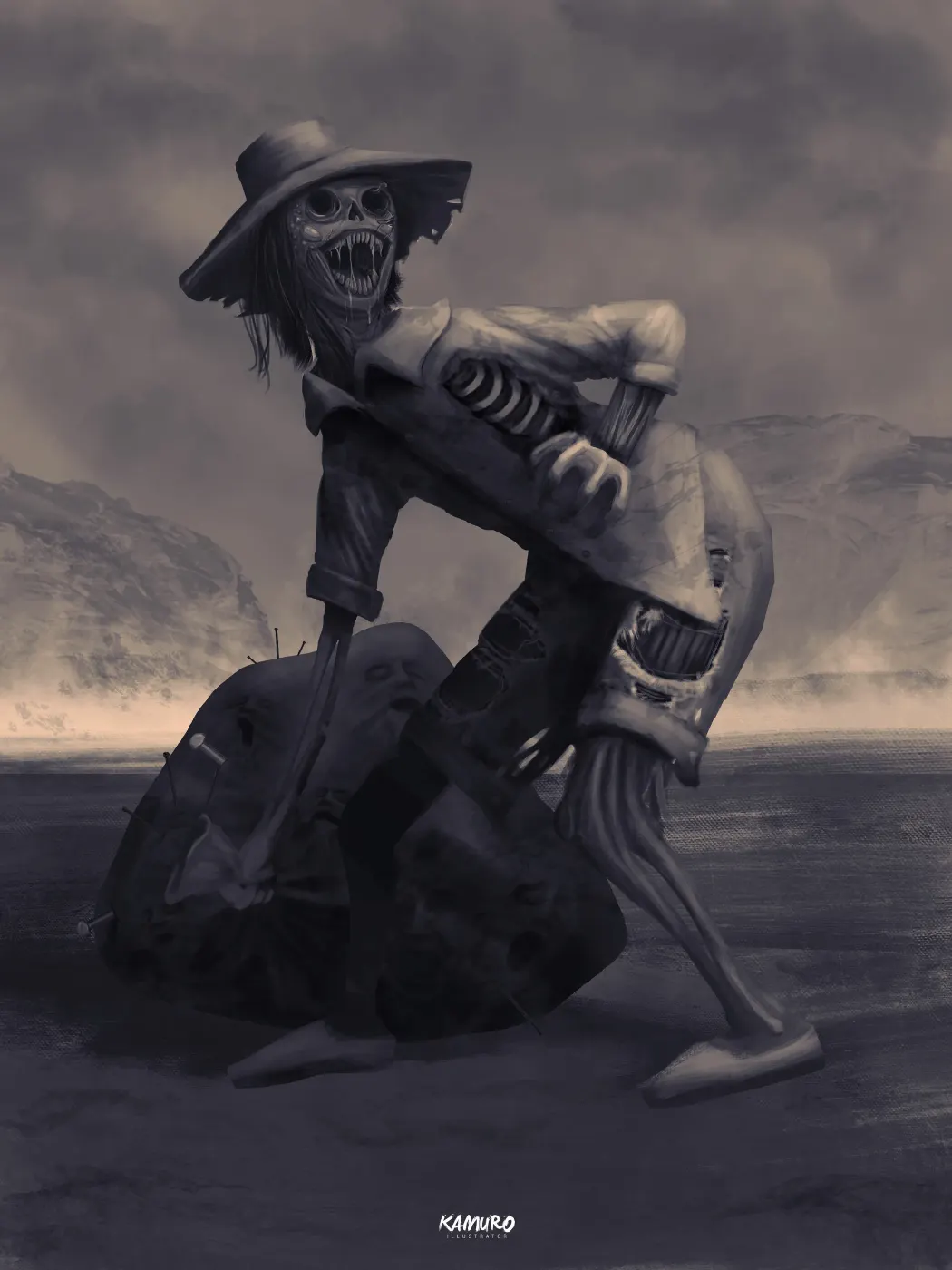
El Silbón, the Whistler
The Llanos (Los Llanos) is a vast expanse of tropical grassland plains and savanna situated within the Orinoco River basin across western Venezuela and eastern Colombia, specifically centered on the municipality of Guanarito in the state of Portuguesa, alongside Barinas and Cojedes. "El Silbón" (The Whistler) is a premier figure of northern South American folklore. Depicted as a roaming spectral patricide bearing a sack of human bones across his shoulder while emitting a chilling tonal whistle, the entity represents a foundational cultural archetype of regional Llanero cattle-ranching lore.
La Llorona, the Weeping Woman
A woman in white who walks beside water weeping for children she drowned herself. The story is known throughout Latin America, but in Mexico City it is fixed to the canals of Xochimilco — the last remains of the lake system Tenochtitlan stood on. The earliest written versions date from the colonial period and braid two layers together: a Spanish tale of an abandoned woman, and pre-Hispanic accounts of a weeping female voice heard before the conquerors came.
Teke Teke
The upper half of a woman's body, moving on its elbows with the clattering sound the legend is named for. The story makes her a schoolgirl cut in two by a train. Its persistence has a simple explanation: in a country with the densest railway network in the world everyone has a level crossing of their own where the legend becomes local. Like most Japanese urban legends of the later twentieth century it spread by word of mouth through schools, long before the internet.
Aka Manto: red paper or blue
Another inhabitant of Japanese school toilets, and the cruellest in construction. A voice from the last cubicle asks which paper you want, red or blue. Choosing red means one thing, blue another, and both are bad; refusing to answer, in most versions, does not save you either. The legend is interesting because it is built as a trap with no exit: there is no right answer, and that is the point — it is the shape of a fear of being asked something you cannot answer correctly.
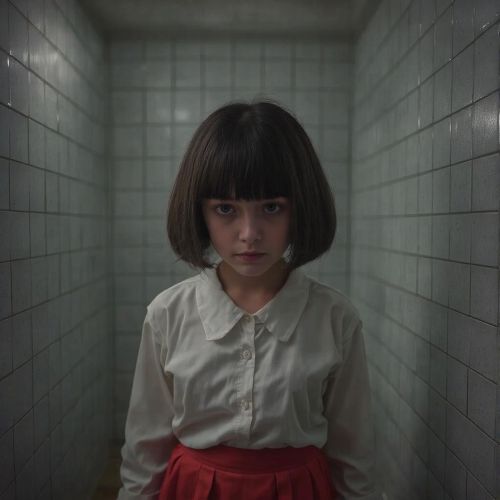
Hanako-san of the school toilet
Restrooms of elementary and junior high schools across Japan (conventionally the third stall on the third floor of the girls' lavatory). Hanako-san (Toire no Hanako-san / "Hanako of the Toilet") is the definitive supernatural entity of modern Japanese school folklore (gakkō no kaidan). Emerging during the post-war decades, the spectral figure evolved into a ubiquitous national myth, synthesizing ancient Shinto animism, the collective trauma of World War II air raids, and adolescent rituals of courage testing (kimodameshi).
Mercy Brown, the Exeter vampire
In 1892 the Brown family of Exeter, Rhode Island, was losing one member after another to tuberculosis. Neighbours convinced the father that one of the dead was feeding on the living, and in March the bodies were exhumed. Two had decomposed; nineteen-year-old Mercy, who had spent the winter in a cold crypt, had not. Her heart was burned, the ashes mixed with water and given to her dying brother to drink. He died two months later. The case is the last and best-documented episode of the New England vampire panic — an attempt to explain an epidemic for which people had no other language.
Resurrection Mary
America's best-known vanishing hitchhiker. Since the 1930s drivers on Archer Avenue outside Chicago have told the same story: a fair-haired girl in a white ball gown asks for a lift, says nothing the whole way, and disappears from the car opposite the gates of Resurrection Cemetery. Attempts have been made to attach the story to several real girls who died young, and none of the versions fits the details. The vanishing-passenger plot is older than the motor car — it is known from tales of horse-drawn carriages — but the Chicago version is fixed to one road and one gate.
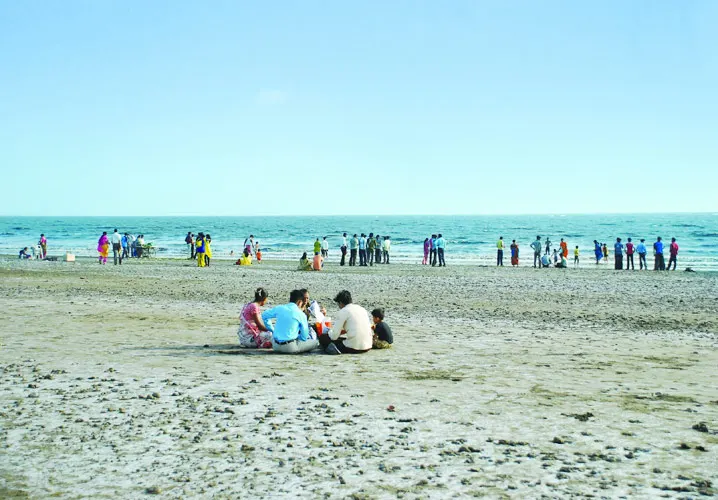
Dumas Beach
A black sand beach on the Gujarat coast, long used as a Hindu cremation ground. Local accounts have the sand black from ash, and voices and laughter heard from the beach at night; disappearances are attributed to people who went walking along the waterline after dark. The authorities close the beach at night, which does the reputation nothing but good.
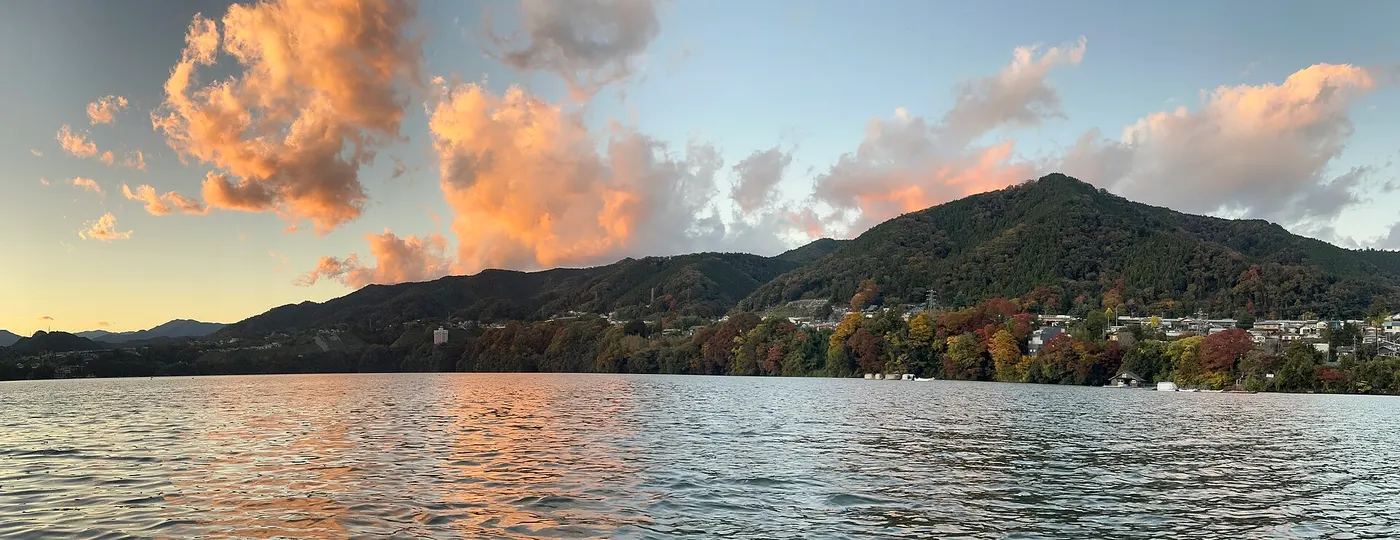
Lake Sagami
An artificial lake in Kanagawa Prefecture, made in 1947 by flooding a valley — houses and a stretch of road remain beneath the water. It was the first reservoir built in Japan after the war. It has acquired a reputation as a place people do not come back from: drownings and suicides here run notably above average, and local accounts tie that to the drowned village.

Oiran Buchi
A gorge in Yamanashi Prefecture attached to one of Japan's grimmer traditions. In the sixteenth century, the account goes, when the Kurosawa gold mine was closed, fifty-five courtesans who knew the layout of the workings were led onto a suspended platform above the river — and the ropes were cut. There is nothing to confirm it historically, but the site is formally treated as a place of remembrance, and the bridge has the reputation to match.
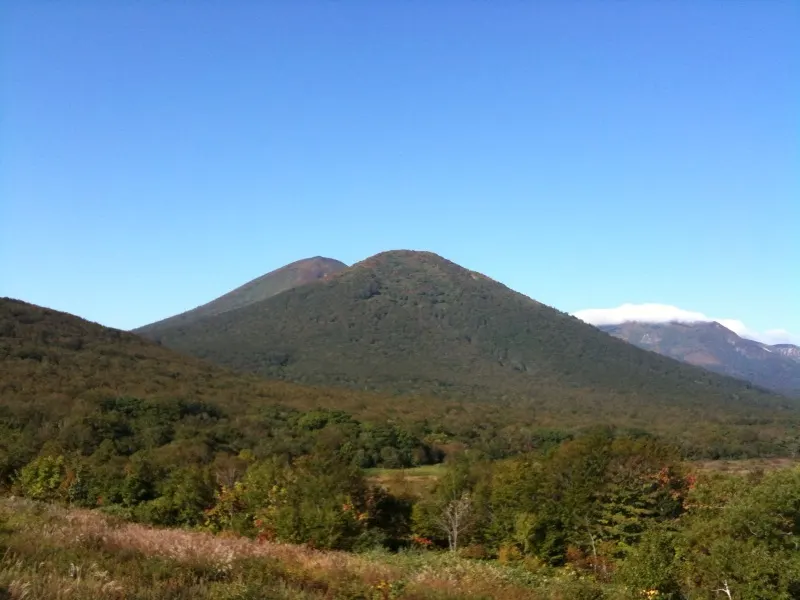
The Hakkōda Mountains
Mountains in northern Honshū where, in January 1902, an army unit was almost wiped out on a training march: of two hundred and ten men, eleven survived. A blizzard of exceptional force caught them and some froze standing up. It remains the worst disaster in the history of mountain travel. The place is called one of the bleakest in Japan, and accounts of meeting soldiers on the trail are unremarkable here.
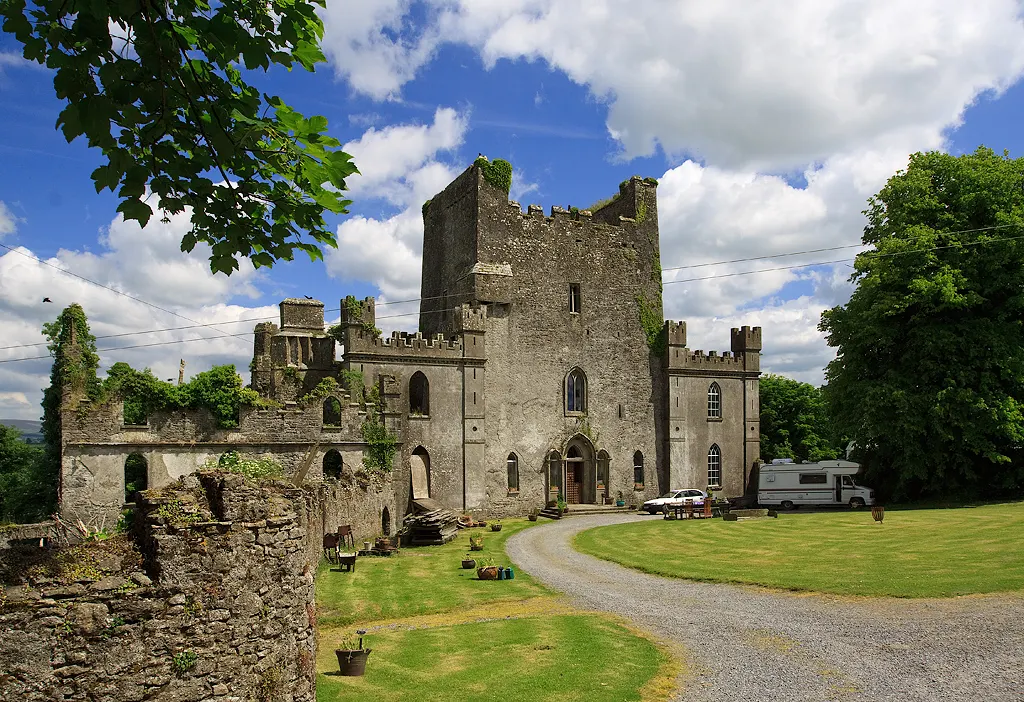
Leap Castle
A castle in County Offaly held by the O'Carroll clan, where in 1532 one brother stabbed another — a priest — at the altar during mass. The room has been called the Bloody Chapel since. During repairs in the early twentieth century an oubliette was opened beneath it, spikes at the bottom; the remains filled three cartloads. Separately there is the Elemental, an entity whose arrival is said to come with a smell of decay and sulphur.
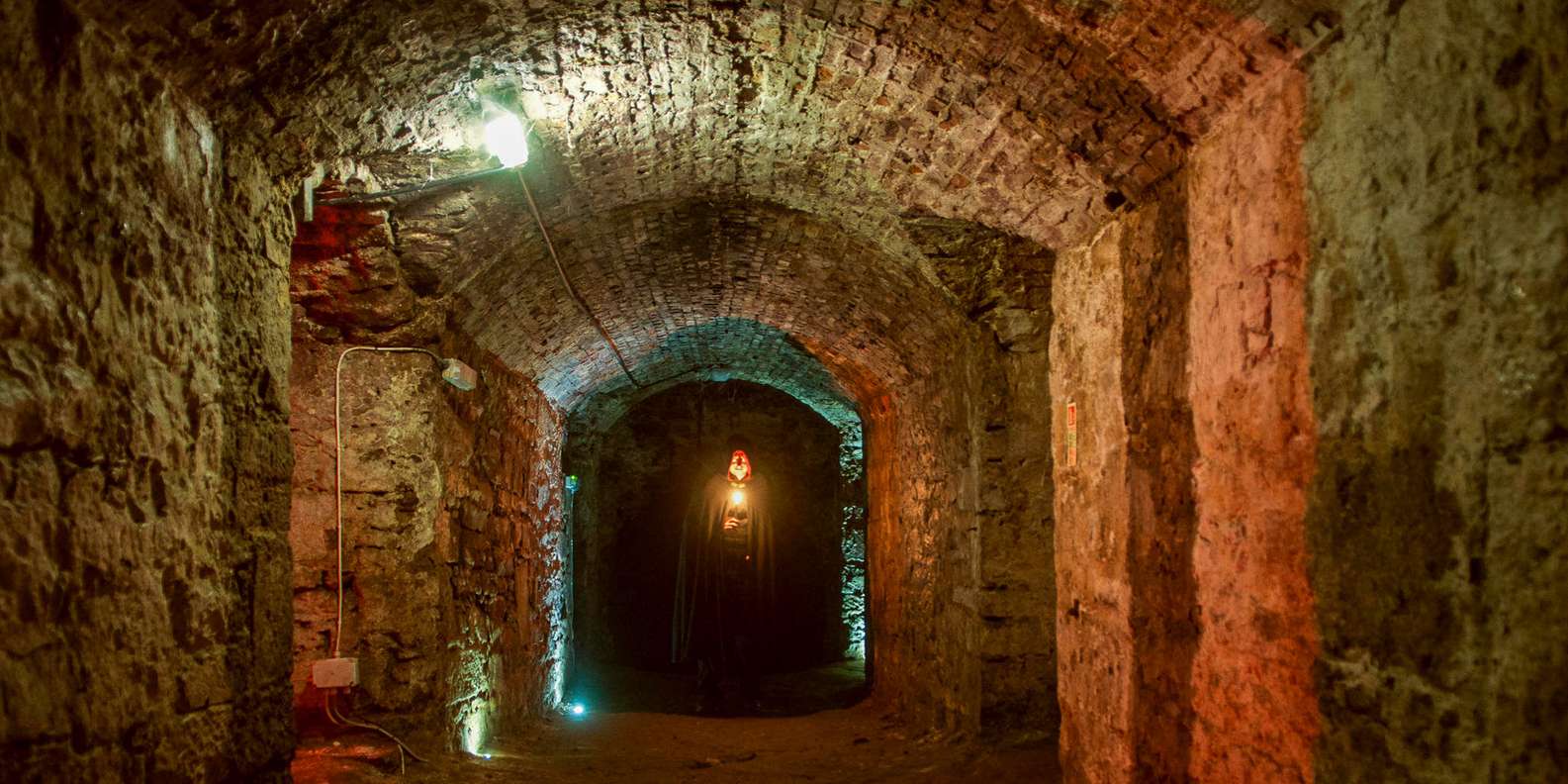
The Edinburgh Vaults
The Edinburgh Vaults (commonly known as the South Bridge Vaults) are an extensive subterranean labyrinth comprising approximately 120 stone chambers integrated inside the 19 massive masonry arches of the South Bridge viaduct in the Old Town of Edinburgh, Scotland, United Kingdom. Completed in the late 18th century to span the steep Cowgate ravine, the interior chambers were originally engineered as commercial storerooms and workshops. Rapidly rendered unlivable by catastrophic water infiltration, the vaults devolved into notorious subterranean slums, were abandoned and sealed in the mid-19th century, and lay forgotten for over a century. Since their rediscovery in the 1980s, the complex has gained international infamy as one of Europe's most prominent paranormal and dark-tourism hotspots.
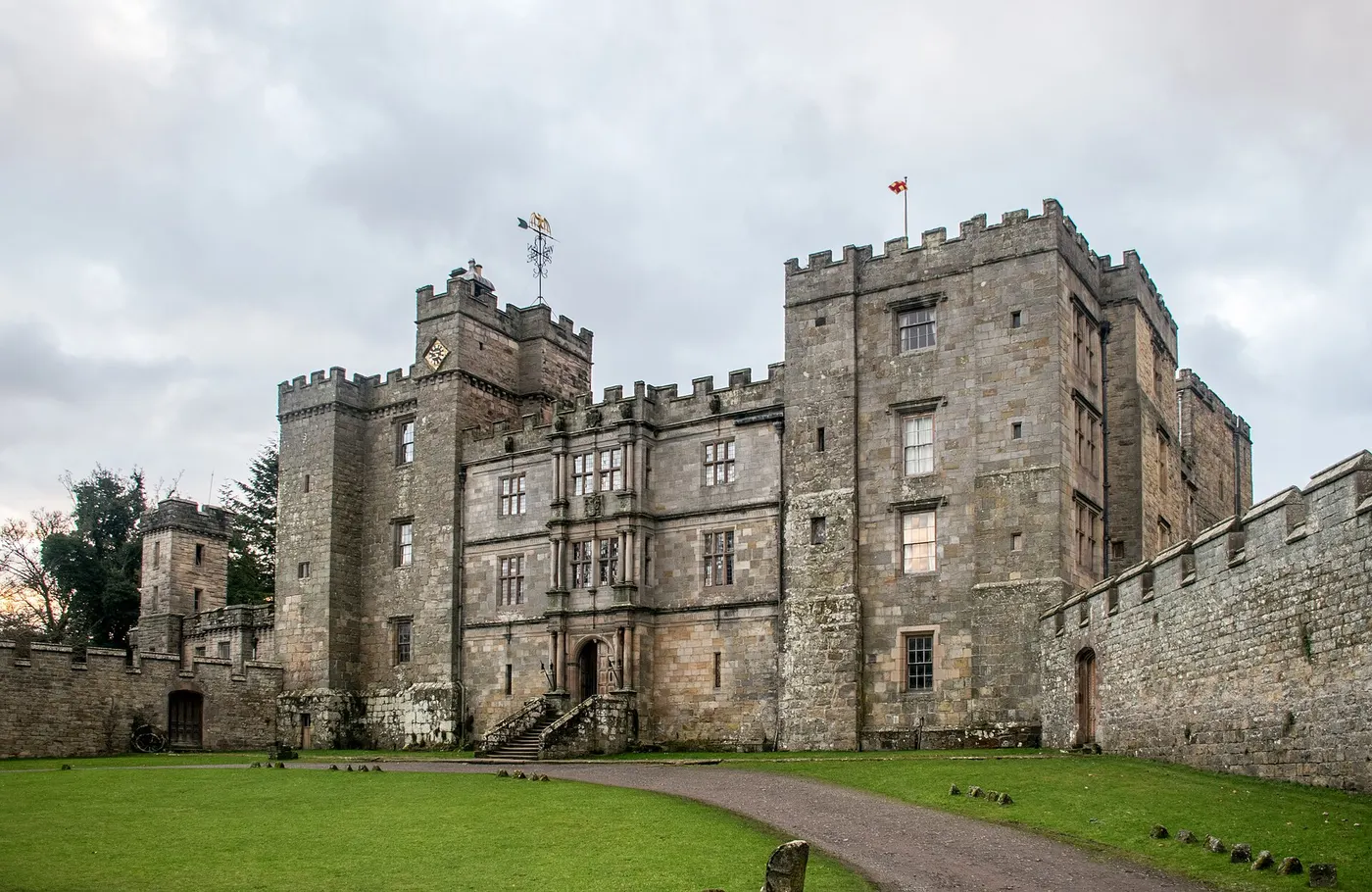
Chillingham Castle
A thirteenth-century castle in Northumberland on the Scottish border, where captured Scots were held and tortured for centuries — the torture chamber survives with its instruments. Its best-known figure is the Radiant Boy, a bluish glow by a wall of the Pink Room; during repairs a child's bones and a scrap of blue cloth were found bricked into that wall. After reburial, the owners say, it stopped.