All places
The full catalogue of approved places — abandoned buildings, anomalous zones, UFO sightings. Sort by rating, recency or discussion, and narrow it by category.
494 places
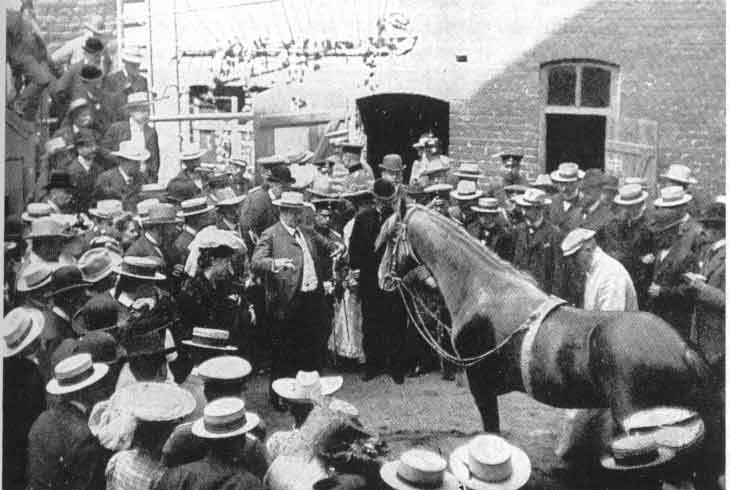
Clever Hans
The residential inner courtyard at 10 Griebenowstraße in the Mitte district of Berlin, Germany. At the turn of the 20th century, this urban setting hosted public demonstrations of the Orlov Trotter stallion known as Clever Hans (Der Kluge Hans). The horse's apparent mastery of arithmetic and human language captivated international audiences, revolutionized animal cognition research, and led to the discovery of the observer-expectancy effect ("Clever Hans effect").
The Hindu Milk Miracle
On the morning of 21 September 1995 word went round Delhi that statues of Ganesha were drinking milk from a spoon. By midday milk was being offered to images all over India, and then in temples in Britain, Canada and Nepal; Delhi sold out of milk and the traffic stopped. That same day India's Ministry of Science and Technology sent a team to the temples, which showed that the milk leaves the spoon through surface tension and the capillary action of porous stone and marble, and then runs down the statue in a thin film. When food colouring was added to the milk the trace became visible over the whole figure. By the evening of the next day the phenomenon had stopped of itself.
The Bleeding Cross of Vile Parle
In March 2012 water began dripping from the feet of a crucifix outside the church of Our Lady of Velankanni in the Mumbai district of Vile Parle; thousands came, collecting the water in bottles and drinking it. The rationalist Sanal Edamaruku arrived with a television crew, followed the damp patch on the wall behind the cross and found a blocked washbasin drain in the room behind it: the water was rising by capillary action through porous concrete and coming out through the figure's foot. He demonstrated it live on air. The Catholic archdiocese of Mumbai filed a complaint against him for outraging religious feelings, and Edamaruku, facing arrest without bail, left for Finland.
The Philip Experiment in Toronto
In 1972 the Toronto Society for Psychical Research ran the experiment backwards: instead of looking for a real ghost, eight people under Iris Owen invented one. They wrote the biography of a seventeenth-century English aristocrat, Philip Aylesford, gave him a castle, a gypsy mistress and a suicide, drew his portrait — and sat for a year addressing a character they had made up themselves. In the second year the raps began, the table moved and rose, and all of it was filmed in front of a studio audience. The point of the experiment was precisely that Philip had never existed: the group obtained the classic phenomena of the séance room from a knowingly fictional spirit.
The Balloon Boy
On 15 October 2009 a homemade balloon shaped like a silver flying saucer rose from a garden in Fort Collins. The father, Richard Heene, said his six-year-old son Falcon was inside. The National Guard put helicopters up, Denver airport held flights, and the country watched two hours of live coverage. The balloon landed empty, the boy was found at home in the attic, and that evening in a CNN studio he told his father: you said we did this for the show. Heene, who had appeared in a reality programme about hunting UFOs, pleaded guilty in a Colorado court, served ninety days and paid $36,000 in restitution to the emergency services.
Grovers Mill and the Panic That Wasn't
On 30 October 1938 Orson Welles broadcast his radio version of The War of the Worlds on CBS, with Martians landing at the village of Grovers Mill in New Jersey — and the next morning the papers wrote of millions of Americans fleeing their homes. That second story was taken apart later. The C. E. Hooper ratings service polled five thousand people that evening: about two per cent were listening, and almost none of them called it news. The historians Jefferson Pooley and Michael Socolow showed that the scale of the panic was invented by the newspapers themselves — print was losing advertising to broadcasting and was glad to prove that radio was dangerous. The monument to the Martians at Grovers Mill was put up in 1988.
The Great Moon Hoax
From 25 August 1835 the New York Sun ran a series of six articles reporting that Sir John Herschel, from the Cape of Good Hope, had seen life on the Moon through a new telescope: forests, herds of bison, temples of sapphire and intelligent winged people four feet tall, which he called Vespertilio-homo. The material was presented as a reprint from the Edinburgh Journal of Science, which had by then been out of print for years. The Sun's circulation rose to fifteen thousand, the largest in the world. The author was the reporter Richard Adams Locke, writing satire on the fashionable speculation about inhabitants of the planets; the paper never printed a retraction, and Herschel learned of his discovery by post.
Operation Blackbird
In the summer of 1990 the BBC and Japan's Nippon TV, with the British Army, set up round-the-clock surveillance of the fields near Bratton in Wiltshire: image intensifiers, thermal cameras, radar and a camp on the hill. It was called Operation Blackbird and broadcast live. On the fifth morning, 25 July, a flawless pattern of circles was found in the field beneath the cameras, and the breakfast bulletin went out announcing a breakthrough. Within hours it emerged that a wooden Ouija board and a cross of sticks lay at the centre of each circle: a hoax carried out in the night directly under observation. None of the equipment had recorded anything at all.
Cheesefoot Head and the First Crop Circles
Circles in wheat began appearing in Hampshire and Wiltshire in the late seventies; they were explained by plasma vortices, landing craft and earth energies, and by the end of the eighties scientists and television crews were driving out to the fields. On 9 September 1991 the newspaper Today printed the confession of two pensioners from Southampton, Doug Bower and Dave Chorley: they had been making the circles at night since 1978, starting near Cheesefoot Head, where Bower had bet in a pub that he could cause a commotion. The tool was a plank on a rope pulled with the foot, and a wire sight on a cap to keep the line straight. In front of reporters they made a circle that the leading researcher Pat Delgado immediately pronounced genuine.
The Paulding Light
On a cleared corridor beneath a power line near Paulding in Upper Michigan, a single light has been seen at the far end on evenings since 1966: by tradition the lantern of a brakeman crushed by a train. The spot became a tourist site and the Forest Service put up a sign. In 2010 students from Michigan Technological University turned a telescope on the light and saw cars in the eyepiece, running on Highway 45 near Dog Meadow eight kilometres away — headlights, sidelights and brake lights all distinguishable. They then drove a car out there and flashed its lights to order over the radio: the light flashed back. An inversion layer over the corridor lifts the headlight beams above the terrain and compresses them into a single point.
The Sailing Stones of Racetrack Playa
On the dry lake of Racetrack Playa in Death Valley, stones weighing up to three hundred kilograms leave furrows hundreds of metres long, sometimes parallel, sometimes turning at right angles. Since 1948 magnetic fields, hurricanes, algae and human interference had all been proposed; nobody had ever seen one move. In 2011–13 Richard and James Norris put GPS units on the stones and a weather station with time-lapse cameras beside them. On 20 December 2013 they watched it happen: after rain the playa freezes over a few millimetres thick, the ice breaks by day into floating panels, and a wind of four or five metres per second is enough for the floes to push the stones at walking pace.
The Bosnian Pyramids at Visoko
In 2005 the businessman Semir Osmanagić announced that the hill of Visočica above the town of Visoko was the oldest pyramid in the world, 220 metres high and built twelve thousand years ago, and began excavating on donations and municipal money. In 2006 the European Association of Archaeologists issued a formal statement, signed by four leading European archaeologists, calling the project a cruel hoax and demanding a halt to work that was destroying genuine medieval and Roman layers on the hill. Geologists described Visočica as a flatiron — a natural landform of Miocene conglomerate, of which the valley has several; the paved slabs proved to be fractured sandstone.
The Mystery Spot at Santa Cruz
An attraction in the woods above Santa Cruz, opened in 1939: inside a leaning cabin balls roll uphill along a board, people change height standing on one plank, and nobody can stand straight. The owners explain it with carbon dioxide from a buried spacecraft and a break in gravity. The cabin is built at about twenty degrees and dug into the hillside, and its windows and doorframes are skewed so that not one true vertical is visible anywhere. The brain takes the walls of the room as vertical rather than the plumb line, and every effect — the uphill ball, the difference in height — reproduces in any of the dozens of such buildings around the world, including one in the next county.
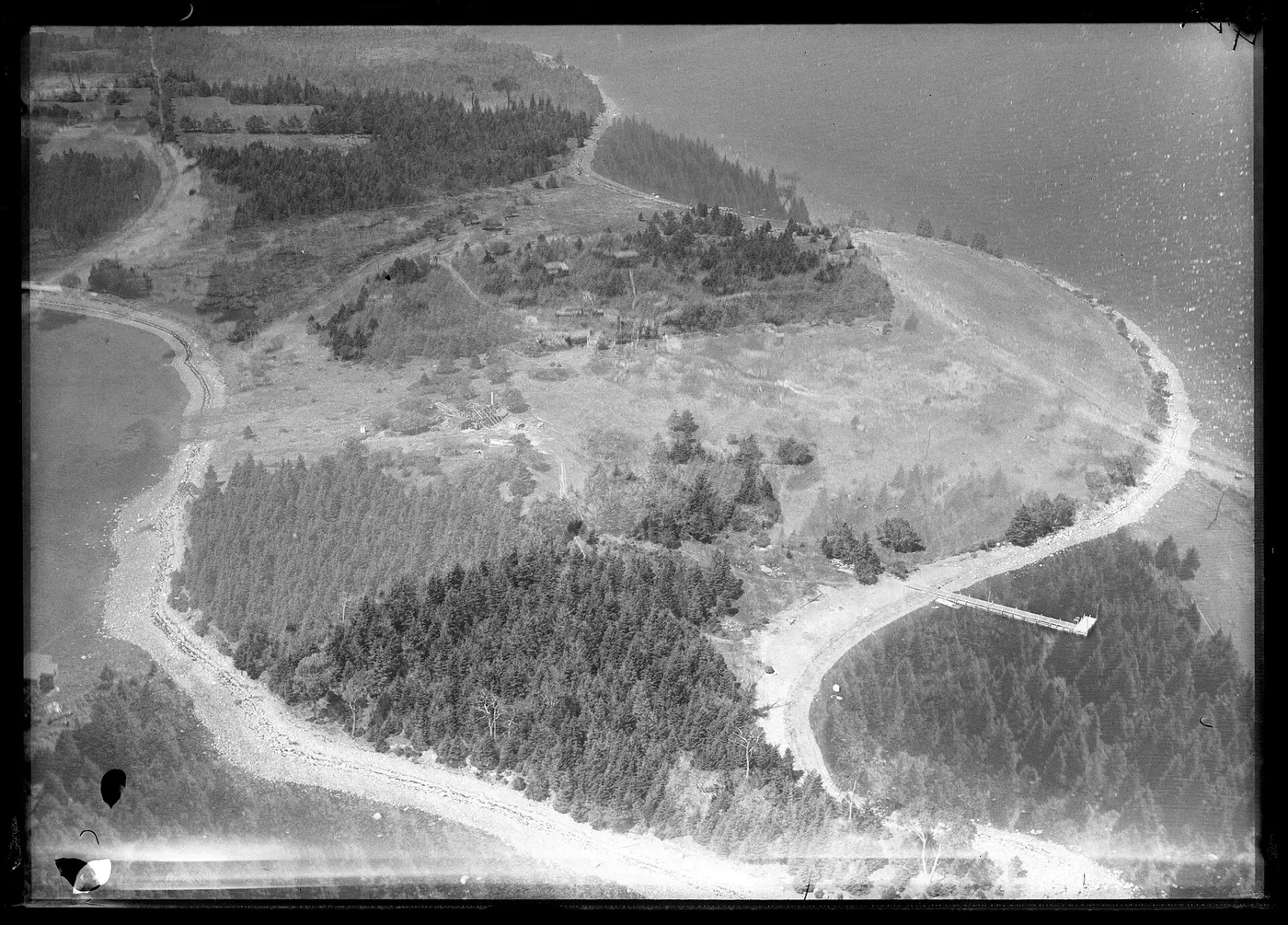
The Oak Island Money Pit
Oak Island is a small, 140-acre tree-covered island situated in Mahone Bay off the Atlantic coast of Nova Scotia, Canada. The island achieved global renown as the site of the "Money Pit"—an enigmatic subterranean shaft where treasure hunters, syndicates, and media ventures have spent hundreds of years and millions of dollars conducting the longest, most expensive treasure hunt in modern history.
The Bimini Road
In 1968 divers off North Bimini in the Bahamas found, at five metres, a half-kilometre line of rectangular limestone blocks laid out straight. Its coincidence with Edgar Cayce's prophecy that Atlantis would appear off Bimini in exactly 1968 made the find famous. The USGS geologist Eugene Shinn cored the blocks through: the internal bedding of adjacent stones continues from one to the next as in a single slab, and the radiocarbon dates increase steadily along the line. It is beachrock, cracked into rectangles as it dried, and it occurs on coastlines everywhere.

The Baltic Sea Anomaly
The Baltic Sea anomaly is an unusual disc-shaped geological formation measuring roughly 60 meters in diameter, resting at a depth of 85 to 90 meters on the seafloor of the Gulf of Bothnia between Sweden and Finland. Discovered via side-scan sonar in June 2011 by the Swedish salvage team Ocean X, the structure visibly echoed the silhouette of a fictional spacecraft, triggering an international ufological sensation and years of alternative speculation.
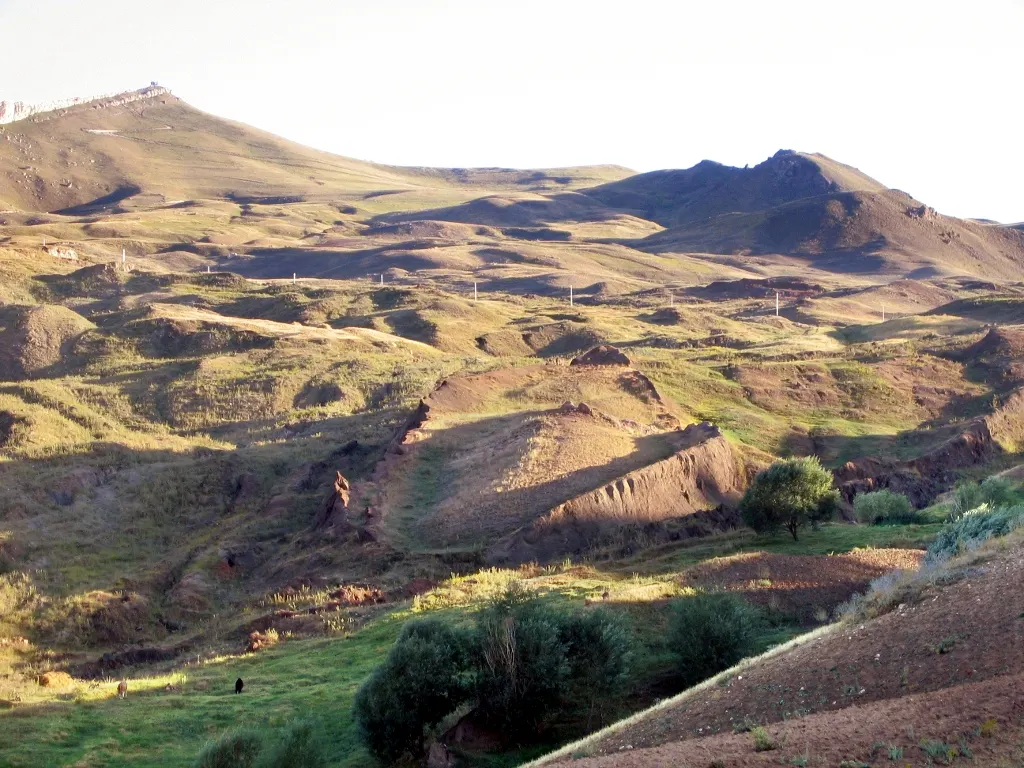
The Durupınar Formation, the Ark
The Durupınar site is a natural geological formation resembling the hull of a massive ship, roughly 160 meters (538 feet) long, situated in the Tendürek Mountains of eastern Turkey. Located 30 kilometers south of Mount Ararat, the outcrop has been promoted for decades by creationists and alternative theorists as the petrified remains of Noah's Ark.
The Curse of the Hope Diamond
The 45-carat blue diamond on show at the Smithsonian in Washington is famous as a stone that destroys its owners: prised from the eye of an Indian idol, it sent Marie Antoinette to the scaffold and ruined the Hope family. The Smithsonian historian Richard Kurin followed every episode through the documents and showed that the legend was assembled and sold by Pierre Cartier around 1910 to persuade Evalyn Walsh McLean to buy the stone — she had told him herself that unlucky things brought her luck. Half the victims never owned the diamond and some never existed. The stone really was cut from the French Blue of the crown jewels, but it was stolen from a storeroom in 1792, not taken from an idol.
The Curse of Tutankhamun
After the opening of tomb KV62 in the Valley of the Kings in 1922–23, and Lord Carnarvon's sudden death from blood poisoning following a mosquito bite, the newspapers announced the pharaoh's curse and attributed to it every death with any connection to the excavation. There is no curse inscription in the tomb. As early as 1934 the Egyptologist Herbert Winlock counted: of the twenty-six people present at the opening, six died within ten years. In 2002 Mark Nelson of Monash University published a study in the British Medical Journal of forty-four westerners who were in Egypt: the survival of those who entered the tomb and those who did not was the same. Howard Carter lived seventeen years after the dig.
The Unlucky Mummy and the Titanic
The painted coffin lid of a priestess of Amun-Ra, acquired by the British Museum in 1889 as EA22542. By the early twentieth century a story had grown around it: everyone who owned it was ruined or died, the photographer who took its picture shot himself, and in April 1912 the museum was said to have shipped it secretly to America aboard the Titanic. None of it happened. The lid is a flat board, not a mummy, and no body was ever attached to it; it has not left London except for wartime and 1990s storage, as the accession registers show. The story was got up privately by the journalist Bertram Fletcher Robinson and the editor W. T. Stead, who liked to tell it at dinner; Stead himself died on the Titanic.
The Shroud of Turin
A linen cloth over four metres long bearing the image of a man, kept in the cathedral of St John the Baptist in Turin since 1578. Its first documentary appearance is at Lirey in France around 1355, and already then the bishop of Troyes, Henri de Poitiers, wrote to the pope that the artist who made it had confessed. In 1988 a sample was cut from the cloth and divided between three independent laboratories — Oxford, Zurich and Arizona — blind, with control fabrics. All three returned the same interval: 1260 to 1390. The result was published in Nature. The Catholic Church has never declared the shroud a genuine relic and describes it as an icon for veneration.
The Piri Reis Map and the Antarctic Coast
In 1929 a surviving fragment of a map drawn by the Ottoman admiral Piri Reis in 1513 was found in the Topkapı Palace in Istanbul. Charles Hapgood, and Erich von Däniken after him, announced that the southern part of the map showed the coast of Antarctica beneath its ice, surveyed from the air by an unknown civilisation. Piri Reis wrote his sources on the margin himself: some twenty portolans, Arab charts and a map of Columbus. The southern line on his sheet is the east coast of South America, bent eastward because the parchment ran out — a device found on other portolans of the period. It bears no resemblance to the true sub-glacial topography of Antarctica established by seismic survey.
The London Hammer
In 1936 Mr and Mrs Hahn, walking by a waterfall on Red Creek near the town of London in Texas, picked up a lump of rock with a piece of wood sticking out of it. The stone was later split and an iron hammer with a wooden handle was inside. The creationist Carl Baugh bought it and opened a museum, announcing it as the tool of an antediluvian man hundreds of millions of years old. The surrounding rock is not Ordovician sandstone but a calcium carbonate concretion, which forms around iron in a matter of years and is common in that creek. The hammer itself matches a pattern of miner's tool mass-produced in Texas in the nineteenth century.
The Coso Artifact
On 13 February 1961 three rock dealers from Olancha, collecting geodes in the Coso Mountains, cut open a concretion and found a ceramic cylinder inside with a metal shaft down the middle and a copper sheath. Geologists they consulted put the rock at half a million years, and the find entered the literature as an extraterrestrial spark plug. In 1999 Pierre Stromberg and Paul Heinrich showed X-rays of it to the Spark Plug Collectors of America: the members identified a Champion plug of the 1920s, with its characteristic thread and ceramic insulator. Concretions of clay and rust grow around iron in decades, not epochs.