Green level — mystical places on the map
Real places with nothing on their record — nothing that is reported to have happened to anybody. A history, a rumour, an atmosphere, a building with a past: the story is about the place itself rather than about what it does to whoever walks in. Most of the catalogue sits here, and that is the honest answer rather than a dull one.
138 placesAbout the danger levels
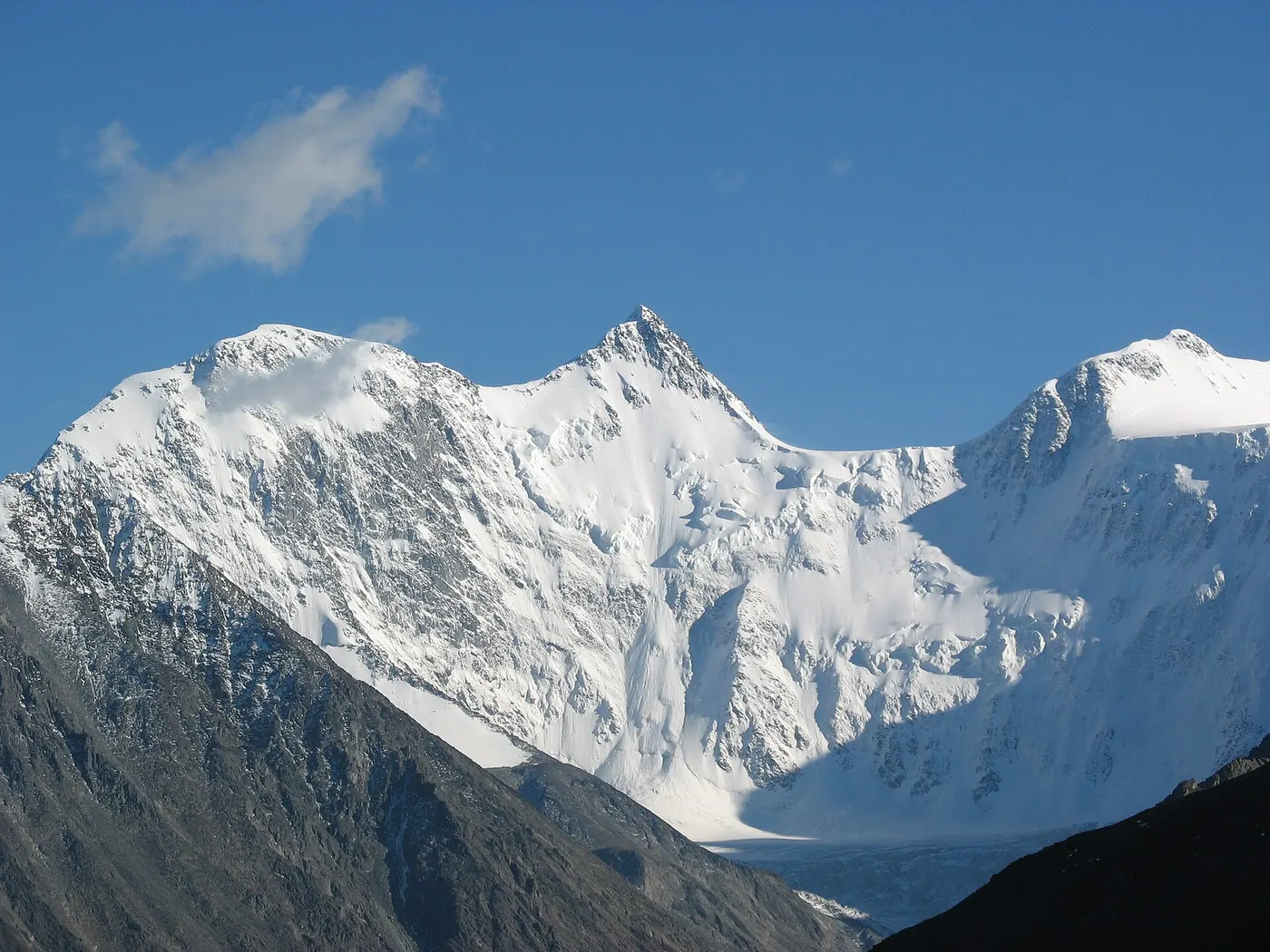
Mount Belukha
The highest point of the Altai, which the Altaians call Uch-Sumer and hold to be forbidden: one did not climb it, or speak loudly at its foot. Nicholas Roerich came here in 1926 and tied the mountain to Belovodye and Shambhala; his paintings made Belukha the centre of a Russian esoteric pilgrimage that has not dried up. The peak stands almost equidistant from three oceans — a fact the esotericists are fond of citing.
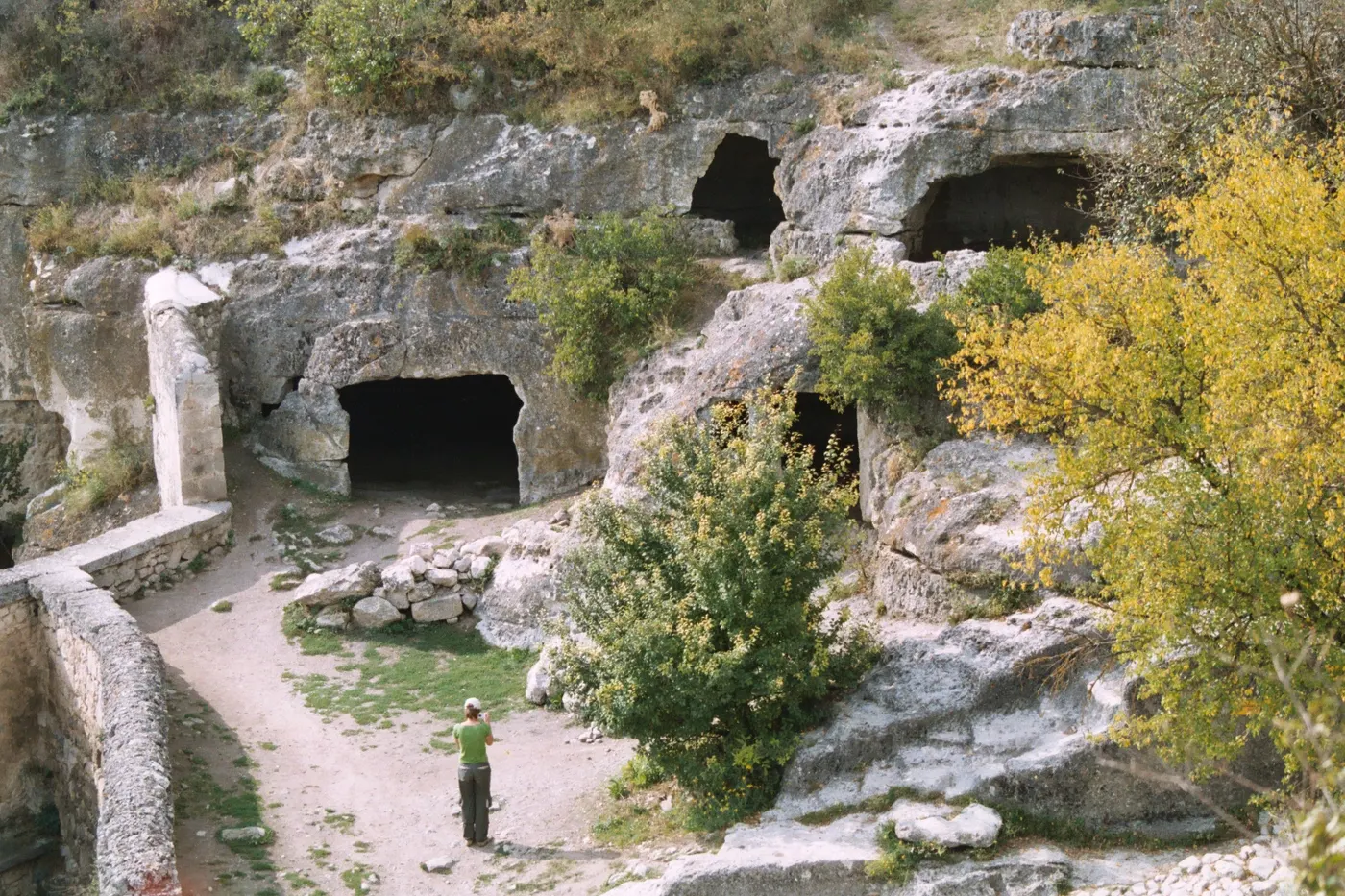
Chufut-Kale
A cave town on a Crimean plateau, inhabited from the sixth century and abandoned in the nineteenth. The name means Jewish fortress — the Karaites were the last to live here. Houses, cisterns, a prison and the mausoleum of the khan's daughter Canike Hanım are cut into the rock. Beside it lies the Karaite cemetery of Balta Tiymez, "the axe shall not touch" — a protected oak grove where felling was absolutely forbidden, which is why it outlived every wood around it.
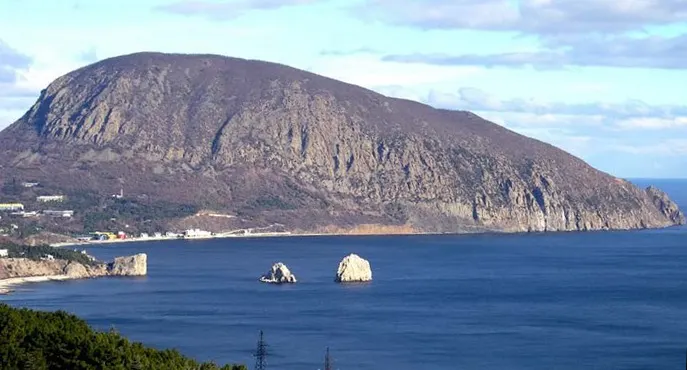
Ayu-Dag, the Bear Mountain
A volcano that never happened on Crimea's south coast: the magma rose but never broke out and set as a dome. From the sea the mountain reads as an enormous bear drinking. A Crimean legend takes that literally — the leader of a bear pack turned to stone, punished for trying to drink the sea dry rather than let a runaway girl go. Remains of a medieval monastery and fortifications survive on it, and the magnetic field in places pulls a compass off true.
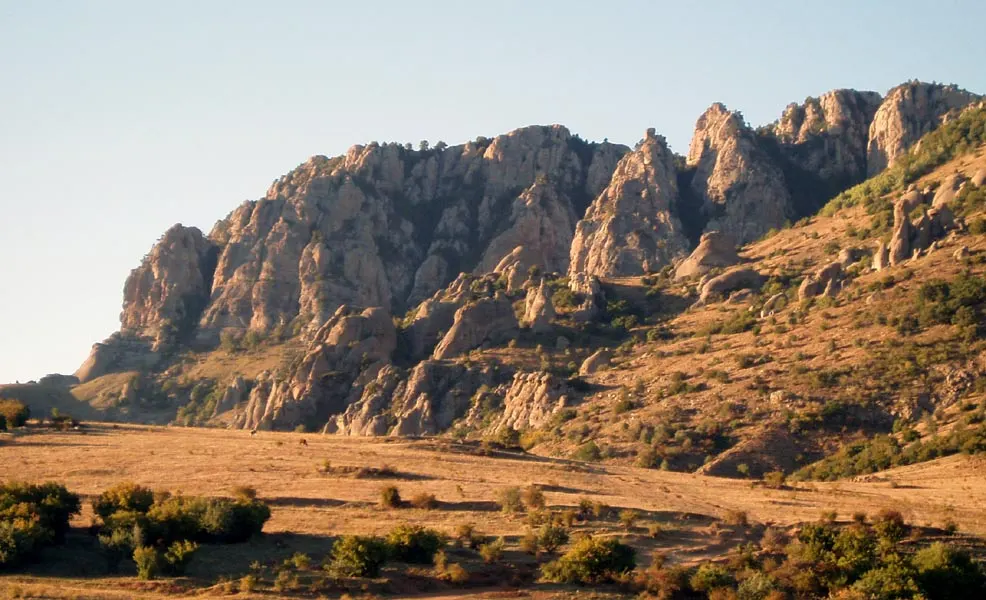
The Valley of Ghosts on Demerdzhi
A slope of the Crimean mountain Demerdzhi scattered with hundreds of stone pillars up to twenty-five metres high — conglomerate from which the rain has washed the softer rock. In mist and at sunset the shapes read as people and animals, and the outlines shift with the light. A Crimean Tatar tradition explains them by the curse of a blacksmith who settled on the mountain; the name means blacksmith. In 1966 the mountain slid and buried part of the village of Lavanda.
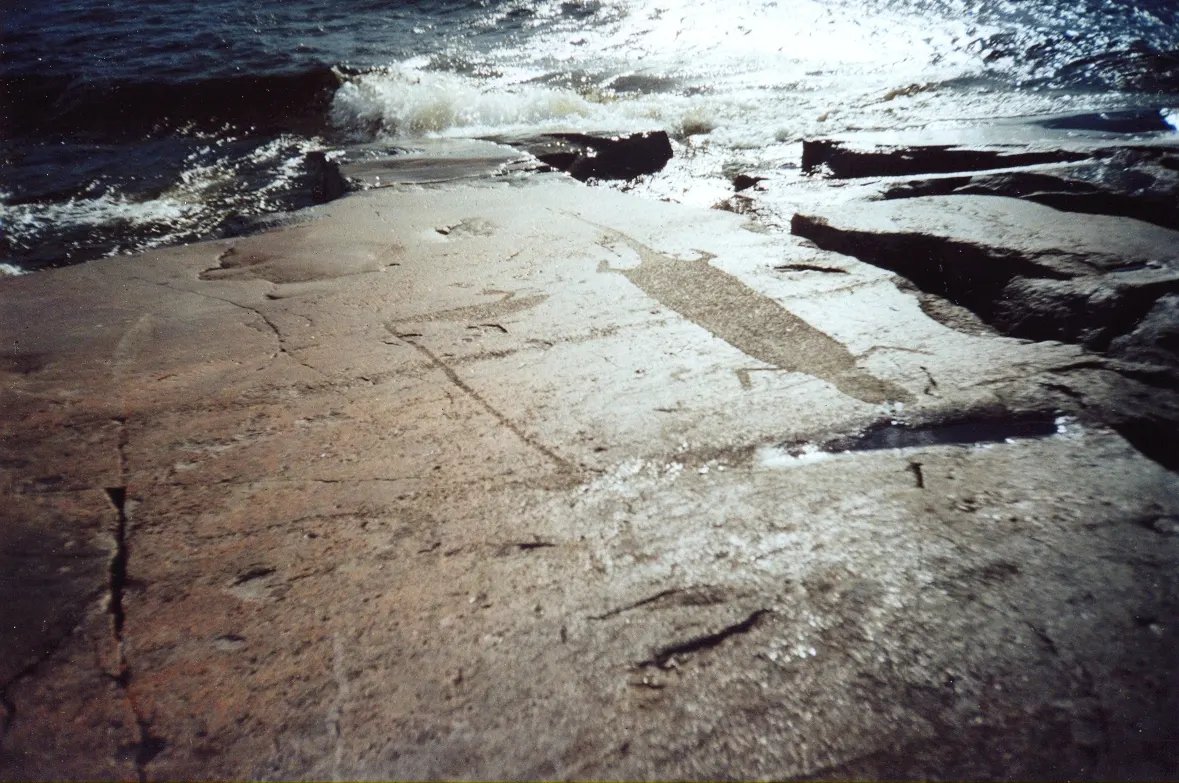
The Onega Petroglyphs and the Demon
Carvings on the shore rocks of Lake Onega, cut five or six thousand years ago. The best-known figure is the Bes — a humanoid nearly two and a half metres tall, split down the middle by a natural fissure. Monks of the Murom monastery cut a Christian cross over it in the fifteenth century to neutralise it, and both marks remain side by side on the stone, which makes this rock a rare document of one faith writing over another.
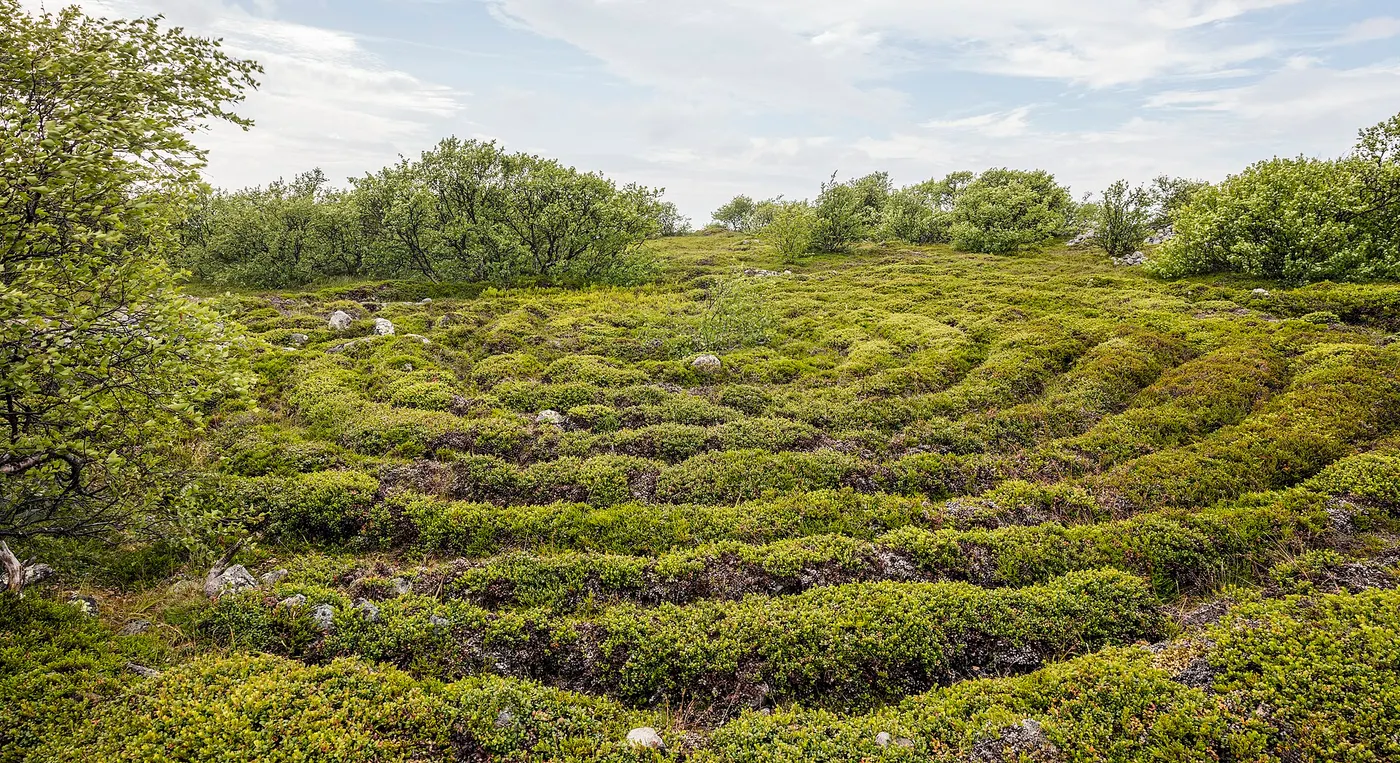
The Solovetsky Labyrinths
Boulder spirals on the Solovetsky Islands, laid out three or four thousand years ago. There are around thirty, the largest twenty-five metres across. There are no branches — one winding path to the centre and back. The accepted explanation ties them to burial rites and to keeping a soul from finding its way back to the living: stone heaps with burnt bone are found beside them.
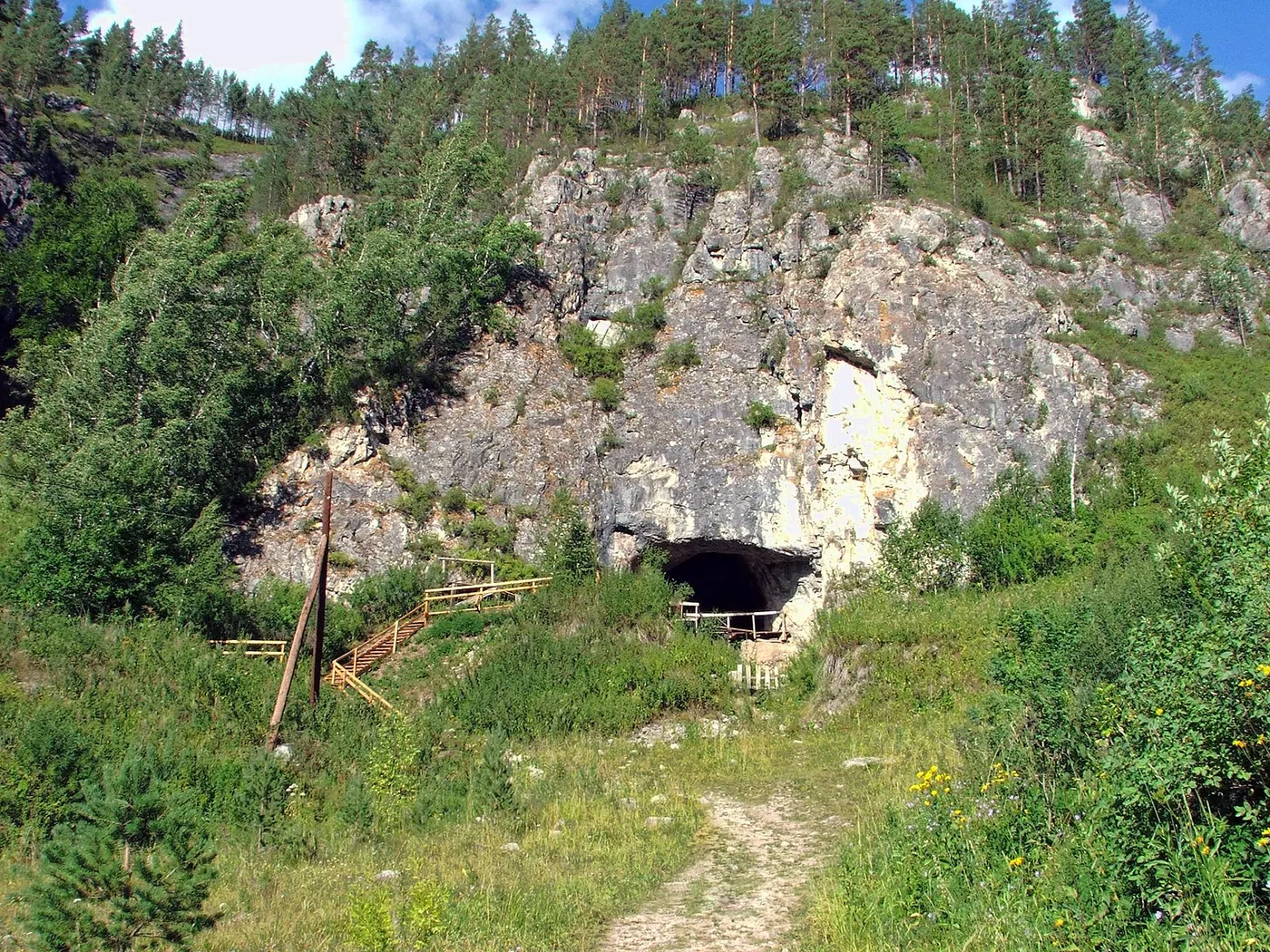
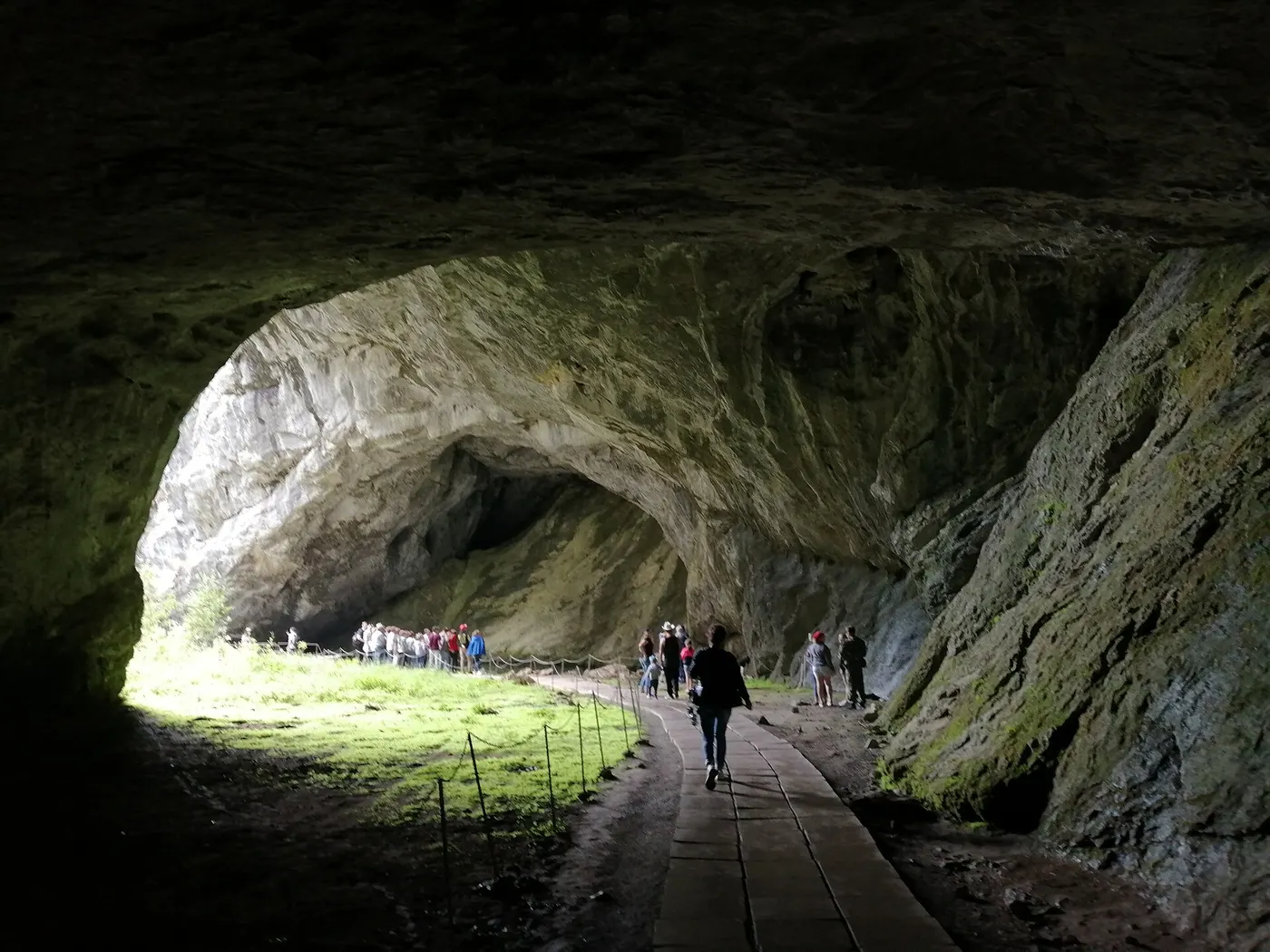
The Denisova Cave
Denisova Cave (Altai: Ayu-Tash, meaning "Bear Rock") is a karstic cave and globally renowned paleoanthropological site situated within the Soloneshensky District of Altai Krai, Russia, in the upper valley of the Anuy River in the northwestern Altai Mountains. Comprising roughly 270 square meters of horizontal chambers, the cave serves as a pristine multi-stratified Pleistocene and Holocene sediment archive that continuously accumulated archaeological deposits spanning over 300,000 years. The site attained global scientific prominence in 2010 when paleogenomic sequencing of a juvenile hominin finger bone fragment revealed a previously unidentified archaic human lineage—the Denisovans—fundamentally reshaping modern paleoanthropology and hominin evolution models.
The Kapova Cave (Shulgan-Tash)
A cave in Bashkortostan with wall paintings some seventeen thousand years old — mammoths, horses, rhinoceroses, laid down in ochre. Before its discovery in 1959 Palaeolithic painting was thought to exist only in Western Europe. In the Bashkir epic Ural-batyr the lake at its mouth is the entrance to the underworld, ruled by Shulgan, the hero's brother who went over to evil. The cave and the lake carry his name.
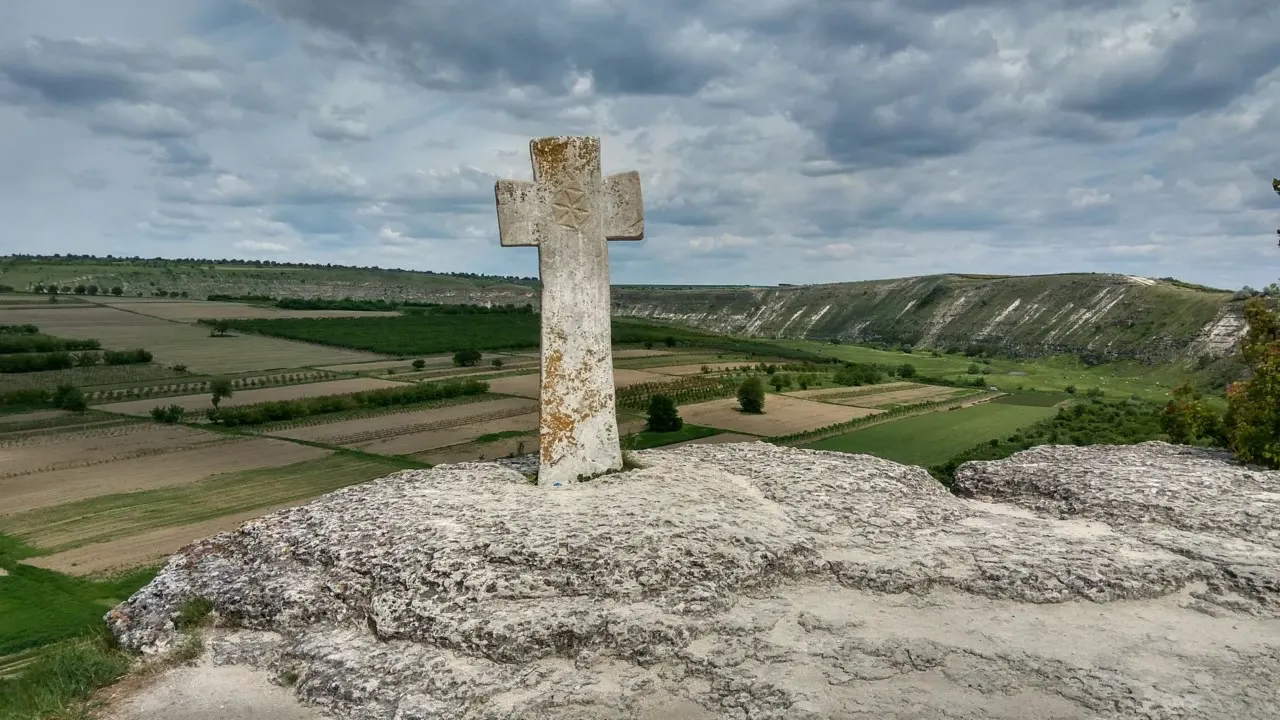
Orheiul Vechi
Old Orhei (Romanian: Orheiul Vechi) is a historical-archaeological museum-reserve and natural-cultural landscape situated within the Orhei District of the Republic of Moldova, set inside the limestone gorge of the Răut River between the villages of Butuceni, Trebujeni, and Morovaia (roughly 50–60 kilometers northeast of Chișinău). The complex forms a natural amphitheater where the meandering river bisects ancient Sarmatian limestone escarpments along the Peștere promontory. The site preserves a continuous archaeological palimpsest spanning millennia: Thracian and Geto-Dacian earthworks, the 14th-century Golden Horde stone city of Shehr al-Jedid, the medieval Moldavian fortress of Stephen the Great, and rupestral Orthodox cave monasteries carved directly into the sheer cliff walls.
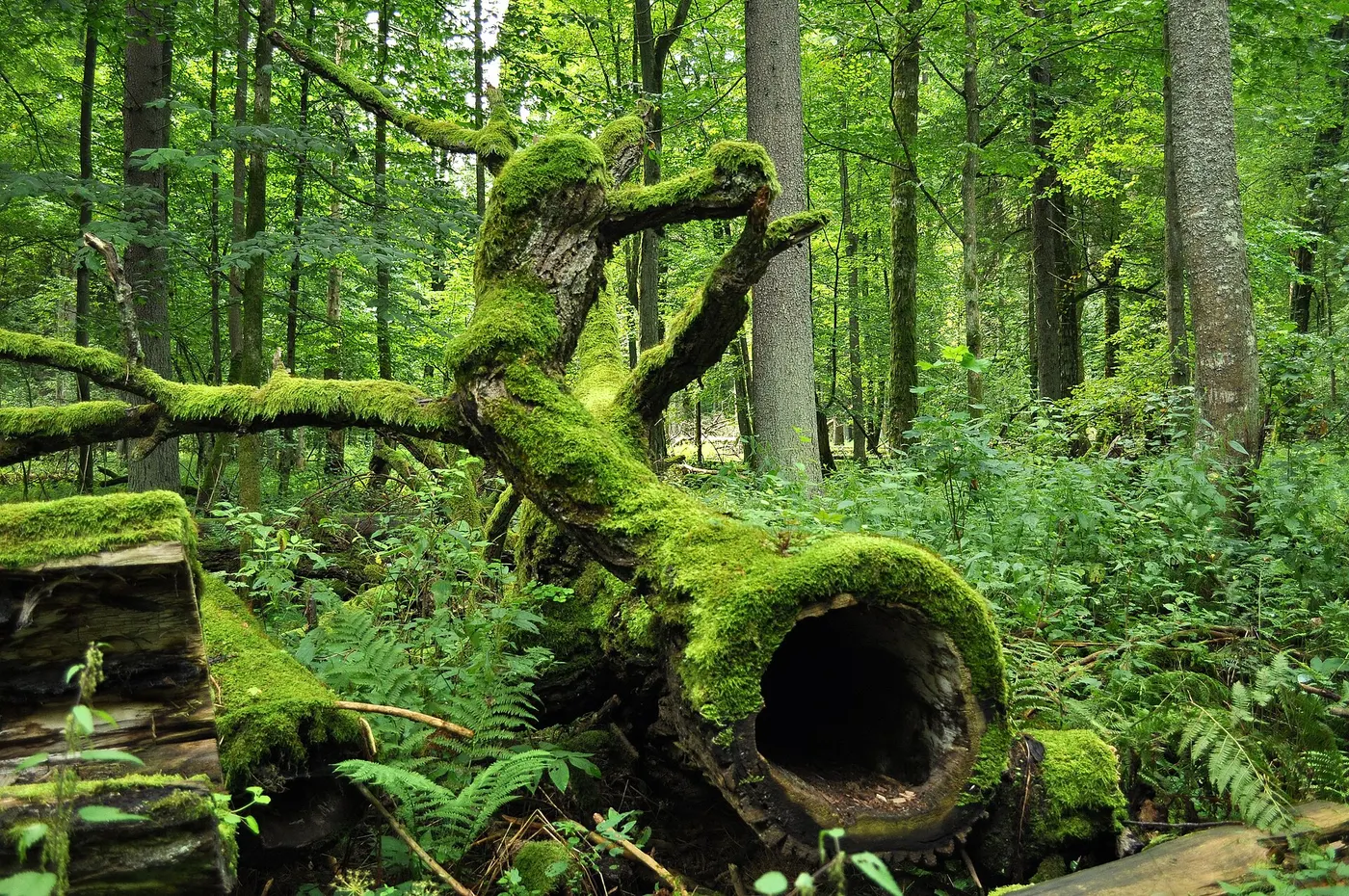
Białowieża Forest
Białowieża Forest (Belovezhskaya Pushcha) is the largest and oldest surviving expanse of primeval lowland mixed temperate forest in Europe, straddling the state border between Belarus (Brest and Grodno regions) and Poland (Podlaskie Voivodeship). Encompassing more than 150,000 hectares, this UNESCO World Heritage Site and biosphere reserve represents the last intact remnant of the prehistoric virgin woodlands that once blanketed the European Plain, home to the planet's largest free-roaming population of the European bison (wisent).
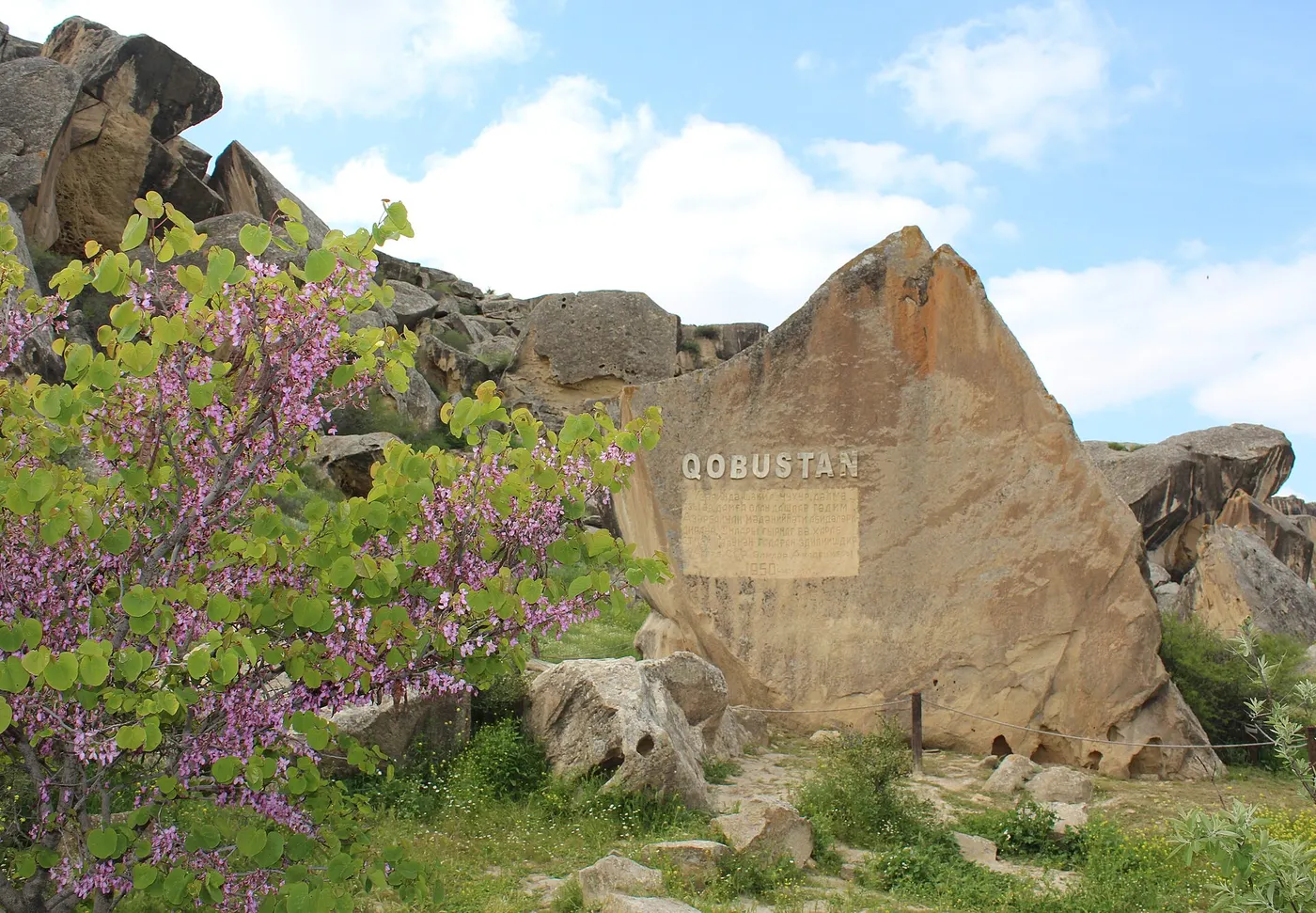
Gobustan
A rock massif outside Baku with more than six thousand petroglyphs, the oldest up to forty thousand years old. The gaval dash stands here too — the tambourine stone, a slab that gives a resonant note when struck and was evidently played. Thor Heyerdahl visited three times and argued that the boats depicted are related to Norwegian petroglyphs, deriving a Caucasian origin for the Scandinavians — a hypothesis specialists did not accept.

Lake Sevan
A high-altitude lake that supplies almost all of Armenia's fresh water. In Soviet times its level was deliberately dropped by nearly twenty metres for hydroelectricity, and what lay beneath came out: Bronze Age settlements, fortresses and necropolises. The Sevan peninsula was an island before that draining. The monastery of Sevanavank was founded in 874 by Princess Mariam, and tradition has it built by monks exiled from Echmiadzin for misconduct.
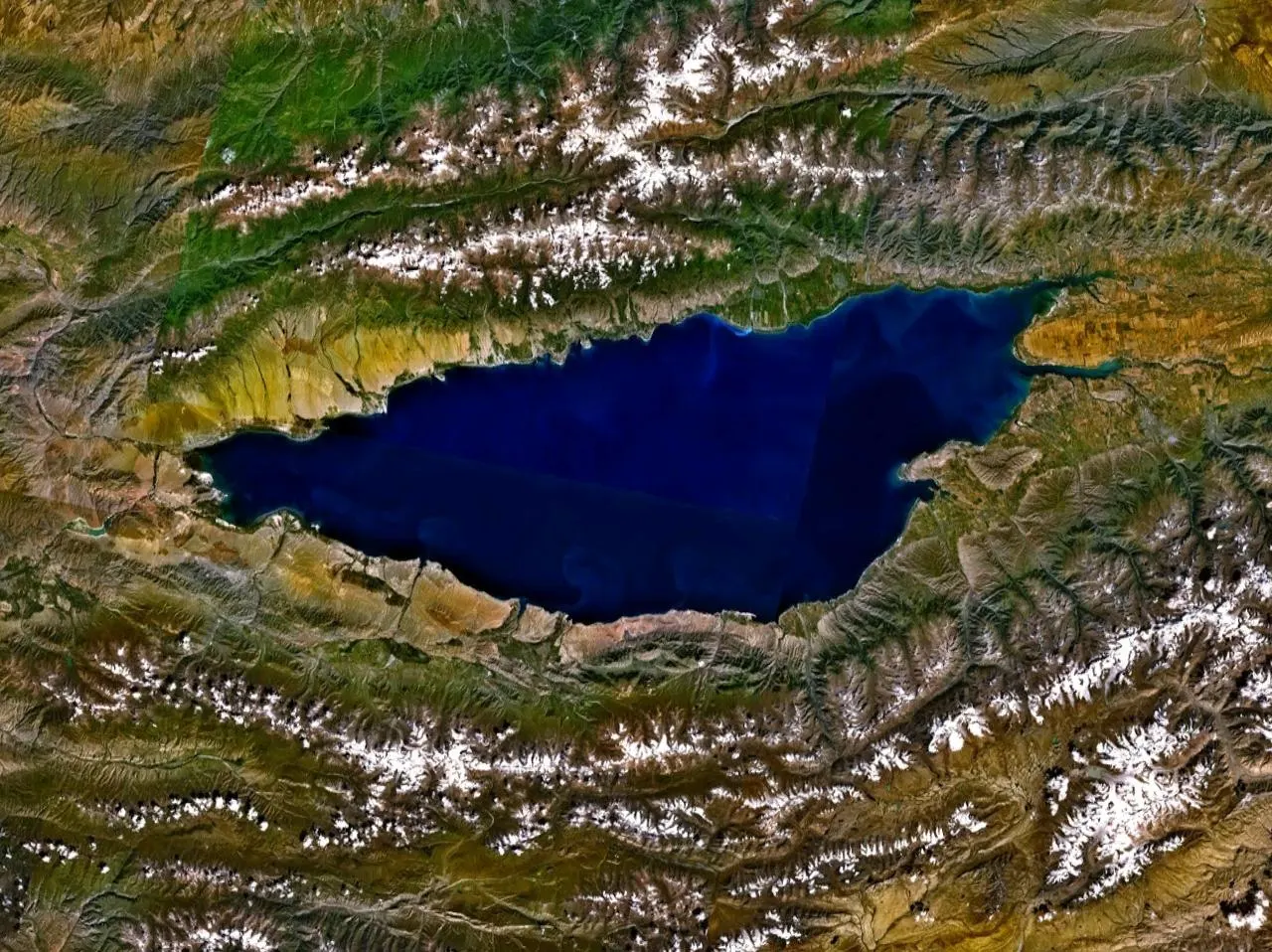
Lake Issyk-Kul
A non-freezing mountain lake in the Tien Shan with several drowned settlements beneath it, from Saka times through the middle ages. Divers have brought up bronze cauldrons, coins and courses of brickwork. One legend ties the lake to Tamerlane's grave, another to a monastery of Armenian brothers where, according to the Catalan Atlas of 1375, the relics of the apostle Matthew were kept. The last is taken seriously enough that expeditions still work the lake.
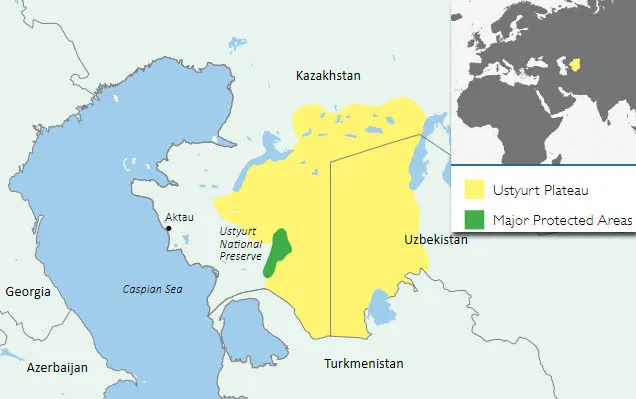
The Ustyurt Plateau
A stony desert between the Caspian and the Aral, breaking to the plain in escarpments a hundred and fifty metres high. From the air the Ustyurt arrows are visible — stone-built structures up to a kilometre long, noticed only in aerial survey in the 1980s. They are read as drive-hunting traps, but who built them is disputed, and estimates of their age run into thousands of years. The place is empty enough that several ungulate species presumed extinct were found here.
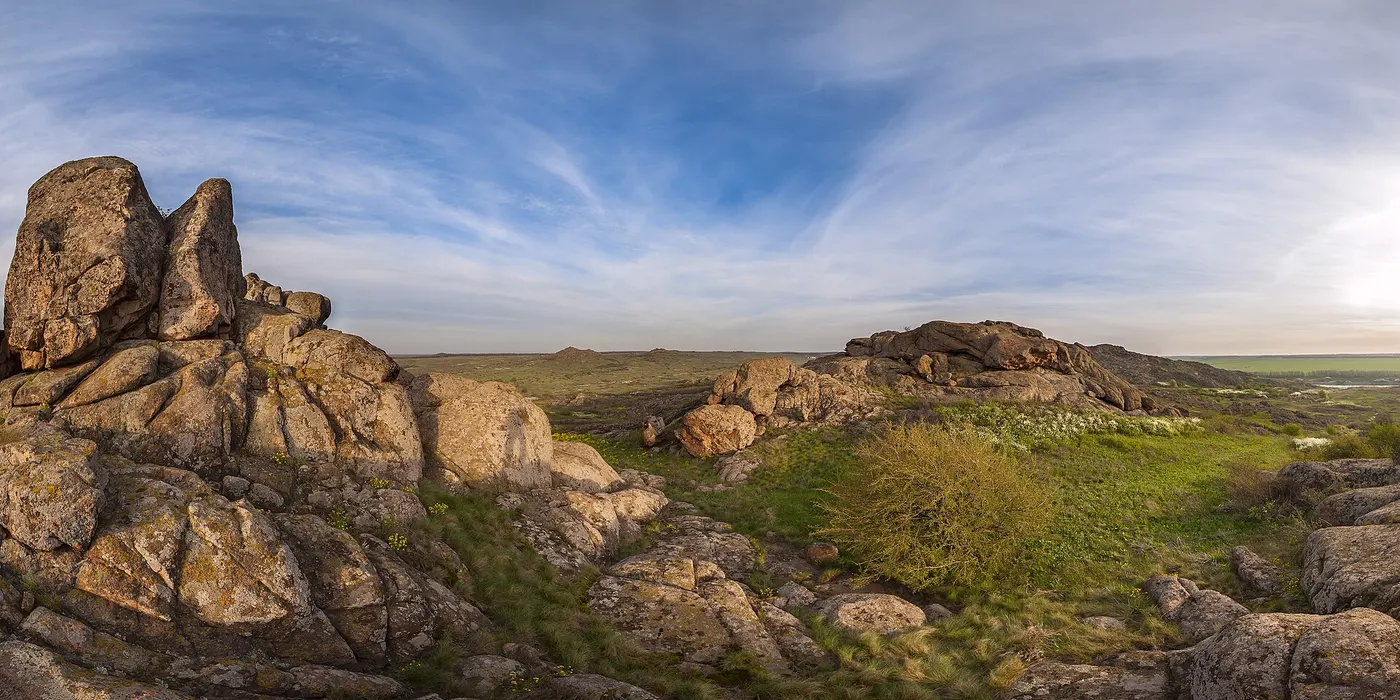
The Stone Graves
The Kamiani Mohyly ("Stone Tombs") Nature Reserve is a compact granitic inselberg formation spanning approximately 400 hectares, rising dramatically above the open Priazovian steppe along the Karatysh River (at the border of Donetsk and Zaporizhzhia Oblasts). For over a century, local historians, geographers, and travelers linked this 100-meter-tall labyrinth of pink granite crags to the chronicle-attested Kalka River and the tragic Battle of 1223—the first catastrophic clash between combined Kievan Rus'-Cuman forces and the Mongol reconnaissance vanguard led by Jebe and Subutai.
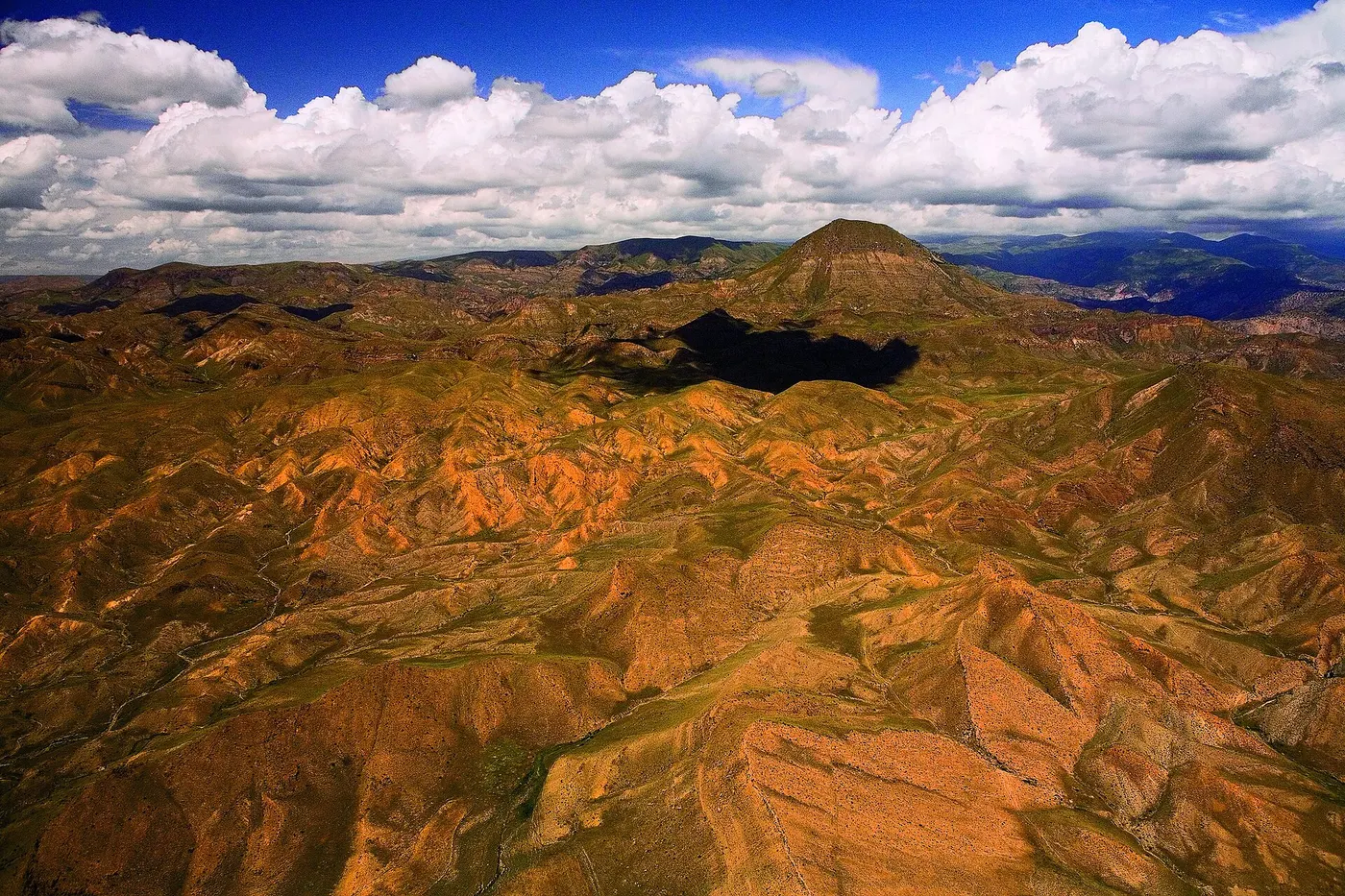
The Vishap Stones of the Gegham Mountains
On the high pastures of Armenia stand the vishaps — stone stelae up to five metres tall, carved as fish or wrapped in the hide of a bull. They are some four thousand years old and were set at springs and water channels. In Armenian mythology the vishap is a dragon that lives in the mountains and holds back the water, until the hero Vahagn defeats it. The stelae predate the written tradition, so who raised them and why is known only from the stone.
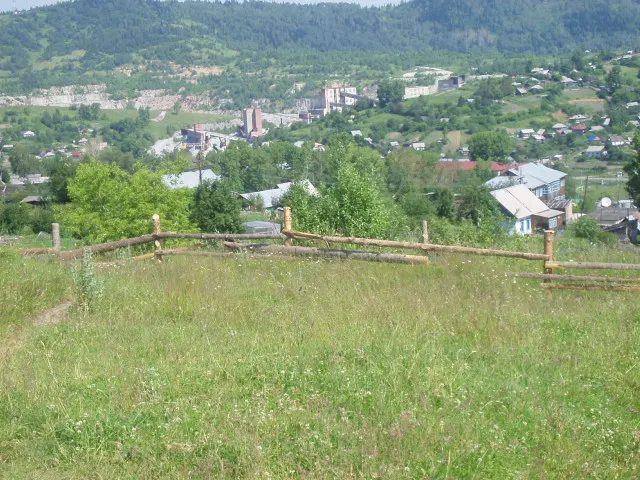
The Azass Cave and the Kuzbass Yeti
Azasskaya Cave is a karst cavern formation located at the headwaters of the Azas stream within Shorsky National Park in the Tashtagolsky District of Kemerovo Oblast (Mountain Shoria), southern Siberia. Featuring an impressive arched entryway grotto measuring up to 12 meters in height and a freezing subterranean stream flowing from its mouth, the site gained international renown in the late 2000s as the alleged primary lair of a surviving relict hominid population: the "Kuzbass Yeti."
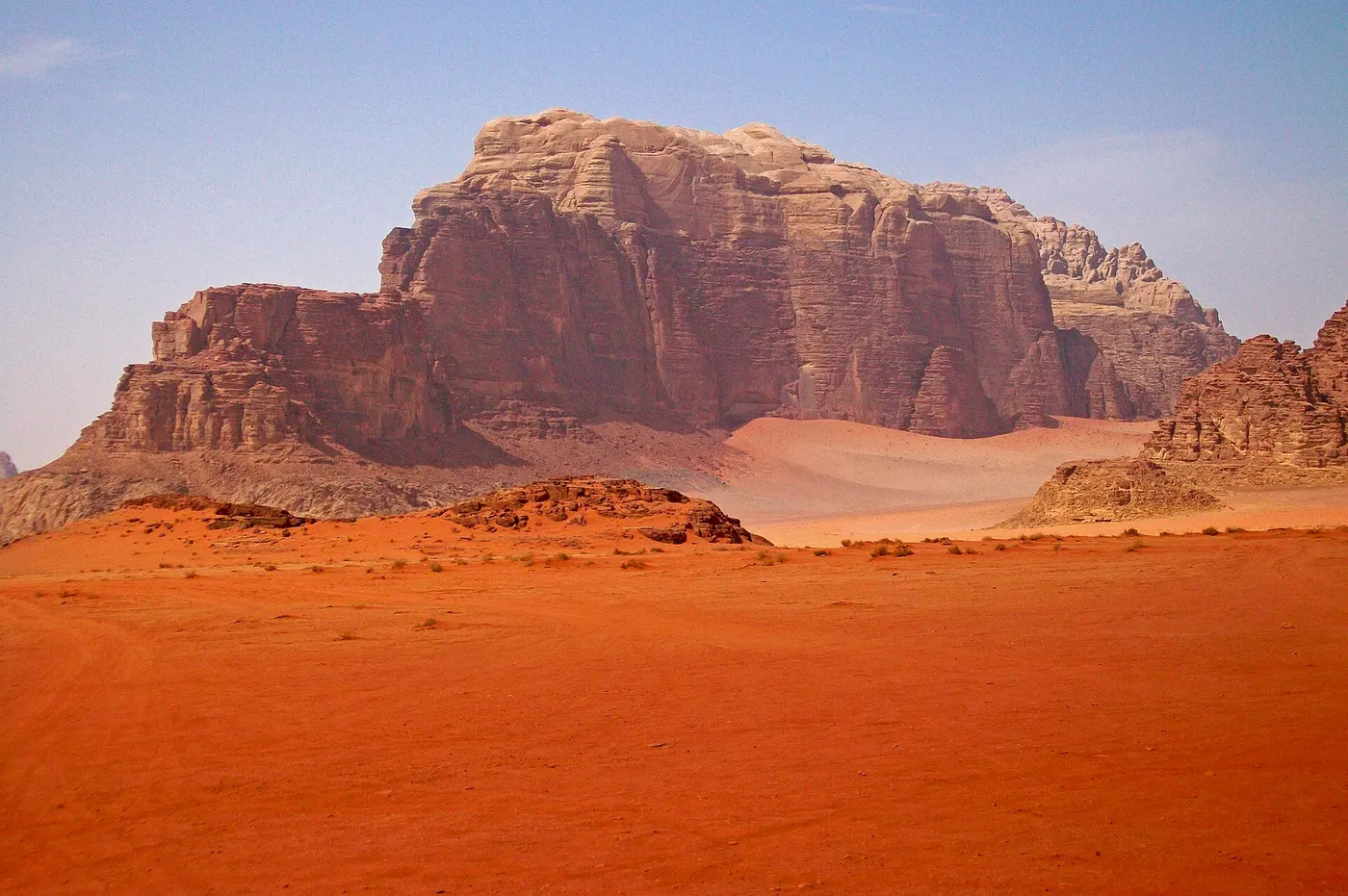
Wadi Rum
A sandstone desert in southern Jordan that the Bedouin call the Valley of the Moon. Its rocks carry twenty-five thousand petroglyphs and twenty thousand inscriptions, the oldest twelve thousand years old. Bedouin tradition fills the gorges with jinn, and the place obliges: the temperature difference between sun and shade reaches twenty degrees, and in the narrow canyons your own footsteps come back with a delay.
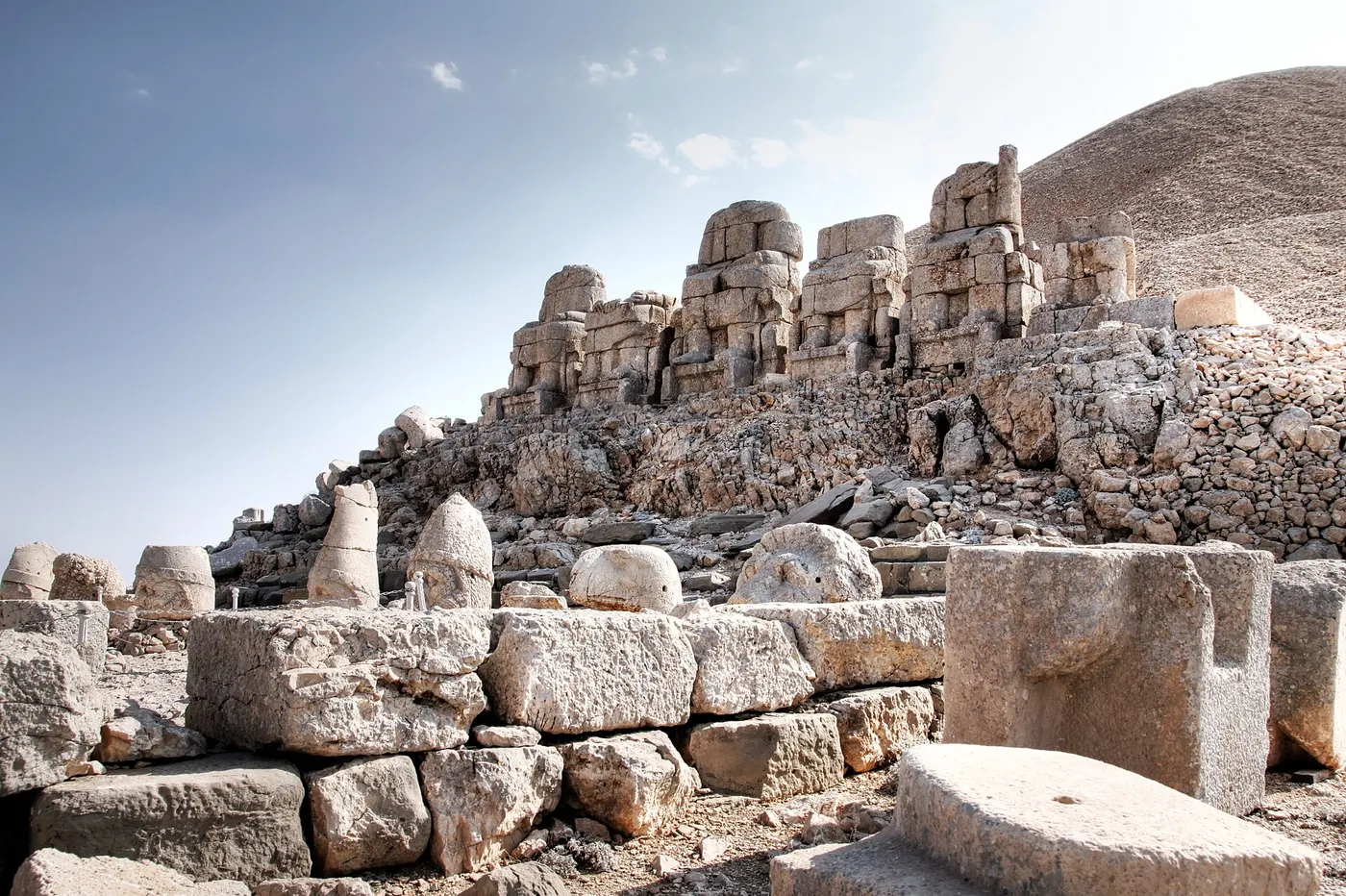
Mount Nemrut
A summit in south-eastern Turkey where Antiochus I of Commagene built himself a tomb in the first century BC and set up nine-metre statues of the gods and of himself. Earthquakes knocked the heads from the bodies, and they now lie separately on the terraces, facing different ways. The tomb itself has never been found: the tumulus of loose gravel cannot be excavated without collapsing.

Lake Toba
The largest volcanic lake in the world, in the caldera of a supervolcano whose eruption some seventy-four thousand years ago is counted among the greatest catastrophes in the planet's history — by a contested hypothesis, it nearly finished humanity. The Batak people fill the lake with spirits and keep a tradition of a man who married a fish turned woman; breaking the promise he made her brought the flood that made the lake.
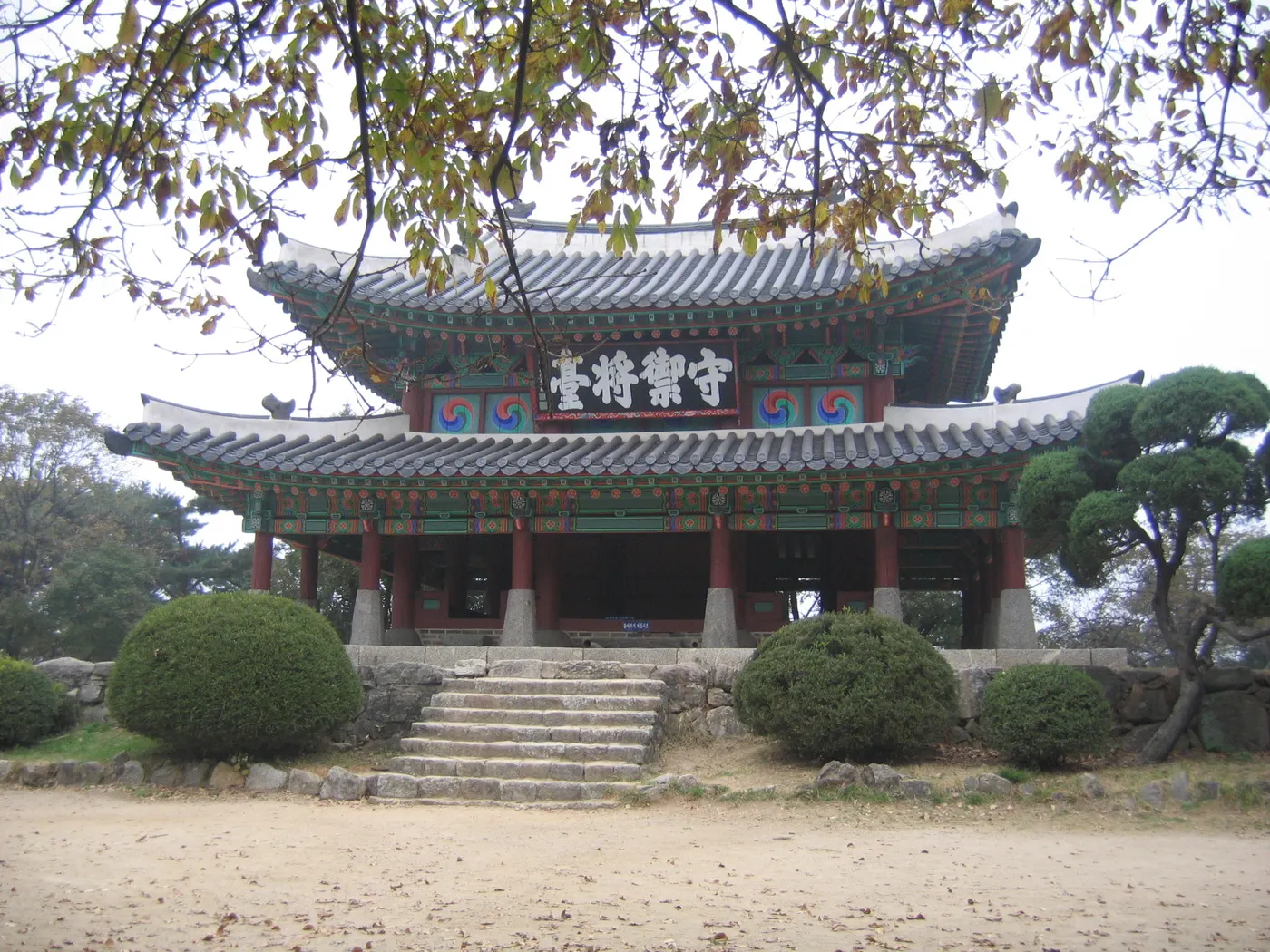
Gwangju and the Gonjiam Psychiatric Hospital
A city south-east of Seoul where the abandoned Gonjiam Psychiatric Hospital stands, closed in 1996. The official reason was sewage problems and a lapsed licence; urban legend insists on mass deaths among patients and a director who fled the country. CNN listed the building among the world's creepiest places. A film about it in 2018 led the owner to seal off access for good.
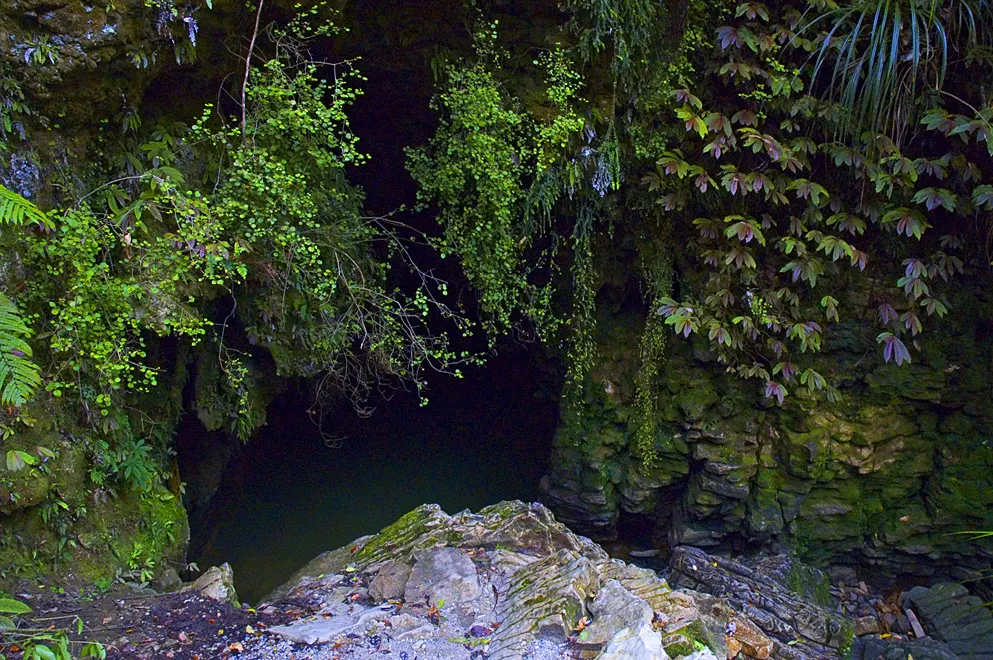
The Waitomo Caves
Limestone caves on New Zealand's North Island whose ceilings glow with the larvae of Arachnocampa luminosa, a species found nowhere else. Thousands of blue points above an underground river look like a night sky; they are in fact lures for prey the larvae catch on sticky threads. Māori knew the caves long before Europeans, and the chief Tāne Tinorau led the first survey into them in 1887.

Lake Fundudzi
The sacred lake of the Venda people in northern South Africa, one of the country's few natural freshwater lakes, formed by an ancient landslide. Nobody approaches the water without the chief's permission, and the lake is properly viewed with one's back to it, through the legs. Tradition places a guardian white crocodile in it, and a drowned village on the bottom whose people refused hospitality to a leper.

Mount Kenya
Africa's second-highest mountain, held by the Kikuyu to be the dwelling of Ngai: houses were traditionally built with the door facing the summit, and prayers directed there. Climbing the main peak, Batian, was long considered something a person did not undertake. The glaciers the first Europeans described have lost more than ninety per cent of their extent in a century.