All places
The full catalogue of approved places — abandoned buildings, anomalous zones, UFO sightings. Sort by rating, recency or discussion, and narrow it by category.
494 places
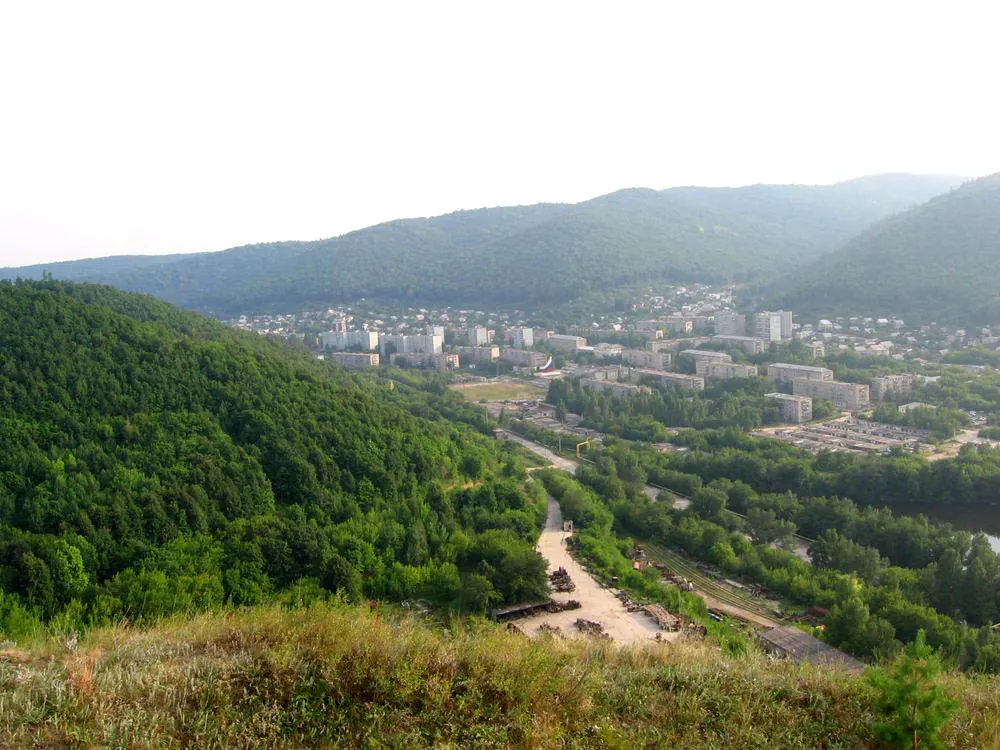
Zhigulyovsk and the Mirages of the Samara Bend
Samarskaya Luka and the Zhiguli Mountains surrounding the town of Zhigulyovsk form a dramatic tectonic bend where the Volga River loops 200 kilometers around an ancient limestone massif. The region is recognized as one of Russia's primary epicenters for optical anomalies, where chronic mirages, floating "ghost cities" over the water, and mysterious light pillars have been documented for centuries.
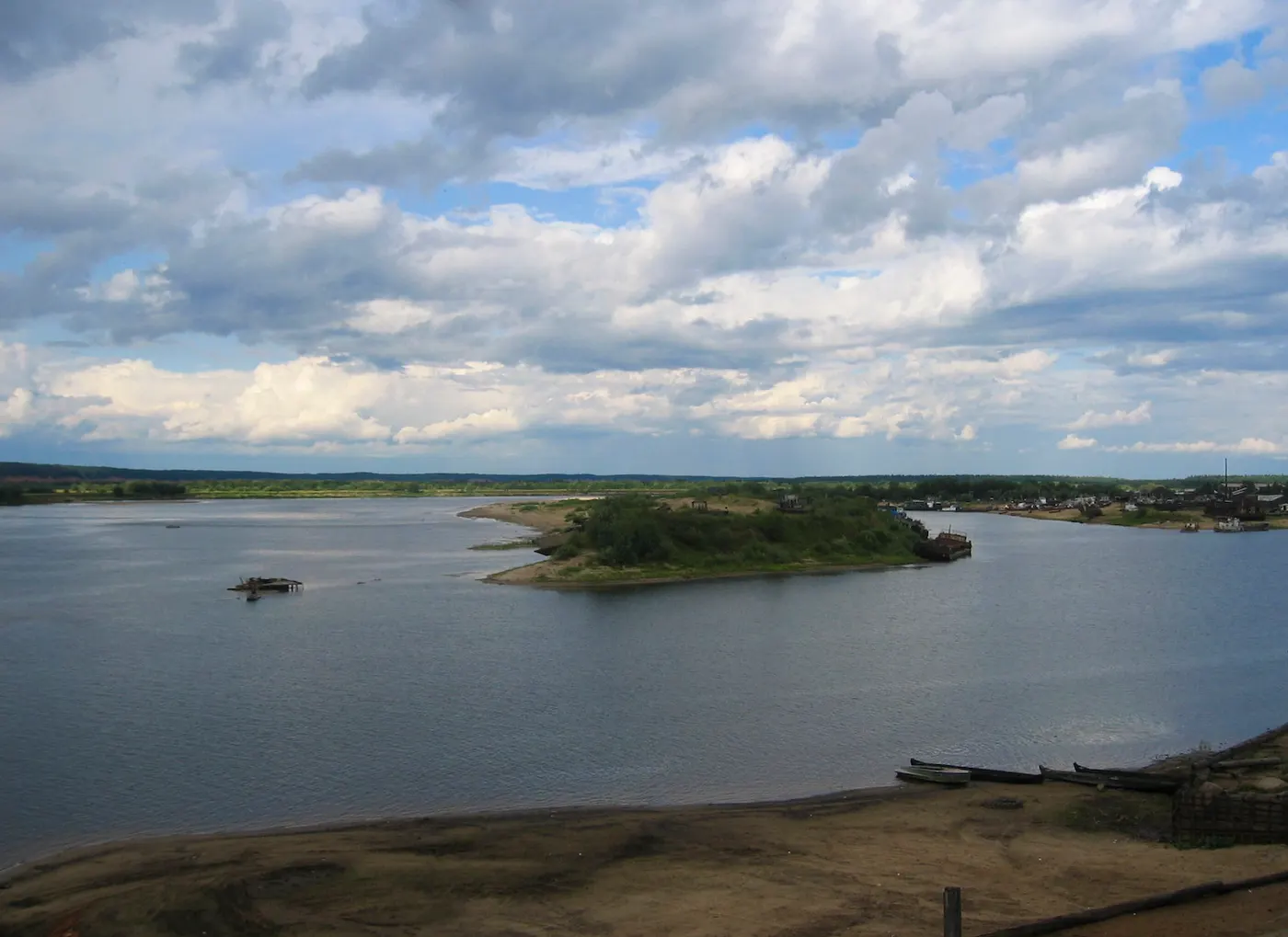
The Vashka and the Piece of Alloy
The Vashka River in the Udorsky District of the Komi Republic is a remote tributary of the Mezen flowing through dense northern taiga. The location gained national and international renown in the summer of 1976 when a strange metallic fragment (known as the "Vashka Find") was discovered on a river gravel bar, becoming a central physical artifact in Soviet ufological lore.
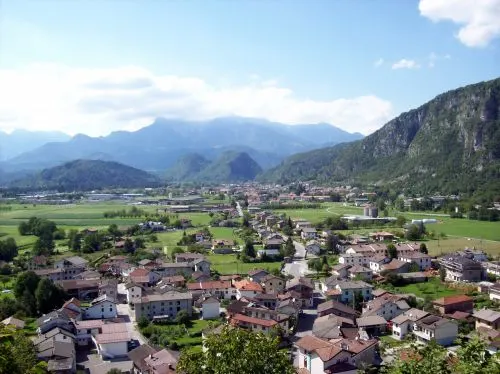
Villa Santina and Rapuzzi's Drawing
On 14 August 1947, six weeks after Kenneth Arnold's flight, an artist named Rapuzzi Johannis was walking in the mountains near this village in Friuli when, by his account, he met two short beings in tight suits and, behind them, a lens-shaped craft. He said they took his pencil and his drawing from him. At home he drew what he had seen. He gave the drawing and a full description to Italian researchers only in the 1960s. It is one of the earliest European contact reports and the first of its kind in Italy; its value is chiefly chronological — it appeared before the genre it would later be said to imitate had formed at all.
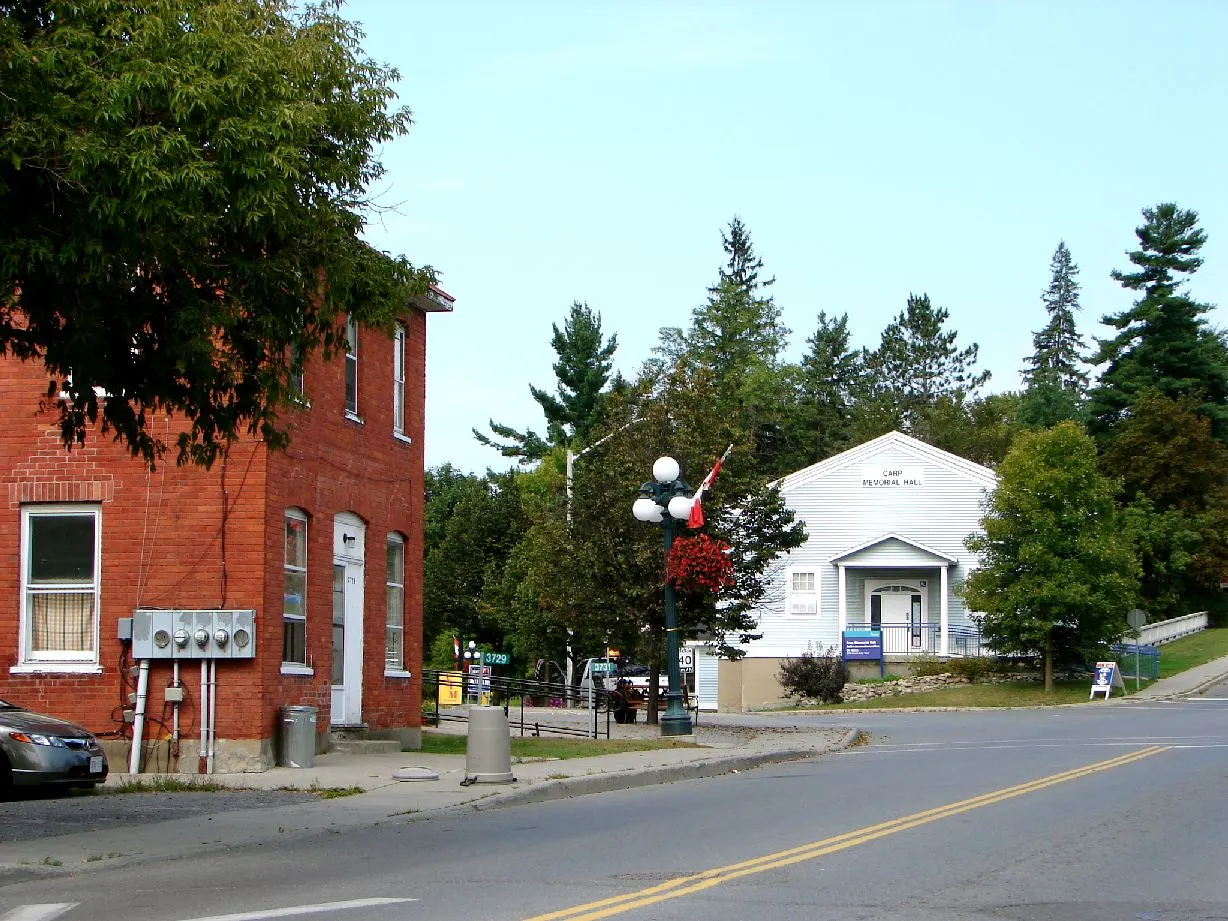
Carp and the Guardian Letters
Between 1989 and 1991 Canadian journalists and researchers received anonymous letters signed "Guardian", claiming that an alien craft had crashed near the village of Carp outside Ottawa and that the government was running a secret programme. Maps and documents came with them, and later a videotape of a glowing object filmed at night. The researcher Bob Oechsler and others checked everything checkable: the documents proved to be assembled from genuine letterheads, and the video showed a lit object in a field. In the 1990s the authorship was attributed to a local man; there was never a full confession. The story survives as a model of how a well-assembled hoax lives for years.
St. Paul and the UFO Landing Pad
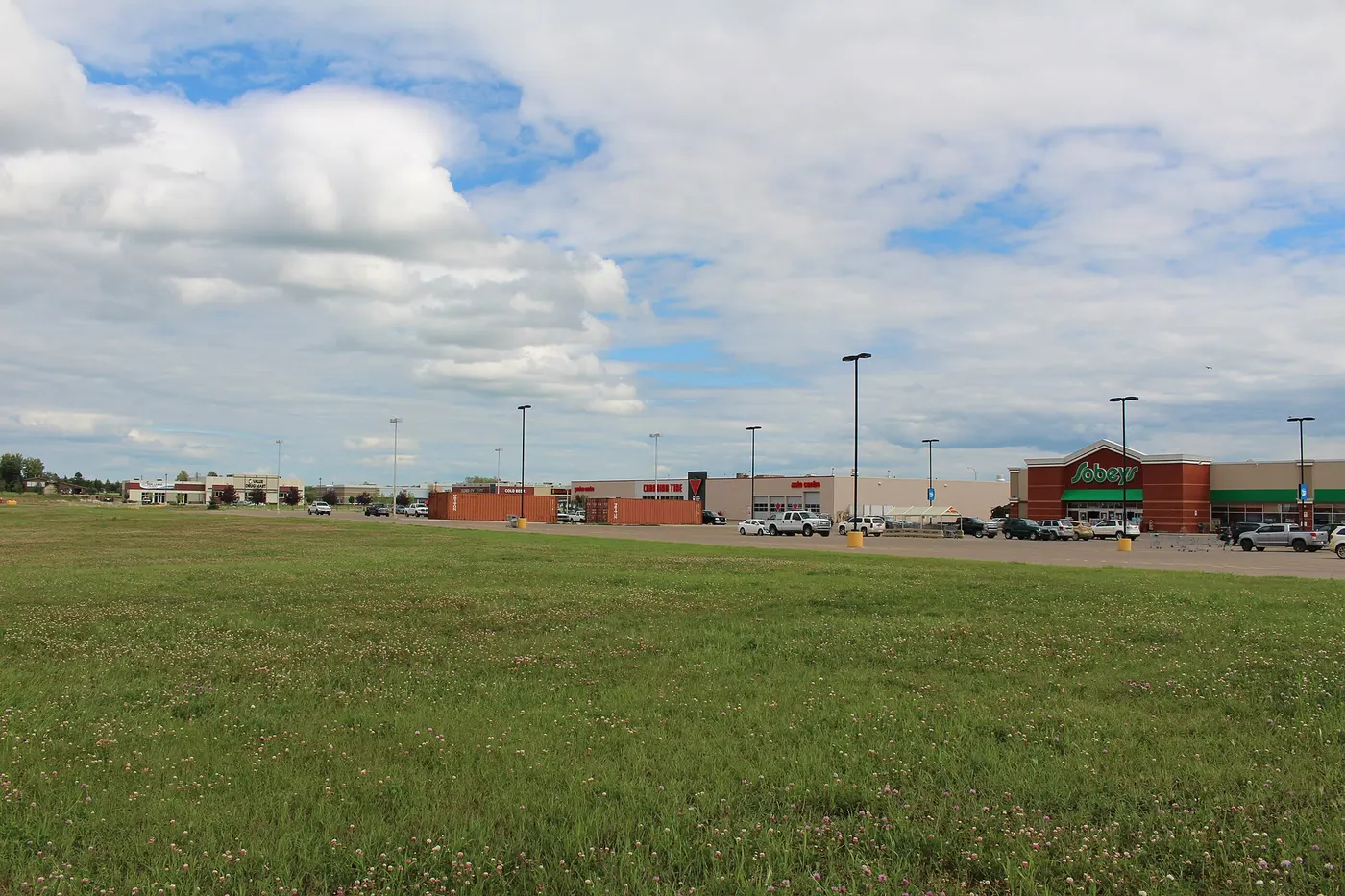
In 1967, for Canada's centenary, this Alberta town built itself a UFO landing pad — a raised concrete structure with a map of Canada made from stone from every province and a plaque inviting any visitor from space to land. It was opened by Canada's minister of national defence, Paul Hellyer, who arrived by helicopter. Forty years later Hellyer became the first former defence minister anywhere to state publicly that extraterrestrials exist. The pad is still there and remains the town's landmark, with a tourist office beside it. In more than fifty years no landing has been recorded.
Mount Adams and the Watchers' Ranch
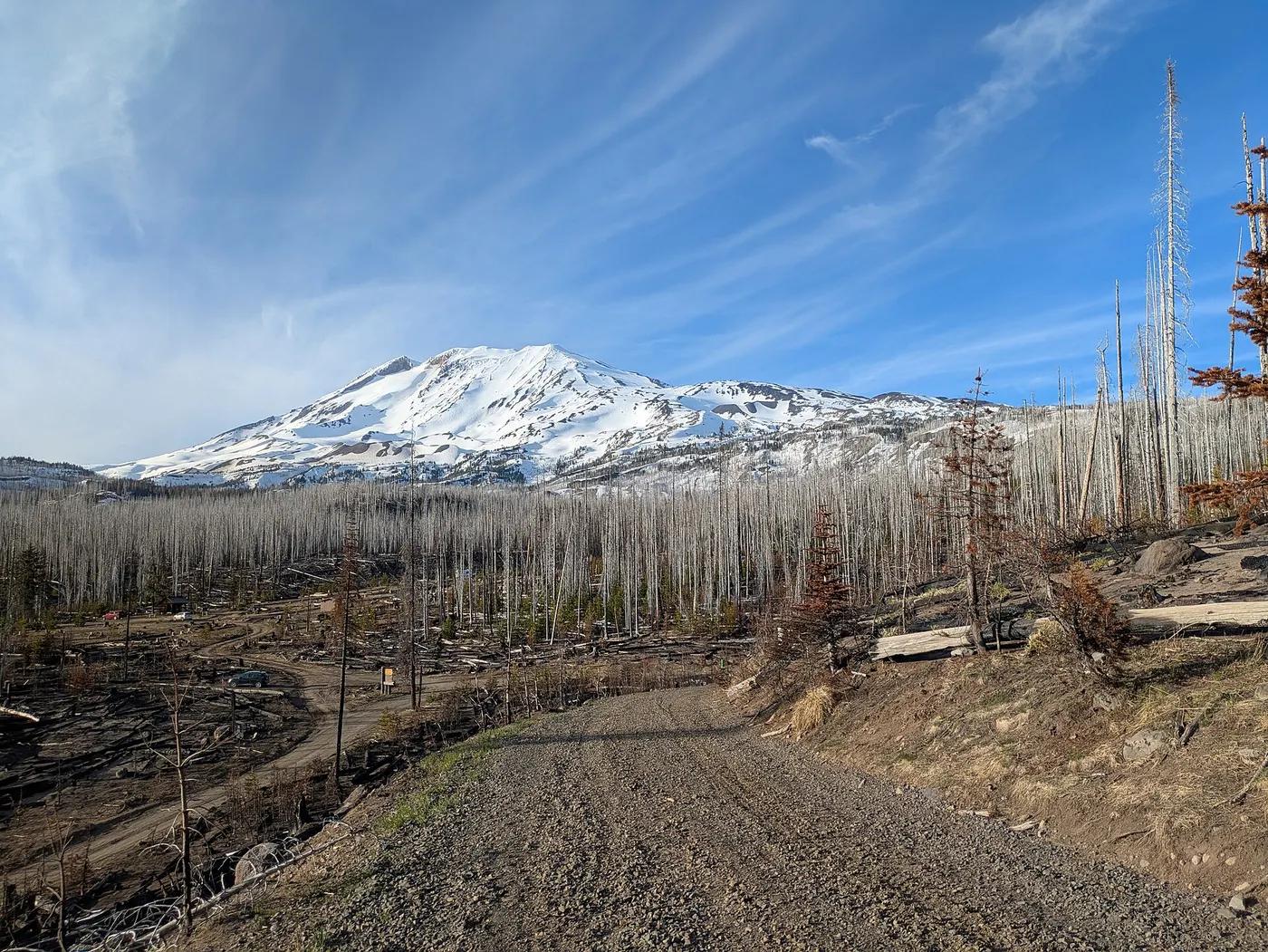
A volcano in southern Washington at whose foot the ECETI ranch has operated since the 1980s — a site people come to specifically in order to watch the sky. In summer dozens camp here with binoculars and cameras, and reports of lights come in every night. It is a rare case on this list of a place known not for one incident but for a continuous practice of watching. The explanation is simple and takes nothing away: the mountain stands well clear of any town, the sky is dark, and low-orbit satellites are visible to the naked eye in their hundreds after sunset. That suits the people who come: there genuinely is a great deal to look at.
Holloman and the Landing That Is Not on Film
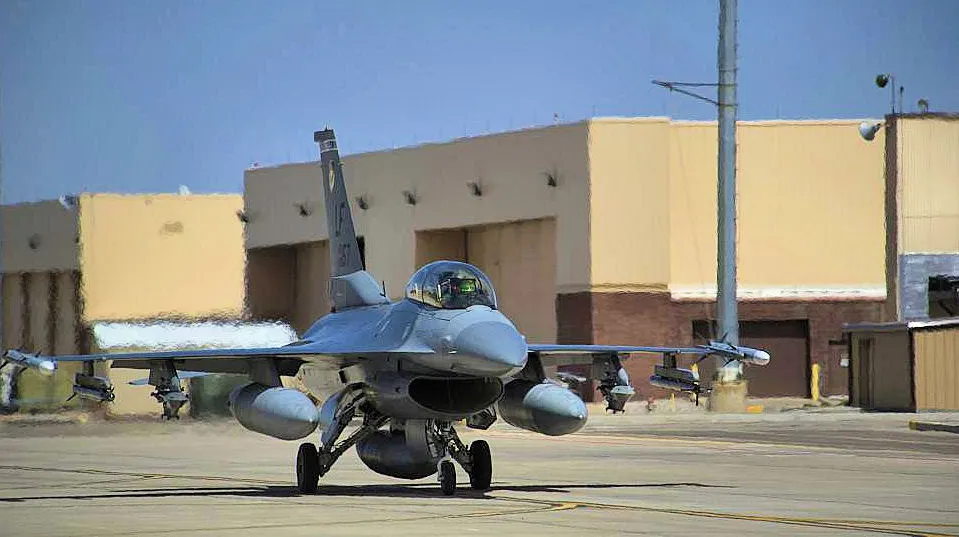
In the 1970s a story spread through the subject that in April 1964 an unidentified craft had landed at this New Mexico base and that a meeting with its crew had been filmed. The source was a producer, Robert Emenegger, preparing a documentary; he was never able to show the film. The base is genuinely associated with the unusual: high-altitude balloon programmes ran here and rocket sleds were tested, and things that fly nowhere else were regularly seen overhead. It is a good example of how a real closed site attracts stories. Nothing in this one is checkable except that the account exists, with a precise date and not one document.
Edwards and the Night on Tape
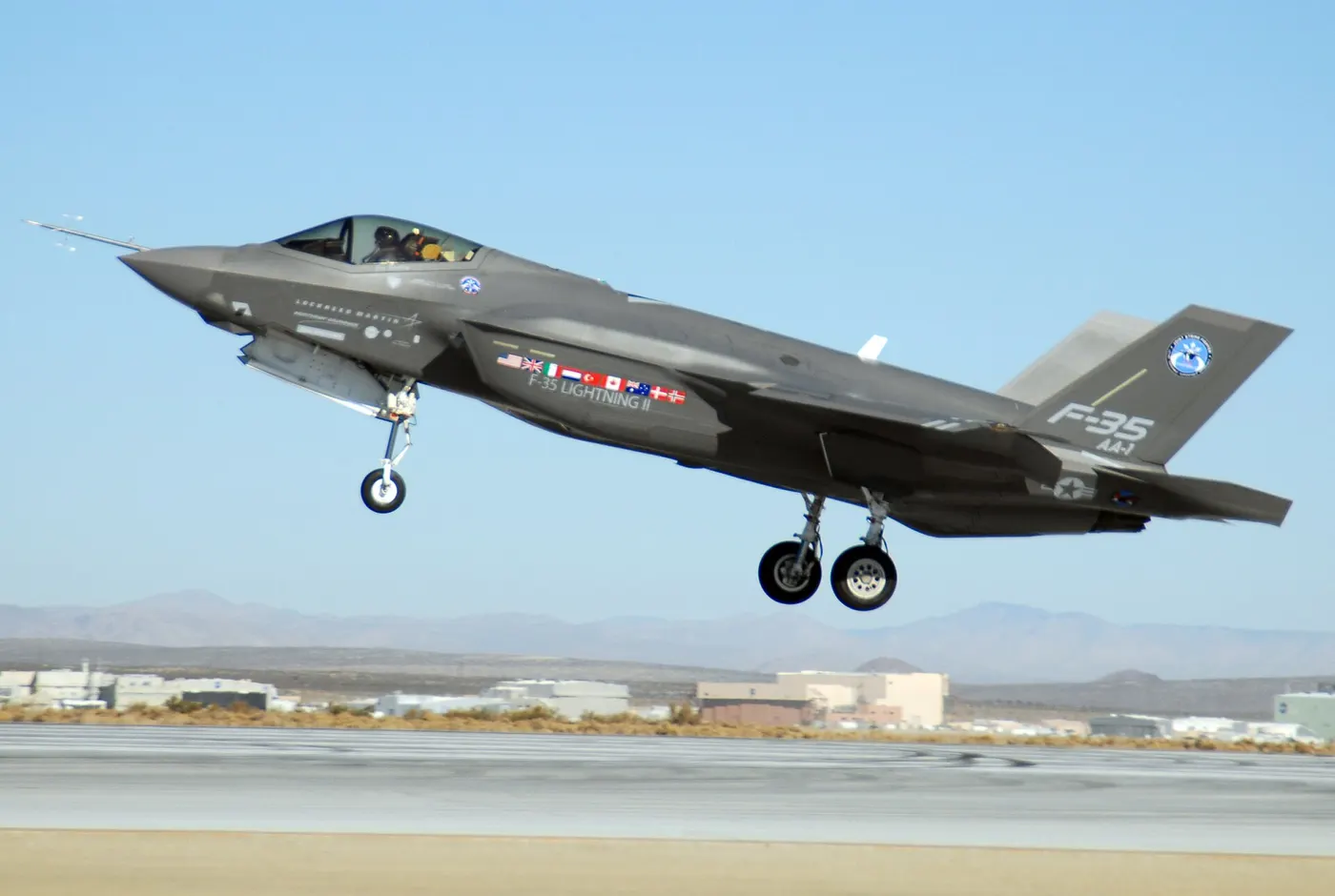
On the night of 3 October 1965 controllers and aircrew at this California base and the range next to it spent several hours tracking unidentified objects that hovered, separated and closed again. The radio recordings survive and were later declassified — officers can be heard discussing the sighting in real time. Dozens of people saw the objects from the ground, base command among them. An aircraft was sent up and found nothing. Edwards is a test base where things that were not reported were being flown in those years, and that is the main explanation. It does not settle the central question: why the base's own staff could not identify what was happening.
Minot and the Night on the Missile Field
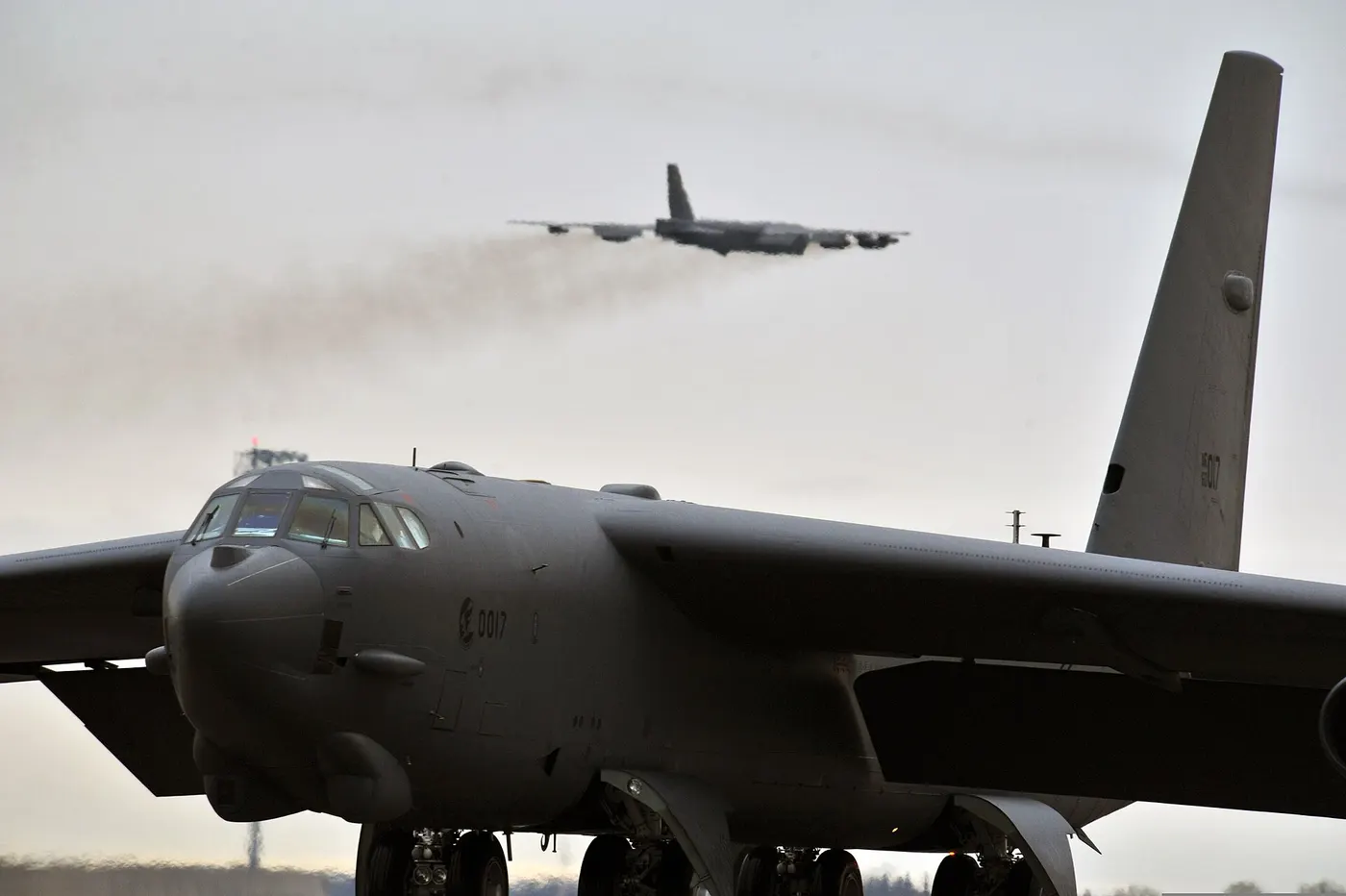
On the night of 24 October 1968 several security patrols on the missile field of this North Dakota base reported a glowing object hanging over the silos. Ground radar held a return, and the crew of a B-52 on approach saw it both on their own radar and with their eyes. The episode entered the Project Blue Book files with an unusually full set of documents: statements from sixteen men, radar film and duty reports. The official explanation is plasma and the star Sirius. It does not account for the agreement between ground and airborne radar, and the case remains one of the most cited military files in the archive.
Kanas and the Lights over the Mountain Lake
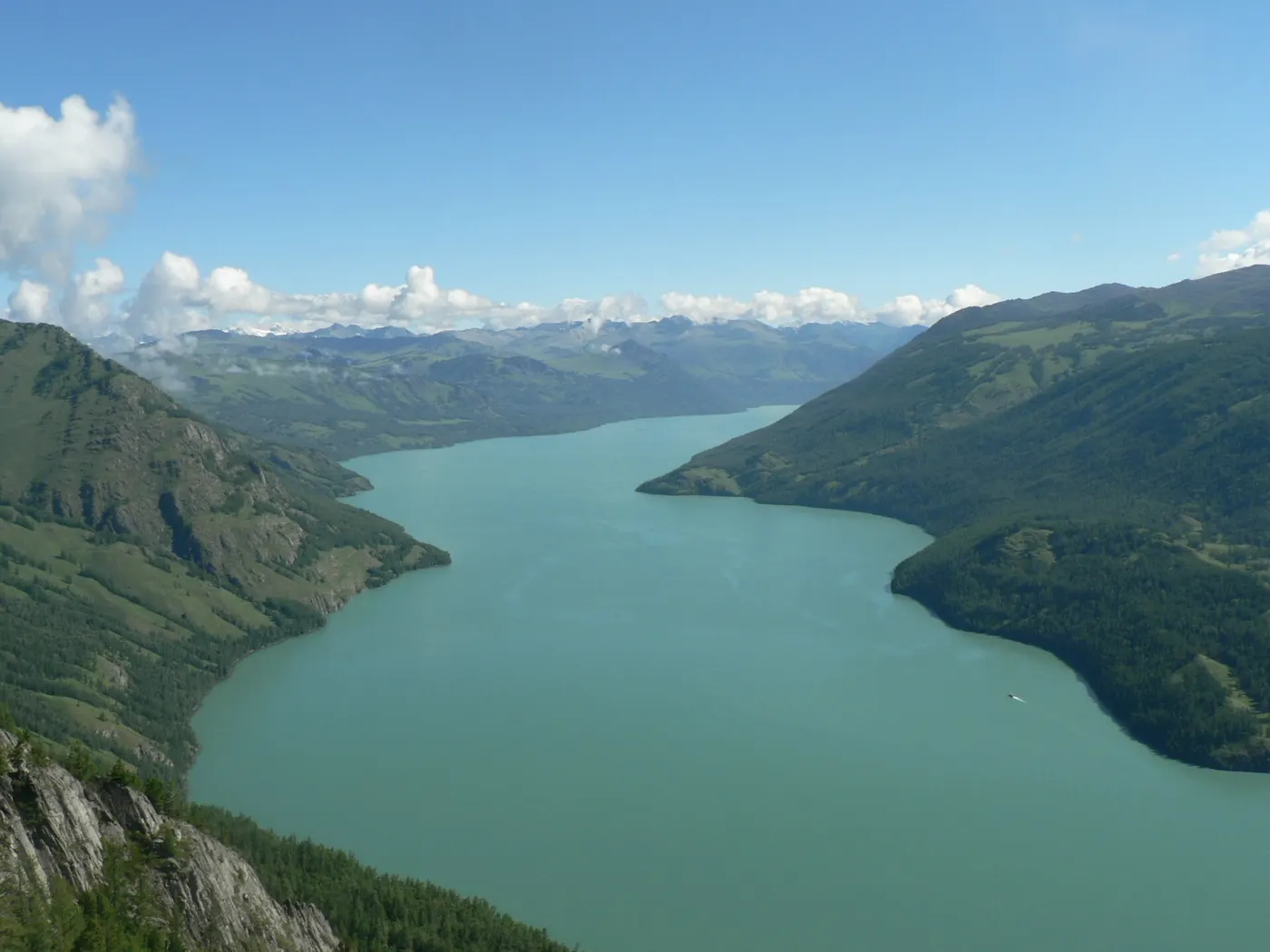
A glacial lake in the far north of Xinjiang, near where the borders of China, Kazakhstan, Russia and Mongolia meet. It is known in China for two things: a lake monster, which is almost certainly a large taimen, and steady reports of lights over the water. The latter increased noticeably in the 2000s, when a road was put in and tourism arrived. The explanation here is largely geographical: the lake lies away from developed country, the air is clean, and launches from Russian and Chinese ranges regularly pass over the mountains, their upper-atmosphere trails visible for hundreds of kilometres and looking exactly as described.
Hakui, the Town That Chose UFOs
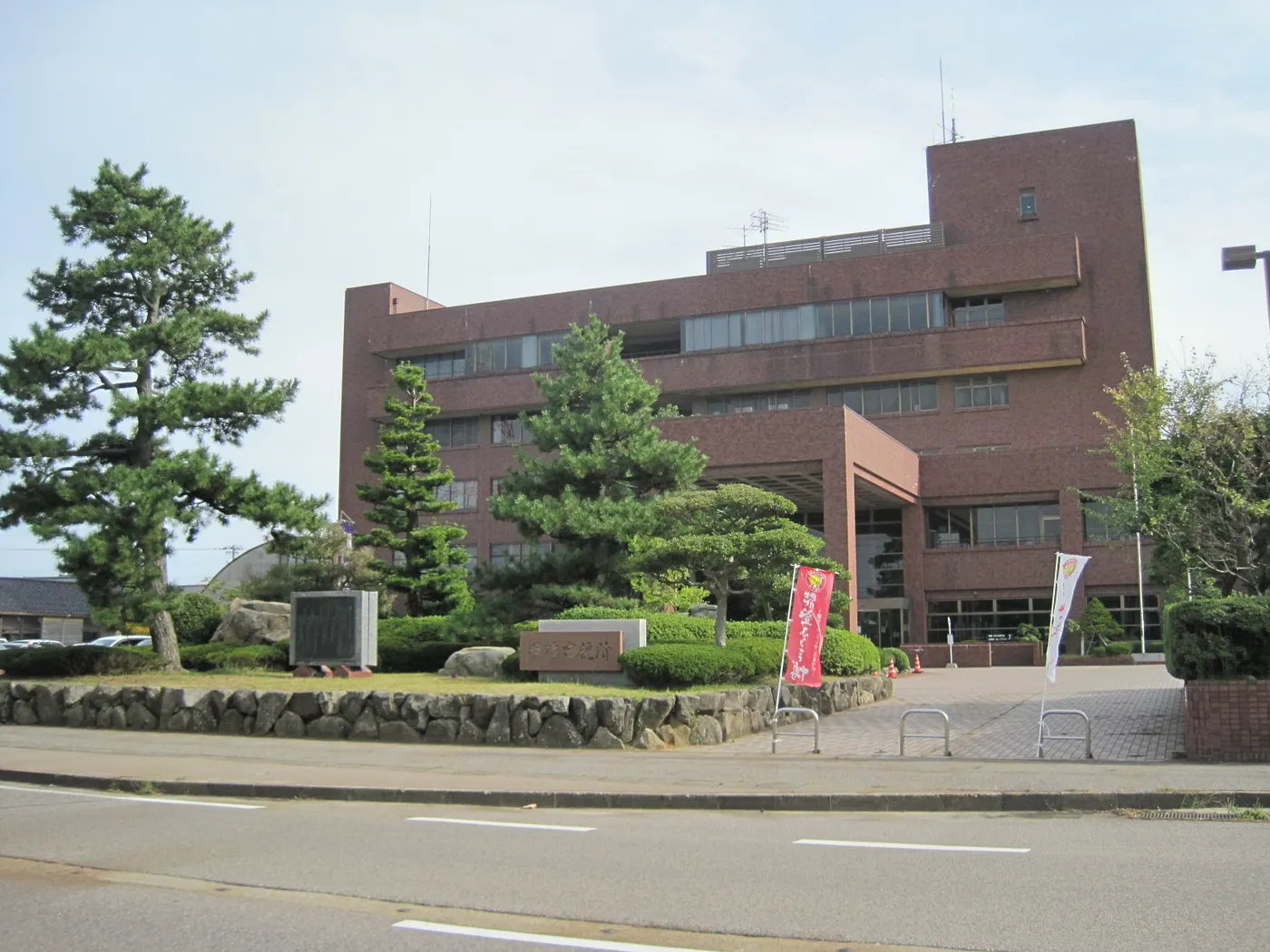
A town on the Sea of Japan coast whose local chronicles record sorabune — sky boats — and which has built a municipal strategy on it. In 1996 it opened Cosmo Isle Hakui: a museum where a genuine Voskhod descent module, a lunar module mock-up and a display on unidentified objects stand side by side. The space hardware is real, bought from Russian and American organisations; this is not a theme park. The town deliberately keeps the two lines next to each other — the documented history of spaceflight and the undocumented stories — and the visitor walks from one into the other through a door. As an approach it is more honest than most places on this list.
Hangzhou and the Airport Closed for an Hour
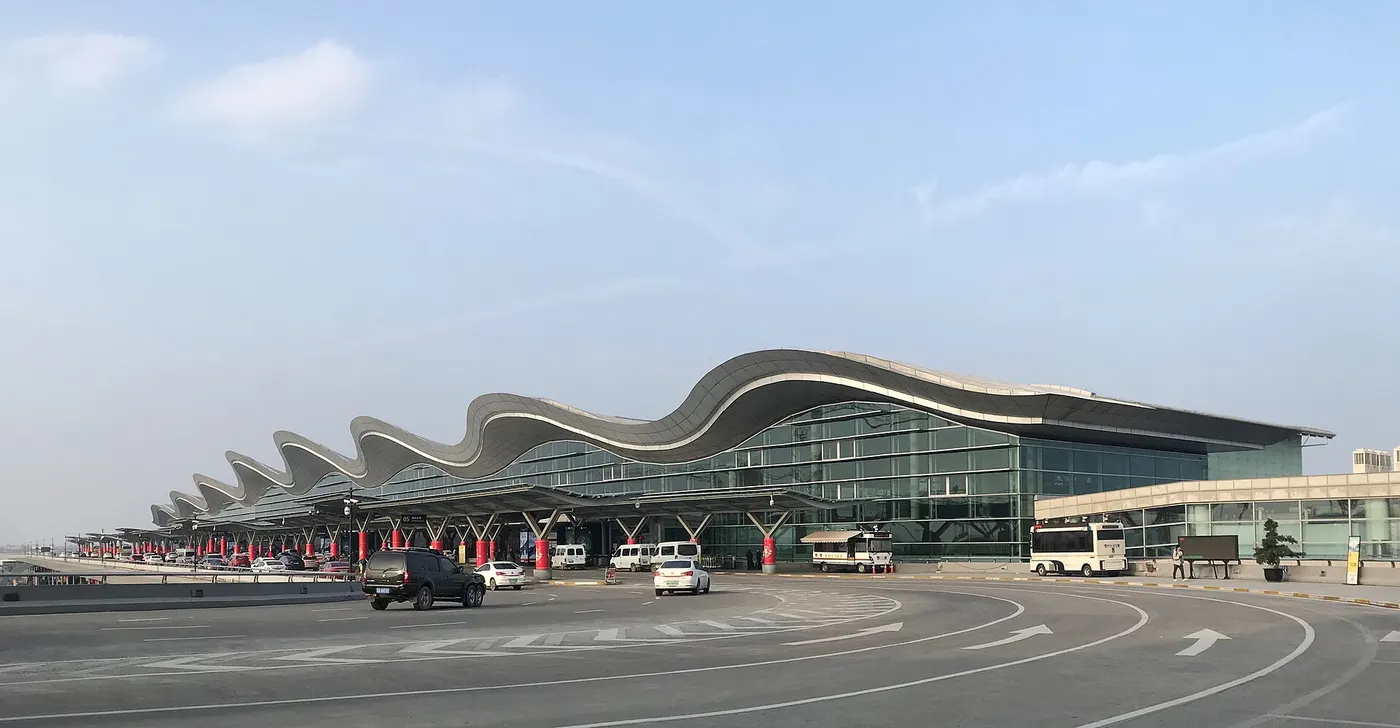
On the evening of 7 July 2010 Xiaoshan airport at Hangzhou stopped work for almost an hour: controllers logged an unidentified object in the zone and eighteen flights were diverted. Passengers and residents photographed a bright trail in the sky. It is a rare instance of a report of an unidentified object shutting down a major airport. Days later the authorities said the phenomenon was connected with military activity and gave no details. The likeliest reading is a missile or aircraft trial; a contrail lit by a low sun produces exactly this picture, and the photographs are consistent with it.
Ruwa and the School Yard
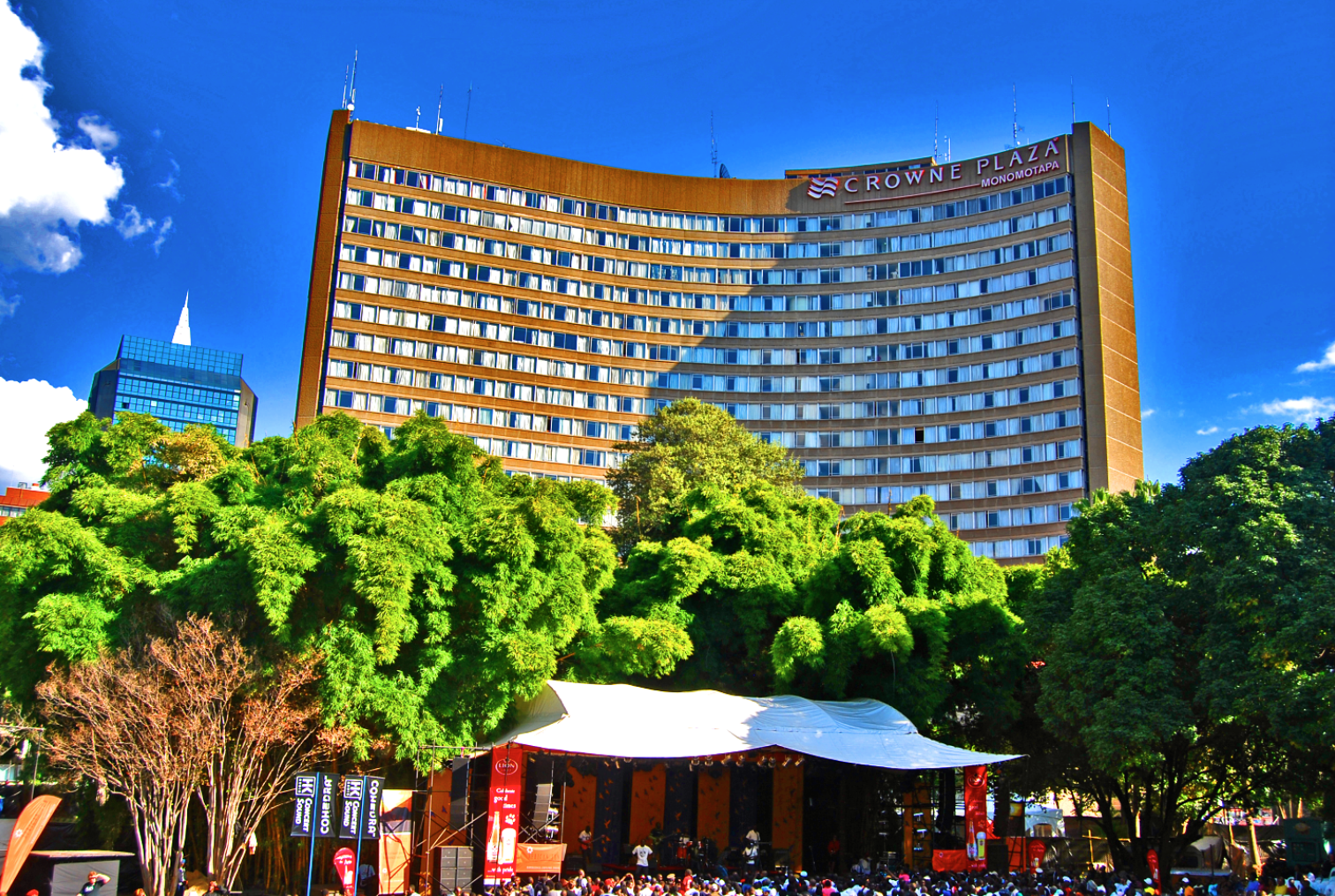
On 16 September 1994, during break at the private Ariel School in this Zimbabwean town, some sixty-two children between six and twelve said they had seen a silver object down beyond the fence and, beside it, a figure in a tight black suit with large eyes. No teacher was in the yard at the time. A few days later the Harvard psychiatrist John Mack, who studied such accounts, spoke to the children individually. The recordings and the drawings survive. Mack did not claim the event had happened; he claimed the children described it as something they had lived through. It remains the best-known case in Africa and one of the most argued-over anywhere.

Tehran and the Night of the Two Phantoms
On the night of 19 September 1976 residents of northern Tehran began ringing Mehrabad airport: a bright object was standing over the city. The Iranian Air Force scrambled an F-4 Phantom; as it closed, its communications and instruments failed and it turned away. A second was sent up, locked the target on radar, and when it tried to fire, the weapons system and radio failed and the pilot broke off. By the crew's report a smaller object separated from the first, went down and landed, flooding the ground with light. The American defence attaché's report on the case was circulated to the State Department, the CIA, the NSA and the Defense Intelligence Agency, and has long been declassified. It is among the best-documented military episodes in the subject.
Kaikōura and the Lights Filmed from the Air
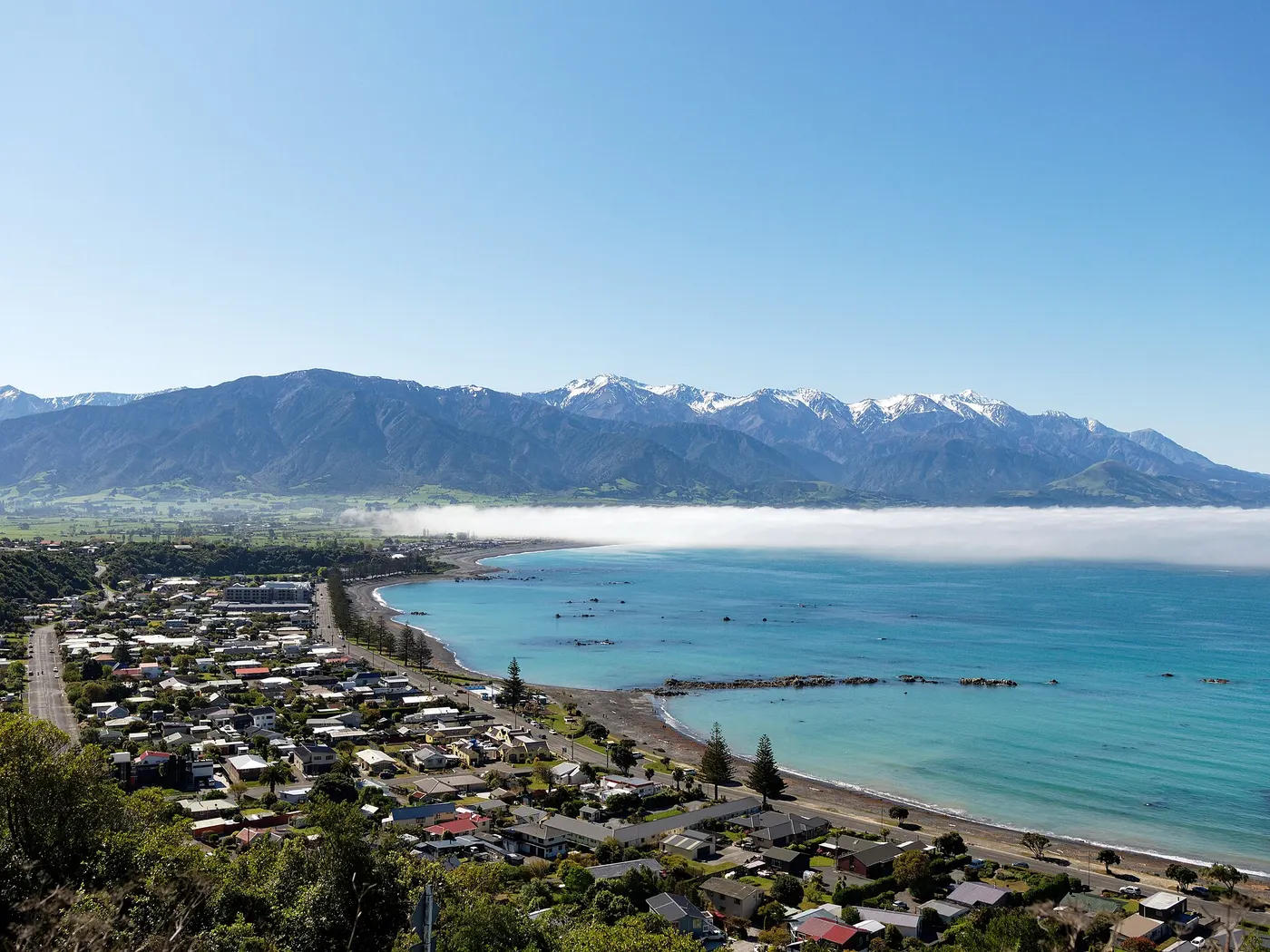
In late December 1978, over the east coast of New Zealand's South Island, the crews of Argosy freight aircraft saw bright lights accompanying them on several consecutive nights. Radar at Wellington confirmed returns. On 31 December an Australian television crew was taken aboard; the cameraman David Crockett filmed the lights on colour stock, and the footage went round the world — one of very few films of the phenomenon shot from an aircraft with simultaneous radar confirmation. The astronomer William Ireland offered an explanation: the lights of squid boats reflected off a temperature inversion, plus Venus. It accounts for some of the episodes and not others.
Cape Otway and Valentich's Last Transmission
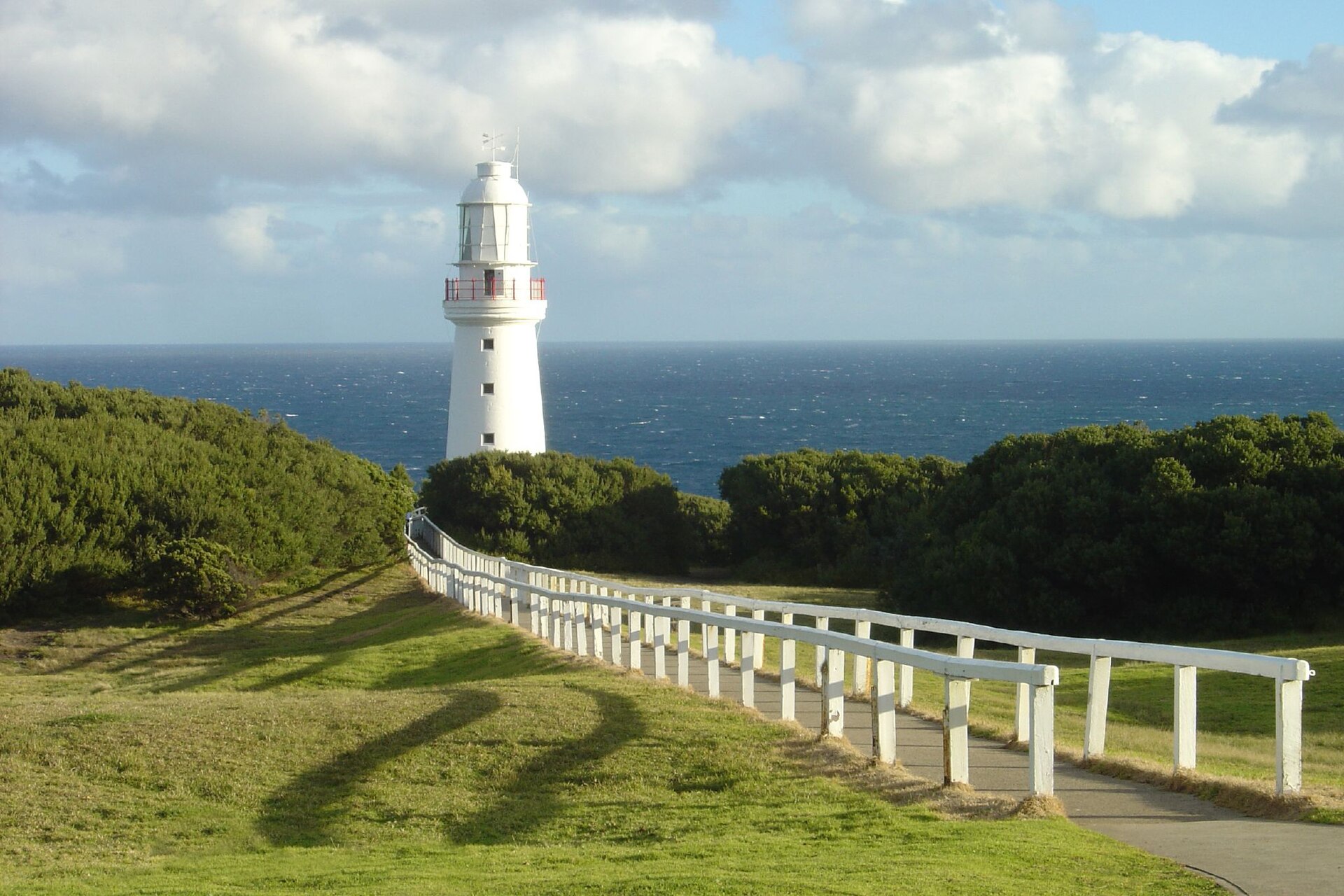
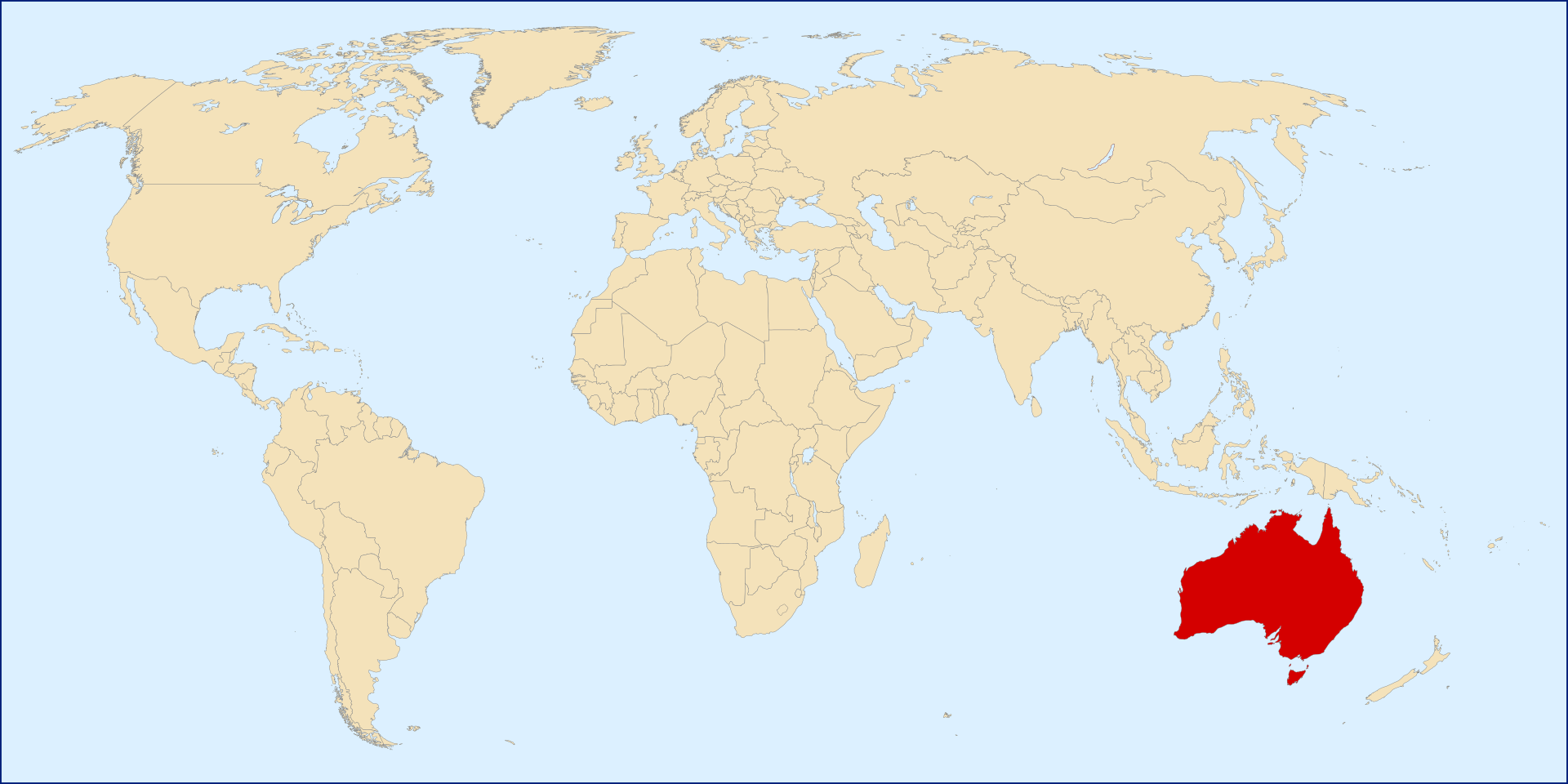
On 21 October 1978 a twenty-year-old pilot, Frederick Valentich, was flying a Cessna 182 alone over Bass Strait south of this cape and told Melbourne control that a large object with four bright lights was accompanying him. His last words were "it is not an aircraft"; then seventeen seconds of metallic scraping on the air, and silence. Neither aircraft nor body was found. Five years later a cowl flap from that production run was recovered off King Island; it could not be tied to his machine. The official finding is that the cause is unknown. Disorientation and inverted flight, and a staged disappearance, have both been considered; neither has been shown.
The Nullarbor and the Knowles Family Car
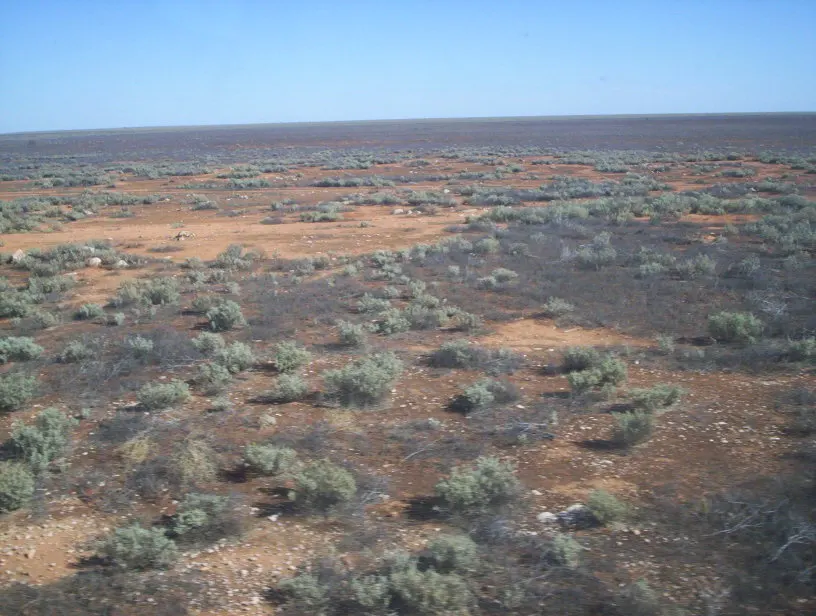
On 20 January 1988 the Knowles family were driving at night across this treeless plain in southern Australia when, by their account, a bright light appeared ahead on the highway. Then, they said, the car was lifted off the road, the cabin filled with black dust and a burnt smell, and their voices went unnaturally high; after a while the car dropped back onto the surface and they drove on with a blown tyre. At the roadhouse at Ceduna the police examined the car: dents in the roof, a black film inside and out. Samples of the film were analysed; the results disagreed. One explanation is a pressure surge from an oncoming truck on an empty road combined with panic. The family never withdrew their account.
Wycliffe Well, the Roadhouse UFO Capital
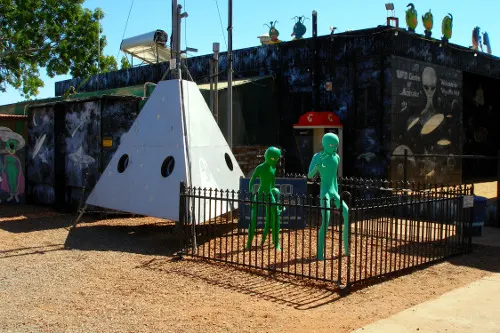
A roadhouse on the Stuart Highway in the middle of the Northern Territory — fuel, a campground and a pub — which has declared itself Australia's UFO capital. Reports have come from here since the 1940s, when an army camp stood nearby, and never stopped. The owners have taken an enterprising view: the walls are painted with green figures, models stand at the door, and the bar keeps a folder of cuttings and a book for visitors to write down what they saw. The honest part of the explanation is the sky. This is some of the darkest, clearest air on the planet, satellites and fireballs are visible to the naked eye, and the route to Pine Gap — the joint American-Australian facility, about whose work little is known — passes nearby.
Tully and the Nest in the Lagoon
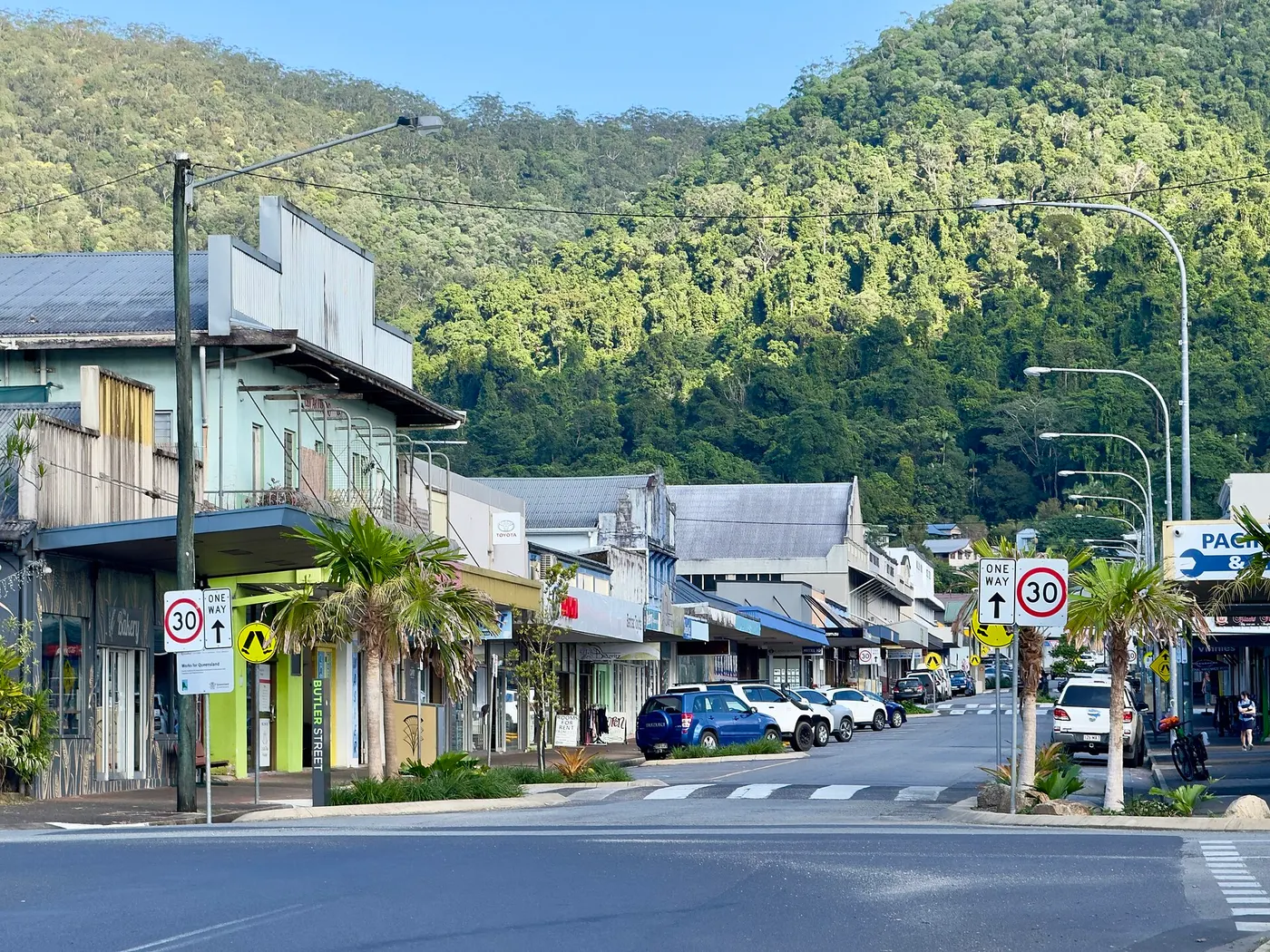
On 19 January 1966 a farmer named George Pedley drove his tractor past a lagoon near this Queensland town and, by his account, saw a grey craft about nine metres across rise out of the reeds. A circular patch of about the same size was left on the water, the reeds flattened and twisted into a spiral. The nest was photographed, the police took a statement, and several more such circles were found in the district within a week. Botanists explained them as a combination of a whirlpool and the root structure of the reed, which floats up as a disc when it tears from the bottom. The explanation is convincing — but outside Australia the case is remembered as the world's first circle, long before the fields of Wiltshire.
Westall and Two Hundred Schoolchildren
On the morning of 6 April 1966 pupils and teachers at two schools in the Melbourne suburb of Westall — between two and three hundred people by various counts — watched a grey-silver disc cross the sports field, drop behind the trees by the grasslands, and lift away a few minutes later. It is the largest sighting by number of witnesses in Australian history. The pupils were assembled that day and told not to discuss it; several of them said for decades afterwards that men in uniform had come to the field. Explanations from a weather balloon to a test aircraft have been offered. In 2013 a playground shaped like a flying saucer was built in the park where it came down.
Fort Yukon and JAL Flight 1628
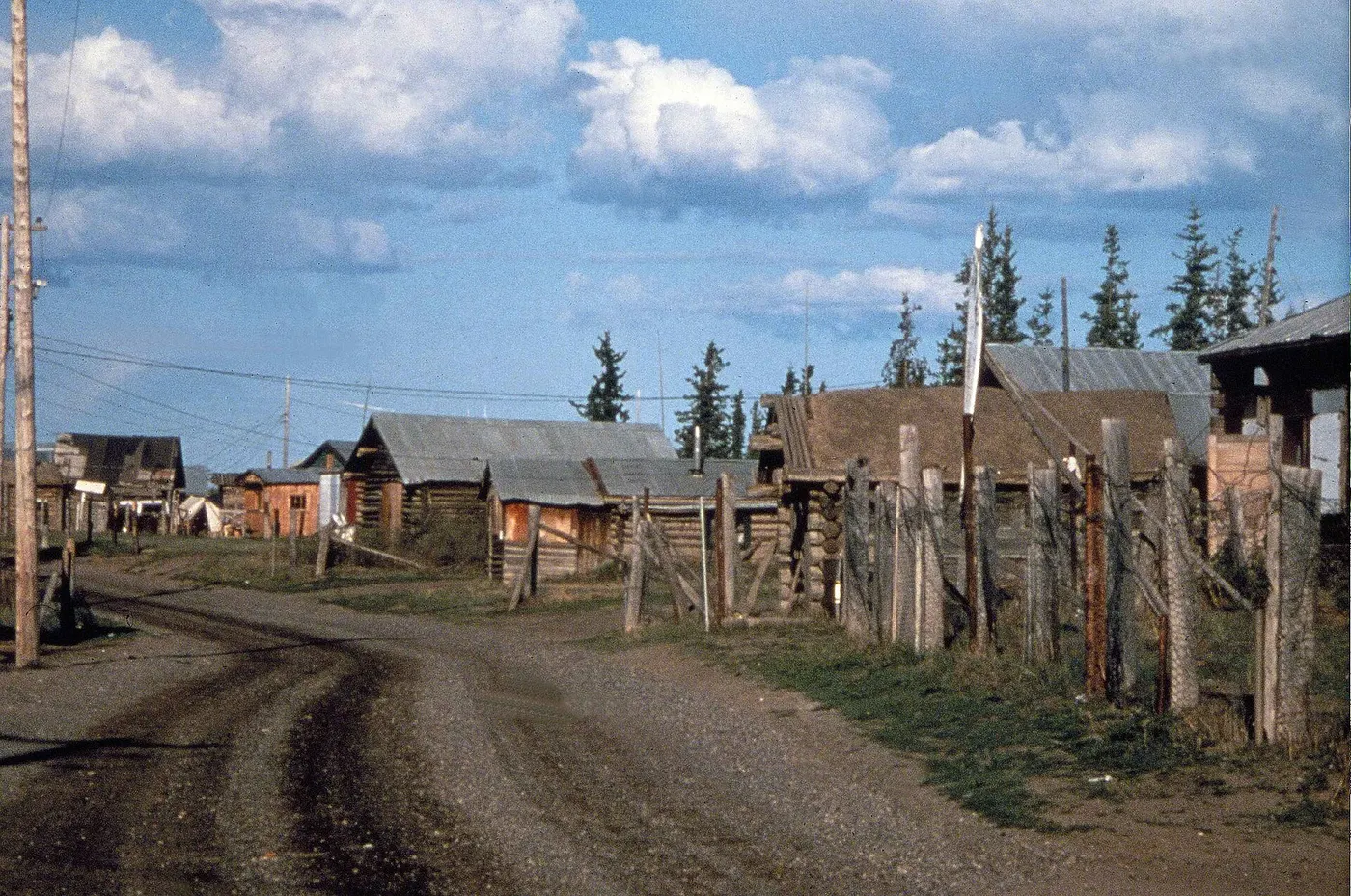
On 17 November 1986 a Japan Airlines cargo 747 was over Alaska when the crew saw two small objects alongside and then — in the description of Captain Kenju Terauchi — something far larger, "the size of two aircraft carriers". The escort lasted about fifty minutes. The controller at Anchorage saw an extra return beside the aircraft on radar; military radar did not confirm it. The Federal Aviation Administration investigated and concluded that the return was an artefact and that what was seen was probably Jupiter and Mars, both low on the horizon that night. Terauchi rejected the explanation and was moved to a ground job.
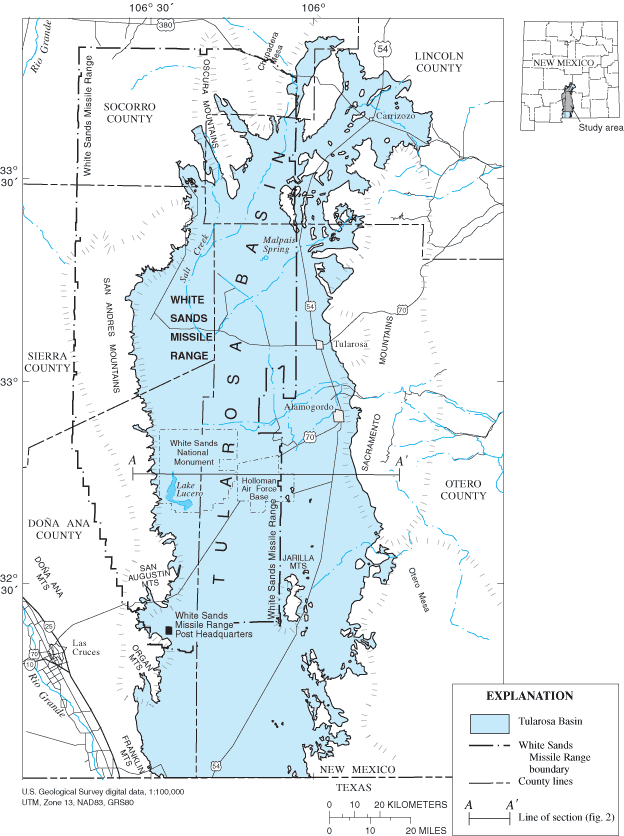
White Sands and the Green Fireballs
From December 1948 bright green spheres began to be seen regularly over New Mexico, moving horizontally and without sound. Most of them were seen over closed installations — this range, Los Alamos, Kirtland base — and the witnesses were guards, pilots and scientists. The Air Force took it seriously: Lincoln La Paz, an astronomer and meteor specialist, ran an observation programme called Twinkle that set cameras and theodolites across the state. La Paz insisted these were not meteors: the trajectory was too horizontal, the colour too uniform, and no fragment was ever found. The programme closed in 1951 without a result. Reports of green fireballs in the region continue.
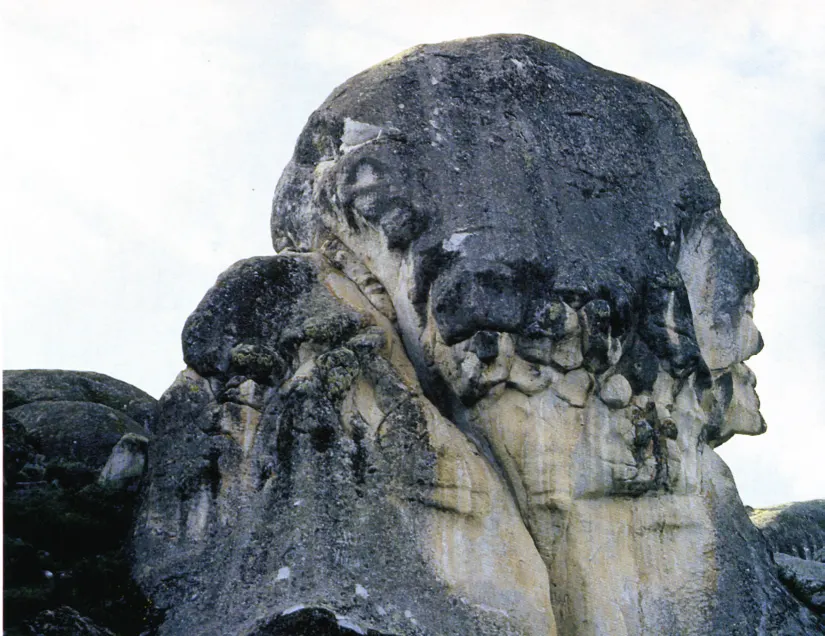
Marcahuasi and the Plateau of Stone Faces
A plateau at four thousand metres in the Peruvian Andes, strewn with weathered rocks in which faces and animal figures appear under the right light. The Peruvian researcher Daniel Ruzo announced in the 1950s that they were the work of an ancient civilisation; geologists hold the shapes to be erosion and the resemblance to be the work of human eyesight. From the 1970s the plateau became a place for esoteric groups to camp, and reports of lights arrived with them. They have been described here for decades, and Marcahuasi is a fixture on Peruvian lists of sighting sites. It can only be reached on foot or on horseback, the nights are cold, and most of the observations were made by people who came for them.
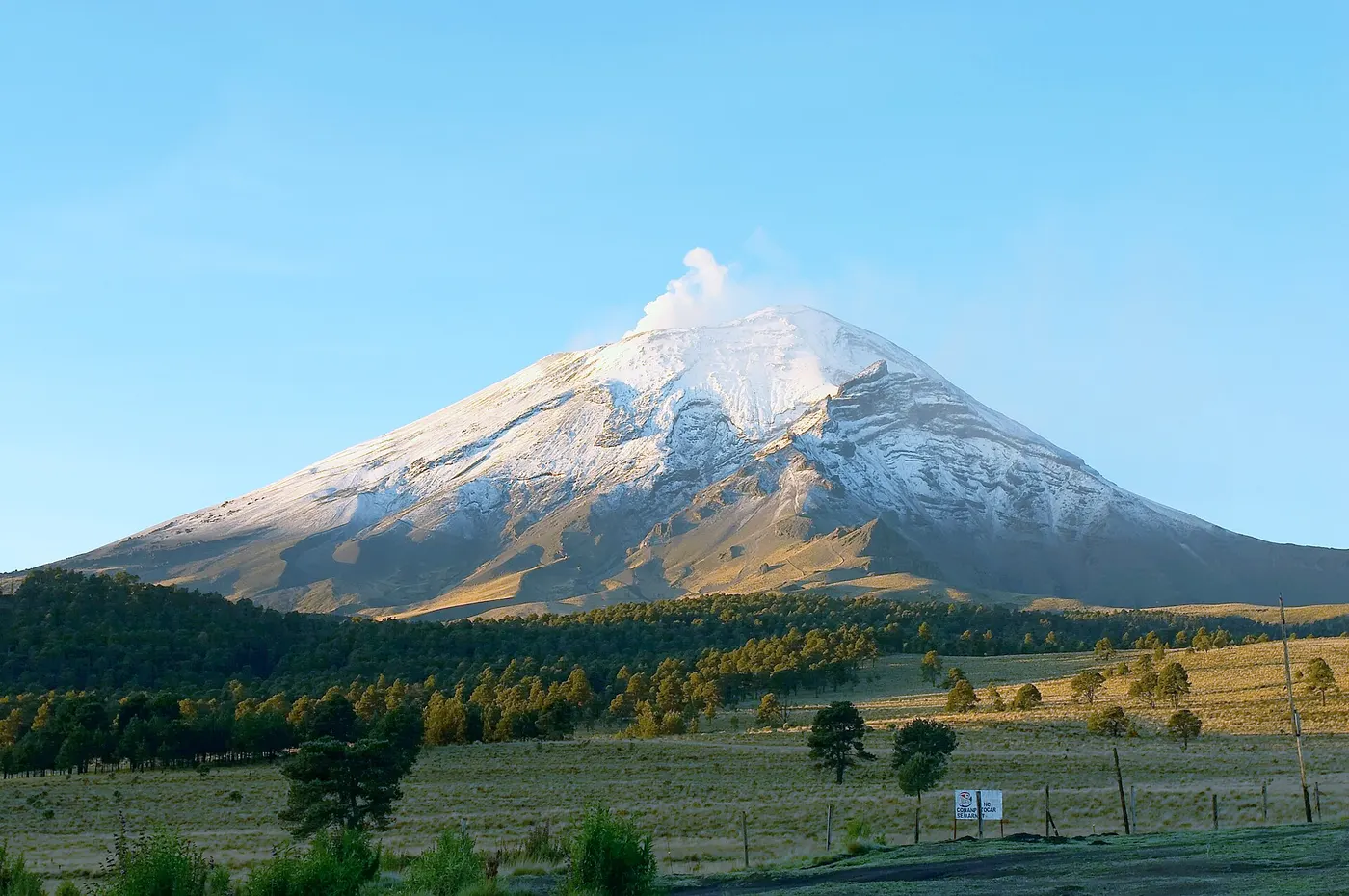
Popocatépetl and the Objects in the Crater
An active volcano seventy kilometres from Mexico City whose crater is watched around the clock by the cameras of the national disaster prevention centre. The recordings are published openly, and since 2012 elongated glowing objects have regularly been found in them, entering or leaving the crater. The best-known clip, showing a cigar shape about a kilometre long, went round the world in October 2012. Volcanologists attribute such footage to a combination of video compression artefacts, birds and insects passing close to the lens, and glowing fragments thrown out in minor explosions. The cameras keep recording, and the material accumulates faster than anyone works through it.