All places
The full catalogue of approved places — abandoned buildings, anomalous zones, UFO sightings. Sort by rating, recency or discussion, and narrow it by category.
494 places
Nazca and the Three-Fingered Mummies
Since 2017 Jaime Maussan has been exhibiting small pale bodies with elongated skulls and three fingers on each hand, said to come from a cave near Nazca — and in 2023 he exhibited them to the Mexican congress. Peruvian prosecutors seized part of the collection and in 2018 published a forensic report led by Flavio Estrada: dolls assembled from human and animal bones held together with modern adhesive, with animal skulls standing in for human ones. Peru's college of archaeologists and its ministry of culture demanded an investigation. The bodies are still on the conference circuit.
Copper Canyon and the Starchild Skull
A skull with a disproportionately large braincase and almost no occipital relief was found around 1930 in a mine tunnel near Copper Canyon in Chihuahua. From 1999 the author Lloyd Pye promoted it as the Starchild, evidence of a human-alien hybrid. DNA testing in 1999 and 2003 returned human mitochondrial and nuclear sequence including a Y chromosome: a boy, with human parents on both sides. The shape of the skull is consistent with congenital hydrocephalus, which in a child of about five produces exactly this deformation.
La Noria and the Ata Mummy
In 2003 a mummy six inches long was found in the abandoned nitrate town of La Noria in the Atacama: an elongated skull, ten pairs of ribs instead of twelve, bone maturity like a six-year-old's. A 2013 UFO documentary announced an alien. The genome was sequenced at Stanford, and the result published in Genome Research in 2018 is not ambiguous: a human girl of Chilean descent who died at or before birth, carrying a rare combination of mutations in seven genes governing skeletal development. Chilean authorities later took an interest in how the remains had left the country at all.
Metepec and the Ranch Alien
In 2007 the Mexican television presenter Jaime Maussan exhibited the body of a tiny creature said to have been caught alive in a trap on a ranch near Metepec in 2005 and drowned in a water tank. According to Maussan the ranchers wanted a fortune for it. The testing that the promoters themselves reported produced an answer nobody had ordered: a skinned primate — a squirrel monkey or a marmoset — with the jaw bones removed and the skin sewn shut. Maussan went on to present several more alien bodies to the public, the Nazca mummies among them.
Montauk and the Ditch Plains Carcass
In July 2008 something washed up on Ditch Plains beach near Montauk: a bald grey carcass with long clawed limbs and a face like a beak. The photograph spread instantly, and the theories ran from a chimera escaped from the laboratory on nearby Plum Island to an alien. The palaeontologist Darren Naish worked through the anatomy from the picture: the limb proportions, the dentition and the shape of the skull are an ordinary raccoon's, after weeks in the water had taken the fur off and the soft tissue of the face had rotted back to the nasal bones. The body vanished before anyone examined it in person.
North Georgia and the Bigfoot in the Freezer
In the summer of 2008 the police officer Matt Whitton and his friend Rick Dyer announced they had found the body of a Bigfoot in the woods of north Georgia — five hundred pounds, over seven feet — and were keeping it in a freezer. A press conference was called in Palo Alto on 15 August and the story ran worldwide. Three days later the investigator Steve Kulls thawed the contents: a rubber costume stuffed with offal bought from a butcher, with moulded rubber feet. Whitton was sacked by the Clayton County police, and Dyer ran the same trick a few years later with a dummy he called Hank.
The Minnesota Iceman
From 1967 Frank Hansen toured Midwest fairs with a refrigerated case holding a hairy humanoid in a block of ice, twenty-five cents to look. In 1968 the zoologists Bernard Heuvelmans and Ivan Sanderson examined it, declared a new species, Homo pongoides, and approached the Smithsonian. While the institution deliberated, Hansen swapped the case: he admitted commissioning a latex model in Hollywood from Howard Ball, who made figures for Disneyland. Nobody ever saw anything but the model, and in 2013 it sold at auction for eleven thousand dollars to a museum in Texas.
Piltdown Man
In 1912 the amateur antiquarian Charles Dawson announced that a gravel pit at Piltdown in East Sussex had yielded the skull and jaw of the missing link between ape and man. British science built its evolutionary tree on it for forty years and quietly set aside the finds that did not fit. In 1953 Kenneth Oakley, Joseph Weiner and Wilfrid Le Gros Clark showed the skull was human and medieval, the jaw was an orangutan's, the teeth had been filed down, and the whole thing stained with an iron solution and chromic acid. A 2016 study using DNA and CT scanning points to a single forger: Dawson himself.
Barnum's Feejee Mermaid
In the summer of 1842 New York read in the papers that an English naturalist, Dr Griffin, had arrived with a dried mermaid from the South Seas. There was no Dr Griffin — he was Barnum's employee Levi Lyman, and Barnum wrote the letters to the editors himself. The specimen, leased from the Boston showman Moses Kimball, was the upper half of a monkey sewn to the tail of a large fish, one of dozens made by Japanese or East Indian craftsmen in the nineteenth century. Takings at the American Museum tripled. The original most likely burned with the museum in 1865.
The Cardiff Giant
On 16 October 1869 men digging a well on William Newell's farm at Cardiff, near Syracuse, struck a stone man ten feet tall. It cost fifty cents to see, the queue lasted all day, and clergymen argued over whether this was a petrified giant out of Genesis. It had been commissioned by Newell's cousin George Hull, a tobacconist and an atheist who had lost his temper in an argument with a preacher: a block of gypsum hauled from Fort Dodge in Iowa, carved in Chicago, aged with sulphuric acid, stippled with darning needles for pores, and buried a year before it was found. Hull confessed that December. P. T. Barnum, refused the original, exhibited a copy of his own — and the public paid to see both.

Ridgway and the Trail-Camera Sasquatch
The forested Appalachian foothills surrounding the borough of Ridgway in Elk County, northwestern Pennsylvania, USA (immediately adjacent to the borders of Allegheny National Forest). In September 2007, an automatic game trail camera deployed in the private woodlands captured a series of images depicting a hunched, shaggy creature with elongated limbs. Widely publicized across international media as the "Jacobs photo" or the "juvenile Sasquatch," the sequence became one of the most prominent cryptozoological media sensations of the 21st century.
Manistee and the Gable Film
In 2007 a Michigan radio station aired an 8mm home movie apparently from the seventies: a picnic, some shooting at cans, and at the end a creature running at the cameraman on all fours as the camera falls sideways. It became the central evidence for the Michigan Dogman and went out on television. In 2010 Mike Agrusa of Michigan admitted he had shot it himself in 2003 on a digital camera, aged the footage, and played the monster in a suit; the second found reel was part of the same joke.
Solway Firth and the Spaceman Behind the Girl
On 23 May 1964 the fireman Jim Templeton photographed his daughter Elizabeth on Burgh Marsh beside the Solway Firth. On the developed frame a white figure in something like a spacesuit stands behind the girl. Kodak confirmed the negative had not been tampered with, and for forty years the picture was offered as evidence. The explanation is in the frame itself: it is Templeton's wife in a pale blue dress, photographed from behind and heavily overexposed — she was standing there, and she is in the same spot on other shots from the roll. Templeton never accepted it, and died in 2011 still convinced.
Mexico City and the Roswell Slides
On 5 May 2015 a seven-thousand-seat hall in Mexico City was shown two Kodachrome slides from 1947: a small body in a display case, announced as an alien from Roswell. Tickets were twenty dollars and the stream was extra. The slides included a placard blurred past reading. Within days a group of sceptics led by Nab Lator stacked frames from the broadcast into a legible version: the mummified body of a two-year-old boy, an exhibit at the Mesa Verde museum in Colorado. Nobody was refunded.
London and the Alien Autopsy Film
On 17 August 1995 television in twenty countries ran a black-and-white film of figures in protective suits dissecting a humanoid body, said to have been shot at Roswell in 1947. It was sold by the London music producer Ray Santilli. Kodak said the edge codes belonged to stock made in 1927, 1947 or 1967 — but only a blank offcut was ever handed over for testing. In 2006 Santilli admitted on Sky that the original had degraded and that what the world saw was filmed in a Camden flat, the dummy stuffed with sheep brains, chicken entrails and raspberry jam.
Hinwil and Billy Meier's Pleiadians
From 1975 the Swiss farmer Eduard Billy Meier produced hundreds of sharp colour photographs of Pleiadian beamships hanging over the hills of the canton of Zürich. Some of the models turned up at his house: discs made from dustbin lids and toy parts, hung on thread. His portrait of the Pleiadian Semjase was traced to a frame from Dean Martin Presents the Golddiggers — the woman is the dancer Michelle Della Fave. The dinosaurs he claimed to have photographed on a trip through time are copies of Zdeněk Burian's paintings from a book on Meier's own shelf.
Palomar and Adamski's Venusian Scout Ships
George Adamski ran a hamburger stand at the foot of Palomar Mountain and from 1952 published photographs of a Venusian scout ship — a bell with three spheres underneath and a dome on top. The shape gave it away at once: the spheres match General Electric light bulbs exactly, and the hull matches the cover of a surgical lamp, or the hood of a chicken brooder lamp sold in the same hardware stores. Joe Nickell and others rebuilt the model from period parts and got the same photograph. Adamski maintained until his death in 1965 that he had flown to Saturn.
Petit-Rechain and the Belgian Triangle
The photographic centrepiece of the Belgian wave of 1989–90: a black triangle with a light at each corner and one in the middle, taken at Petit-Rechain near Verviers in April 1990. It went round the world, was analysed at the University of Mons and the Royal Military Academy, and produced expert talk of plasma and of an image impossible to fake. In July 2011 Patrick Maréchal went on RTL-TVI and showed how he had done it: a piece of polystyrene painted black, four spotlights and a long exposure. He had kept it to himself for twenty-one years because the joke had got away from him.
Ted Serios and the Thoughtographs
From the early sixties the Chicago bellhop Ted Serios projected images straight onto Polaroid film: buildings, shopfronts, cars, blurred but recognisable. The Denver psychiatrist Jule Eisenbud gave him a book and ten years of research. In 1967 Charles Reynolds and David Eisendrath of Popular Photography sat in on a session and described the gizmo — a rolled paper tube Serios held against the lens and would not let anyone examine. A tube that size holds a lens and a transparency; the conjuror James Randi reproduced the whole body of work the same way.
Mumler and the First Spirit Photographs
In 1861 the Boston engraver William Mumler found a translucent figure on a self-portrait and announced he had photographed his dead cousin. For years afterwards he photographed Civil War widows beside their dead — his most famous print shows Mary Todd Lincoln with the hands of the murdered president on her shoulders. New York tried him for fraud in 1869: P. T. Barnum appeared for the prosecution and produced a spirit portrait of his own, made in an evening. Mumler was acquitted because the court could not prove the method, but several of his ghosts were recognised as living Bostonians he had photographed earlier.
The Surgeon's Photograph
The most reproduced photograph in the history of cryptozoology: a long neck above the water of Loch Ness, published by the Daily Mail on 21 April 1934 and credited to a respectable London gynaecologist, Robert Kenneth Wilson — hence the surgeon. The neck was a Woolworth's toy submarine with a head of plastic wood, about a foot high. The story surfaced in papers in 1975, and in 1993 the ninety-year-old Christian Spurling, stepson of the hoax's organiser Marmaduke Wetherell, described building the model. Wetherell was paying back the Daily Mail, which had publicly ridiculed his own monster footprints — prints left by an umbrella stand made from a hippopotamus foot.
Cottingley and the Paper Fairies
In the summer of 1917 sixteen-year-old Elsie Wright and her nine-year-old cousin Frances Griffiths came back from the beck behind the house with five photographs of themselves sitting beside tiny winged figures. Arthur Conan Doyle, who had just buried his son, published them in the Strand Magazine and defended them for the rest of his life. The fairies were cut from card, copied from illustrations in Princess Mary's Gift Book, and held up on hatpins — one pin is visible in a print. Both women confessed in 1983, a few years before they died; Frances maintained to the end that the fifth photograph was real.

Coyote Canyon and the Coyote Springs tract
Coyote Canyon and the Coyote Springs tract form a rugged canyon featuring natural mineral springs nestled at the foot of the Manzanita Mountains southeast of Albuquerque, New Mexico, USA. In the late 19th century, it was a quiet destination for wilderness camping and convalescence; in modern history, it became one of America’s most secretive and anomalous military corridors, absorbed into the restricted perimeter of Kirtland Air Force Base and Sandia National Laboratories—nearly a century before the Paul Bennewitz affair made it globally famous.
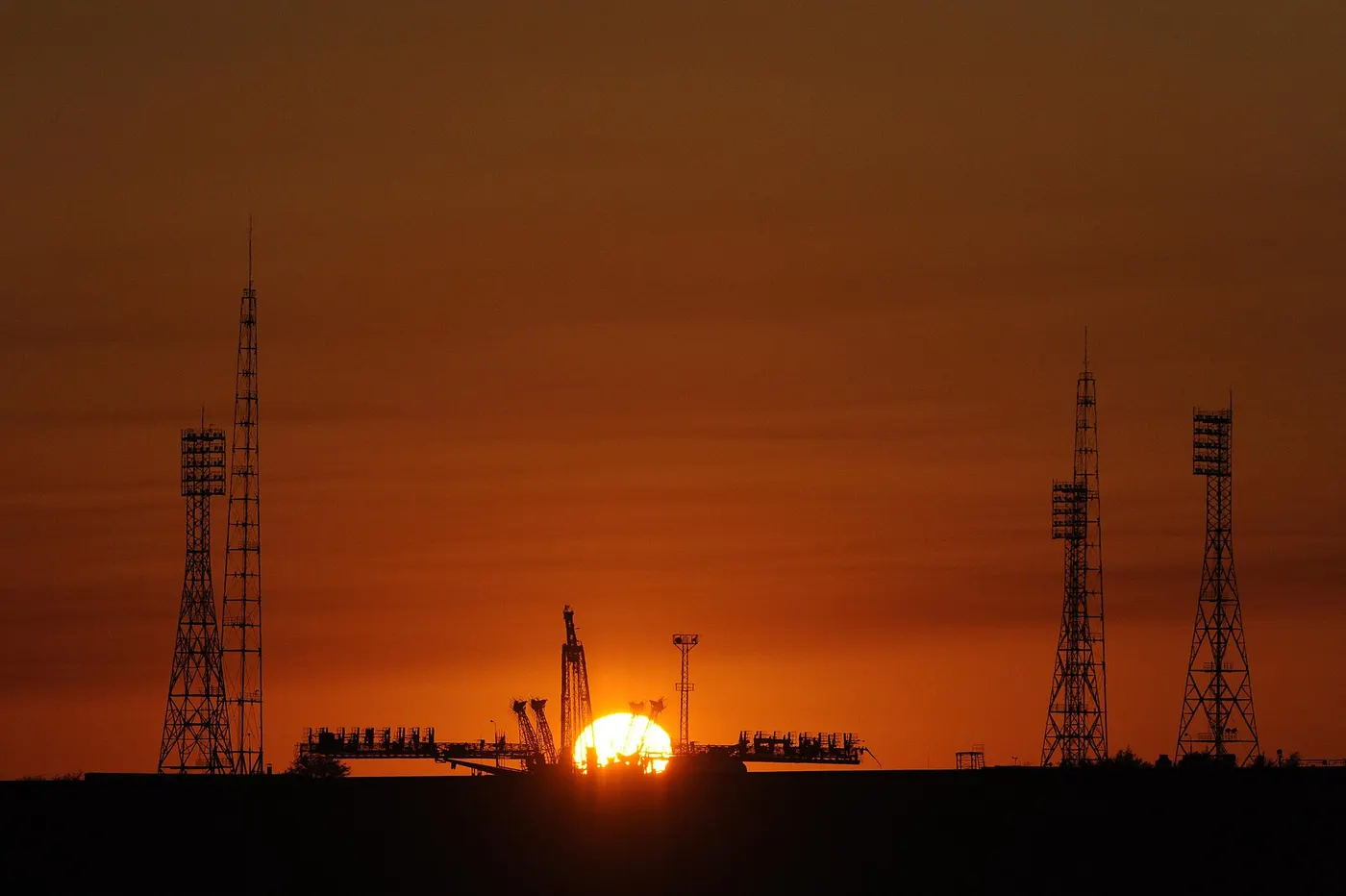
Baikonur and a Sky Full of Explanations
The Baikonur Cosmodrome in the Kyzylorda Region of Kazakhstan is the world's first and largest operational spaceport, long surrounded by reports and rumors of unidentified flying objects. Particular intrigue surrounds accounts by Soviet military personnel and rocket engineers describing glowing spheres, discs, and light beams observed over launch pads and ballistic missile silos.